Menu
Currency
Main
Store
Blog

Loading Report

Preparing your ancestry journey

Connecting to ancient matches...

Preparing your report

Skip to main content
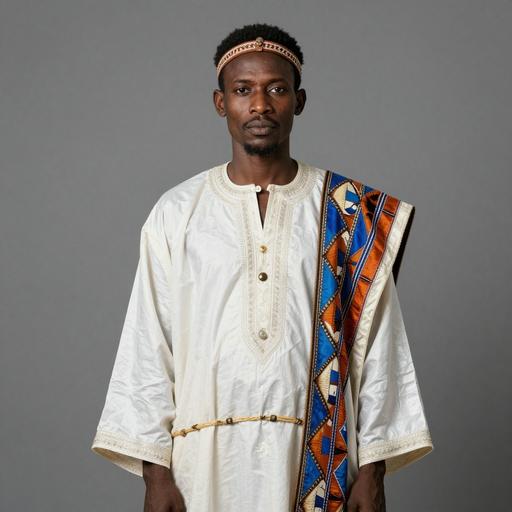
Portrait reconstruction of A man buried in Kenya in the Swahili era
Ancient Individual

A man buried in Kenya in the Swahili era

A man buried in Kenya during the Swahili Culture of Faza

A fragment of the ancient world, preserved across millennia in strands of DNA.

I23548
1645 CE - 1800 CE
Male
Kenya
Scroll to begin
Chapter I

Identity

The biological and cultural markers that define this ancient individual

Sample ID

I23548

Date Range

1645 CE - 1800 CE

Cultural Period

Swahili Culture of Faza

Biological Sex

Male

mtDNA Haplogroup

L3e3a

Y-DNA Haplogroup

E-M4217

Chapter II

Place

Where this individual was discovered

Country Kenya
Locality Faza (Lamu, Pate Island)
Coordinates -2.1033, 41.0206
Chapter III

Time

When this individual lived in the broader context of human history

I23548 1645 CE - 1800 CE
Chapter IV

Story

The narrative of this ancient life

The Swahili culture of Faza, located on the northern coast of Pate Island in the Lamu Archipelago off the coast of Kenya, is a vibrant and historically rich facet of the broader Swahili civilization. The Swahili Coast has long been a crossroads of various cultures due to its strategic position for trade across the Indian Ocean, and Faza, with its distinct local culture, is a fascinating example of this cultural synthesis.

Historical Overview

Faza, also known as Ampaza, is an ancient town whose history predates European colonization by centuries, with a recorded existence dating back to at least the 14th century. This area flourished as part of the Swahili city-states, which emerged around the 9th century. The Swahili people and their culture evolved as a mix of African, Arab, Persian, and later, European influences, a result of extensive commerce and interaction through trade routes that connected East Africa to Asia, the Middle East, and beyond. The prosperity of these city-states was largely due to trade in gold, ivory, slaves, spices, and other goods.

Language and Literature

The Swahili language, a Bantu language heavily influenced by Arabic and to a lesser extent by Persian, Portuguese, and Indian languages, serves as a lingua franca across East Africa. Faza played a role in the development of Swahili literature, particularly the rich tradition of oral poetry. Swahili poetry often blends themes of love, religion, and historical narratives, and is notable for its use of metaphor and allegory.

Architecture

Faza and the Swahili Coast are renowned for their distinctive architectural style, characterized by coral stone buildings, intricate wooden door carvings, and small, tight-knit streets that showcase a blend of African, Arab, and Indian influences. The mosques and mausoleums, with their unique styles and ancient Swahili inscriptions, highlight the Islamic influence that has been predominant since Arab traders began settling on the coast. Faza’s architectural heritage reflects a harmony between functionality and aesthetics, suitable for its coastal environment.

Religion and Spirituality

Islam has been the dominant religion in Faza since the Arab incursion, around the 7th or 8th century. The Islamic culture heavily influences social and cultural norms, with mosques serving as central community hubs. Religious festivals, such as Eid al-Fitr and Eid al-Adha, are vital cultural events, bringing together the community in shared faith and celebration.

Social Structure

Historically, Swahili society in Faza was hierarchical, with a ruling elite typically consisting of merchant families of either Arab or Persian descent, while the local African populations often served in roles as artisans, farmers, or in labor sectors. Although economic and social transformations have since altered the rigidness of these structures, echoes of this historical stratification are still present in social customs and community interactions.

Economy and Trade

The economy of Faza, traditionally dependent on trade, leveraged its strategic location along the Indian Ocean trade networks. While historical trade focused on gold, ivory, and slaves, contemporary Faza’s economy is more localized, with fishing, farming, and small-scale trade taking precedence. The introduction of tourism, owing to the world heritage status of adjacent Lamu, has also become significant, although it has brought both opportunities and challenges to local traditions and economies.

Arts and Crafts

Swahili culture in Faza is rich in arts and crafts, from intricately carved wooden furniture to vibrant Kangas (colorful cloth wraps) worn by women. The art forms often utilize local materials and are renowned for their bright colors and detailed patterns. Music and dance, including Taarab, a genre that blends African, Arabic, and Indian influences, play central roles in social and ceremonial functions.

Contemporary Challenges

Today, the Swahili culture of Faza faces several challenges, including environmental pressures, economic shifts, and the impacts of globalization, which threaten traditional ways of life. Efforts towards cultural preservation and sustainable development are ongoing, often spearheaded by local and international organizations aiming to protect the unique heritage of regions like Faza.

In conclusion, the Swahili culture of Faza represents a fascinating tapestry of historical narratives, architectural beauty, and cultural diversity. Its ongoing evolution mirrors broader global themes of cultural interaction and adaptation, making it both a unique locality and a symbol of the enduring richness of Swahili civilization.

Context

Related Samples

This individual exists within a broader network of ancient samples. No ancient genome stands alone.

Sample ID Culture/Period Date Location Action
I7934 Swahili Culture of Manda Island 1456 CE Manda (Lamu), Kenya View
I7939 Swahili Culture of Manda Island 1456 CE Manda (Lamu), Kenya View
I7941 Swahili Culture of Manda Island 1485 CE Manda (Lamu), Kenya View
I7942 Swahili Culture of Manda Island 1457 CE Manda (Lamu), Kenya View
I7943 Swahili Culture of Manda Island 1400 CE Manda (Lamu), Kenya View
I7944 Swahili Culture of Songo Mnara 1516 CE Songo Mnara (Kilwa District, Songo Mnara Island), Tanzania View
I8816 Swahili Culture of Kilwa 1300 CE Kilwa (Kilwa District), Tanzania View
I13871 Makwasinyi (Kenya) 1650 CE Makwasinyi (Taita-Taveta), Kenya View
I13872 Makwasinyi (Kenya) 1650 CE Makwasinyi (Taita-Taveta), Kenya View
I13873 Makwasinyi (Kenya) 1650 CE Makwasinyi (Taita-Taveta), Kenya View
I13874 Makwasinyi (Kenya) 1709 CE Makwasinyi (Taita-Taveta), Kenya View
I13875 Makwasinyi (Kenya) 1667 CE Makwasinyi (Taita-Taveta), Kenya View
I13876 Makwasinyi (Kenya) 1650 CE Makwasinyi (Taita-Taveta), Kenya View
I14001 Swahili Culture of Lindi 1511 CE Lindi, Tanzania View
I14780 Makwasinyi (Kenya) 1650 CE Makwasinyi (Taita-Taveta), Kenya View
I14781 Makwasinyi (Kenya) 1698 CE Makwasinyi (Taita-Taveta), Kenya View
I17401 Makwasinyi (Kenya) 1650 CE Makwasinyi (Taita-Taveta), Kenya View
I17402 Makwasinyi (Kenya) 1650 CE Makwasinyi (Taita-Taveta), Kenya View
I17404 Makwasinyi (Kenya) 1650 CE Makwasinyi (Taita-Taveta), Kenya View
I17405 Makwasinyi (Kenya) 1650 CE Makwasinyi (Taita-Taveta), Kenya View
I17406 Swahili Culture of Mtwapa 1250 CE Mtwapa (Kilifi), Kenya View
I17407 Swahili Culture of Mtwapa 1250 CE Mtwapa (Kilifi), Kenya View
I17410 Swahili Culture of Mtwapa 1446 CE Mtwapa (Kilifi), Kenya View
I17419 Swahili Culture of Manda Island 800 CE Manda (Lamu), Kenya View
I19381 Swahili Culture of Mtwapa 1250 CE Mtwapa (Kilifi), Kenya View
I19384 Swahili Culture of Mtwapa 1250 CE Mtwapa (Kilifi), Kenya View
I19385 Swahili Culture of Mtwapa 1250 CE Mtwapa (Kilifi), Kenya View
I19387 Swahili Culture of Mtwapa 1457 CE Mtwapa (Kilifi), Kenya View
I19388 Swahili Culture of Mtwapa 1200 CE Mtwapa (Kilifi), Kenya View
I19390 Swahili Culture of Mtwapa 1250 CE Mtwapa (Kilifi), Kenya View
I19392 Swahili Culture of Mtwapa 1250 CE Mtwapa (Kilifi), Kenya View
I19393 Swahili Culture of Mtwapa 1200 CE Mtwapa (Kilifi), Kenya View
I19394 Swahili Culture of Mtwapa 1200 CE Mtwapa (Kilifi), Kenya View
I19395 Swahili Culture of Mtwapa 1250 CE Mtwapa (Kilifi), Kenya View
I19404 Bungule People of Kenya 1400 CE Bungule (Taita-Taveta), Kenya View
I19407 Swahili Culture of Manda Island 1400 CE Manda (Lamu), Kenya View
I19408 Swahili Culture of Mtwapa 1250 CE Mtwapa (Kilifi), Kenya View
I19411 Swahili Culture of Mtwapa 1496 CE Mtwapa (Kilifi), Kenya View
I19413 Swahili Culture of Mtwapa 1446 CE Mtwapa (Kilifi), Kenya View
I19414 Swahili Culture of Mtwapa 1350 CE Mtwapa (Kilifi), Kenya View
I19416 Swahili Culture of Mtwapa 1445 CE Mtwapa (Kilifi), Kenya View
I19417 Swahili Culture of Mtwapa 1400 CE Mtwapa (Kilifi), Kenya View
I19418 Swahili Culture of Mtwapa 1497 CE Mtwapa (Kilifi), Kenya View
I19419 Swahili Culture of Mtwapa 1250 CE Mtwapa (Kilifi), Kenya View
I19420 Swahili Culture of Mtwapa 1446 CE Mtwapa (Kilifi), Kenya View
I19423 Swahili Culture of Mtwapa 1323 CE Mtwapa (Kilifi), Kenya View
I19547 Swahili Culture of Songo Mnara 1508 CE Songo Mnara (Kilwa District, Songo Mnara Island), Tanzania View
I19548 Swahili Culture of Songo Mnara 1418 CE Songo Mnara (Kilwa District, Songo Mnara Island), Tanzania View
I19550 Swahili Culture of Songo Mnara 1412 CE Songo Mnara (Lindi Region, Kilwa District, Songo Mnara Island) , Tanzania View
I19552 Swahili Culture of Songo Mnara 1402 CE Songo Mnara (Kilwa District, Songo Mnara Island), Tanzania View
I23548 Swahili Culture of Faza 1645 CE Faza (Lamu, Pate Island), Kenya View
I23550 Swahili Culture of Mtwapa 1200 CE Mtwapa (Kilifi), Kenya View
I23551 Swahili Culture of Mtwapa 1250 CE Mtwapa (Kilifi), Kenya View
I23554 Swahili Culture of Mtwapa 1250 CE Mtwapa (Kilifi), Kenya View
I23657 Swahili Culture of Mtwapa 1250 CE Mtwapa (Kilifi), Kenya View
I23660 Swahili Culture of Mtwapa 1435 CE Mtwapa (Kilifi), Kenya View
I23662 Swahili Culture of Mtwapa 1450 CE Mtwapa (Kilifi), Kenya View
I24661 Swahili Culture of Mtwapa 1250 CE Mtwapa (Kilifi), Kenya View
I24662 Swahili Culture of Mtwapa 1250 CE Mtwapa (Kilifi), Kenya View
I24663 Swahili Culture of Mtwapa 1250 CE Mtwapa (Kilifi), Kenya View
I24665 Swahili Culture of Mtwapa 1250 CE Mtwapa (Kilifi), Kenya View
I24975 Swahili Culture of Mtwapa 1250 CE Mtwapa (Kilifi), Kenya View
I13611 Swahili Culture of Mtwapa 1350 CE Mtwapa (Kilifi), Kenya View
I17409 Swahili Culture of Mtwapa 1226 CE Mtwapa (Kilifi), Kenya View
I17412 Swahili Culture of Mtwapa 1250 CE Mtwapa (Kilifi), Kenya View
I17413 Swahili Culture of Mtwapa 1250 CE Mtwapa (Kilifi), Kenya View
I19386 Swahili Culture of Mtwapa 1451 CE Mtwapa (Kilifi), Kenya View
I19391 Swahili Culture of Mtwapa 1200 CE Mtwapa (Kilifi), Kenya View
I19401 Swahili Culture of Mtwapa 1435 CE Mtwapa (Kilifi), Kenya View
I19409 Swahili Culture of Mtwapa 1442 CE Mtwapa (Kilifi), Kenya View
I19415 Swahili Culture of Mtwapa 1408 CE Mtwapa (Kilifi), Kenya View
I19549 Swahili Culture of Songo Mnara 1629 CE Songo Mnara (Kilwa District, Songo Mnara Island), Tanzania View
I21475 Swahili Culture of Mtwapa 1454 CE Mtwapa (Kilifi), Kenya View
I23558 Swahili Culture of Mtwapa 1200 CE Mtwapa (Kilifi), Kenya View
I23561 Swahili Culture of Mtwapa 1424 CE Mtwapa (Kilifi), Kenya View
I7938 Swahili Culture of Manda Island 1437 CE Manda (Lamu), Kenya View
Sample ID Culture/Period Date Location Action
I23548 Swahili Culture of Faza 1645 CE Faza (Lamu, Pate Island), Kenya View
Sources

References

Scientific publications and genetic data that inform this profile.

Scientific Publication

Entwined African and Asian genetic roots of medieval peoples of the Swahili coast

Authors Brielle ES, Fleisher J, Wynne-Jones S, Sirak K, Broomandkhoshbacht N et al.
Abstract

The urban peoples of the Swahili coast traded across eastern Africa and the Indian Ocean and were among the first practitioners of Islam among sub-Saharan people1,2. The extent to which these early interactions between Africans and non-Africans were accompanied by genetic exchange remains unknown. Here we report ancient DNA data for 80 individuals from 6 medieval and early modern (AD 1250-1800) coastal towns and an inland town after AD 1650. More than half of the DNA of many of the individuals from coastal towns originates from primarily female ancestors from Africa, with a large proportion-and occasionally more than half-of the DNA coming from Asian ancestors. The Asian ancestry includes components associated with Persia and India, with 80-90% of the Asian DNA originating from Persian men. Peoples of African and Asian origins began to mix by about AD 1000, coinciding with the large-scale adoption of Islam. Before about AD 1500, the Southwest Asian ancestry was mainly Persian-related, consistent with the narrative of the Kilwa Chronicle, the oldest history told by people of the Swahili coast3. After this time, the sources of DNA became increasingly Arabian, consistent with evidence of growing interactions with southern Arabia4. Subsequent interactions with Asian and African people further changed the ancestry of present-day people of the Swahili coast in relation to the medieval individuals whose DNA we sequenced.

Use code for 25% off Expires Jul 12