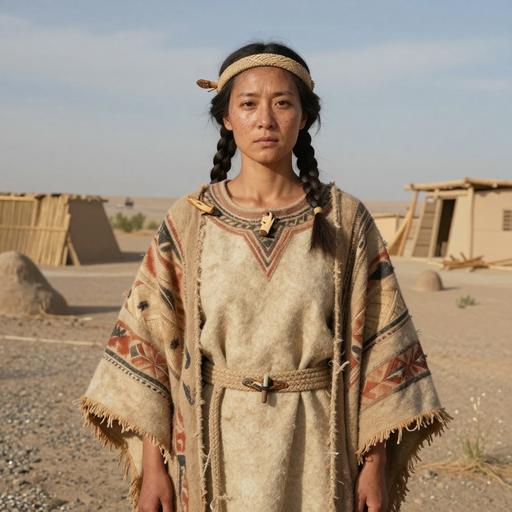
The Xiaohe culture, part of the broader prehistoric cultures in the region of Xinjiang, China, represents a fascinating and enigmatic aspect of the Bronze Age in this area. This culture, discovered primarily through archaeological excavations at the Xiaohe Cemetery, also known as the Small River Cemetery, offers intriguing insights into the lives, beliefs, and practices of a people who lived thousands of years ago in the harsh, arid expanses of the Tarim Basin.
Geographic and Environmental Context
The Xiaohe site is located in the Lop Nur region of the Tarim Basin in present-day Xinjiang, China, an area characterized by its arid desert environment with extreme temperature fluctuations. The site's remote location has contributed to its remarkable state of preservation, providing a wealth of material for archaeological study. During the Bronze Age, the area likely experienced slightly more favorable climatic conditions, though it remained a challenging environment for human habitation.
Cultural and Temporal Framework
The Xiaohe culture is primarily understood through its burial practices, as most of the archaeological evidence comes from the Xiaohe Cemetery. Radiocarbon dating suggests that the cemetery was in use approximately between 2000 BCE and 1450 BCE. This places the Xiaohe culture contemporaneously with other significant Bronze Age cultures in China, such as the Erlitou culture and the later Shang Dynasty, although it developed independently due to its geographic isolation.
Material Culture and Artifacts
The Xiaohe burials are renowned for their extraordinary preservation, offering unique artifacts that shed light on the culture:
Burial Practices: The Xiaohe Cemetery features hundreds of tombs, constructed in a boat-shaped fashion and covered with a wooden structure. Burials were conducted with attention to ritual, and the cemetery itself is marked by large, vertically implanted phallic-shaped poles, which are thought to have religious symbolism.
Mummification: Many of the interred individuals have been naturally mummified, allowing researchers to study their physical characteristics. The mummies often exhibit features that are atypical of the broader East Asian populations, hinting at diverse migratory influences, possibly from Western Eurasian populations.
Textiles and Clothing: The mummies are often clothed in finely crafted textiles, including woolen garments and felt hats, highlighting advanced textile production skills. The presence of wool indicates sheep herding, while plant-based textiles suggest knowledge of local flora.
Grave Goods: The burials contained a variety of grave goods, including wooden masks, pottery, carved figurines, and objects made from jade, suggesting a complex culture with rich symbolic and possibly religious life.
Social and Economic Life
The artifacts and burial practices provide glimpses of the Xiaohe social structure and economy:
Agriculture and Animal Husbandry: Evidence of grains like wheat and millet found in the region indicates that the Xiaohe people practiced agriculture. The herding of animals, particularly sheep, is suggested by woolen textile remnants.
Craftsmanship: The quality of the textiles and woodworking indicates specialized craftsmanship and knowledge of materials, with potential trade or cultural exchanges occurring with adjacent cultures.
Religious and Ritualistic Practices: The burial practices and grave goods reflect a society with rich spiritual beliefs, possibly ancestor worship or a form of shamanism, given the ritualistic nature of the phallic symbols and carved figurines.
Connections and Interactions
Despite the geographic isolation, there is evidence suggesting some level of interaction between the Xiaohe culture and other regions. The presence of elements in the material culture that have parallels in Western and Central Asia indicates that the Silk Road network may have had precursors even in ancient times, facilitating cultural and possibly genetic exchanges.
Conclusion
The Xiaohe culture of the Bronze Age represents a complex, adaptive society residing at the crossroads of civilizations. While much remains to be understood, ongoing research in this area continues to illuminate the diverse tapestry of human history in ancient Xinjiang. The artifacts, burial practices, and environmental adaptation strategies offer invaluable insights into the cultural and social dynamics of this ancient community, highlighting the intricate interplay of isolation and interaction in shaping human societies.