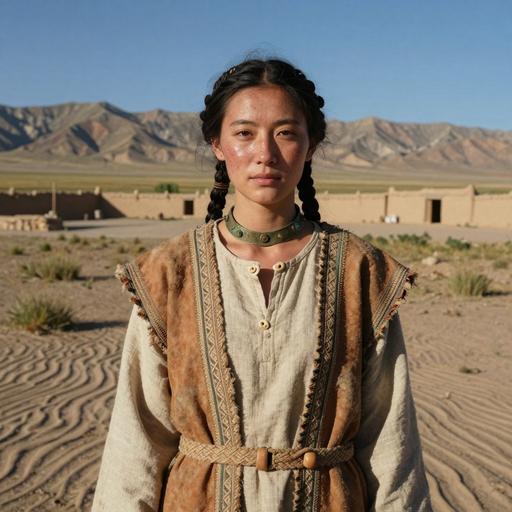
The Xinjiang Bronze Age represents a fascinating period in ancient Chinese civilization, marked by a unique cultural and technological landscape in the northwestern region of present-day China. This era, roughly dating from the 2nd millennium BCE to the 1st millennium BCE, showcases the interactions between different cultures across Eurasia and highlights the region's role as a crossroads of trade and cultural exchange.
Geographical and Environmental Context
The Xinjiang region, encompassing vast deserts, high mountains, and fertile oases, provided a challenging yet resource-rich environment for ancient peoples. Its position along the Silk Road facilitated interactions between nomadic pastoralists, settled agriculturalists, and traders, creating a melting pot of cultures. This geographical positioning was crucial for the diffusion of Bronze Age technologies and cultural practices.
Cultural and Technological Development
Metallurgy and Craftsmanship
Bronze metallurgy is a defining feature of this period, with the emergence of sophisticated techniques in metalworking. Artifacts such as weapons, tools, ornaments, and ritual vessels underscore the advanced metallurgical skills of the region's inhabitants. The use of bronze signified a considerable advancement over previous stone tools and contributed to improvements in agriculture, warfare, and cultural practices.
Settlements and Architecture
Archaeological evidence reveals the presence of both nomadic and settled communities, with semi-permanent structures in oasis towns and temporary encampments in grazing areas. The architecture of the period often consisted of mud-brick constructions and yurts, reflecting adaptations to the varied climate and lifestyle of the inhabitants. Some settlements show evidence of fortifications and large communal buildings, indicating a degree of social organization and defense needs.
Economy and Substinance
The economy during the Xinjiang Bronze Age was diverse, comprising agriculture, herding, hunting, and trade. The arid landscape necessitated innovative irrigation techniques, facilitating the cultivation of wheat, millet, and barley in oasis areas. Pastoralism played a significant role, with sheep, goats, and horses being key components of the subsistence strategy. The domestication and use of the horse were particularly significant for transportation and trade.
Cultural Interactions and Exchange
Xinjiang's location as a nexus of various trade routes allowed for significant cultural interactions with other regions. The influence of the Central Asian steppe cultures, Indo-European migrations, and contact with early Chinese civilizations contributed to a rich tapestry of influences. This is evident in the artistic styles, burial practices, and religious motifs found in archaeological sites.
Burial Practices and Beliefs
Burial sites from this era reflect a complex spiritual life, with grave goods indicating belief in an afterlife and emphasizing social status. The presence of chariots and horses in some high-status burials suggests the importance of mobility and possibly hint at Indo-European influences. These burial practices also reveal insights into the social hierarchy and the role of the elite in the Bronze Age society.
Linguistic and Ethnic Diversity
The Xinjiang Bronze Age was characterized by linguistic and ethnic diversity. Evidence suggests that the region was home to a variety of languages, possibly including early forms of Indo-European languages. This linguistic diversity points to the broader movements and exchanges of peoples across the region.
Legacy and Historical Impact
The Xinjiang Bronze Age set the foundations for the region's later historical developments and its integration into various Chinese dynasties. Its legacy is visible in the continuation of certain technological, cultural, and economic practices into later periods. Moreover, it underscores the importance of Xinjiang as a cultural and technological bridge between the East and West.
In conclusion, the Xinjiang Bronze Age reflects a dynamic and complex period in ancient Chinese civilization, showcasing technological innovations, cultural exchanges, and adaptations to a challenging environment. The region's archaeological record provides invaluable insights into the processes that shaped the development of early complex societies in this pivotal part of the world.