Menu
Currency
Main
Store
Blog

Loading Report

Preparing your ancestry journey

Connecting to ancient matches...

Preparing your report

Skip to main content
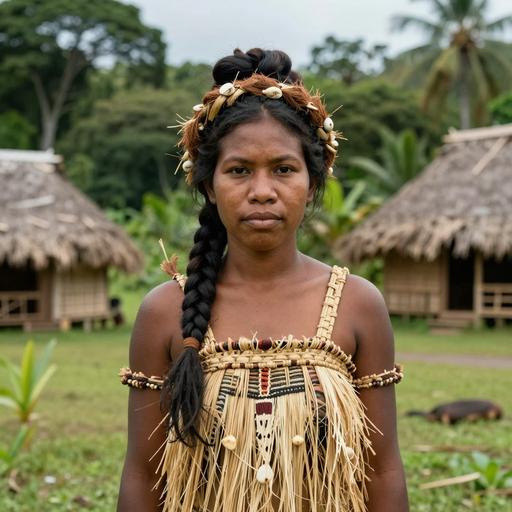
Portrait reconstruction of A woman buried in Vanuatu in the Early Prehistoric era
Ancient Individual

A woman buried in Vanuatu in the Early Prehistoric era

A woman buried in Vanuatu during the Vanuatu 2,000 Years Ago

A fragment of the ancient world, preserved across millennia in strands of DNA.

MAL007
163 BCE - 19 CE
Female
Vanuatu
Scroll to begin
Chapter I

Identity

The biological and cultural markers that define this ancient individual

Sample ID

MAL007

Date Range

163 BCE - 19 CE

Cultural Period

Vanuatu 2,000 Years Ago

Biological Sex

Female

mtDNA Haplogroup

B4a1a1a

Y-DNA Haplogroup

N/A (Female)

Chapter II

Place

Where this individual was discovered

Country Vanuatu
Locality Malakula
Chapter III

Time

When this individual lived in the broader context of human history

MAL007 163 BCE - 19 CE
Chapter IV

Story

The narrative of this ancient life

Around 2,000 years ago, Vanuatu was a key part of the expansive Austronesian cultural and linguistic network. The islands that constitute modern-day Vanuatu were initially settled approximately 3,000 years ago by Austronesian-speaking peoples during the Lapita cultural period. By 2,000 years ago, the culture in Vanuatu had begun to evolve from its Lapita roots into what would eventually become distinctively Melanesian, yet it still retained many Austronesian influences.

Geography and Environment Vanuatu is an archipelago of volcanic origin in the South Pacific Ocean, consisting of around 83 islands. The environment is characterized by lush tropical vegetation, rugged terrain, and an abundance of marine resources. The climate is tropical, with a wet season from November to April and a dry season from May to October, providing a diverse ecosystem that supported various forms of subsistence.

Subsistence and Economy During this period, the inhabitants of Vanuatu relied heavily on both agriculture and maritime resources. The cultivation of root crops such as taro and yams formed the backbone of the agricultural system. These were supplemented by bananas, sugarcane, coconuts, and other fruit varieties. The fertile volcanic soil, combined with the tropical climate, provided ideal conditions for these crops.

Fishing and the collection of marine resources were also crucial. The ocean provided an abundance of fish, shellfish, and sea creatures, which were essential protein sources. The people of Vanuatu are believed to have utilized sophisticated fishing techniques, including nets, traps, and line fishing, as well as seafaring canoes for deep-sea fishing.

Society and Culture Vanuatu society was organized into small, interconnected communities, often based around extended kinship groups or clans. These groups were typically led by chiefs or community elders who held religious and social authority. Social organization was likely flexible, with a degree of hierarchy present, yet without the rigid stratification seen in more centralized societies.

The culture of Vanuatu during this period exhibited rich artistic expression. Pottery remained a vital craft, though it had developed distinct characteristics from the earlier Lapita style. Intricate patterns were painted or incised on various clay objects. Furthermore, oral traditions, storytelling, and dance were integral to cultural life, serving as methods to pass down history, knowledge, and social values.

Religion and Spirituality Religious beliefs were animistic, with natural elements and ancestral spirits playing a significant role. The people of Vanuatu saw the landscape around them as inhabited by spirits, and rituals were conducted to appease these spiritual entities. Ceremonies and offerings were likely essential parts of the social and religious framework, serving to ensure community wellbeing and successful agricultural and fishing yields.

Technology and Innovation Technological advancements during this era were relatively sophisticated for the time. The people of Vanuatu constructed outrigger canoes that allowed for effective navigation and fishing. These boats were crucial for trade and communication with neighboring islands within the Austronesian network. Stone tools were predominantly used for agriculture and daily tasks, crafted with precision to suit various needs.

Trade and Interaction Vanuatu, positioned strategically within the Austronesian sphere, participated actively in regional trade networks. Exchange of goods such as obsidian, pottery, shell ornaments, and rare stones likely took place, facilitating not only economic transactions but also cultural exchanges. These networks helped to disseminate new technologies, ideologies, and genetic influences across the Pacific.

In summary, Vanuatu 2,000 years ago was a vibrant and dynamic society with strong Austronesian roots, evolving unique cultural identities that would lay the foundation for future Melanesian societies. It was characterized by a close relationship with the natural environment, a rich tapestry of cultural practices and traditions, and active engagement in wider Pacific interactions.

Context

Related Samples

This individual exists within a broader network of ancient samples. No ancient genome stands alone.

Sample ID Culture/Period Date Location Action
FUT002 Vanuatu 1,200 Years Ago 651 CE Futuna, Vanuatu View
FUT006 Vanuatu 1,200 Years Ago 680 CE Futuna, Vanuatu View
FUT007 Vanuatu 1,200 Years Ago 681 CE Futuna, Vanuatu View
LHA001 Tonga 800 Years Ago 1034 CE Tongatapu, Tonga View
MAL002 Vanuatu 2,500 Years Ago 755 BCE Malakula, Vanuatu View
MAL004 Vanuatu 2,600 Years Ago 772 BCE Malakula, Vanuatu View
MAL007 Vanuatu 2,000 Years Ago 163 BCE Malakula, Vanuatu View
TAN001 Vanuatu 200 Years Ago 1661 CE Tanna, Vanuatu View
TAN002 Vanuatu 2,500 Years Ago 680 BCE Tanna, Vanuatu View
TAP003 French Polynesia 400 Years Ago 1508 CE French Polynesia. Ra'iatea, French Polynesia View
FUT001 Vanuatu 1,100 Years Ago 688 CE Futuna, Vanuatu View
MAI002 Solomon Islands 500 Years Ago 1431 CE Malaita, Solomon Islands View
MAL001 Vanuatu 2,200 Years Ago 399 BCE Malakula, Vanuatu View
MAL006 Vanuatu 2,700 Years Ago 811 BCE Malakula, Vanuatu View
MAL008 Vanuatu 2,200 Years Ago 399 BCE Malakula, Vanuatu View
TAP002 French Polynesia 200 Years Ago 1657 CE French Polynesia. Ra'iatea, French Polynesia View
TAP004 French Polynesia 200 Years Ago 1645 CE French Polynesia. Ra'iatea, French Polynesia View
TON001 Tonga 2,500 Years Ago 850 BCE Talasiu site. Tongatapu, Tonga View
TON002 Tonga 2,500 Years Ago 850 BCE Talasiu site. Tongatapu, Tonga View
FUT001 688 CE Futuna, Vanuatu View
MAI002 1431 CE Malaita, Solomon Islands View
MAL001 399 BCE Malakula, Vanuatu View
MAL006 811 BCE Malakula, Vanuatu View
MAL008 399 BCE Malakula, Vanuatu View
TAP002 1657 CE French Polynesia. Ra'iatea, French Polynesia View
TAP004 1645 CE French Polynesia. Ra'iatea, French Polynesia View
TON001 850 BCE Talasiu site. Tongatapu, Tonga View
TON002 850 BCE Talasiu site. Tongatapu, Tonga View
Sample ID Culture/Period Date Location Action
MAL007 Vanuatu 2,000 Years Ago 163 BCE Malakula, Vanuatu View
Sources

References

Scientific publications and genetic data that inform this profile.

Scientific Publication

Language continuity despite population replacement in Remote Oceania

Authors Posth C, Nägele K, Colleran H, Valentin F, Bedford S et al.
Abstract

Recent genomic analyses show that the earliest peoples reaching Remote Oceania-associated with Austronesian-speaking Lapita culture-were almost completely East Asian, without detectable Papuan ancestry. However, Papuan-related genetic ancestry is found across present-day Pacific populations, indicating that peoples from Near Oceania have played a significant, but largely unknown, ancestral role. Here, new genome-wide data from 19 ancient South Pacific individuals provide direct evidence of a so-far undescribed Papuan expansion into Remote Oceania starting ~2,500 yr BP, far earlier than previously estimated and supporting a model from historical linguistics. New genome-wide data from 27 contemporary ni-Vanuatu demonstrate a subsequent and almost complete replacement of Lapita-Austronesian by Near Oceanian ancestry. Despite this massive demographic change, incoming Papuan languages did not replace Austronesian languages. Population replacement with language continuity is extremely rare-if not unprecedented-in human history. Our analyses show that rather than one large-scale event, the process was incremental and complex, with repeated migrations and sex-biased admixture with peoples from the Bismarck Archipelago.