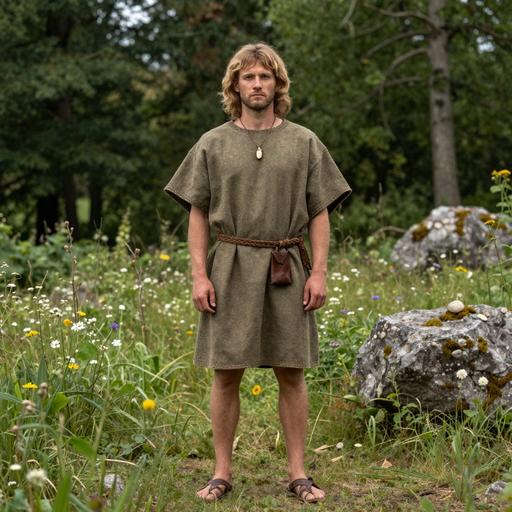
The Late Neolithic to Bronze Age period in what is now Sweden, spanning approximately 2300 to 500 BCE, represents a significant transition in prehistoric culture and society, laying crucial groundwork for Proto-Norse development. This era was marked by advancements in technology, art, trade, and social structure, as well as evolving spiritual and ritual practices. Here's an extensive and detailed description of this fascinating era:
Technological and Agricultural Developments
1. Metalwork:
During this period, societies transitioned from the Neolithic reliance on stone tools to embracing bronze metallurgy. The introduction of bronze, an alloy typically comprising copper and tin, revolutionized tool-making and weaponry. This allowed for more efficient tools for agriculture, hunting, and warfare, which, in turn, greatly influenced other aspects of life.
2. Agriculture:
Agriculture saw significant improvements, with more advanced plowing techniques and the domestication of various crops. As communities became more sedentary, they developed more sophisticated farming practices, including crop rotation, which helped sustain larger populations. Livestock such as cattle, sheep, and pigs became crucial food sources, supplementing hunting and gathering.
3. Maritime Technology:
Sweden's numerous waterways and proximity to the sea encouraged the development of impressive maritime skills. Communities used smaller boats for local travel and trade, while larger vessels facilitated extensive trade networks with other regions in Scandinavia, as well as areas across what is now known as Europe.
Trade and Economic Expansion
Trade networks during the Late Neolithic to Bronze Age were highly developed and crucial for the exchange of ideas, materials, and cultures. Amber from the Baltic was a particularly valuable commodity, often exchanged for metals and other goods from Southern Europe. This trade was instrumental in introducing new cultural influences and technological innovations to the region.
Social and Political Structure
1. Hierarchical Society:
The emergence of more complex social hierarchies characterized this period. Evidence suggests the development of a proto-chiefdom political organization, as implied by the difference in grave goods and burial practices. Some individuals were buried with elaborate metal goods, suggesting a differentiation in social status or wealth.
2. Settlements:
Villages became more permanent, with an increase in population density and the construction of longhouses made from timber and thatch. These structures often served multiple purposes, functioning as homes for extended families as well as storage for food and tools.
Cultural and Ritualistic Practices
1. Religion and Spirituality:
Ritualistic practices and beliefs were deeply interconnected with the natural world. The society likely practiced a form of animism or shamanism, with a strong emphasis on nature spirits, ancestors, and perhaps early forms of a pantheon that evolved into the Norse gods.
2. Burials:
Burial practices varied but frequently included tumuli (burial mounds) and stone settings, known as ship settings or stone ships, which may have symbolized the deceased's journey into the afterlife. Grave goods, such as pottery, weapons, and jewelry, often accompanied the deceased, reflecting their status and beliefs in the afterlife.
3. Art and Symbolism:
Art from this era reveals a rich symbolic culture. Rock carvings (petroglyphs) found throughout Sweden depict scenes of boats, animals, humans, and abstract symbols, reflecting religious beliefs, daily life, and significant historical events. Bronze objects were often intricately decorated, indicating not only the skill of the artisans but also the significance attached to these items.
Legacy
The Late Neolithic to Bronze Age period set the stage for the eventual development of Proto-Norse culture and society. The advancements in technology, social organization, and trade during this era paved the way for the Iron Age and the eventual rise of the Norse civilization known for its Viking Age explorers, traders, and warriors. The cultural and ritualistic elements from this period have echoes in later Norse mythology and practices, indicating an enduring legacy that extended well into the subsequent historical periods.