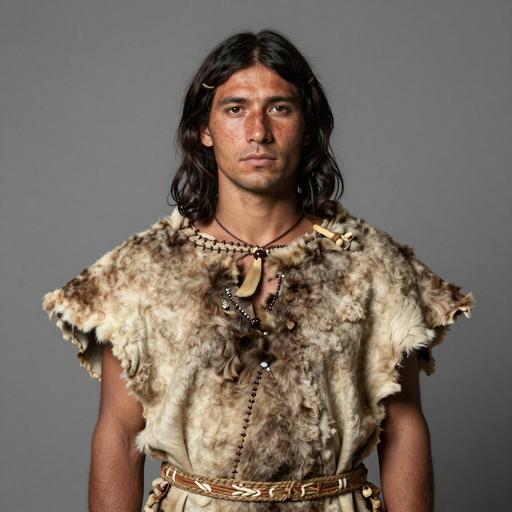
The Hunter-Gatherer Popovo culture of Russia, part of the broader Circumpolar Cultures, refers to a prehistoric society that inhabited the northern regions of Russia. This culture existed during a time when vast expanses of the Earth's surface were covered by dense forests and expansive tundra, and human groups primarily subsisted on hunting, gathering, and fishing. Below is an extensive and detailed description of this era and culture:
Geography and Environment
The Popovo people lived in what is now the Russian Arctic, a region characterized by its extreme climates and challenging environments. This area is marked by long, harsh winters and brief, milder summers. The landscape ranges from tundra in the north to taiga (boreal forest) further south. The tundra is dominated by mosses, lichens, and small shrubs, whereas the taiga is rich in coniferous trees such as pine, spruce, and fir. Large rivers and numerous lakes also feature prominently in the region's geography, providing critical resources for sustenance.
Subsistence Strategies
The Popovo culture, like many hunter-gatherer societies, developed complex subsistence strategies to survive. They relied heavily on the rich biodiversity available in their environment. The seasonal migrations of large game animals such as reindeer (caribou), elk, and various species of fish in the rivers and lakes formed a significant part of their diet. During the colder months, hunting expeditions focused on large game, while the warmer seasons provided opportunities to gather berries, nuts, roots, and plants. This seasonal approach to food resources required a deep understanding of animal behavior and plant ecology.
Technology and Tools
The Popovo people were adept at crafting tools from the resources available to them. Stone, bone, antler, and wood were the primary materials used in tool-making. Flint-knapping techniques were employed to create sharp blades, arrowheads, and scrapers, which were essential for hunting and processing game. Bone and antler were used to make durable tools such as needles, fishing hooks, and harpoons. The society also utilized sleds and skis for transportation across the snowy and icy terrain, showcasing their adaptation to the climate.
Social Structure and Community Life
The Hunter-Gatherer Popovo communities were likely organized into small, mobile family groups or bands, which facilitated efficient resource use and mobility. These bands were composed of kin-related individuals who cooperated in hunting, gathering, and other daily tasks. Leadership within these groups was probably based on age, experience, or skill rather than formal hierarchies, allowing for flexible social organization.
Cultural practices, beliefs, and knowledge were likely passed down through oral traditions, storytelling, and communal gatherings. Rituals and spiritual beliefs may have played a role in reinforcing social bonds and understanding the natural world; however, exact details of their spiritual life remain speculative due to the lack of written records.
Art and Symbolism
While evidence is scarce, it is possible that the Popovo culture, like their circumpolar counterparts, expressed themselves through art and symbolism. Artifacts such as carved figurines, engraved tools, and decorated personal items suggest an appreciation for aesthetics and symbolic communication. Such artifacts could have served various functions, including ritualistic purposes, social identity, and storytelling.
Environmental and Cultural Interactions
The Popovo people were part of a broader network of circumpolar cultures, often engaging in exchanges with neighboring groups. These interactions could have included trade of materials like flint or amber, the sharing of technological innovations, and cultural exchanges that enriched their societal practices.
In conclusion, the Hunter-Gatherer Popovo culture of Russia embodies resilience and adaptability in the face of one of Earth's most formidable environments. Their subsistence strategies, technological innovations, and social structures illustrate a profound connection with the natural world, which enabled them to thrive in the circumpolar regions. Despite the challenges of their environment, the Popovo people developed a rich cultural tapestry that marks a significant period in the history of human adaptation and survival.