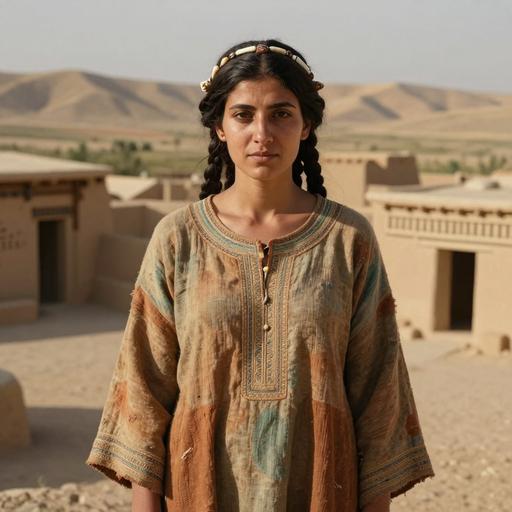
The Bronze Age at Shah Tepe represents an intriguing chapter in the early history of Iran, particularly reflecting the dynamics of Central Asian influences and indigenous development. Situated in the northeastern part of modern-day Iran, Shah Tepe was an important archaeological site that offers insights into the cultural, technological, and societal aspects of the Early Iranian Bronze Age. This period, roughly spanning from 3500 to 1200 BCE, was characterized by significant advancements that laid the groundwork for subsequent developments in the region.
Geographical Context
Shah Tepe is located near the Gorgan Plain, an area that strategically bridges the Central Asian steppes and the Iranian plateau. This positioning made it a crucial location for trade and cultural exchanges, influencing the amalgamation of diverse cultural elements within the region. The proximity to the Caspian Sea also facilitated interactions with distant cultures, enabling Shah Tepe to become a significant node in early Bronze Age networks.
Cultural and Societal Structure
The cultural fabric of Shah Tepe during the Bronze Age was marked by a complex social hierarchy, likely consisting of ruling elites, specialized craftsmen, traders, and a broad base of agricultural communities. The presence of fortified structures indicates a society concerned with security and possibly engaged in regional conflicts or threatened by nomadic incursions. Architectural remnants suggest well-planned settlements with residential, ceremonial, and possibly administrative buildings.
Technological and Artistic Achievements
The Bronze Age is named for its significant advancement in metallurgy, and at Shah Tepe, this is evident in the sophisticated use of bronze tools and weapons. The transition from stone to metal tools marked an evolutionary leap in productivity and warfare capabilities. The craftsmanship in metallurgy was complemented by ceramic production, as evidenced by pottery remains that display intricate designs and motifs, reflecting both aesthetic pursuits and practical functions.
Artisans created various decorative items and household goods from materials such as stone, bone, and metal, showcasing both local ingenuity and external influences. These artifacts often feature geometric designs typical of the region, but with occasional motifs borrowed from Mesopotamian cultures, indicating cross-cultural interactions.
Economy and Trade
The economy of Shah Tepe would have been a mixed one, relying heavily on agriculture, animal husbandry, and trade. The fertile lands of the Gorgan Plain supported the cultivation of crops such as barley and wheat, while the domestication of animals like cattle, sheep, and goats provided meat, milk, and wool. The location facilitated trade routes that connected Shah Tepe to other civilizations, including those in Mesopotamia, the Indus Valley, and Anatolia.
Trade likely involved the exchange of local agricultural products and crafted goods for exotic materials such as lapis lazuli, tin, and possibly luxury textiles. The control of trade routes would have been economically advantageous, contributing to Shah Tepe’s regional importance.
Religious and Funerary Practices
The religious life at Shah Tepe during the Bronze Age likely revolved around polytheistic beliefs common among ancient Iranian cultures. Archaeological evidence, such as burial sites and artifacts with possible ritual significance, suggests the existence of priestly classes or religious leaders. Funerary practices indicate the belief in an afterlife, with graves furnished with goods intended to accompany the deceased beyond death. These burial goods provide invaluable information regarding the social stratification and daily life of the inhabitants.
Decline and Legacy
The decline of Shah Tepe likely mirrors broader regional transformations, including climatic shifts, invasions, or economic changes. As the Bronze Age gave way to the Iron Age, new technologies, and cultural dynamics emerged. However, the legacy of Shah Tepe persisted, as elements of its culture, technological advancements, and trade links influenced successive civilizations in the Iranian plateau.
Conclusion
The Bronze Age at Shah Tepe stands as a testament to the complex interplay of indigenous development and external influences that characterized early Iranian societies. Through its strategic location, advanced metallurgy, trade networks, and cultural practices, Shah Tepe offers a window into the dynamic and interconnected world of ancient Iran. Understanding this site renders a deeper appreciation of the cultural precursors to the sophisticated Persian empires that would later dominate the region.