Menu
Currency
Main
Store
Blog

Loading Report

Preparing your ancestry journey

Connecting to ancient matches...

Preparing your report

Skip to main content
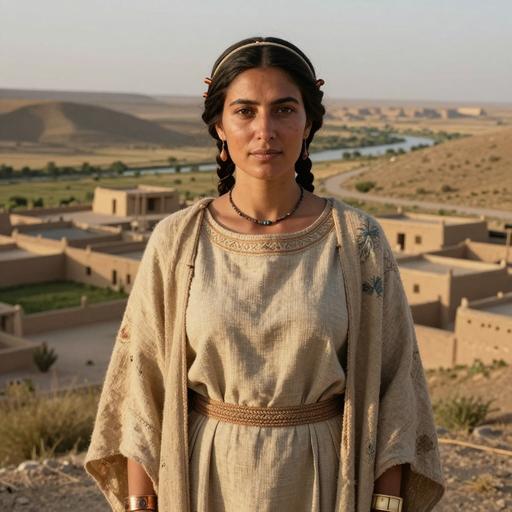
Portrait reconstruction of A woman buried in Iran in the Bronze Age era
Ancient Individual

A woman buried in Iran in the Bronze Age era

A woman buried in Iran during the Bronze Age Shah Tepe

A fragment of the ancient world, preserved across millennia in strands of DNA.

sha008
3200 BCE - 3100 BCE
Female
Iran
Scroll to begin
Chapter I

Identity

The biological and cultural markers that define this ancient individual

Sample ID

sha008

Date Range

3200 BCE - 3100 BCE

Cultural Period

Bronze Age Shah Tepe

Biological Sex

Female

mtDNA Haplogroup

K1a12a

Y-DNA Haplogroup

N/A (Female)

Chapter II

Place

Where this individual was discovered

Country Iran
Locality Shah Tepe (Kerman, Arzuiyeh)
Coordinates 28.3300, 56.8700
Chapter III

Time

When this individual lived in the broader context of human history

sha008 3200 BCE - 3100 BCE
Chapter IV

Story

The narrative of this ancient life

The Bronze Age at Shah Tepe represents an intriguing chapter in the early history of Iran, particularly reflecting the dynamics of Central Asian influences and indigenous development. Situated in the northeastern part of modern-day Iran, Shah Tepe was an important archaeological site that offers insights into the cultural, technological, and societal aspects of the Early Iranian Bronze Age. This period, roughly spanning from 3500 to 1200 BCE, was characterized by significant advancements that laid the groundwork for subsequent developments in the region.

Geographical Context

Shah Tepe is located near the Gorgan Plain, an area that strategically bridges the Central Asian steppes and the Iranian plateau. This positioning made it a crucial location for trade and cultural exchanges, influencing the amalgamation of diverse cultural elements within the region. The proximity to the Caspian Sea also facilitated interactions with distant cultures, enabling Shah Tepe to become a significant node in early Bronze Age networks.

Cultural and Societal Structure

The cultural fabric of Shah Tepe during the Bronze Age was marked by a complex social hierarchy, likely consisting of ruling elites, specialized craftsmen, traders, and a broad base of agricultural communities. The presence of fortified structures indicates a society concerned with security and possibly engaged in regional conflicts or threatened by nomadic incursions. Architectural remnants suggest well-planned settlements with residential, ceremonial, and possibly administrative buildings.

Technological and Artistic Achievements

The Bronze Age is named for its significant advancement in metallurgy, and at Shah Tepe, this is evident in the sophisticated use of bronze tools and weapons. The transition from stone to metal tools marked an evolutionary leap in productivity and warfare capabilities. The craftsmanship in metallurgy was complemented by ceramic production, as evidenced by pottery remains that display intricate designs and motifs, reflecting both aesthetic pursuits and practical functions.

Artisans created various decorative items and household goods from materials such as stone, bone, and metal, showcasing both local ingenuity and external influences. These artifacts often feature geometric designs typical of the region, but with occasional motifs borrowed from Mesopotamian cultures, indicating cross-cultural interactions.

Economy and Trade

The economy of Shah Tepe would have been a mixed one, relying heavily on agriculture, animal husbandry, and trade. The fertile lands of the Gorgan Plain supported the cultivation of crops such as barley and wheat, while the domestication of animals like cattle, sheep, and goats provided meat, milk, and wool. The location facilitated trade routes that connected Shah Tepe to other civilizations, including those in Mesopotamia, the Indus Valley, and Anatolia.

Trade likely involved the exchange of local agricultural products and crafted goods for exotic materials such as lapis lazuli, tin, and possibly luxury textiles. The control of trade routes would have been economically advantageous, contributing to Shah Tepe’s regional importance.

Religious and Funerary Practices

The religious life at Shah Tepe during the Bronze Age likely revolved around polytheistic beliefs common among ancient Iranian cultures. Archaeological evidence, such as burial sites and artifacts with possible ritual significance, suggests the existence of priestly classes or religious leaders. Funerary practices indicate the belief in an afterlife, with graves furnished with goods intended to accompany the deceased beyond death. These burial goods provide invaluable information regarding the social stratification and daily life of the inhabitants.

Decline and Legacy

The decline of Shah Tepe likely mirrors broader regional transformations, including climatic shifts, invasions, or economic changes. As the Bronze Age gave way to the Iron Age, new technologies, and cultural dynamics emerged. However, the legacy of Shah Tepe persisted, as elements of its culture, technological advancements, and trade links influenced successive civilizations in the Iranian plateau.

Conclusion

The Bronze Age at Shah Tepe stands as a testament to the complex interplay of indigenous development and external influences that characterized early Iranian societies. Through its strategic location, advanced metallurgy, trade networks, and cultural practices, Shah Tepe offers a window into the dynamic and interconnected world of ancient Iran. Understanding this site renders a deeper appreciation of the cultural precursors to the sophisticated Persian empires that would later dominate the region.

Context

Related Samples

This individual exists within a broader network of ancient samples. No ancient genome stands alone.

Sample ID Culture/Period Date Location Action
BOG019 Turkey Central Bogazkoy-Hattusa Roman Imperial 100 CE Boğazköy-Ḫattuša (Çorum, Boğazkale), Turkey View
BOG020 Turkey Central Bogazkoy-Hattusa Roman Imperial 130 CE Boğazköy-Ḫattuša (Çorum, Boğazkale), Turkey View
BOG024 Turkey Central Bogazkoy-Hattusa Roman Imperial 130 CE Boğazköy-Ḫattuša (Çorum, Boğazkale), Turkey View
BOG028 Modern Turkish (Boğazköy-Hattuša) 1000-1900 CE 1000 CE Boğazköy-Ḫattuša (Çorum, Boğazkale), Turkey View
CTG025 Bronze Age Aegean Culture of Aydin 2015 BCE Çine-Tepecik (Aydın, Çine), Turkey View
G23 Early Bronze Age Theopetra Culture 2343 BCE Theopetra Cave (Thessaly), Greece View
G31 Early Helladic Perachora 2700 BCE Perachora Cave (Corinthia), Greece View
G37 Early Bronze Age Sarakenos Cave Culture 2476 BCE Boeotia, Sarakenos Cave (Thessalia-Central Greece, Stereas Elladas), Greece View
G62 Early Helladic Perachora 2700 BCE Perachora Cave (Corinthia), Greece View
G65 Early Helladic Perachora 2700 BCE Perachora Cave (Corinthia), Greece View
G66 Early Helladic Perachora 2700 BCE Perachora Cave (Corinthia), Greece View
G76a Early Helladic Perachora 2570 BCE Perachora Cave (Corinthia), Greece View
geo005 Didnauri Culture of Georgia 1260 BCE Didnauri (Samreklo), Georgia View
geo006 Didnauri Culture of Georgia 1043 BCE Didnauri (Samreklo), Georgia View
geo015 Kura-Araxes Culture 3017 BCE Doghlauri (Shida Kartli, Kareli), Georgia View
geo017 Doghlauri culture of Georgia 1375 BCE Doghlauri (Shida Kartli, Kareli), Georgia View
geo029 Didnauri Culture of Georgia 1222 BCE Didnauri (Samreklo), Georgia View
Gordion002 Central Anatolian Iron Age Culture (Gordion) 323 BCE Gordion (Central, Ankara), Turkey View
gur016 Nazarlebi Culture of Georgia 1500 BCE Nazarlebi (Eastern Georgia, Kakheti, Shiraki Plain), Georgia View
gur017 Nazarlebi Culture of Georgia 1500 BCE Nazarlebi (Eastern Georgia, Kakheti, Shiraki Plain), Georgia View
gur019 Nazarlebi Culture of Georgia 1500 BCE Nazarlebi (Eastern Georgia, Kakheti, Shiraki Plain), Georgia View
mus005 Central Anatolian Pre-Pottery Neolithic 7457 BCE Musular (Aksaray, Gülağaç), Turkey View
mus006 Central Anatolian Pre-Pottery Neolithic 7311 BCE Musular (Aksaray, Gülağaç), Turkey View
sha003 Bronze Age Shah Tepe 3200 BCE Shah Tepe (Kerman, Arzuiyeh), Iran View
sha004 Bronze Age Shah Tepe 3489 BCE Shah Tepe (Kerman, Arzuiyeh), Iran View
sha006 Bronze Age Shah Tepe 3200 BCE Shah Tepe (Kerman, Arzuiyeh), Iran View
sha007 Bronze Age Shah Tepe 3369 BCE Shah Tepe (Kerman, Arzuiyeh), Iran View
sha008 Bronze Age Shah Tepe 3200 BCE Shah Tepe (Kerman, Arzuiyeh), Iran View
sha009 Bronze Age Shah Tepe 3346 BCE Shah Tepe (Kerman, Arzuiyeh), Iran View
sha010 Bronze Age Shah Tepe 3200 BCE Shah Tepe (Kerman, Arzuiyeh), Iran View
sha012 Bronze Age Shah Tepe 3200 BCE Shah Tepe (Kerman, Arzuiyeh), Iran View
ksha014 Bronze Age Shah Tepe 3200 BCE Shah Tepe (Kerman, Arzuiyeh), Iran View
ulu117 Early Bronze Age Ulucak Culture 4000 BCE Ulucak Höyük (İzmir, Kemalpaşa), Turkey View
zrj003 Shamakhi Culture 205 CE Shamakhi, Azerbaijan View
Sample ID Culture/Period Date Location Action
sha003 Bronze Age Shah Tepe 3200 BCE Shah Tepe (Kerman, Arzuiyeh), Iran View
sha004 Bronze Age Shah Tepe 3489 BCE Shah Tepe (Kerman, Arzuiyeh), Iran View
sha006 Bronze Age Shah Tepe 3200 BCE Shah Tepe (Kerman, Arzuiyeh), Iran View
sha007 Bronze Age Shah Tepe 3369 BCE Shah Tepe (Kerman, Arzuiyeh), Iran View
sha008 Bronze Age Shah Tepe 3200 BCE Shah Tepe (Kerman, Arzuiyeh), Iran View
sha009 Bronze Age Shah Tepe 3346 BCE Shah Tepe (Kerman, Arzuiyeh), Iran View
sha010 Bronze Age Shah Tepe 3200 BCE Shah Tepe (Kerman, Arzuiyeh), Iran View
sha012 Bronze Age Shah Tepe 3200 BCE Shah Tepe (Kerman, Arzuiyeh), Iran View
ksha014 Bronze Age Shah Tepe 3200 BCE Shah Tepe (Kerman, Arzuiyeh), Iran View
Sources

References

Scientific publications and genetic data that inform this profile.

Scientific Publication

Spatial and temporal heterogeneity in human mobility patterns in Holocene Southwest Asia and the East Mediterranean

Authors Koptekin D, Yüncü E, Rodríguez-Varela R, Altınışık NE, Psonis N et al.
Abstract

We present a spatiotemporal picture of human genetic diversity in Anatolia, Iran, Levant, South Caucasus, and the Aegean, a broad region that experienced the earliest Neolithic transition and the emergence of complex hierarchical societies. Combining 35 new ancient shotgun genomes with 382 ancient and 23 present-day published genomes, we found that genetic diversity within each region steadily increased through the Holocene. We further observed that the inferred sources of gene flow shifted in time. In the first half of the Holocene, Southwest Asian and the East Mediterranean populations homogenized among themselves. Starting with the Bronze Age, however, regional populations diverged from each other, most likely driven by gene flow from external sources, which we term "the expanding mobility model." Interestingly, this increase in inter-regional divergence can be captured by outgroup-f3-based genetic distances, but not by the commonly used FST statistic, due to the sensitivity of FST, but not outgroup-f3, to within-population diversity. Finally, we report a temporal trend of increasing male bias in admixture events through the Holocene.

Use code for 25% off Expires Jul 12