Menu
Currency
Main
Store
Blog

Loading Report

Preparing your ancestry journey

Connecting to ancient matches...

Preparing your report

Skip to main content
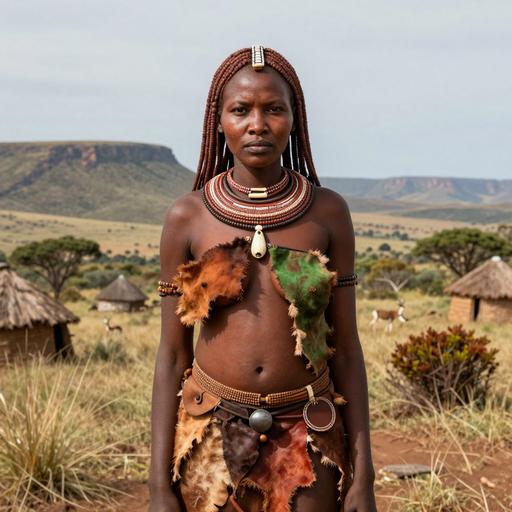
Portrait reconstruction of A woman buried in South Africa in the Middle Ages era
Ancient Individual

A woman buried in South Africa in the Middle Ages era

A woman buried in South Africa during the South Africa 1200 Years Before Present

A fragment of the ancient world, preserved across millennia in strands of DNA.

UCT473
665 CE - 884 CE
Female
South Africa
Scroll to begin
Chapter I

Identity

The biological and cultural markers that define this ancient individual

Sample ID

UCT473

Date Range

665 CE - 884 CE

Cultural Period

South Africa 1200 Years Before Present

Biological Sex

Female

mtDNA Haplogroup

L0d1a1a

Y-DNA Haplogroup

N/A (Female)

Chapter II

Place

Where this individual was discovered

Country South Africa
Locality Kasteelberg
Chapter III

Time

When this individual lived in the broader context of human history

UCT473 665 CE - 884 CE
Chapter IV

Story

The narrative of this ancient life

South Africa around 800 AD, or 1200 years before present, was a region characterized by a variety of cultures and societies shaped by their environments and the early stages of Bantu expansion. This period was marked by the Late Iron Age in Southern Africa, lying on the cusp of significant social, technological, and cultural transformations.

Environment and Geography

South Africa’s environment around 800 AD was diverse, encompassing vast savannas, woodlands, coastal plains, and an interior plateau. The climate was predominantly temperate, with variations ranging from arid in the northwest to sub-tropical along the eastern coast. These geographical features influenced the diverse cultures inhabiting the region, shaping their economies, settlement patterns, and social structures.

Cultural and Social Dynamics

  1. Khoisan Groups:

    • The oldest inhabitants, the Khoisan, comprised two distinct groups: the hunter-gatherer San and the pastoral Khoikhoi.
    • San communities were primarily nomadic, relying on hunting indigenous fauna and gathering endemic plant species.
    • Khoikhoi societies practiced pastoralism, domesticating sheep and cattle, which defined their social and economic structures.
    • Both groups had rich oral traditions and distinct languages characterized by click consonants.
  2. Bantu Expansion:

    • By 800 AD, the Bantu-speaking peoples had gradually spread into the region, part of a larger migration across Sub-Saharan Africa.
    • These communities introduced iron-working, advanced agriculture, ceramics, and settled village life.
    • Bantu societies were organized around kinship and clan structures, practicing centralized chieftaincies.
    • Agriculture was diverse, including cereals like millet and sorghum, which supported growing populations.

Economic Activities

  • Agriculture and Livestock: The practice of mixed farming—combining crop cultivation with livestock husbandry—was widespread. This diversified economy improved food security and supported denser settlements.
  • Trading Networks: Southern Africa was beginning to integrate into broader inter-regional trade networks. Evidence suggests that goods like ivory and ostrich eggs were exchanged, later linking to the Swahili Coast’s Indian Ocean trade.

Technological Developments

  • Iron Metallurgy: The development and utilization of iron technology revolutionized tools and weapons, enhancing agricultural efficiency and military capability. Skills in smelting and blacksmithing were vital community roles.
  • Pottery and Art: This period saw a richness in pottery styles, often used for everyday utility and ceremonial contexts. Pottery serves as an archaeological indicator of cultural transitions and interactions.

Social and Political Structures

  • Societies were predominantly organized on principles of kinship and communal cooperation. Leadership often resided in lineage-based chiefdoms.
  • Over time, increased agricultural productivity and social complexities began centralizing power, setting foundations for later, more centralized states like Mapungubwe.
  • Rituals and oral traditions reinforced social norms and shared histories. Ancestral worship and animism were prevalent, with spiritual leaders holding significant societal roles.

Conclusion

The era around 800 AD in present-day South Africa was a vibrant mosaic of cultures on the brink of profound transformations. The coexistence of Khoisan groups and incoming Bantu peoples reflected varied adaptations to the landscape. These interactions underscored the region’s rich cultural tapestry, setting a stage for the subsequent rise of complex societies and state formations. This period was foundational for the development of Southern Africa's diverse cultural and historical trajectory, influencing the region for centuries to come.

Context

Related Samples

This individual exists within a broader network of ancient samples. No ancient genome stands alone.

Sample ID Culture/Period Date Location Action
I2966 Hora Late Stone Age 8500BP in Malawi 7131 BCE Mzimba District. Hora, Malawi View
I0589 Zanzibar 1300 Years Before Present in Tanzania 586 CE Zanzibar. Kuumbi Cave, Tanzania View
I3726 Luxmanda 3000 Years Before Present in Tanzania 1204 BCE Luxmanda. UVS40, Tanzania View
KhoesanLeipzigHunter South Africa 2200 Years Before Present 403 BCE St. Helena, South Africa View
MAL-005 Modern Malawi 2000 CE Dedza // Yao, Malawi View
MAL-009 Modern Malawi 2000 CE Machinga // Yao, Malawi View
MAL-011 Modern Malawi 2000 CE Mchinga // Chichewa, Malawi View
MAL-012 Modern Malawi 2000 CE Salima // Chichewa, Malawi View
MAL-014 Modern Malawi 2000 CE Nambuma // Chichewa, Malawi View
MAL-015 Modern Malawi 2000 CE Blantyre // Yao, Malawi View
MAL-018 Modern Malawi 2000 CE Nkotankhota // Chichewa, Malawi View
MAL-019 Modern Malawi 2000 CE Dedza // Chichewa, Malawi View
MAL-023 Modern Malawi 2000 CE Mchisi // Chichewa, Malawi View
MAL-024 Modern Malawi 2000 CE Mangochi // Yao, Malawi View
MAL-025 Modern Malawi 2000 CE Chev // Ngoni, Malawi View
MAL-026 Modern Malawi 2000 CE Chev // Ngoni, Malawi View
MAL-028 Modern Malawi 2000 CE Lilongwe // Chichewa, Malawi View
MAL-032 Modern Malawi 2000 CE Blantyre // Yao, Malawi View
MAL-043 Modern Malawi 2000 CE Chev // Chichewa, Malawi View
MAL-045 Modern Malawi 2000 CE Dowa // Chichewa, Malawi View
MAL-047 Modern Malawi 2000 CE Majimba // Tumbuka, Malawi View
MAL-050 Modern Malawi 2000 CE Zomba // Chichewa, Malawi View
MAL-058 Modern Malawi 2000 CE Mzimba // Tumbuka, Malawi View
MAL-059 Modern Malawi 2000 CE Mzimba // Tumbuka, Malawi View
MAL-065 Modern Malawi 2000 CE Mzimba // Tumbuka, Malawi View
MAL-073 Modern Malawi 2000 CE Mzimba // Tumbuka, Malawi View
MAL-074 Modern Malawi 2000 CE Mzimba // Ngoni, Malawi View
MAL-079 Modern Malawi 2000 CE Karonga // Tumbuka, Malawi View
MAL-097 Modern Malawi 2000 CE Nlekata bay //, Malawi View
MAL-099 Modern Malawi 2000 CE Karonga // Tumbuka, Malawi View
MAL-101 Modern Malawi 2000 CE Machinga // Chichewa, Malawi View
MAL-112 Modern Malawi 2000 CE Mangochi // Chichewa, Malawi View
MAL-122 Modern Malawi 2000 CE Lilongwe // Chichewa, Malawi View
MAL-124 Modern Malawi 2000 CE Chev Distr // Chichewa, Malawi View
MAL-136 Modern Malawi 2000 CE Mangochi // Yao, Malawi View
MAL-196 Modern Malawi 2000 CE Zomba // chiyao, Malawi View
MAL-197 Modern Malawi 2000 CE Majimba // Chichewa, Malawi View
MAL-206 Modern Malawi 2000 CE Mzimba // Tumbuka, Malawi View
I0595 Kenya 400 Years Ago 1445 BCE Kilifi. Panga ya Saidi, Kenya View
I4421 Chencherere Late Stone Age 5200BP in Malawi 3400 BCE Chencherere, Malawi View
I4422 Chencherere Late Stone Age 5200BP in Malawi 3351 BCE Chencherere, Malawi View
I4426 Fingira Late Stone Age 2500BP in Malawi 542 BCE Fingira, Malawi View
I4427 Late Stone Age Malawi 4227 BCE Fingira, Malawi View
I4468 Late Stone Age Malawi 4230 BCE Fingira, Malawi View
I2967 Hora Late Stone Age 8500BP in Malawi 6222 BCE Mzimba District. Hora, Malawi View
UCT473 South Africa 1200 Years Before Present 665 CE Kasteelberg, South Africa View
UCT386 South Africa 1900 Years Before Present 88 BCE Faraoskop Rock Shelter, South Africa View
I1048 Pemba 1400 Years Before Present in Tanzania 539 CE Zanzibar. Pemba Island. Mapangani Cave, Tanzania View
I2298 Pemba 600 Years Before Present in Tanzania 1319 CE Zanzibar. Pemba Island. Mapangani Cave, Tanzania View
UCT473 665 BCE Kasteelberg, South Africa View
UCT386 88 BCE Faraoskop Rock Shelter, South Africa View
I0589 586 BCE Zanzibar. Kuumbi Cave, Tanzania View
I1048 539 BCE Zanzibar. Pemba Island. Mapangani Cave, Tanzania View
I2298 1319 BCE Zanzibar. Pemba Island. Mapangani Cave, Tanzania View
I1048 539 BCE Zanzibar. Pemba Island. Mapangani Cave, Tanzania View
I0595 1445 BCE Kilifi. Panga ya Saidi, Kenya View
I0589 586 BCE Zanzibar. Kuumbi Cave, Tanzania View
I2966 7131 BCE Mzimba District. Hora, Malawi View
I2967 6222 BCE Mzimba District. Hora, Malawi View
I4468 4230 BCE Fingira, Malawi View
I4427 4227 BCE Fingira, Malawi View
I4421 3400 BCE Chencherere, Malawi View
I4422 3351 BCE Chencherere, Malawi View
I3726 1204 BCE Luxmanda. UVS40, Tanzania View
I1048 539 BCE Zanzibar. Pemba Island. Mapangani Cave, Tanzania View
I4426 542 BCE Fingira, Malawi View
Sample ID Culture/Period Date Location Action
UCT473 South Africa 1200 Years Before Present 665 CE Kasteelberg, South Africa View
Sources

References

Scientific publications and genetic data that inform this profile.

Scientific Publication

Reconstructing Prehistoric African Population Structure

Authors Skoglund P, Thompson JC, Prendergast ME, Mittnik A, Sirak K et al.
Abstract

We assembled genome-wide data from 16 prehistoric Africans. We show that the anciently divergent lineage that comprises the primary ancestry of the southern African San had a wider distribution in the past, contributing approximately two-thirds of the ancestry of Malawi hunter-gatherers ∼8,100-2,500 years ago and approximately one-third of the ancestry of Tanzanian hunter-gatherers ∼1,400 years ago. We document how the spread of farmers from western Africa involved complete replacement of local hunter-gatherers in some regions, and we track the spread of herders by showing that the population of a ∼3,100-year-old pastoralist from Tanzania contributed ancestry to people from northeastern to southern Africa, including a ∼1,200-year-old southern African pastoralist. The deepest diversifications of African lineages were complex, involving either repeated gene flow among geographically disparate groups or a lineage more deeply diverging than that of the San contributing more to some western African populations than to others. We finally leverage ancient genomes to document episodes of natural selection in southern African populations. PAPERCLIP.

Use code for 25% off Expires Jul 13