Menu
Currency
Main
Store
Blog

Loading Report

Preparing your ancestry journey

Connecting to ancient matches...

Preparing your report

Skip to main content
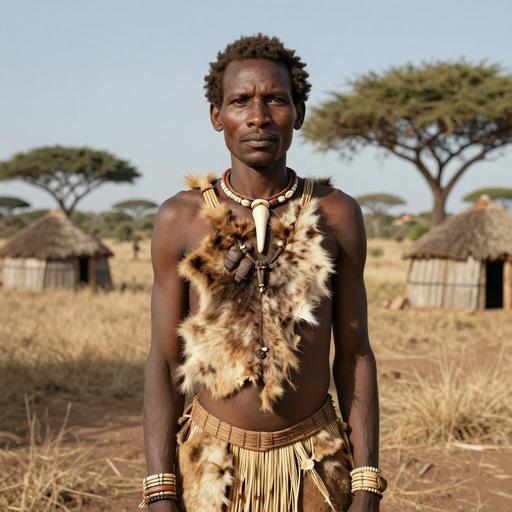
Portrait reconstruction of A man buried in South Africa in the Modern era
Ancient Individual

A man buried in South Africa in the Modern era

A man buried in South Africa during the South Africa 2200 Years Before Present

A fragment of the ancient world, preserved across millennia in strands of DNA.

KhoesanLeipzigHunter
403 BCE - 201 BCE
Male
South Africa
Scroll to begin
Chapter I

Identity

The biological and cultural markers that define this ancient individual

Sample ID

KhoesanLeipzigHunter

Date Range

403 BCE - 201 BCE

Cultural Period

South Africa 2200 Years Before Present

Biological Sex

Male

mtDNA Haplogroup

L0d2c1

Y-DNA Haplogroup

A-M51

Chapter II

Place

Where this individual was discovered

Country South Africa
Locality St. Helena
Chapter III

Time

When this individual lived in the broader context of human history

KhoesanLeipzigHunter 403 BCE - 201 BCE
Chapter IV

Story

The narrative of this ancient life

Around 2200 years before the present, approximately 200 BC, South Africa was in a period of transition and cultural dynamism marked by the Bantu expansion. This era predates significant written records specific to Southern Africa's interior, so much of our understanding comes from archaeology, linguistics, and later historiographies.

The Bantu Expansion: By 200 BC, Bantu-speaking peoples were likely migrating into the southern regions of Africa from their original homelands in West-Central Africa. This migration wasn't a single, coordinated movement but a gradual diffusion over centuries. The Bantu expansion is one of the most significant series of migrations in human history, spreading not only people but shared languages, cultures, and technologies across sub-Saharan Africa.

Cultural and Technological Developments:

  • Iron Age: This period in sub-Saharan Africa saw the introduction and refinement of iron-working, which was transformative for societies. The ability to forge iron not only improved agricultural yields with better tools but also enhanced hunting and warfare capabilities.

  • Agriculture: The Bantu brought with them agricultural practices, cultivating crops such as yams, millet, and sorghum. This agricultural knowledge enabled more stable and sedentary communities as opposed to primarily hunter-gatherer lifestyles.

  • Pastoralism: In addition to agriculture, the Bantu expansion included domesticated animals, notably goats and cattle. Cattle, in particular, played a crucial social and economic role, often seen as a symbol of wealth and status within these societies.

Social Structure and Communities:

  • Kinship-Based Societies: Communities were typically organized around kinship groups or clans. These were often hierarchies led by elders or chieftains, with social duties and rights delineated according to age and gender.

  • Settlement Patterns: Bantu-speaking communities often settled in semi-permanent villages. These were usually small, accommodating extended family units, and were sometimes fortified for protection.

Language and Communication: Linguistic studies show that as Bantu-speaking peoples spread, they brought languages that evolved into a variety of dialects and related languages. This linguistic diversity is a testament to the adaptation and integration of Bantu societies across different regions and environments.

Interactions and Trade:

  • Hunter-Gatherer Societies: As Bantu groups moved southward, they interacted with indigenous Khoisan-speaking hunter-gatherer societies. These interactions ranged from trade and cultural exchange to displacement and conflict.

  • Trade Networks: While formal, large-scale trade networks were limited in this period, trade occurred in valuable resources like iron tools and ornaments, pottery, and possibly cattle.

Religious and Spiritual Beliefs: Religious practices during this period were predominantly animistic, with a focus on ancestors and spirits influencing the natural world. Rituals and ceremonies were integral to maintaining social cohesion and environmental balance, often conducted by shamans or spiritual leaders.

Archaeological Evidence: Sites across Southern Africa such as Mapungubwe would later offer insight into these early societies. Logistical data derived from pottery styles, settlement ruins, and iron implements found in these locations provide critical archaeological evidence of the life ways and technological advancement of Bantu-speaking communities.

In summary, around 2200 years ago, Southern Africa was marked by the significant influence of the Bantu expansion, with these peoples gradually introducing transformative cultural, agricultural, and technological changes. These developments laid important foundations for the future complex societies that would emerge in Southern Africa. The era was characterized by adaptation, innovation, and the blending of cultures that shaped the African continent's historical trajectory.

Context

Related Samples

This individual exists within a broader network of ancient samples. No ancient genome stands alone.

Sample ID Culture/Period Date Location Action
I2966 Hora Late Stone Age 8500BP in Malawi 7131 BCE Mzimba District. Hora, Malawi View
I0589 Zanzibar 1300 Years Before Present in Tanzania 586 CE Zanzibar. Kuumbi Cave, Tanzania View
I3726 Luxmanda 3000 Years Before Present in Tanzania 1204 BCE Luxmanda. UVS40, Tanzania View
KhoesanLeipzigHunter South Africa 2200 Years Before Present 403 BCE St. Helena, South Africa View
MAL-005 Modern Malawi 2000 CE Dedza // Yao, Malawi View
MAL-009 Modern Malawi 2000 CE Machinga // Yao, Malawi View
MAL-011 Modern Malawi 2000 CE Mchinga // Chichewa, Malawi View
MAL-012 Modern Malawi 2000 CE Salima // Chichewa, Malawi View
MAL-014 Modern Malawi 2000 CE Nambuma // Chichewa, Malawi View
MAL-015 Modern Malawi 2000 CE Blantyre // Yao, Malawi View
MAL-018 Modern Malawi 2000 CE Nkotankhota // Chichewa, Malawi View
MAL-019 Modern Malawi 2000 CE Dedza // Chichewa, Malawi View
MAL-023 Modern Malawi 2000 CE Mchisi // Chichewa, Malawi View
MAL-024 Modern Malawi 2000 CE Mangochi // Yao, Malawi View
MAL-025 Modern Malawi 2000 CE Chev // Ngoni, Malawi View
MAL-026 Modern Malawi 2000 CE Chev // Ngoni, Malawi View
MAL-028 Modern Malawi 2000 CE Lilongwe // Chichewa, Malawi View
MAL-032 Modern Malawi 2000 CE Blantyre // Yao, Malawi View
MAL-043 Modern Malawi 2000 CE Chev // Chichewa, Malawi View
MAL-045 Modern Malawi 2000 CE Dowa // Chichewa, Malawi View
MAL-047 Modern Malawi 2000 CE Majimba // Tumbuka, Malawi View
MAL-050 Modern Malawi 2000 CE Zomba // Chichewa, Malawi View
MAL-058 Modern Malawi 2000 CE Mzimba // Tumbuka, Malawi View
MAL-059 Modern Malawi 2000 CE Mzimba // Tumbuka, Malawi View
MAL-065 Modern Malawi 2000 CE Mzimba // Tumbuka, Malawi View
MAL-073 Modern Malawi 2000 CE Mzimba // Tumbuka, Malawi View
MAL-074 Modern Malawi 2000 CE Mzimba // Ngoni, Malawi View
MAL-079 Modern Malawi 2000 CE Karonga // Tumbuka, Malawi View
MAL-097 Modern Malawi 2000 CE Nlekata bay //, Malawi View
MAL-099 Modern Malawi 2000 CE Karonga // Tumbuka, Malawi View
MAL-101 Modern Malawi 2000 CE Machinga // Chichewa, Malawi View
MAL-112 Modern Malawi 2000 CE Mangochi // Chichewa, Malawi View
MAL-122 Modern Malawi 2000 CE Lilongwe // Chichewa, Malawi View
MAL-124 Modern Malawi 2000 CE Chev Distr // Chichewa, Malawi View
MAL-136 Modern Malawi 2000 CE Mangochi // Yao, Malawi View
MAL-196 Modern Malawi 2000 CE Zomba // chiyao, Malawi View
MAL-197 Modern Malawi 2000 CE Majimba // Chichewa, Malawi View
MAL-206 Modern Malawi 2000 CE Mzimba // Tumbuka, Malawi View
I0595 Kenya 400 Years Ago 1445 BCE Kilifi. Panga ya Saidi, Kenya View
I4421 Chencherere Late Stone Age 5200BP in Malawi 3400 BCE Chencherere, Malawi View
I4422 Chencherere Late Stone Age 5200BP in Malawi 3351 BCE Chencherere, Malawi View
I4426 Fingira Late Stone Age 2500BP in Malawi 542 BCE Fingira, Malawi View
I4427 Late Stone Age Malawi 4227 BCE Fingira, Malawi View
I4468 Late Stone Age Malawi 4230 BCE Fingira, Malawi View
I2967 Hora Late Stone Age 8500BP in Malawi 6222 BCE Mzimba District. Hora, Malawi View
UCT473 South Africa 1200 Years Before Present 665 CE Kasteelberg, South Africa View
UCT386 South Africa 1900 Years Before Present 88 BCE Faraoskop Rock Shelter, South Africa View
I1048 Pemba 1400 Years Before Present in Tanzania 539 CE Zanzibar. Pemba Island. Mapangani Cave, Tanzania View
I2298 Pemba 600 Years Before Present in Tanzania 1319 CE Zanzibar. Pemba Island. Mapangani Cave, Tanzania View
UCT473 665 BCE Kasteelberg, South Africa View
UCT386 88 BCE Faraoskop Rock Shelter, South Africa View
I0589 586 BCE Zanzibar. Kuumbi Cave, Tanzania View
I1048 539 BCE Zanzibar. Pemba Island. Mapangani Cave, Tanzania View
I2298 1319 BCE Zanzibar. Pemba Island. Mapangani Cave, Tanzania View
I1048 539 BCE Zanzibar. Pemba Island. Mapangani Cave, Tanzania View
I0595 1445 BCE Kilifi. Panga ya Saidi, Kenya View
I0589 586 BCE Zanzibar. Kuumbi Cave, Tanzania View
I2966 7131 BCE Mzimba District. Hora, Malawi View
I2967 6222 BCE Mzimba District. Hora, Malawi View
I4468 4230 BCE Fingira, Malawi View
I4427 4227 BCE Fingira, Malawi View
I4421 3400 BCE Chencherere, Malawi View
I4422 3351 BCE Chencherere, Malawi View
I3726 1204 BCE Luxmanda. UVS40, Tanzania View
I1048 539 BCE Zanzibar. Pemba Island. Mapangani Cave, Tanzania View
I4426 542 BCE Fingira, Malawi View
Sample ID Culture/Period Date Location Action
cha001 South Africa 2200 Years Before Present 1504 CE Champagne Castle, South Africa View
ela001 South Africa 2200 Years Before Present 1419 CE Eland Cave, South Africa View
mfo001 South Africa 2200 Years Before Present 1483 CE Mfongosi, South Africa View
new001 South Africa 2200 Years Before Present 1445 CE Newcastle, South Africa View
KhoesanLeipzigHunter South Africa 2200 Years Before Present 403 BCE St. Helena, South Africa View
Sources

References

Scientific publications and genetic data that inform this profile.

Scientific Publication

Reconstructing Prehistoric African Population Structure

Authors Skoglund P, Thompson JC, Prendergast ME, Mittnik A, Sirak K et al.
Abstract

We assembled genome-wide data from 16 prehistoric Africans. We show that the anciently divergent lineage that comprises the primary ancestry of the southern African San had a wider distribution in the past, contributing approximately two-thirds of the ancestry of Malawi hunter-gatherers ∼8,100-2,500 years ago and approximately one-third of the ancestry of Tanzanian hunter-gatherers ∼1,400 years ago. We document how the spread of farmers from western Africa involved complete replacement of local hunter-gatherers in some regions, and we track the spread of herders by showing that the population of a ∼3,100-year-old pastoralist from Tanzania contributed ancestry to people from northeastern to southern Africa, including a ∼1,200-year-old southern African pastoralist. The deepest diversifications of African lineages were complex, involving either repeated gene flow among geographically disparate groups or a lineage more deeply diverging than that of the San contributing more to some western African populations than to others. We finally leverage ancient genomes to document episodes of natural selection in southern African populations. PAPERCLIP.

Use code for 25% off Expires Jul 13