Saltar al contenido principal
mtDNA · Materno linaje

Y

mtDNA Haplogroup Y

Un perfil de referencia de una rama de linaje. Compartir haplogrupos no demuestra una relación familiar ni una identidad cultural.

Perfil de referencia

Contexto de la rama

Contexto histórico de la rama de linaje mtDNA Y

Haplogroup Y is a rare mitochondrial DNA (mtDNA) haplogroup that is primarily found in Siberia, parts of Northeast Asia, and among Native American populations. Like other mtDNA haplogroups, it is maternally inherited and has been critical in understanding the genetic history of ancient populations and their migrations, particularly into the Americas.

Origin and Evolution

Haplogroup Y is believed to have originated around 20,000 to 30,000 years ago, likely in Siberia or Northeast Asia. It is a subclade of the larger haplogroup N, which is one of the major mtDNA lineages that emerged after the Out of Africa migration. Haplogroup Y represents one of the rarer and geographically specific mtDNA haplogroups, tracing the ancient movements of humans in the harsh climates of northern Asia and their eventual migration into North America.

The origin of haplogroup Y is closely tied to the Upper Paleolithic period, a time when humans were expanding across the northern latitudes of Asia and adapting to the extreme conditions of the Last Glacial Maximum (LGM), around 18,000 to 20,000 years ago.

Geographic Distribution and Significance

Siberia and Northeast Asia

Haplogroup Y is most commonly found in populations in Siberia and Northeast Asia. Its highest frequencies are observed among certain Indigenous Siberian groups, such as the Evenk, Yakuts, and Nganasan. These populations have historically lived in some of the coldest and most isolated regions of northern Asia, and haplogroup Y reflects their ancient ancestry and adaptation to these environments.

Native American Populations

Haplogroup Y is also found in Native American populations, though at much lower frequencies than other mitochondrial haplogroups like A, B, C, and D, which are the most common lineages in the Americas. Its presence among Native Americans suggests that it was part of the early migrations from Siberia to the Americas, likely via the Bering Land Bridge during the late Pleistocene, around 15,000 to 20,000 years ago.

The appearance of haplogroup Y in Native American populations is particularly important for understanding the peopling of the Americas. Alongside other haplogroups of Siberian origin, Y provides evidence of the multiple waves of migration that contributed to the genetic makeup of Indigenous populations in North and South America.

Role in Human Migration

Haplogroup Y plays a crucial role in understanding ancient human migrations, particularly the movement of peoples from Siberia into the Americas. The following are some key migratory patterns associated with haplogroup Y:

Out of Siberia and Into the Americas

The presence of haplogroup Y in both Siberia and Native American populations suggests that it was part of the migratory waves that brought humans into North America during the late Pleistocene. These migrations likely occurred via the Bering Land Bridge, a landmass that connected Siberia to North America during periods of lower sea levels. Haplogroup Y's presence in Native American populations supports the idea of multiple migratory events and genetic exchanges between populations in Northeast Asia and the Americas.

Paleolithic Adaptations

Haplogroup Y also provides insights into how ancient human populations adapted to the extreme conditions of Paleolithic Siberia and Northeast Asia. The harsh environments of the Last Glacial Maximum shaped the survival and migratory patterns of the populations carrying haplogroup Y, pushing them to migrate southward or across the Bering Land Bridge into more temperate environments in North America.

Ancient DNA and Archaeological Evidence

Ancient DNA studies have identified haplogroup Y in both Siberian and Native American remains, helping to reconstruct the migratory history of these populations. These studies have revealed that haplogroup Y was present in ancient Siberian populations, suggesting that it played a role in the movement of people into the Americas during the late Pleistocene.

Additionally, haplogroup Y has been detected in ancient Native American remains, although at low frequencies, reinforcing the idea that it was one of the mitochondrial lineages involved in the early peopling of the Americas.

Modern Distribution and Frequency

Haplogroup Y is relatively rare in modern populations, but it has a specific distribution:

  • Siberia and Northeast Asia: Haplogroup Y is found at moderate frequencies in Indigenous Siberian populations, particularly in northern Siberia among groups such as the Yakut, Evenk, and Nganasan. These populations have long inhabited remote and isolated regions, preserving their ancient genetic lineages.

  • Native American Populations: Haplogroup Y is found at low frequencies in Native American populations, particularly among North American Indigenous groups. Its presence in these populations is significant for understanding the ancient migration routes from Siberia to the Americas.

Genetic and Evolutionary Significance

Haplogroup Y is significant for understanding the genetic history of Siberia, Northeast Asia, and the Americas. Although it is relatively rare, its presence in both Siberian and Native American populations highlights its role in ancient human migrations, particularly during the Pleistocene.

The rarity of haplogroup Y makes it a valuable lineage for tracing specific migration events and understanding how early human populations adapted to the extreme environments of Siberia and migrated into new territories like North America.

Conclusion

Haplogroup Y is a mitochondrial DNA lineage that is most commonly found in Siberia, Northeast Asia, and at low frequencies in Native American populations. Originating around 20,000 to 30,000 years ago, haplogroup Y is significant for understanding ancient human migrations, particularly the movement of peoples from Siberia into the Americas during the late Pleistocene via the Bering Land Bridge.

Although rare, haplogroup Y provides key insights into the genetic history of populations living in some of the most challenging environments on Earth, from the cold climates of Siberia to the early peopling of North America. As one of the mitochondrial lineages that contributed to the genetic diversity of Native American populations, haplogroup Y continues to be an important focus of research in population genetics and human prehistory.

Puntos clave

  • Origin and Evolution
  • Geographic Distribution and Significance
  • Role in Human Migration
  • Ancient DNA and Archaeological Evidence
  • Modern Distribution and Frequency

Perfil de referencia

Árbol y relaciones

Contexto filogenético y subclados

Trayectoria evolutiva

Sigue las ramas superiores registradas hasta Y. Las fechas son estimaciones y pueden cambiar al revisarse los datos de referencia.

Pasos Haplogrupo Antigüedad estimada Época arqueológica Tiempo transcurrido Subclados inmediatos Portadores modernos analizados Referencias antiguas
1 Y Actual ~11,000 years ago Neolithic 11,000 years 2 26 0
2 N9 ~25,000 years ago Paleolithic 25,000 years 3 178 0
3 N ~60,000 years ago Paleolithic 60,000 years 16 26,150 13
4 L3 ~70,000 years ago Paleolithic 70,000 years 7 30,162 6
5 L3'4 - - - 2 30,212 0
6 L3'4'6 - - - 2 30,216 0
7 L2'3'4'6 - - - 2 31,333 0
8 L2'3'4'5'6'7 - - - 2 31,349 0
9 L1'2'3'4'5'6'7 - - - 2 31,852 0
10 L ~160,000 years ago Paleolithic 160,000 years 2 32,236 5

Ramas hermanas (2)

Otras ramas del mismo haplogrupo superior

Perfil de referencia

En el mundo

Distribución geográfica y presencia moderna

Origen registrado

Southeast Asia, particularly found among populations in the Philippines and surrounding regions

Distribución moderna

MTDNA haplogroup Y is primarily found in the following populations:

  • Southeast Asian populations
  • Some populations in East Asia (particularly in Japan and Korea)
  • Some populations in Siberia
  • Indigenous peoples of the Americas (at very low frequencies)

Haplogroup Y is rare and primarily localized in East and Southeast Asia.

Contexto histórico

Una rama a través del tiempo

Formación estimada en una cronología histórica amplia. Los marcadores temporales aportan contexto y no implican relación con culturas concretas.

  1. ~11k años de antigüedad

    Haplogrupo Y

    Formación estimada de esta rama de mtDNA; las fechas y ubicaciones son estimaciones de referencia.

    Esta rama
  2. ~10k años de antigüedad

    Revolución neolítica

    Inicio de la agricultura y formación de comunidades sedentarias

  3. ~5k años de antigüedad

    Edad del Bronce

    Metalurgia, escritura y primeras civilizaciones

  4. ~3k años de antigüedad

    Edad del Hierro

    Herramientas de hierro y ampliación de redes comerciales

  5. ~2.5k años de antigüedad

    Antigüedad clásica

    Desarrollo de las civilizaciones griega y romana

  6. Actualidad

    Actualidad

    Época moderna

Perfil de referencia

Contexto arqueológico

Asociaciones arqueológicas registradas para la rama mtDNA Y

Asociaciones registradas

Estas etiquetas describen contextos arqueológicos registrados para las muestras de referencia enlazadas a Y. Una asociación no demuestra que todos los portadores pertenecieran a una cultura ni siguieran una ruta migratoria concreta.

Early Avar Gongguan Late Medieval Mongolian Mongol Tasmola
Las atribuciones culturales se basan en el contexto arqueológico de las muestras de ADN antiguo y pueden representar asociaciones regionales de periodos concretos.
Perfil de referencia

Catálogo de muestras

9 portadores de subclados del haplogrupo Y (sin portadores directos en la selección de referencia actual)

9 mostradas · 9 muestras coincidentes

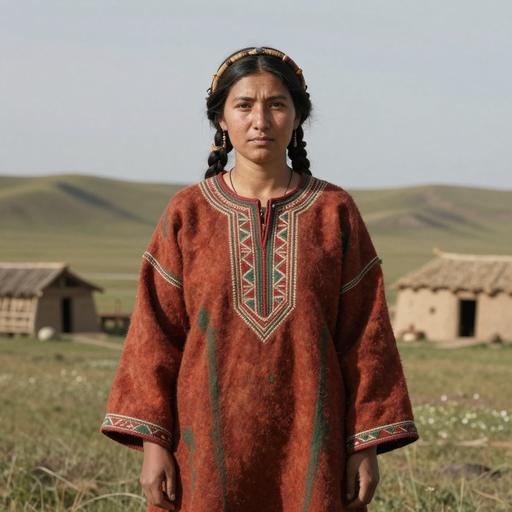
Los retratos son ilustraciones generadas con IA. Las etiquetas de muestra y los identificadores de acceso identifican los registros de referencia.

Retrato Muestra País Época Fecha Cultura mtDNA Coincidencia
Retrato ilustrativo de Gongguan individual, Green Island. Gongguan site, Taiwan (250-650 CE) generado con IA
Identificador de muestra: I13722
Taiwan Taiwan Gongguan 250-650 CE Gongguan Y2a1 Subclado
Retrato ilustrativo de Early Avar-o High East Asia individual, Csongrád-Csanád County. Apátfalva-Nagyútdűlő, Hungary (630-660 CE) generado con IA
Identificador de muestra: AN-376
Hungary Hungary EarlyAvar 600-700 CE Early Avar Y1a1 Subclado
Retrato ilustrativo de Early Avar-o High East Asia individual, Danube-Tisza Interfluve. Kecskemét-Sallai út, Hungary (630-670 CE) generado con IA
Identificador de muestra: A1823
Hungary Early Avar Period Danube-Tisza, Hungary 600-700 CE Early Avar Y1a1 Subclado
Retrato ilustrativo de Early Avar individual, Csongrád-Csanád County. Szeged-FehértóA, Hungary (650-675 CE) generado con IA
Identificador de muestra: SZF-371
Hungary Hungary EarlyAvar 650-700 CE Early Avar Y1a1 Subclado
Retrato ilustrativo de EIA Tasmola individual, Birlik (Almaty) (Almaty Region, Talgar District), Kazakhstan (776-481 BCE) generado con IA
Identificador de muestra: BIR013
Kazakhstan Tasmola Culture 800-450 BCE Tasmola Y1a1 Subclado
Retrato ilustrativo de Bulgan Late Medieval individual, Bulgan. Ulaan Kherem II, Mongolia (1,035-1,172 CE) generado con IA
Identificador de muestra: ULA001
Mongolia Mongolia Bulgan LateMedieval 1035-1172 calCE (928±23 BP, MAMS-41127) Late Medieval Mongolian Y1a Subclado
Retrato ilustrativo de Khentii Late Medieval individual, Tavan Khailaast, Mongolia (1,299-1,409 CE) generado con IA
Identificador de muestra: TK5-8
Mongolia Mongol Empire 1299-1409 calCE (IAAA-130276) Mongol Y1a1 Subclado
Retrato ilustrativo de Khentii Late Medieval individual, Tavan Khailaast, Mongolia (1,330-1,442 CE) generado con IA
Identificador de muestra: TK5-2
Mongolia Mongol Empire 1330-1442 calCE (IAAA-150902) Mongol Y1a1 Subclado
Retrato ilustrativo de Gongguan individual, Green Island. Gongguan site, Taiwan (1,366-1,126 BCE) generado con IA
Identificador de muestra: I13721
Taiwan Taiwan Gongguan 1366-1126 calBCE (2990±20 BP, PSUAMS-7614) Gongguan Y2a1 Subclado
MATERNAL LINAJE · ADN ANTIGUO

Mapa de pruebas de linajes antiguos

Sigue los clados superiores hasta esta rama y explora dónde se encontraron portadores antiguos.

Cargando observaciones antiguas...

Los marcadores son ubicaciones de hallazgos arqueológicos. Una línea discontinua representa una transición geográfica propuesta e incierta entre ramas consecutivas, apoyada en varias observaciones fechadas; no es una ruta de viaje exacta, un lugar de nacimiento ni una prueba de descendencia directa. Las muestras del clado parental pueden pertenecer a otras ramas descendientes. Se mantienen huecos cuando las pruebas son insuficientes. Las fechas de las muestras son distintas de las fechas de formación de los haplogrupos.

Perfil de referencia

Mapa de distribución de portadores

Distribución geográfica de muestras de ADN antiguo (9), portadores directos o de subclados de Y

Portador de un subclado
Filtro de periodo temporal
Todos los periodos
Mostrando todas las muestras
Perfil de referencia

Distribución temporal

Distribución de portadores por periodos arqueológicos

Perfil de referencia

Distribución geográfica

Recuentos por país registrado de las muestras. Reflejan la selección de referencia disponible, no frecuencias de población.

Perfil de referencia

Distribución por país y época

Compara los recuentos de muestras registradas por países y periodos arqueológicos. Selecciona una celda con datos para examinar una muestra.

Datos

Datos y procedencia

Información sobre las fuentes y la calidad de los datos

Última actualización 2026-01-15

Fuente de datos

La clasificación, las fechas estimadas y el contexto geográfico reflejan los datos de referencia registrados y pueden cambiar al revisarse las pruebas. La cobertura de muestras es desigual; las ubicaciones registradas y las asociaciones arqueológicas no establecen el origen personal ni la identidad cultural.