Saltar al contenido principal
Y-DNA · Paterno linaje

I2A2

Y-DNA Haplogroup I2A2

Un perfil de referencia de una rama de linaje. Compartir haplogrupos no demuestra una relación familiar ni una identidad cultural.

Perfil de referencia

Contexto de la rama

Contexto histórico de la rama de linaje Y-DNA I2A2

Origins and Evolution

Y-DNA haplogroup I2a2 is a subclade of I2a, which itself belongs to the broader haplogroup I2 branch of the Y-chromosome phylogeny. Haplogroup I is one of the oldest major lineages in Europe, and its internal branches are strongly associated with Upper Paleolithic and Mesolithic European hunter-gatherer ancestry. I2a2 likely emerged in Europe during the late Ice Age or early postglacial period, around 18 thousand years ago, though the precise age depends on the specific sub-branches included under this label and the resolution of the phylogenetic tree.

As with other I2 lineages, the deep history of I2a2 is tied to the survival and regional diversification of male-lineages within European refugia and postglacial recolonization zones. Later demographic events in the Neolithic, Copper Age, and Bronze Age further redistributed these lineages, especially in southeastern and central Europe.

Subclades

I2a2 is an intermediate clade, so its significance lies partly in how it connects older ancestral I2a branches to more specific downstream lineages. Depending on the naming convention and tree version, it may include or sit near sub-branches that show strong regional founder effects in parts of Europe.

Key points about subclade structure:

  • It is nested within I2a, a major European paternal lineage.
  • Its downstream branches may show localized expansions rather than a single continent-wide profile.
  • The distribution of I2a2 sub-branches is often shaped by founder effects, genetic drift, and historical population structure.

Geographical Distribution

I2a2 is found mainly in Europe, with strongest representation in regions that also show broad continuity for other I2 lineages. It is most often observed in:

  • The Balkans, especially southeastern European populations
  • East Slavic populations and neighboring eastern European groups
  • Central Europe, including Germanic- and Slavic-speaking regions
  • Parts of Scandinavia and the northern European plain
  • The British Isles, where it appears at lower frequencies, often reflecting historical migration
  • The Baltic region, where older European paternal lineages can persist at modest levels

Outside Europe, I2a2 is also present in diaspora populations in the Americas and Australia, reflecting recent migration rather than ancient local origin.

Historical and Cultural Significance

Because I2a2 descends from an old European lineage, it is often interpreted in the context of postglacial European continuity rather than a single archaeological culture. However, broad associations with prehistoric cultural horizons are reasonable:

  • Mesolithic hunter-gatherers: likely the deepest ancestral context for the broader I2 lineage
  • Neolithic and post-Neolithic Europe: persistence amid the spread of farming populations
  • Bronze Age expansions: regional reshaping of paternal lineages through mobility and founder effects
  • Iron Age and historic-era ethnogenesis: continued survival in local European populations, especially in the Balkans and eastern Europe

Unlike some haplogroups that are strongly tied to one archaeological culture, I2a2 is better understood as a deep regional European lineage that was repeatedly retained, bottlenecked, and redistributed over millennia.

Population Genetics Perspective

In population genetics studies, I2a and its subclades often show patterns consistent with male-line continuity, regional isolation, and postglacial diversification. For I2a2, the exact present-day frequency can vary substantially by sampling strategy and subclade definition, but its overall profile is most consistent with:

  • A European origin
  • Deep ancestry linked to hunter-gatherer paternal lineages
  • Later regional expansions in southeastern and central Europe
  • Lower-level presence in western and northern Europe due to migration and historical admixture

Because Y-DNA lineages are inherited strictly through the paternal line, I2a2 should not be interpreted as a proxy for language or ethnicity. Its distribution reflects a complex history of demographic continuity, drift, and migration.

Conclusion

Y-DNA haplogroup I2a2 is a deeply rooted European paternal subclade within the broader I2 lineage. Its significance lies in its connection to ancient European male ancestry and its survival across many later population changes, especially in the Balkans, eastern Europe, and parts of central and northern Europe.

Puntos clave

  • Origins and Evolution
  • Subclades
  • Geographical Distribution
  • Historical and Cultural Significance
  • Population Genetics Perspective

Perfil de referencia

Árbol y relaciones

Contexto filogenético y subclados

Trayectoria evolutiva

Sigue las ramas superiores registradas hasta I2A2. Las fechas son estimaciones y pueden cambiar al revisarse los datos de referencia.

Pasos Haplogrupo Antigüedad estimada Época arqueológica Tiempo transcurrido Subclados inmediatos Portadores modernos analizados Referencias antiguas
1 I2A2 Actual ~18,000 years ago Mesolithic 18,000 years 2 542 0
2 I2A ~18,000 years ago Mesolithic 18,000 years 2 1,551 24
3 I2 ~20,000 years ago Mesolithic 20,000 years 2 1,785 10
4 I ~25,000 years ago Paleolithic 25,000 years 4 3,486 79

Ramas hermanas (1)

Otras ramas del mismo haplogrupo superior

Perfil de referencia

En el mundo

Distribución geográfica y presencia moderna

Origen registrado

Europe

Distribución moderna

The populations where Y-DNA haplogroup I2a2 haplogroup I2A2 is found include:

  1. Balkan populations
  2. East Slavic populations
  3. Central European populations
  4. Scandinavian populations
  5. German and Austrian populations
  6. British and Irish populations
  7. Baltic populations
  8. Recent diaspora populations in the Americas and Australia

Presencia regional

Southeastern Europe (Balkans) High
Southern Europe (Mediterranean islands, Sardinia) Moderate
Central Europe Moderate
Western Europe Low
Eastern Europe Low
Balkans High
Northern Europe Low
Contexto histórico

Una rama a través del tiempo

Formación estimada en una cronología histórica amplia. Los marcadores temporales aportan contexto y no implican relación con culturas concretas.

  1. ~20k años de antigüedad

    Último máximo glacial

    Máxima extensión de la última glaciación y aislamiento de poblaciones

  2. ~18k años de antigüedad

    Haplogrupo I2A2

    Formación estimada de esta rama de Y-DNA; las fechas y ubicaciones son estimaciones de referencia.

    Esta rama
  3. ~10k años de antigüedad

    Revolución neolítica

    Inicio de la agricultura y formación de comunidades sedentarias

  4. ~5k años de antigüedad

    Edad del Bronce

    Metalurgia, escritura y primeras civilizaciones

  5. ~3k años de antigüedad

    Edad del Hierro

    Herramientas de hierro y ampliación de redes comerciales

  6. ~2.5k años de antigüedad

    Antigüedad clásica

    Desarrollo de las civilizaciones griega y romana

  7. Actualidad

    Actualidad

    Época moderna

Perfil de referencia

Contexto arqueológico

Asociaciones arqueológicas registradas para la rama Y-DNA I2A2

Asociaciones registradas

Estas etiquetas describen contextos arqueológicos registrados para las muestras de referencia enlazadas a I2A2. Una asociación no demuestra que todos los portadores pertenecieran a una cultura ni siguieran una ruta migratoria concreta.

Alföld Linear Pottery Anatolian Neolithic Doggerland Maglemosian Mesolithic British Motala Culture Netherlands_LateMesolithic
Las atribuciones culturales se basan en el contexto arqueológico de las muestras de ADN antiguo y pueden representar asociaciones regionales de periodos concretos.
Perfil de referencia

Catálogo de muestras

17 portadores directos y 29 portadores de subclados del haplogrupo I2A2

10 mostradas · 46 muestras coincidentes

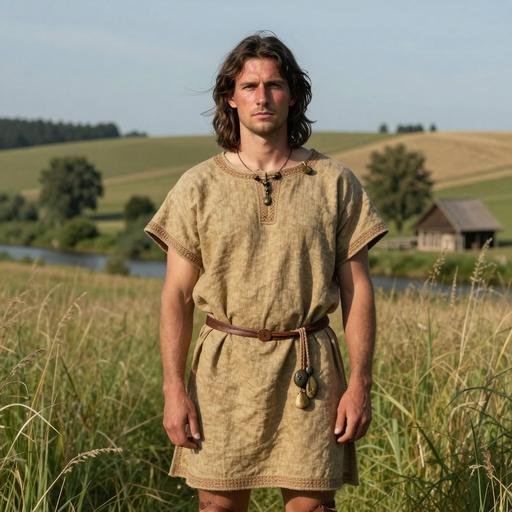
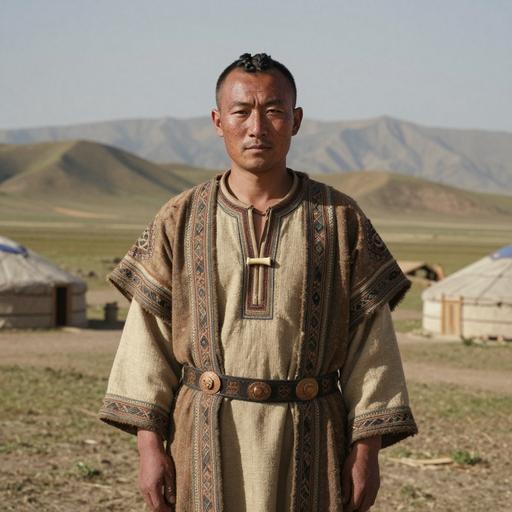
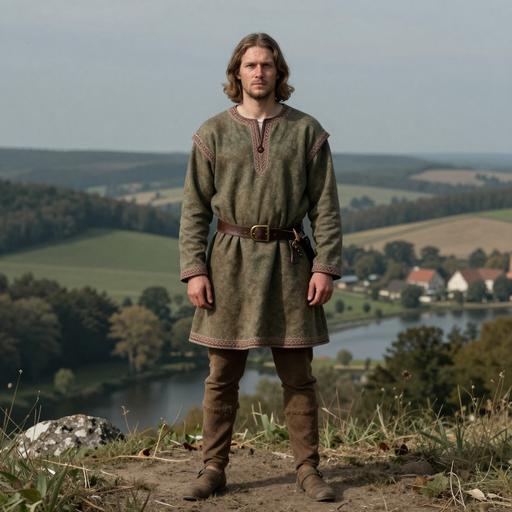
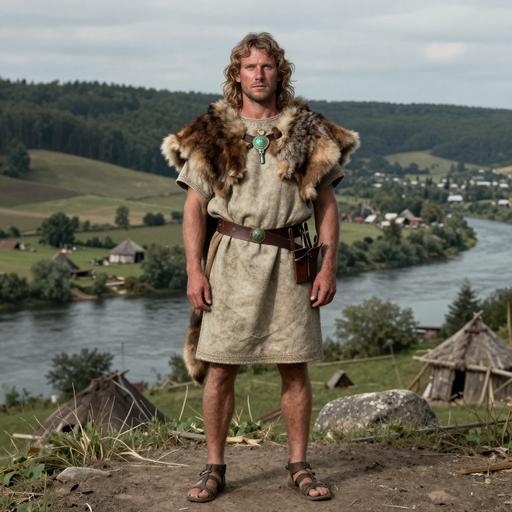
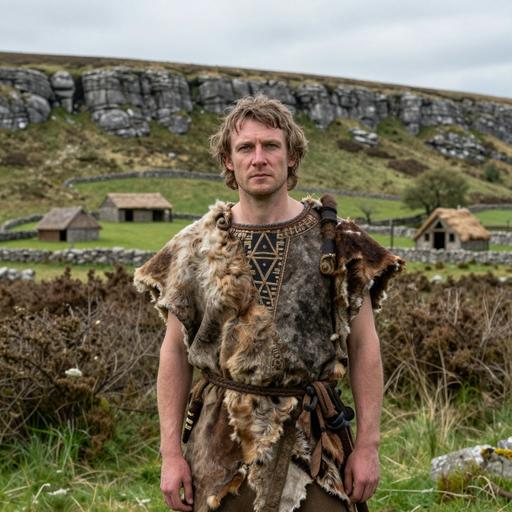
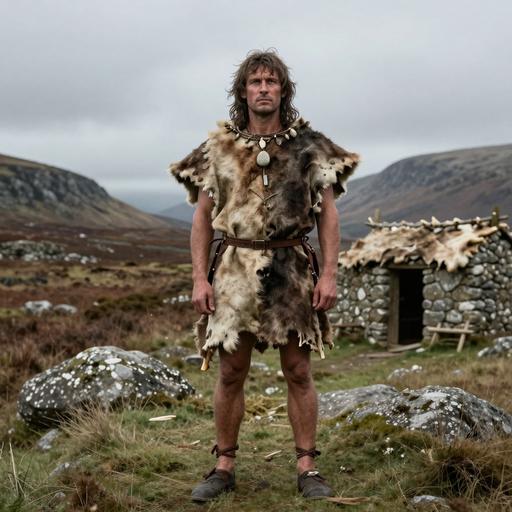
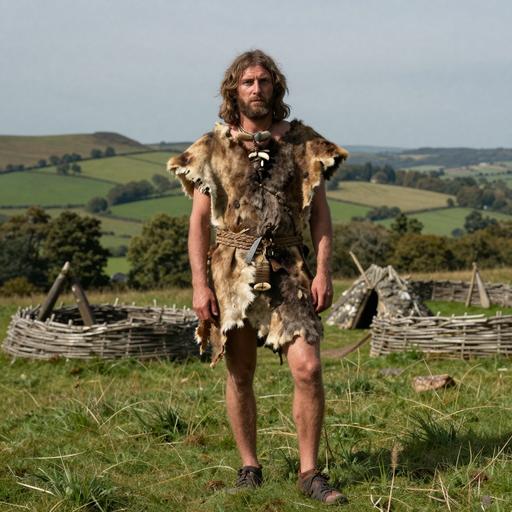
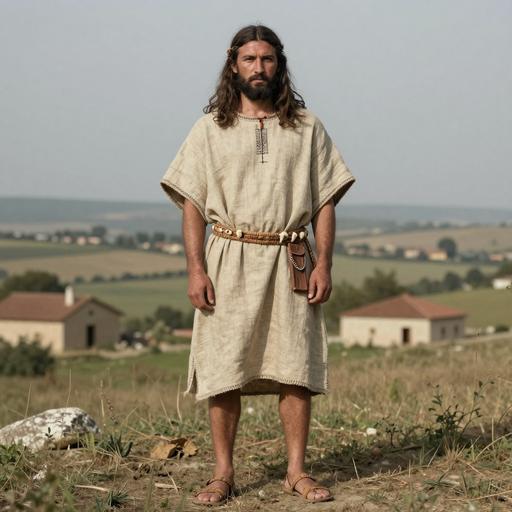
Los retratos son ilustraciones generadas con IA. Las etiquetas de muestra y los identificadores de acceso identifican los registros de referencia.

Retrato Muestra País Época Fecha Cultura Y-DNA Coincidencia
Retrato ilustrativo de Dunum Medieval Saxon individual, Lower Saxony. Dunum, Germany (800-1,000 CE) generado con IA
Identificador de muestra: DUN012
Germany Saxon Medieval Dunum, Germany 800-1000 CE Saxon Dunum I2a2 Direct
Retrato ilustrativo de Proto-Germanic individual, Mecklenburg-Vorpommern. Tollense battlefield, Germany (1,300-1,200 BCE) generado con IA
Identificador de muestra: WEZ24
Germany Bronze Age Tollense Valley, Germany 1300 BCE - 1200 BCE Tollense Culture I2a2 Direct
Retrato ilustrativo de Proto-Germanic individual, Mecklenburg-Vorpommern. Tollense battlefield, Germany (1,300-1,200 BCE) generado con IA
Identificador de muestra: WEZ71
Germany Bronze Age Tollense Valley, Germany 1300 BCE - 1200 BCE Tollense Culture I2a2 Direct
Retrato ilustrativo de Proto-Germanic individual, Mecklenburg-Vorpommern. Tollense battlefield, Germany (1,300-1,200 BCE) generado con IA
Identificador de muestra: WEZ39
Germany Bronze Age Tollense Valley, Germany 1300 BCE - 1200 BCE Tollense Culture I2a2 Direct
Retrato ilustrativo de Proto-Germanic individual, Mecklenburg-Vorpommern. Tollense battlefield, Germany (1,300-1,200 BCE) generado con IA
Identificador de muestra: WEZ48
Germany Bronze Age Tollense Valley, Germany 1300 BCE - 1200 BCE Tollense Culture I2a2 Direct
Retrato ilustrativo de Czechia EBA Unetice individual, Bohemia. Vliněves, Czech Republic (1,940-1,696 BCE) generado con IA
Identificador de muestra: VLI042
Czech Republic Early Bronze Age Unetice Culture, Bohemia, Czech Republic 1940-1696 calBCE (3504±41 BP, UBA-27398) Unetice Culture I2a2 Direct
Retrato ilustrativo de Czechia EBA Unetice individual, Bohemia. Brandýs nad Labem, Czech Republic (2,136-1,951 BCE) generado con IA
Identificador de muestra: BNL003
Czech Republic Early Bronze Age Unetice Culture, Bohemia, Czech Republic 2136-1951 calBCE (3661±24 BP, MAMS-30776) Unetice Culture I2a2 Direct
Retrato ilustrativo de Czechia EBA Unetice individual, Bohemia. Brandýs nad Labem, Czech Republic (2,140-1,950 BCE) generado con IA
Identificador de muestra: BNL002
Czech Republic Early Bronze Age Unetice Culture, Bohemia, Czech Republic 2150-1950 BCE Unetice Culture I2a2 Direct
Retrato ilustrativo de Czechia EBA Unetice individual, Bohemia. Praha-Miškovice, Czech Republic (2,141-1,956 BCE) generado con IA
Identificador de muestra: PMI004
Czech Republic Early Bronze Age Unetice Culture, Bohemia, Czech Republic 2141-1956 calBCE (3675±30 BP, KIA-35083) Unetice Culture I2a2 Direct
Retrato ilustrativo de Czechia EBA Unetice individual, Bohemia. Praha-Ďáblice, Czech Republic (2,199-2,035 BCE) generado con IA
Identificador de muestra: PDA002
Czech Republic Early Bronze Age Unetice Culture, Bohemia, Czech Republic 2199-2035 calBCE (3720±21 BP, MAMS-30756) Unetice Culture I2a2 Direct
PATERNAL LINAJE · ADN ANTIGUO

Mapa de pruebas de linajes antiguos

Sigue los clados superiores hasta esta rama y explora dónde se encontraron portadores antiguos.

Cargando observaciones antiguas...

Los marcadores son ubicaciones de hallazgos arqueológicos. Una línea discontinua representa una transición geográfica propuesta e incierta entre ramas consecutivas, apoyada en varias observaciones fechadas; no es una ruta de viaje exacta, un lugar de nacimiento ni una prueba de descendencia directa. Las muestras del clado parental pueden pertenecer a otras ramas descendientes. Se mantienen huecos cuando las pruebas son insuficientes. Las fechas de las muestras son distintas de las fechas de formación de los haplogrupos.

Perfil de referencia

Mapa de distribución de portadores

Distribución geográfica de muestras de ADN antiguo (46), portadores directos o de subclados de I2A2

Portador directo Portador de un subclado
Filtro de periodo temporal
Todos los periodos
Mostrando todas las muestras
Perfil de referencia

Distribución temporal

Distribución de portadores por periodos arqueológicos

Perfil de referencia

Distribución geográfica

Recuentos por país registrado de las muestras. Reflejan la selección de referencia disponible, no frecuencias de población.

Perfil de referencia

Distribución por país y época

Compara los recuentos de muestras registradas por países y periodos arqueológicos. Selecciona una celda con datos para examinar una muestra.

Datos

Datos y procedencia

Información sobre las fuentes y la calidad de los datos

Última actualización 2026-06-17
Puntuación de confianza 50/100
Cobertura Low

Fuente de datos

La clasificación, las fechas estimadas y el contexto geográfico reflejan los datos de referencia registrados y pueden cambiar al revisarse las pruebas. La cobertura de muestras es desigual; las ubicaciones registradas y las asociaciones arqueológicas no establecen el origen personal ni la identidad cultural.