Profil de référence pour une branche de lignée. Des haplogroupes partagés n'établissent pas de lien familial ni d'identité culturelle.
Profil de référence
Contexte de la branche
Contexte historique de la branche de lignée mtDNA J1
Origins and Evolution
mtDNA haplogroup J1 is a subclade of haplogroup J (itself part of the larger JT macro-haplogroup). Based on its phylogenetic position and coalescent estimates, J1 most likely formed in the Near East during the Upper Paleolithic to early post-glacial interval (tens of thousands of years ago) and was carried by populations that later contributed to the genetic makeup of Neolithic farmers and post‑glacial recolonizing groups. Its age is younger than the root of haplogroup J but old enough to have diversified into several daughter lineages prior to, and during, the Neolithic period.
Genetic and ancient DNA studies show that haplogroup J lineages (including J1 and J2) were present in the Near East and adjacent regions throughout the late Pleistocene and Holocene. J1 expanded at different times in different places, producing local high-frequency pockets in some Mediterranean and Caucasus populations and lower-frequency presence across much of Europe and North Africa.
Subclades (if applicable)
J1 contains multiple downstream subclades (commonly reported as J1a, J1b, J1c etc. in the literature) that display regional structure. Some sublineages are concentrated in the eastern Mediterranean and Caucasus, while others show distributions that indicate westward spread into Southern and Western Europe or southward into North Africa. The diversity of J1 subclades in the Near East and Caucasus supports an origin and early diversification in that broader region, followed by later expansions tied to climatic amelioration and cultural diffusion (e.g., Neolithic demic processes).
Geographical Distribution
Today J1 is found at moderate frequencies in the Near East and parts of the Caucasus, moderate to low frequencies across Southern Europe (particularly the Mediterranean rim), low to moderate frequencies in North Africa, and is detectable at low frequencies in parts of Central Asia and Eastern Europe. J1 is also present within Jewish maternal lineages (both Ashkenazi and Sephardi), where specific subclades have been observed. The pattern—high diversity and varied subclades in the Near East/Caucasus and more restricted sublineages further afield—is consistent with an origin in the Near East followed by multiple waves of dispersal.
Historical and Cultural Significance
Population genetic and ancient DNA evidence link J1 and related J lineages to post‑glacial re-expansions and to the Neolithic transition that spread farming from the Near East into Europe and North Africa. While not a simple marker of any single archaeological culture, J1 lineages are often detected among early farming communities and later populations influenced by Near Eastern demography. This makes J1 of particular interest for studies of maternal ancestry and the spread of agricultural lifeways, as well as for reconstructing regional maternal histories (e.g., in the Caucasus, Levant, Mediterranean basin, and North Africa).
Conclusion
mtDNA J1 is an informative maternal lineage for tracing Near Eastern origins of Holocene population movements. It exemplifies how a Near Eastern clade diversified and contributed to the maternal gene pools of neighboring regions during the post‑glacial and Neolithic periods, leaving a patchy but persistent signature in modern populations across the Mediterranean, the Caucasus, North Africa, and into parts of Europe and Central Asia.
Points clés
Origins and Evolution
Subclades (if applicable)
Geographical Distribution
Historical and Cultural Significance
Conclusion
Profil de référence
Arbre et relations
Contexte phylogénétique et sous-clades
Voie évolutive
Suivez les branches parentes consignées jusqu'à J1. Les dates sont des estimations et peuvent évoluer lorsque les données de référence sont révisées.
The populations where MTDNA haplogroup J1 is found include:
Southern and Western European populations
Middle Eastern populations
North African populations
Caucasus region populations
Some populations in Central Asia
Jewish populations (Ashkenazi and Sephardi)
Contexte historique
Une branche dans le temps
Formation estimée sur une chronologie historique large. Les repères de période servent de contexte et n'impliquent pas de lien avec des cultures particulières.
Il y a ~30k ans
Haplogroupe J1
Formation estimée de cette branche mtDNA ; les dates et les lieux sont des estimations de référence.
Cette branche
Il y a ~20k ans
Dernier maximum glaciaire
Apogée de la dernière période glaciaire, populations isolées
Il y a ~10k ans
Révolution néolithique
Début de l'agriculture et émergence de communautés sédentaires
Il y a ~5k ans
Âge du bronze
Travail des métaux, écriture et premières civilisations
Il y a ~3k ans
Âge du fer
Outils en fer, réseaux d'échanges élargis
Il y a ~2.5k ans
Antiquité classique
Floraison des civilisations grecque et romaine
Aujourd'hui
Aujourd'hui
Époque moderne
Profil de référence
Contexte archéologique
Associations archéologiques consignées pour la branche mtDNA J1
Associations consignées
Ces libellés décrivent des contextes archéologiques consignés pour des échantillons de référence liés à J1. Une association n'établit pas que tous les porteurs appartenaient à une culture ni qu'ils ont suivi une route migratoire précise.
Les attributions culturelles reposent sur le contexte archéologique des échantillons d'ADN ancien et peuvent refléter des associations régionales à certaines périodes.
Profil de référence
Catalogue d'échantillons
55 porteurs de sous-clade de l'haplogroupe J1 (aucun porteur direct dans la sélection de référence actuelle)
10 affiché(s) · 50 échantillons correspondants
Aucun échantillon ne correspond à ces filtres. Essayez un autre libellé, lieu ou période.
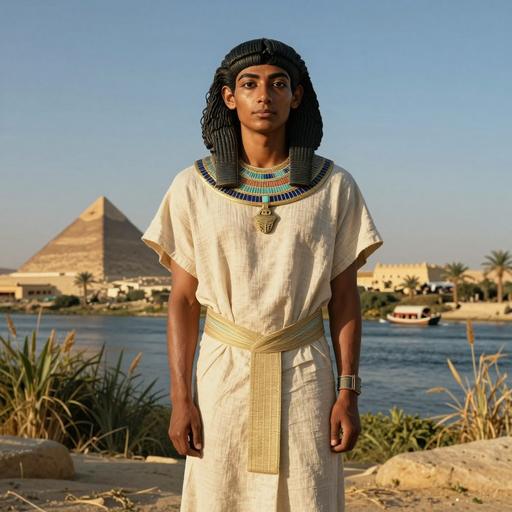
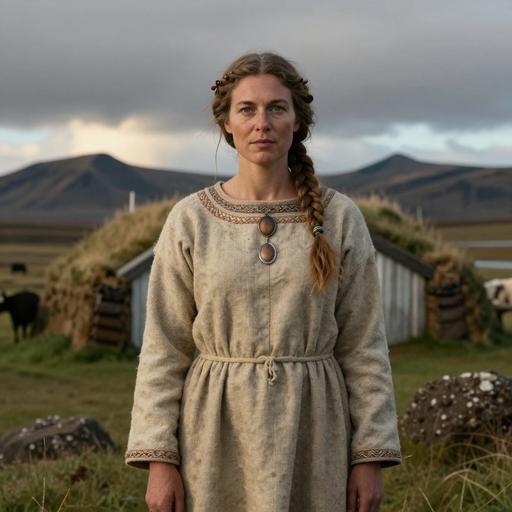
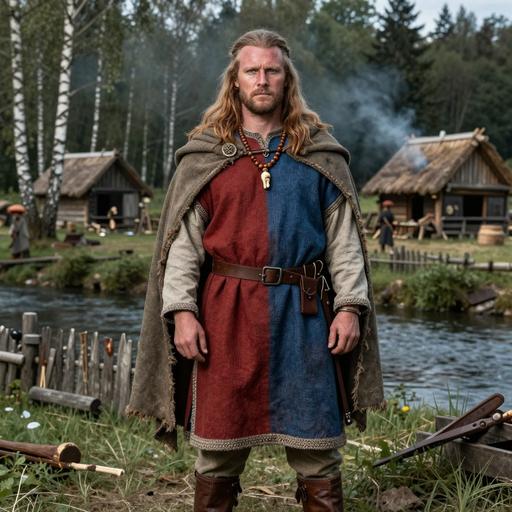
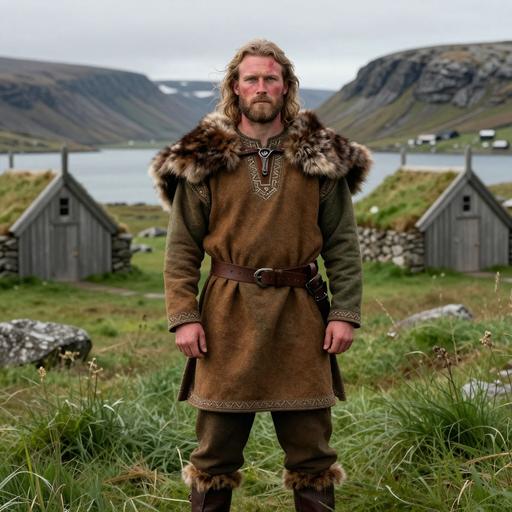
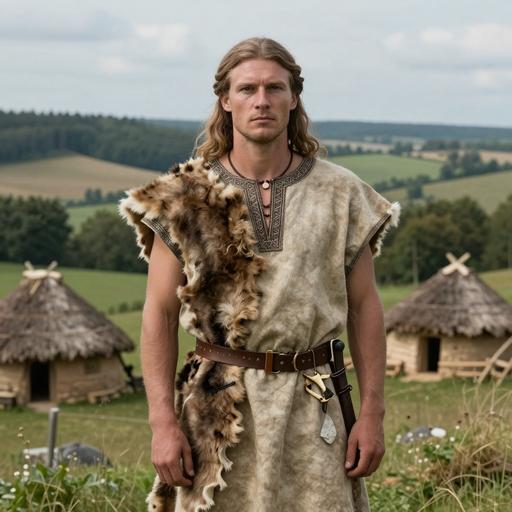
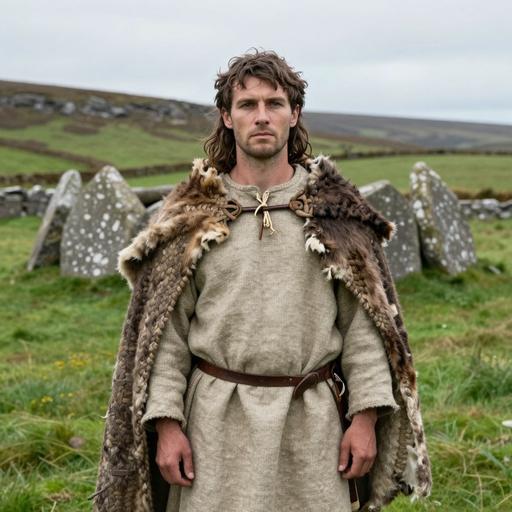
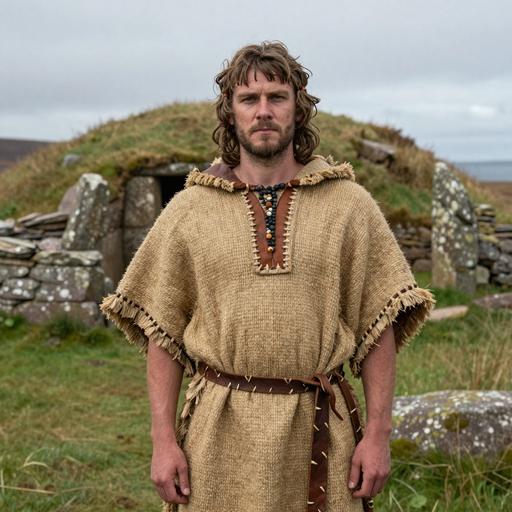
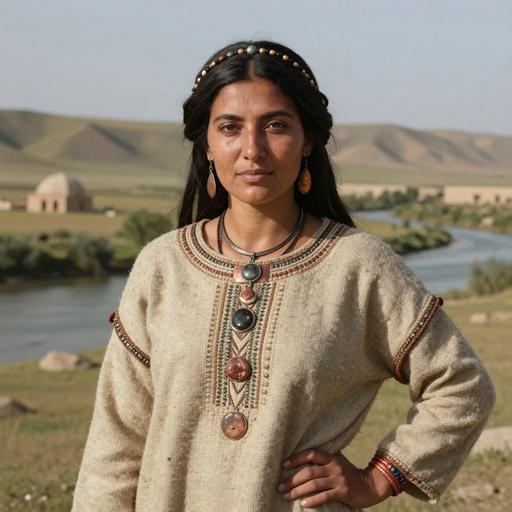
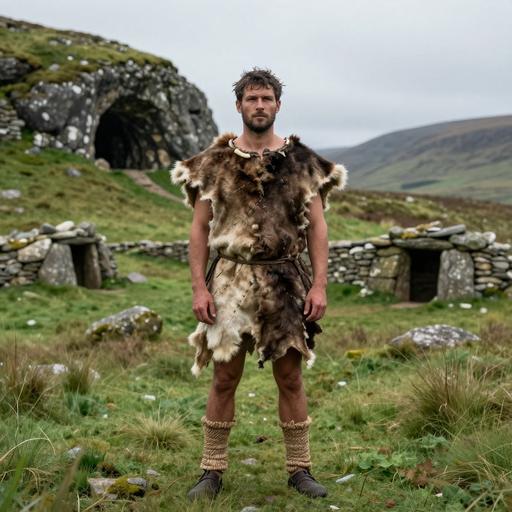
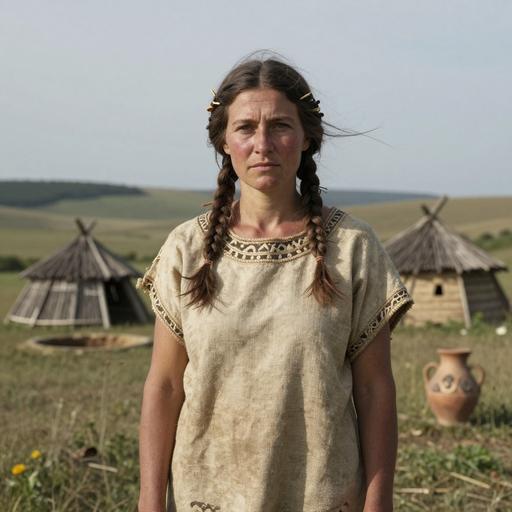
Les portraits sont des illustrations générées par IA. Les libellés d'échantillon et identifiants d'accès désignent les enregistrements de référence.
Portrait
Échantillon
Pays
Époque
Date
Culture
mtDNA
Correspondance
Identifiant d'échantillon : R47
Italy
Imperial Rome
241-341 calCE (1765±15 BP, UCIAMS-198588)
Roman Empire
J1c1c
Sous-clade
Identifiant d'échantillon : Alh1
Germany
Early Medieval Germany
250 CE - 650 CE
Early Medieval German
J1c7a
Sous-clade
Identifiant d'échantillon : Alh1
Germany
The Germanic Tribes
250 CE - 650 CE
J1c7a*
Sous-clade
Identifiant d'échantillon : R122
Italy
Late Antiquity Italy
400-600 CE
Late Roman
J1c-a
Sous-clade
Identifiant d'échantillon : DA223
Kazakhstan
Kazakhstan Wusun
414 BCE - 211 BCE
Wusun
J1c5a-a3
Sous-clade
Identifiant d'échantillon : DA223
Kazakhstan
The Nomadic Empires of the Eurasian Steppe
414 BCE - 211 BCE
J1c5a-a3
Sous-clade
Identifiant d'échantillon : VK505
Estonia
Early Viking Age Estonia
700 CE - 800 CE
Viking
J1b1a1b
Sous-clade
Identifiant d'échantillon : VK505
Estonia
The Viking Age
700 CE - 800 CE
J1b1a1b*
Sous-clade
Identifiant d'échantillon : JK2134
Egypt
Third Intermediate Period in Egypt
787 BCE - 546 BCE
Third Intermediate
J1d7*
Sous-clade
Identifiant d'échantillon : ESZ001
Kazakhstan
Iron Age Tasmola-Saka Culture, Kazakhstan
789-546 calBCE (2525?25 BP)
Tasmola-Saka Culture
J1b1a1-a
Sous-clade
Identifiant d'échantillon : GRO017
Netherlands
Saxon Medieval Groningen, Netherlands
800 CE - 1000 CE
Saxon Culture
J1b1a1
Sous-clade
Identifiant d'échantillon : SSG-A2
Iceland
Iceland PreChristian
850 CE - 1000 CE
Norse Pagan
J1c3g1*
Sous-clade
Identifiant d'échantillon : SSG-A2
Iceland
Medieval Nordic Region
850 CE - 1000 CE
1984
J1c3g1*
Sous-clade
Identifiant d'échantillon : YGS-B2
Iceland
Iceland PreChristian
870 CE - 1000 CE
Norse Pagan
J1c1a
Sous-clade
Identifiant d'échantillon : YGS-B2
Iceland
Medieval Nordic Region
870 CE - 1000 CE
1984
J1c1a*
Sous-clade
Identifiant d'échantillon : VK396
Sweden
Sweden Viking
900 CE - 1200 CE
Viking
J1c2t
Sous-clade
Identifiant d'échantillon : VK156
Poland
Poland Viking
900 CE - 1100 CE
Viking
J1c2c2a1
Sous-clade
Identifiant d'échantillon : VK513
Greenland
Greenland EarlyNorse
900 CE - 1200 CE
Norse Greenland
J1c1b
Sous-clade
Identifiant d'échantillon : VK286
Denmark
Denmark Viking
900 CE - 1000 CE
Viking Denmark
J1c-a
Sous-clade
Identifiant d'échantillon : VK156
Poland
The Viking Age
900 CE - 1100 CE
J1c2c2a1*
Sous-clade
Identifiant d'échantillon : VK286
Denmark
The Viking Age
900 CE - 1000 CE
J1c-a
Sous-clade
Identifiant d'échantillon : VK396
Sweden
The Viking Age
900 CE - 1200 CE
J1c2t*
Sous-clade
Identifiant d'échantillon : VK513
Greenland
The Viking Age
900 CE - 1200 CE
J1c1b*
Sous-clade
Identifiant d'échantillon : VK517
Sweden
Sweden Viking
1000 CE - 1100 CE
Viking
J1c3f1
Sous-clade
Identifiant d'échantillon : VK517
Sweden
The Viking Age
1000 CE - 1100 CE
J1c3f1*
Sous-clade
Identifiant d'échantillon : TSK-A26
Iceland
Iceland Early Christian
1050 CE - 1200 CE
Norse-Christian
J1b1a1a*
Sous-clade
Identifiant d'échantillon : TSK-A26
Iceland
Medieval Nordic Region
1050 CE - 1200 CE
1984
J1b1a1a*
Sous-clade
Identifiant d'échantillon : I10553
Italy
Italy Sardinia LBA
1255-1055 calBCE (2950±20 BP, PSUAMS-4876)
Nuragic Culture
J1c3
Sous-clade
Identifiant d'échantillon : POST_12
Germany
Middle Bronze Age Lech Valley, Germany
2193 BCE - 1985 BCE
Lech Valley Culture
J1c3g*
Sous-clade
Identifiant d'échantillon : POST_12
Germany
Early Bronze Age Central Europe
2193 BCE - 1985 BCE
J1c3g*
Sous-clade
Identifiant d'échantillon : I0113
Germany
Bell Beaker Culture, Germany
2396-2034 calBCE (3773±47 BP, Erl-7283)
Bell Beaker
J1c5-a
Sous-clade
Identifiant d'échantillon : UNTA85_1343
Germany
Bell Beaker Culture, Lech Valley, Germany
2401-2146 calBCE (3819±24 BP, MAMS-18949)
Bell Beaker
J1c2
Sous-clade
Identifiant d'échantillon : UNTA58_68Sk2
Germany
Bell Beaker Culture, Lech Valley, Germany
2468 BCE - 2305 BCE
Bell Beaker
J1c*
Sous-clade
Identifiant d'échantillon : UNTA58_68Sk2
Germany
The Bell Beaker Culture
2468 BCE - 2305 BCE
ANATOLIAN_BRONZE_AGE
J1c*
Sous-clade
Identifiant d'échantillon : SEC005
Italy
Italy Sardinia LateC
2469-2306 calBCE (3912±20 BP, MAMS-38292)
Late Chalcolithic Sardinian
J1c3n'o'p
Sous-clade
Identifiant d'échantillon : I1538
Germany
Corded Ware Culture, Germany
2500-2050 BCE
Corded Ware
J1c5
Sous-clade
Identifiant d'échantillon : I1540
Germany
Corded Ware Culture, Germany
2600-2200 BCE
Corded Ware
J1c5f1
Sous-clade
Identifiant d'échantillon : Log04
Greece
Middle Bronze Age Logkas, Greece
2600-2000 BCE
Logkas Culture
J1c-a
Sous-clade
Identifiant d'échantillon : CAK532
Ireland
Ireland LN
3013-2890 calBCE (4321±30 BP, OxA-35326)
Irish Late Neolithic
J1c3
Sous-clade
Identifiant d'échantillon : I7554
United Kingdom
Scotland N
3368 BCE - 3102 BCE
Scottish Neolithic
J1c9
Sous-clade
Identifiant d'échantillon : MB6
Ireland
Ireland MN
3494-3036 calBCE (4548±51 BP, UBA-35071)
Irish Middle Neolithic
J1c3
Sous-clade
Identifiant d'échantillon : I4910
Tajikistan
Chalcolithic Sarazm
3634-3522 calBCE (4765±20 BP, PSUAMS-2624)
Sarazm Culture
J1d9
Sous-clade
Identifiant d'échantillon : I6747
United Kingdom
England N
3645 BCE - 3526 BCE
British Neolithic
J1c1b*
Sous-clade
Identifiant d'échantillon : I6747
United Kingdom
Early Neolithic Britain
3645 BCE - 3526 BCE
J1c1b*
Sous-clade
Identifiant d'échantillon : I6747
United Kingdom
Early Neolithic Britain
3645 BCE - 3526 BCE
J1c1b*
Sous-clade
Identifiant d'échantillon : I6747
United Kingdom
Early Neolithic Britain
3645 BCE - 3526 BCE
J1c1b*
Sous-clade
Identifiant d'échantillon : I2691
United Kingdom
Scotland N
3710 BCE - 3632 BCE
Scottish Neolithic
J1c1
Sous-clade
Identifiant d'échantillon : I4089
Romania
Romania C Bodrogkeresztur
3765-3640 calBCE (4915±25 BP, PSUAMS-1746)
Bodrogkeresztur
J1c
Sous-clade
Identifiant d'échantillon : I1505
Hungary
Middle Neolithic Alföld Linear Pottery Culture, Hungary
Hungary The Linear Pottery Culture 5210 BCE - 5003 BCE
J1c5*Sous-clade
LIGNÉE MATERNELLE · ADN ANTIQUE
Carte des preuves de lignées antiques
Suivez les clades parents jusqu'à cette branche et explorez où des porteurs antiques ont été identifiés.
Chargement des observations antiques…
La réduction des animations est activée. Utilisez la chronologie ou Tout afficher pour explorer à votre rythme.
Lire les observations sous forme de tableau
Observations antiques affichées par branche, période et date médiane
Branche
Période
Plage de dates
Échantillon
Identifiant d'échantillon
Emplacement
Haplogroupe
Relation
Les marqueurs indiquent des lieux de découvertes archéologiques. Un trait pointillé représente une transition géographique proposée et incertaine entre branches consécutives, appuyée sur plusieurs observations datées ; ce n'est pas un itinéraire exact, un lieu de naissance ni une preuve de descendance directe. Des échantillons de clades parents peuvent appartenir à d'autres branches descendantes. Des lacunes subsistent lorsque les preuves sont insuffisantes. Les dates d'échantillon diffèrent des dates de formation des haplogroupes.
Le regroupement par période historique reflète quand chaque individu antique a vécu, en combinant toutes les branches de cette chaîne de lignée ; ce n'est pas une séquence migratoire ni une chronologie personnelle entre périodes.
Profil de référence
Carte de répartition des porteurs
Répartition géographique de 55 échantillons d'ADN ancien (porteurs directs et de sous-clade de J1)
Porteur de sous-clade
Filtre de période
Toutes les périodes
Affichage de tous les échantillons
Profil de référence
Répartition temporelle
Répartition des porteurs selon les périodes archéologiques
Profil de référence
Répartition géographique
Effectifs par pays d'échantillon consigné. Ils reflètent la sélection de référence disponible, pas des fréquences de population.
Profil de référence
Répartition pays × époque
Comparez les effectifs d'échantillons consignés selon les pays et les périodes archéologiques. Sélectionnez une cellule renseignée pour examiner un échantillon.
Données
Données et provenance
Informations sur les sources et qualité des données
Dernière mise à jour2026-02-09
Source des données
La classification, les dates estimées et le contexte géographique reflètent les données de référence consignées et peuvent évoluer lorsque les éléments sont révisés. La couverture d'échantillons est inégale ; les lieux consignés et les associations archéologiques n'établissent pas une origine personnelle ni une identité culturelle.