Aller au contenu principal
mtDNA · lignée Maternelle

L4

mtDNA Haplogroup L4

Profil de référence pour une branche de lignée. Des haplogroupes partagés n'établissent pas de lien familial ni d'identité culturelle.

Profil de référence

Contexte de la branche

Contexte historique de la branche de lignée mtDNA L4

Origins and Evolution

Haplogroup L4 is a maternal lineage that branches from the ancestral node L3'4, making it a sister clade to haplogroup L3 (the lineage that later gave rise to non‑African mtDNA macrohaplogroups M and N). Based on phylogenetic position and coalescent estimates for related lineages, L4 most likely arose in East or Northeast Africa during the Late Pleistocene (order of tens of thousands of years ago). Its emergence predates or overlaps with the time when modern human populations in Africa were undergoing regional diversification and technological change associated with Later Stone Age adaptations.

Molecular clock estimates for deep African mtDNA clades carry uncertainty, but the placement of L4 as a distinct branch from the L3'4 node supports an origin substantially earlier than many Holocene expansions; a midpoint autosomal and mtDNA calibration suggests an approximate coalescence in the neighborhood of ~70–90 kya, consistent with the originTimeKya provided here.

Subclades

L4 contains multiple internal branches that have been recognized in phylogenetic surveys (commonly designated L4a, L4b, and further downstream haplotypes). These subclades show differing local distributions and frequencies: some are concentrated in the Horn of Africa and Ethiopian highlands, while others appear in eastern and central African populations. Ancient DNA from Africa is still sparse compared with Eurasia, so the fine structure and age estimates of individual L4 subclades remain an active area of research.

Geographical Distribution

Today, L4 is most commonly observed in East Africa and the Horn of Africa, with lower-frequency occurrences in neighboring parts of Northeast and Central Africa. L4 lineages are especially represented among populations in Ethiopia, Somalia, Eritrea and parts of Sudan and Kenya. Smaller frequencies have been reported in some hunter‑gatherer and pastoralist groups in Tanzania and adjacent regions. The pattern is consistent with a long-term regional presence with later localized population movements and admixture shaping its modern distribution.

Historical and Cultural Significance

Because L4 is an old African maternal lineage with a strong East African signature, it is useful for reconstructing deep regional demography in eastern Africa, including the population structure that preceded the spread of Afroasiatic languages and the later movements associated with Holocene pastoralism and agriculture. L4 lineages persist in both food-producer and hunter‑gatherer communities, which makes them informative for comparisons of continuity versus replacement in local populations. When combined with Y‑DNA and autosomal data, L4 helps clarify maternal contributions to later cultural expansions within the Horn and East Africa.

Conclusion

mtDNA haplogroup L4 is an important East African maternal lineage branching from the L3'4 node, with a Late Pleistocene origin and modern concentrations in the Horn and adjacent East African regions. Continued sampling, especially ancient DNA from eastern Africa, will refine the timing and internal structure of L4 and improve understanding of how it maps onto archaeological and linguistic transitions in the region.

Points clés

  • Origins and Evolution
  • Subclades
  • Geographical Distribution
  • Historical and Cultural Significance
  • Conclusion
Profil de référence

Arbre et relations

Contexte phylogénétique et sous-clades

Voie évolutive

Suivez les branches parentes consignées jusqu'à L4. Les dates sont des estimations et peuvent évoluer lorsque les données de référence sont révisées.

Étapes Haplogroupe Âge estimé Époque archéologique Temps écoulé Descendants immédiats Descendants modernes testés Liens anciens
1 L4 Actuel ~80,000 years ago Paleolithic 80,000 ans 2 43 0
2 L3'4 - - - 2 30,212 0
3 L3'4'6 - - - 2 30,216 0
4 L2'3'4'6 - - - 2 31,333 0
5 L2'3'4'5'6'7 - - - 2 31,349 0
6 L1'2'3'4'5'6'7 - - - 2 31,852 0
7 L ~160,000 years ago Paleolithic 160,000 ans 2 32,236 5

Branches sœurs (1)

Autres branches issues du même haplogroupe parent

Profil de référence

Dans le monde

Distribution géographique et présence moderne

Origine consignée

East Africa / Horn of Africa

Distribution moderne

The populations where mtDNA haplogroup L4 is found include:

  1. Ethiopian highland populations (e.g., Amhara, Oromo)
  2. Somali and other Horn of Africa groups
  3. Eritrean populations
  4. Northern and central Sudanese groups
  5. Nilotic-speaking populations in parts of South Sudan and neighboring areas
  6. Kenyan coastal and interior groups
  7. Tanzanian hunter-gatherer communities (e.g., Hadza, Sandawe) and other Eastern Tanzanian groups
  8. Chadic and Sahelian groups with low to moderate frequencies (e.g., parts of Chad)
  9. Mixed Afroasiatic-speaking pastoralist communities in the Horn and East Africa
  10. Other East African and adjacent Central African populations at low frequencies
Contexte historique

Une branche dans le temps

Formation estimée sur une chronologie historique large. Les repères de période servent de contexte et n'impliquent pas de lien avec des cultures particulières.

  1. Il y a ~80k ans

    Haplogroupe L4

    Formation estimée de cette branche mtDNA ; les dates et les lieux sont des estimations de référence.

    Cette branche
  2. Il y a ~70k ans

    Sortie d'Afrique

    Grande migration des humains modernes hors d'Afrique

  3. Il y a ~50k ans

    Paléolithique supérieur

    Outils avancés, art et essor culturel

  4. Il y a ~20k ans

    Dernier maximum glaciaire

    Apogée de la dernière période glaciaire, populations isolées

  5. Il y a ~10k ans

    Révolution néolithique

    Début de l'agriculture et émergence de communautés sédentaires

  6. Il y a ~5k ans

    Âge du bronze

    Travail des métaux, écriture et premières civilisations

  7. Il y a ~3k ans

    Âge du fer

    Outils en fer, réseaux d'échanges élargis

  8. Il y a ~2.5k ans

    Antiquité classique

    Floraison des civilisations grecque et romaine

  9. Aujourd'hui

    Aujourd'hui

    Époque moderne

Profil de référence

Contexte archéologique

Associations archéologiques consignées pour la branche mtDNA L4

Associations consignées

Ces libellés décrivent des contextes archéologiques consignés pour des échantillons de référence liés à L4. Une association n'établit pas que tous les porteurs appartenaient à une culture ni qu'ils ont suivi une route migratoire précise.

Austria_Avar Bungule Corded Ware Jordanow-Michelsberg Culture Khovd Long-Term Late Roman Malawian LSA Pastoral Neolithic Slab Grave Culture St. Helena Colonial Unetice Culture
Les attributions culturelles reposent sur le contexte archéologique des échantillons d'ADN ancien et peuvent refléter des associations régionales à certaines périodes.
Profil de référence

Catalogue d'échantillons

16 porteurs de sous-clade de l'haplogroupe L4 (aucun porteur direct dans la sélection de référence actuelle)

10 affiché(s) · 16 échantillons correspondants

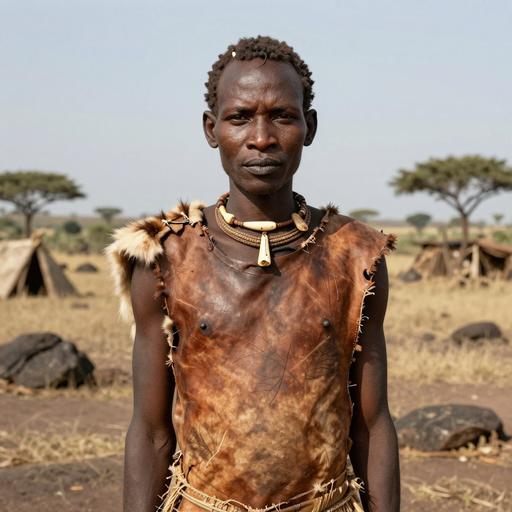
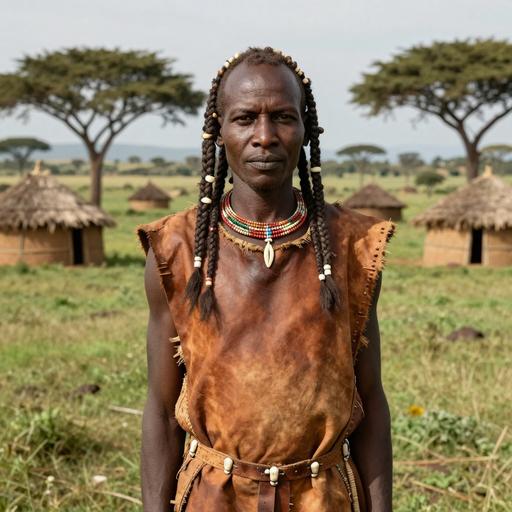
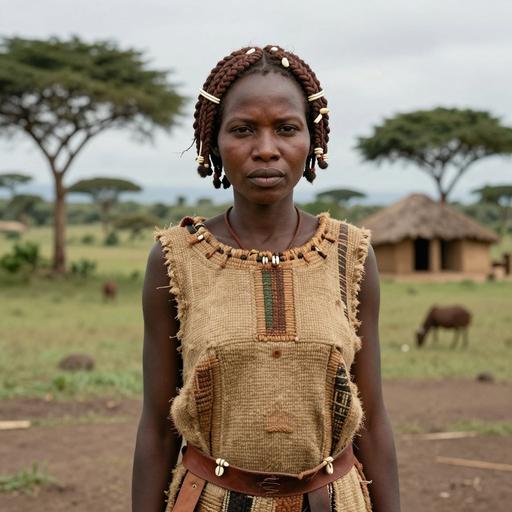
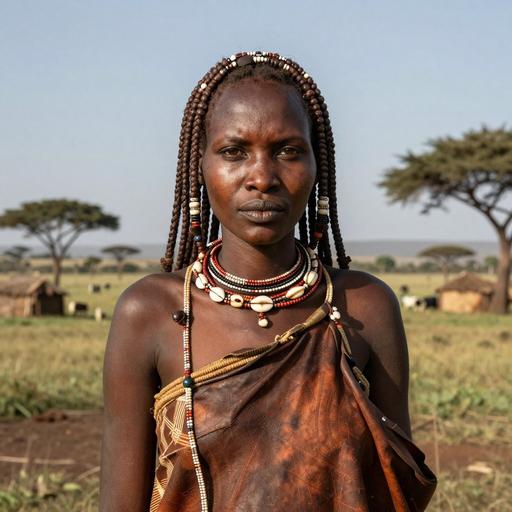
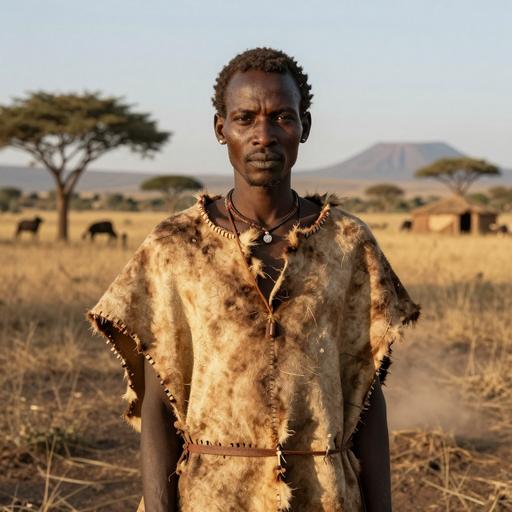
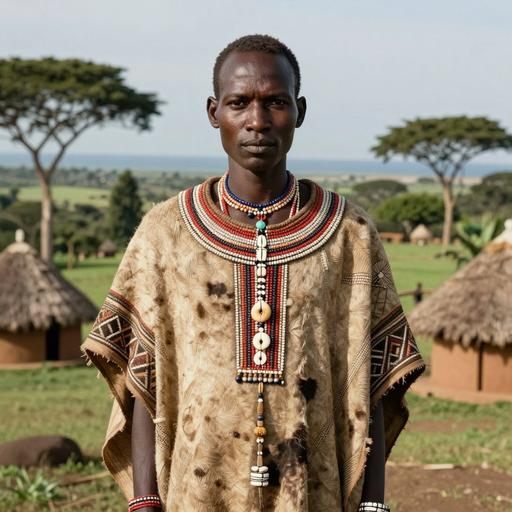
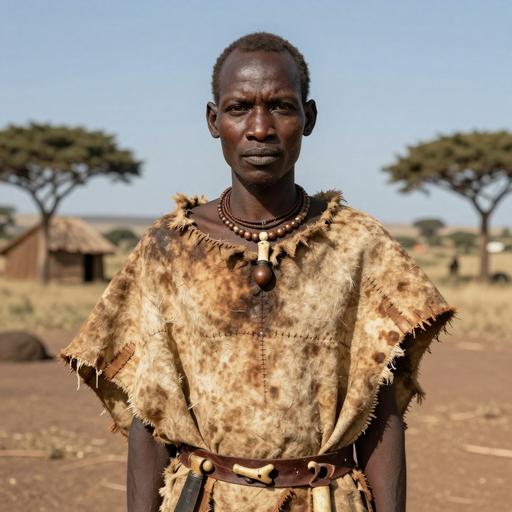
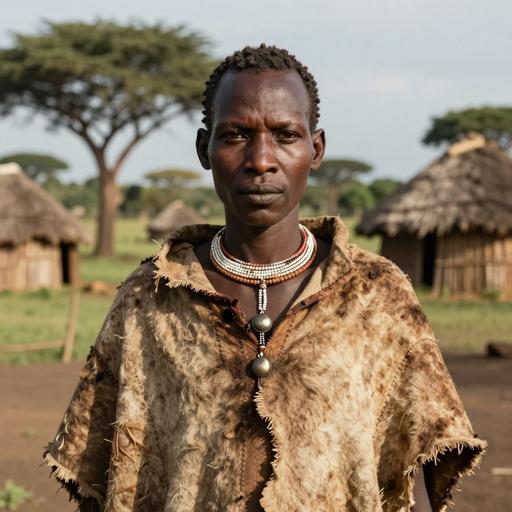
Les portraits sont des illustrations générées par IA. Les libellés d'échantillon et identifiants d'accès désignent les enregistrements de référence.

Portrait Échantillon Pays Époque Date Culture mtDNA Correspondance
Portrait illustratif généré par IA de LSA individual, Victoria Nyanza. Kisumu. Jawuoyo Rockshelter, Kenya (84-211 BCE)
Identifiant d'échantillon : I8808
Kenya Kenya LSA 119-216 calCE (1895±15 BP, PSUAMS-4783) LSA Kenya L4b2a2c Sous-clade
Portrait illustratif généré par IA de Lazio Late Antiquity Roman individual, Mausoleo di Augusto, Italy (300-700 CE)
Identifiant d'échantillon : R30
Italy Late Antiquity Italy 300-700 CE Late Roman L4a2 Sous-clade
Portrait illustratif généré par IA de Pastoral N individual, Nakuru. Naivasha Burial Groud, Kenya (391-208 BCE)
Identifiant d'échantillon : I8919
Kenya Kenya PastoralN 382-186 calBCE (2255±20 BP, PSUAMS-4789) Pastoral Neolithic L4a1 Sous-clade
Portrait illustratif généré par IA de Pastoral N individual, Gishimangeda Cave, Tanzania (414-203 BCE)
Identifiant d'échantillon : I13978
Tanzania Prehistoric in Tanzania 414-203 calBCE (2355±20 BP, PSUAMS-5653) Tanzanian Prehistoric L4b2a1 Sous-clade
Portrait illustratif généré par IA de Pastoral N individual, Nakuru. Naivasha Burial Groud, Kenya (541-402 BCE)
Identifiant d'échantillon : I8814
Kenya Kenya PastoralN 719-233 calBCE (2400±20 BP, PSUAMS-4784) Pastoral Neolithic L4b2a2b Sous-clade
Portrait illustratif généré par IA de Swahili Coast Civilization individual, Zanzibar. Kuumbi Cave, Tanzania (586-652 CE)
Identifiant d'échantillon : I0589
Tanzania Zanzibar 1300 Years Before Present in Tanzania 586 CE - 652 CE Zanzibar Culture L4b2a2c Sous-clade
Portrait illustratif généré par IA de Africa East Ancient individual, Zanzibar. Kuumbi Cave, Tanzania (586-652 BCE)
Identifiant d'échantillon : I0589
Tanzania Ancient East Africa 586 BCE - 652 BCE L4b2a2c Sous-clade
Portrait illustratif généré par IA de Africa East Ancient individual, Zanzibar. Kuumbi Cave, Tanzania (586-652 BCE)
Identifiant d'échantillon : I0589
Tanzania Ancient East Africa 586 BCE - 652 BCE L4b2a2c Sous-clade
Portrait illustratif généré par IA de Pastoral N individual, Nakuru. Keringet Cave. GrJg4, Kenya (757-423 BCE)
Identifiant d'échantillon : I8804
Kenya Kenya PastoralN 750-402 calBCE (2465±20 BP, PSUAMS-4716) Pastoral Neolithic L4b2a1 Sous-clade
Portrait illustratif généré par IA de Pastoral N Elmenteitan individual, Nakuru. Rigo Cave. GrJh3, Kenya (800-600 BCE)
Identifiant d'échantillon : I8922
Kenya Kenya PastoralN Elmenteitan 541-383 calBCE (2400±15 BP, PSUAMS-4725) Elmenteitan Culture L4b2a2c Sous-clade
LIGNÉE MATERNELLE · ADN ANTIQUE

Carte des preuves de lignées antiques

Suivez les clades parents jusqu'à cette branche et explorez où des porteurs antiques ont été identifiés.

Chargement des observations antiques…

Les marqueurs indiquent des lieux de découvertes archéologiques. Un trait pointillé représente une transition géographique proposée et incertaine entre branches consécutives, appuyée sur plusieurs observations datées ; ce n'est pas un itinéraire exact, un lieu de naissance ni une preuve de descendance directe. Des échantillons de clades parents peuvent appartenir à d'autres branches descendantes. Des lacunes subsistent lorsque les preuves sont insuffisantes. Les dates d'échantillon diffèrent des dates de formation des haplogroupes.

Profil de référence

Carte de répartition des porteurs

Répartition géographique de 16 échantillons d'ADN ancien (porteurs directs et de sous-clade de L4)

Porteur de sous-clade
Filtre de période
Toutes les périodes
Affichage de tous les échantillons
Profil de référence

Répartition temporelle

Répartition des porteurs selon les périodes archéologiques

Profil de référence

Répartition géographique

Effectifs par pays d'échantillon consigné. Ils reflètent la sélection de référence disponible, pas des fréquences de population.

Profil de référence

Répartition pays × époque

Comparez les effectifs d'échantillons consignés selon les pays et les périodes archéologiques. Sélectionnez une cellule renseignée pour examiner un échantillon.

Données

Données et provenance

Informations sur les sources et qualité des données

Dernière mise à jour 2026-06-14

Source des données

La classification, les dates estimées et le contexte géographique reflètent les données de référence consignées et peuvent évoluer lorsque les éléments sont révisés. La couverture d'échantillons est inégale ; les lieux consignés et les associations archéologiques n'établissent pas une origine personnelle ni une identité culturelle.