Aller au contenu principal
mtDNA · lignée Maternelle

ND

mtDNA Haplogroup ND

Profil de référence pour une branche de lignée. Des haplogroupes partagés n'établissent pas de lien familial ni d'identité culturelle.

Profil de référence

Contexte de la branche

Contexte historique de la branche de lignée mtDNA ND

Origins and Evolution

mtDNA haplogroup ND represents a lineage derived from macro-haplogroup N and sits on the branch of the phylogeny that gives rise to haplogroup D and closely related lineages. Based on molecular-clock estimates for D and related N-derived clades, ND most likely diversified in northeast or East Asia during the Upper Paleolithic (roughly 40–50 kya), following the initial Out-of-Africa dispersal that produced macro-haplogroups M and N. The evolutionary history of ND reflects adaptation and demographic expansions in high-latitude Eurasia during the Late Pleistocene and the subsequent peopling of the Americas via Beringia in the terminal Pleistocene / early Holocene.

Subclades (if applicable)

The most biologically and archaeogenetically important descendant of the ND branch is haplogroup D, which contains multiple subclades (for example, D1, D2, D4 and D4h3a among others) that have distinctive geographic and temporal patterns. Many of these D subclades are highly diversified in East Asia and Siberia; several D lineages (notably D1 and D4h3a) are also key maternal lineages in Indigenous American populations. Where present, ND should be treated as the upstream node for these D subclades in phylogenetic reconstructions.

Geographical Distribution

Modern distributions of ND-derived lineages are concentrated in East Asia, Northeast Asia (Siberia/Tungusic/Mongolic areas), and among Indigenous peoples of the Americas. High frequencies are observed in some northern and eastern Asian populations and in many Native American groups, reflecting deep Pleistocene roots and later founder effects during the peopling of the Americas. ND-descended haplogroups are generally rare or absent in most of western Eurasia and Africa except where later migrations introduced eastern maternal lineages.

Historical and Cultural Significance

Lineages descending from ND played a central role in the Paleolithic settlement of northern Eurasia and the colonization of the Americas. Ancient DNA studies have recovered D-lineages in Pleistocene and early Holocene individuals from Siberia, East Asia, and pre-Clovis/early Holocene sites in the Americas (for example, D4h3a in early New World contexts). In East Asia, ND-derived lineages appear in prehistoric hunter-gatherer contexts such as Jomon-era Japan and in various Holocene Siberian groups, linking genetic evidence to archaeological patterns of mobility, coastal and inland foraging, and later regional continuity or replacement.

Conclusion

As an N-derived node associated with haplogroup D, ND is a key maternal lineage for reconstructing northern Eurasian population history and the ancestral maternal makeup of Native American peoples. Its time depth in the Upper Paleolithic and its geographic concentration in East/Northeast Asia make it informative for studies of Late Pleistocene migrations, high-latitude adaptations, and the demographic processes that carried people across Beringia into the Americas.

Points clés

  • Origins and Evolution
  • Subclades (if applicable)
  • Geographical Distribution
  • Historical and Cultural Significance
  • Conclusion
Profil de référence

Arbre et relations

Contexte phylogénétique et sous-clades

Voie évolutive

Suivez les branches parentes consignées jusqu'à ND. Les dates sont des estimations et peuvent évoluer lorsque les données de référence sont révisées.

Étapes Haplogroupe Âge estimé Époque archéologique Temps écoulé Descendants immédiats Descendants modernes testés Liens anciens
1 ND Actuel ~45,000 years ago Paleolithic 45,000 ans 1 0 12
2 N ~60,000 years ago Paleolithic 60,000 ans 16 26,150 13
3 L3 ~70,000 years ago Paleolithic 70,000 ans 7 30,162 6
4 L3'4 - - - 2 30,212 0
5 L3'4'6 - - - 2 30,216 0
6 L2'3'4'6 - - - 2 31,333 0
7 L2'3'4'5'6'7 - - - 2 31,349 0
8 L1'2'3'4'5'6'7 - - - 2 31,852 0
9 L ~160,000 years ago Paleolithic 160,000 ans 2 32,236 5

Branches sœurs (15)

Autres branches issues du même haplogroupe parent

Profil de référence

Dans le monde

Distribution géographique et présence moderne

Origine consignée

East / Northeast Asia

Distribution moderne

The populations where mtDNA haplogroup ND haplogroup ND is found include:

  1. East Asian populations (Han Chinese, Japanese, Koreans)
  2. Northeast Asian and Siberian groups (Yakut, Evenks, Tungusic and Mongolic peoples)
  3. Indigenous peoples of the Americas (North, Central and South American Native groups carrying D subclades)
  4. Ainu and Jomon-descended populations of northern Japan
  5. Tibetan and Himalayan populations (low to moderate frequencies in some groups)
  6. Central Asian minorities (low to moderate frequencies reflecting east–west contact)
  7. Indigenous peoples of Arctic and subarctic regions (Inuit-related and other Arctic-adjacent groups, where D is present)
  8. Ancient Paleolithic and early Holocene remains from Siberia and northeastern Eurasia (archaeogenetic contexts)
  9. Coastal East Asian forager/seafaring groups (where specific D subclades are enriched)
  10. Small, localized occurrences in parts of Southeast Asia reflecting downstream dispersals or drift
Contexte historique

Une branche dans le temps

Formation estimée sur une chronologie historique large. Les repères de période servent de contexte et n'impliquent pas de lien avec des cultures particulières.

  1. Il y a ~50k ans

    Paléolithique supérieur

    Outils avancés, art et essor culturel

  2. Il y a ~45k ans

    Haplogroupe ND

    Formation estimée de cette branche mtDNA ; les dates et les lieux sont des estimations de référence.

    Cette branche
  3. Il y a ~20k ans

    Dernier maximum glaciaire

    Apogée de la dernière période glaciaire, populations isolées

  4. Il y a ~10k ans

    Révolution néolithique

    Début de l'agriculture et émergence de communautés sédentaires

  5. Il y a ~5k ans

    Âge du bronze

    Travail des métaux, écriture et premières civilisations

  6. Il y a ~3k ans

    Âge du fer

    Outils en fer, réseaux d'échanges élargis

  7. Il y a ~2.5k ans

    Antiquité classique

    Floraison des civilisations grecque et romaine

  8. Aujourd'hui

    Aujourd'hui

    Époque moderne

Profil de référence

Contexte archéologique

Associations archéologiques consignées pour la branche mtDNA ND

Associations consignées

Ces libellés décrivent des contextes archéologiques consignés pour des échantillons de référence liés à ND. Une association n'établit pas que tous les porteurs appartenaient à une culture ni qu'ils ont suivi une route migratoire précise.

Altai Neanderthal Austria_Avar Bohemian Hunter-Gatherer Buran-Kaya Dzudzuana Early Avar Early Bronze Anatolia France_Megalithic_MN Funnel Beaker Culture Hetian Culture Iraqi PPN Peștera cu Oase
Les attributions culturelles reposent sur le contexte archéologique des échantillons d'ADN ancien et peuvent refléter des associations régionales à certaines périodes.
Profil de référence

Catalogue d'échantillons

12 porteurs de sous-clade de l'haplogroupe ND (aucun porteur direct dans la sélection de référence actuelle)

10 affiché(s) · 12 échantillons correspondants

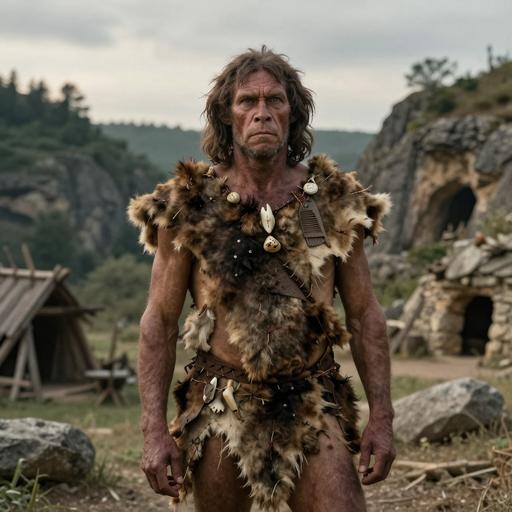
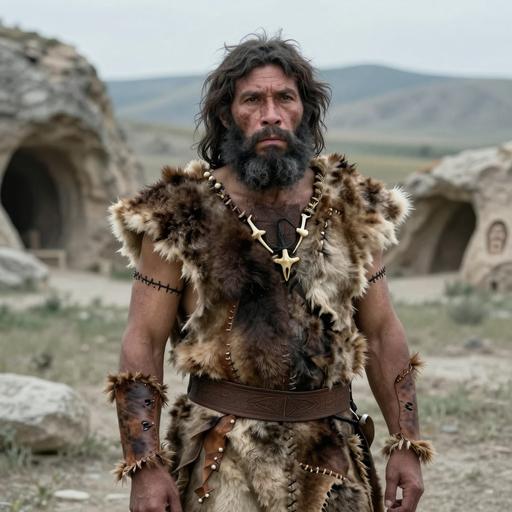
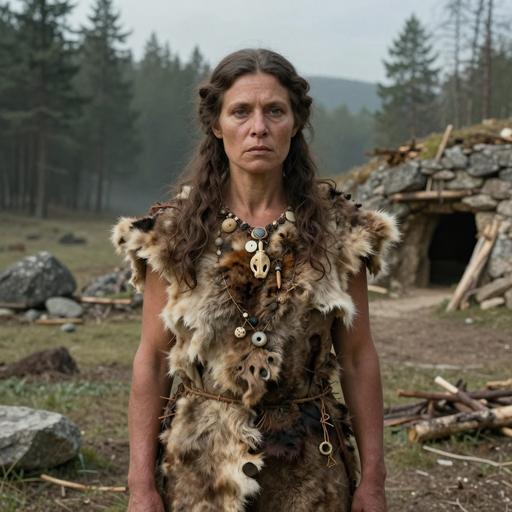
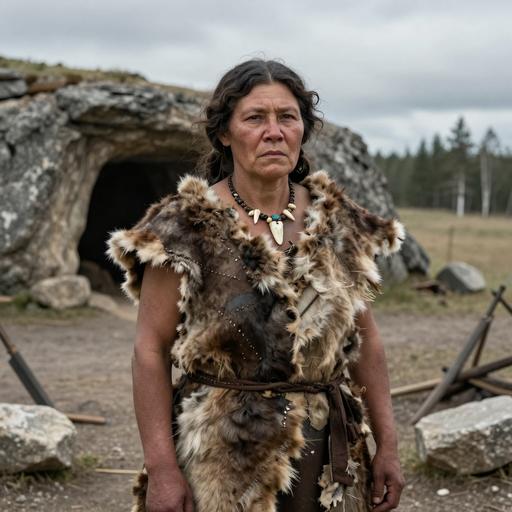
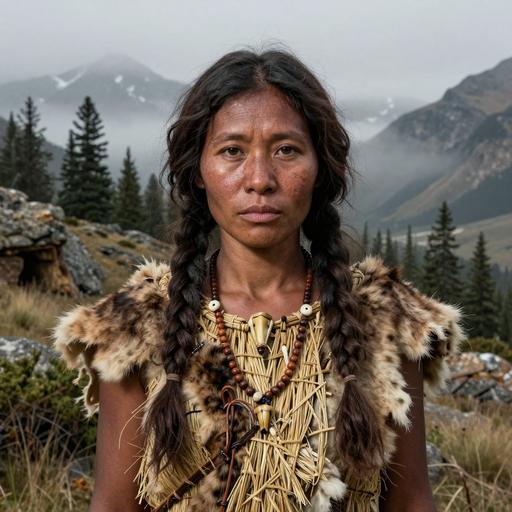
Les portraits sont des illustrations générées par IA. Les libellés d'échantillon et identifiants d'accès désignent les enregistrements de référence.

Portrait Échantillon Pays Époque Date Culture mtDNA Correspondance
Portrait illustratif généré par IA de Neanderthal individual, Spy Cave, Belgium (39,431-38,495 BCE)
Identifiant d'échantillon : Spy_final
Belgium Spy Neanderthal, Belgium 39431 BCE - 38495 BCE Spy Culture ND1b1a1b2* Sous-clade
Portrait illustratif généré par IA de Neanderthal individual, Spy Cave, Belgium (39,431-38,495 BCE)
Identifiant d'échantillon : Spy_final
Belgium Neanderthals 39431 BCE - 38495 BCE ND1b1a1b2* Sous-clade
Portrait illustratif généré par IA de Neanderthal individual, Les Cottes, France (41,201-40,596 BCE)
Identifiant d'échantillon : Les_Cottes_final
France Les Cottes Neanderthal 41201 BCE - 40596 BCE Les Cottes ND1b1* Sous-clade
Portrait illustratif généré par IA de Neanderthal individual, Les Cottes, France (41,201-40,596 BCE)
Identifiant d'échantillon : Les_Cottes_final
France Neanderthals 41201 BCE - 40596 BCE ND1b1* Sous-clade
Portrait illustratif généré par IA de Neanderthal individual, Mezmaiskaya, Russia (43,015-40,206 BCE)
Identifiant d'échantillon : Mezmaiskaya2_final
Russia Mezmaiskaya 2 Neanderthal 43015 BCE - 40206 BCE Mezmaiskaya ND1b1a* Sous-clade
Portrait illustratif généré par IA de Neanderthal individual, Mezmaiskaya, Russia (43,015-40,206 BCE)
Identifiant d'échantillon : Mezmaiskaya2_final
Russia Neanderthals 43015 BCE - 40206 BCE ND1b1a* Sous-clade
Portrait illustratif généré par IA de Neanderthal individual, North Caucasus. Republic of Adygea. Mezmaiskaya Cave, Russia (68,050-58,050 BCE)
Identifiant d'échantillon : Mezmaiskaya1
Russia Mezmaiskaya 1 Neanderthal 68050 BCE - 58050 BCE Mezmaiskaya ND1b2* Sous-clade
Portrait illustratif généré par IA de Neanderthal individual, North Caucasus. Republic of Adygea. Mezmaiskaya Cave, Russia (68,050-58,050 BCE)
Identifiant d'échantillon : Mezmaiskaya1
Russia Neanderthals 68050 BCE - 58050 BCE ND1b2* Sous-clade
Portrait illustratif généré par IA de Neanderthal individual, Chagyrskaya Cave, Russia (98,050-58,050 BCE)
Identifiant d'échantillon : Chagyrskaya
Russia Chagyrskaya Cave Neanderthal, Russia 98050 BCE - 58050 BCE Chagyrskaya ND1b1* Sous-clade
Portrait illustratif généré par IA de Neanderthal individual, Chagyrskaya Cave, Russia (98,050-58,050 BCE)
Identifiant d'échantillon : Chagyrskaya
Russia Neanderthals 98050 BCE - 58050 BCE ND1b1* Sous-clade
LIGNÉE MATERNELLE · ADN ANTIQUE

Carte des preuves de lignées antiques

Suivez les clades parents jusqu'à cette branche et explorez où des porteurs antiques ont été identifiés.

Chargement des observations antiques…

Les marqueurs indiquent des lieux de découvertes archéologiques. Un trait pointillé représente une transition géographique proposée et incertaine entre branches consécutives, appuyée sur plusieurs observations datées ; ce n'est pas un itinéraire exact, un lieu de naissance ni une preuve de descendance directe. Des échantillons de clades parents peuvent appartenir à d'autres branches descendantes. Des lacunes subsistent lorsque les preuves sont insuffisantes. Les dates d'échantillon diffèrent des dates de formation des haplogroupes.

Profil de référence

Carte de répartition des porteurs

Répartition géographique de 12 échantillons d'ADN ancien (porteurs directs et de sous-clade de ND)

Porteur de sous-clade
Filtre de période
Toutes les périodes
Affichage de tous les échantillons
Profil de référence

Répartition temporelle

Répartition des porteurs selon les périodes archéologiques

Profil de référence

Répartition géographique

Effectifs par pays d'échantillon consigné. Ils reflètent la sélection de référence disponible, pas des fréquences de population.

Profil de référence

Répartition pays × époque

Comparez les effectifs d'échantillons consignés selon les pays et les périodes archéologiques. Sélectionnez une cellule renseignée pour examiner un échantillon.

Données

Données et provenance

Informations sur les sources et qualité des données

Dernière mise à jour 2026-02-16
Score de confiance 50/100
Couverture Low

Source des données

La classification, les dates estimées et le contexte géographique reflètent les données de référence consignées et peuvent évoluer lorsque les éléments sont révisés. La couverture d'échantillons est inégale ; les lieux consignés et les associations archéologiques n'établissent pas une origine personnelle ni une identité culturelle.