Préparation du rapport

Chargement des informations et références disponibles

Connexion au corpus archéologique…

Collecte des archives antiques

Aller au contenu principal
Arroyo Seco II — 7200 Years Ago
Profil culturel

Arroyo Seco II — 7200 Years Ago

Mid‑Holocene Pampas foragers whose stones and genes trace ancient journeys

5462 CE - 50007200 BCE
Pampas, Argentina (Arroyo Seco II)
Faites défiler pour commencer
Chapitre I

Le récit

Comprendre la culture Arroyo Seco II — 7200 Years Ago

Arroyo Seco II (c. 5462–5000 BCE) captures mid‑Holocene hunter‑gatherers in the Argentine Pampas. Ancient DNA from two individuals shows mtDNA C1c and Y haplogroups P and Q, offering preliminary clues to maternal continuity and paternal diversity in early South America.

Time Period

c. 5462–5000 BCE (≈7200 BP)

Region

Pampas, Argentina (Arroyo Seco II)

Common Y-DNA

P, Q (one each; n=2)

Common mtDNA

C1c (both samples; n=2)

Chapitre II

Chronologie

Moments clés de l'histoire de cette culture

5462 BCE

Occupation documented at Arroyo Seco II

Archaeological deposits at Arroyo Seco II date to c. 5462–5000 BCE, marking mid‑Holocene forager occupation in the Pampas.

Chapitre III

Origins & Emergence

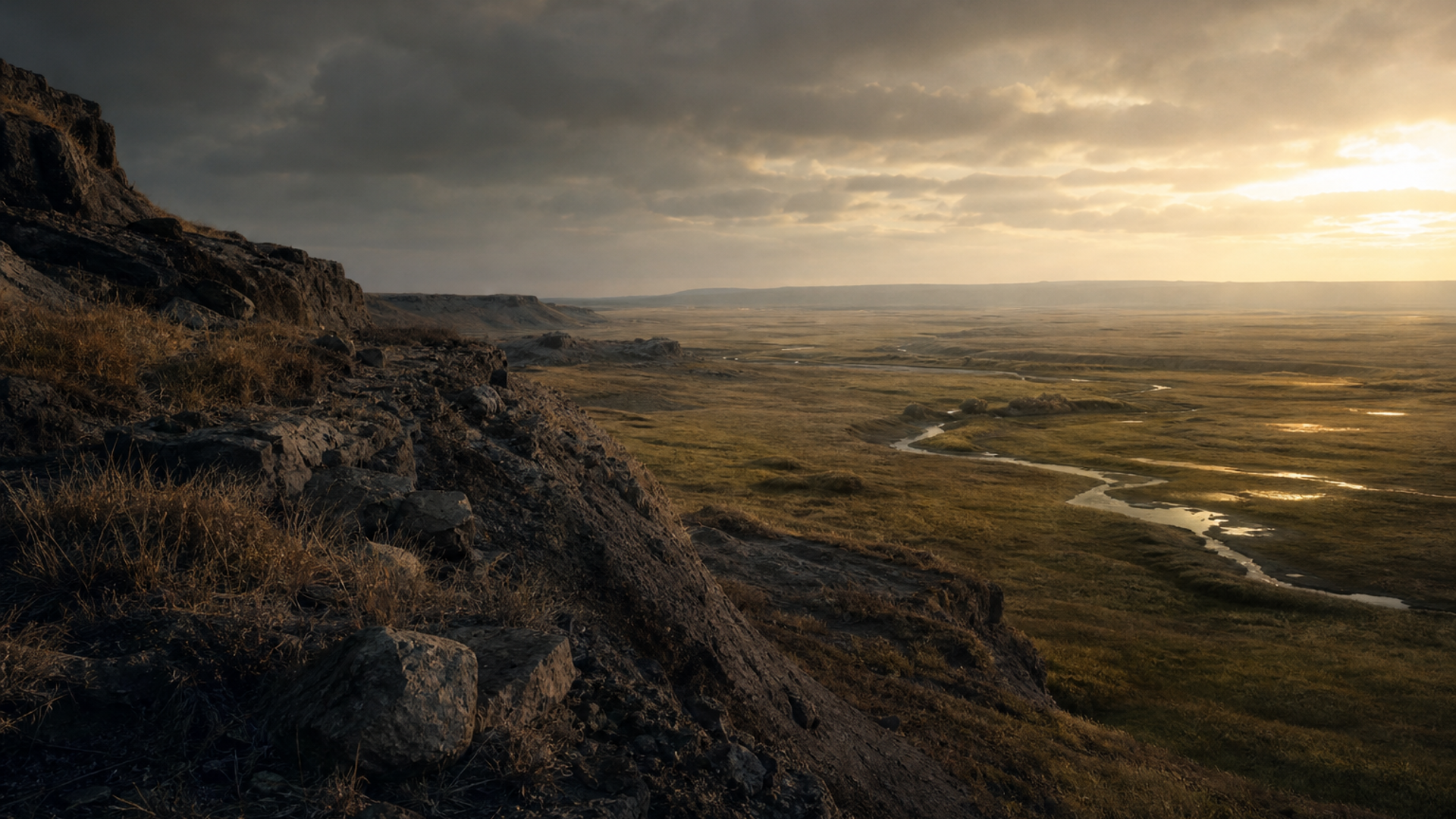
Arroyo Seco II sits within the broad sweep of the mid‑Holocene Pampas, a landscape of rivers, wetlands and grasslands where human groups adapted to post‑glacial environments. Radiocarbon and contextual dating place the documented occupation between roughly 5462 BCE and 5000 BCE (≈7200 BP). Archaeological data indicates a foraging economy tuned to local resources; seasonal movements and flexible camp patterns would have been well suited to shifting riverine and plain ecosystems.

Genetically, the tiny aDNA sample set from Arroyo Seco II offers a faint but evocative signal of deeper population history. Both recovered mitochondrial genomes belong to haplogroup C1c, a maternal lineage widely documented in early and later Native American contexts. On the paternal side, one individual carries haplogroup Q, a lineage commonly associated with Native American male ancestry, while the other is reported as haplogroup P — which may reflect an under‑resolved paternal assignment or a rare branch captured in older classification schemes.

Limited evidence suggests continuity of maternal lineages in the region, but the small sample size (n=2) means these inferences must remain tentative. Archaeological patterns combined with emerging genetic data point toward long‑standing occupation and local adaptation, yet they also highlight the need for broader sampling to resolve migration routes, sex‑biased processes, and population structure during the mid‑Holocene.

  • Occupation dated c. 5462–5000 BCE (≈7200 BP)
  • Located in the Pampas at Arroyo Seco II, Argentina
  • Genetic hints of maternal continuity (mtDNA C1c) but very limited sample size
Chapitre IV

Daily Life & Society

Archaeological excavations at Arroyo Seco II reveal the traces of mobile, resource‑flexible lifeways. Lithic assemblages and faunal remains recovered from the site indicate a mixed foraging economy: hunting of local game, capture of aquatic and semi‑aquatic species in river channels and wetlands, and collection of seasonally available plants. Hearth features and discard lenses (where present) suggest ephemeral camps revisited across seasonal rounds rather than permanently occupied villages.

Social groups were likely small, kin‑based bands in which tasks were shared and knowledge of landscape and resource pulses was essential. Craft specialization appears limited in the archaeological record, consistent with mobile lifeways: stone tools were often expediently produced and maintained, and organic technologies (wooden tools, baskets, cordage) leave poor archaeological visibility but were likely integral. Material culture — flaked stone, occasional ground stone and use‑wear patterns — speaks to a pragmatic engagement with place.

Mortuary and ritual practices at Arroyo Seco II are not well characterized in the available data; however, the recovery of human remains suitable for DNA indicates that people were buried or deposited within the sedimentary contexts accessible to excavation. Archaeological data indicates resilience and adaptability in a changing mid‑Holocene environment, but many aspects of social organization remain underdetermined pending further fieldwork and interdisciplinary study.

  • Mixed foraging economy focused on riverine and grassland resources
  • Small, mobile bands with pragmatic lithic technologies
Chapitre V

Genetic Profile

Ancient DNA from Arroyo Seco II comprises two individuals — a very small dataset that must be interpreted cautiously. Both individuals share mitochondrial haplogroup C1c, a maternal lineage known across ancient and modern populations in the Americas; this pattern is consistent with regional maternal continuity but cannot on its own prove long‑term demographic stability. On the paternal side the two Y‑chromosome assignments differ: one individual is assigned to haplogroup Q, commonly found in Native American male lineages, while the other is reported as haplogroup P. Haplogroup P sits upstream of Q in global Y‑phylogeny and, in some cases, may reflect limited resolution or rare paternal variants in older datasets.

These genetic signals, read alongside archaeology, are evocative: the shared mtDNA suggests women bearing C1c lineages were present in the Pampas during the mid‑Holocene, while the paternal diversity hints at complex male line histories or classification uncertainty. However, with only two samples the probability of capturing population‑level variation is low. Sex‑biased mobility, founder effects, and small band sizes can produce patterns that look like continuity or change in tiny datasets.

Arroyo Seco II highlights the power of ancient DNA to open a window on past lifeways, but it also demonstrates the necessity of larger, geographically and temporally distributed samples to distinguish local continuity from broader migratory processes.

  • Both samples carry mtDNA C1c — suggests possible maternal continuity
  • Y‑DNA shows P and Q (one each) — indicates preliminary paternal diversity or under‑resolution
Chapitre VI

Legacy & Modern Connections

The remains at Arroyo Seco II provide a tangible link between the deep past and present‑day Indigenous landscapes of Argentina. Genetic affinities such as mtDNA C1c connect these mid‑Holocene individuals to maternal lineages observed across the Americas, offering a molecular thread through time. Archaeology and aDNA together suggest long‑running human engagement with Pampas environments, but they stop short of claiming direct ancestry without broader comparative data and respectful collaboration with descendant communities.

The site's legacy is twofold: scientifically, it underscores how even very small ancient DNA samples can reshape questions about mobility, continuity and regional diversity; ethically and culturally, it reminds researchers to engage with Indigenous stakeholders, prioritize repatriation and stewardship, and communicate uncertainty transparently. Future work — expanded sampling, better chronological control, and community partnerships — will be essential to transform preliminary genomic glimpses into robust narratives of human history in the Pampas.

  • Genetic ties hint at continuity with broader Native American maternal lineages
  • Findings are preliminary; respectful collaboration and further sampling are needed
Propulsé par l'IA

Assistant IA

Posez des questions sur la culture Arroyo Seco II — 7200 Years Ago

Assistant IA par DNAGENICS

Débloquer cette fonction
Posez des questions sur la culture Arroyo Seco II — 7200 Years Ago. L'assistant IA peut expliquer les résultats génétiques, le contexte historique, les preuves archéologiques et les liens génétiques avec les populations actuelles, dans les limites de l'interprétation.
Exemple d'analyse IA

La culture Arroyo Seco II — 7200 Years Ago représente un chapitre fascinant de l'histoire humaine…

L'analyse génétique met en évidence des similarités avec des populations antérieures et des signes d'adaptations propres. Les échantillons d'ADN ancien éclairent les schémas migratoires et les liens entre populations, avec des limites qui dépendent de l'étude et du contexte archéologique.

Il s'agit d'un aperçu de l'analyse IA. Accédez à l'assistant complet pour explorer :

  • Composition et similarité génétique
  • Schémas migratoires et origines
  • Vie quotidienne et pratiques culturelles
  • Contexte génétique actuel

Explorez d'autres cultures antiques

Découvrez les récits de civilisations issues du monde antique