Préparation du rapport

Chargement des informations et références disponibles

Connexion au corpus archéologique…

Collecte des archives antiques

Aller au contenu principal
Asturian Mesolithic Shores
Profil culturel

Asturian Mesolithic Shores

Hunter-gatherers of Asturias (6589–5626 BCE): coastal life in shell, bone, and DNA

6589 CE - 5626 BCE
Asturias, Northern Spain (Llanes)
Faites défiler pour commencer
Chapitre I

Le récit

Comprendre la culture Asturian Mesolithic Shores

Archaeological and genetic glimpses of Mesolithic communities from El Mazo and El Toral-3 (Asturias, Spain). Limited samples show mitochondrial U lineages and a Y-haplogroup I, linking these coastal foragers to western hunter-gatherer ancestries.

Time Period

6589–5626 BCE (Mesolithic)

Region

Asturias, Northern Spain (Llanes)

Common Y-DNA

I (1/3 samples)

Common mtDNA

U (3/3 samples)

Chapitre II

Chronologie

Moments clés de l'histoire de cette culture

6589 BCE

Earliest dated individual from El Mazo

One of the human remains from El Mazo yields a radiocarbon date near 6589 BCE, marking an early Mesolithic presence on the Cantabrian coast.

Chapitre III

Origins & Emergence

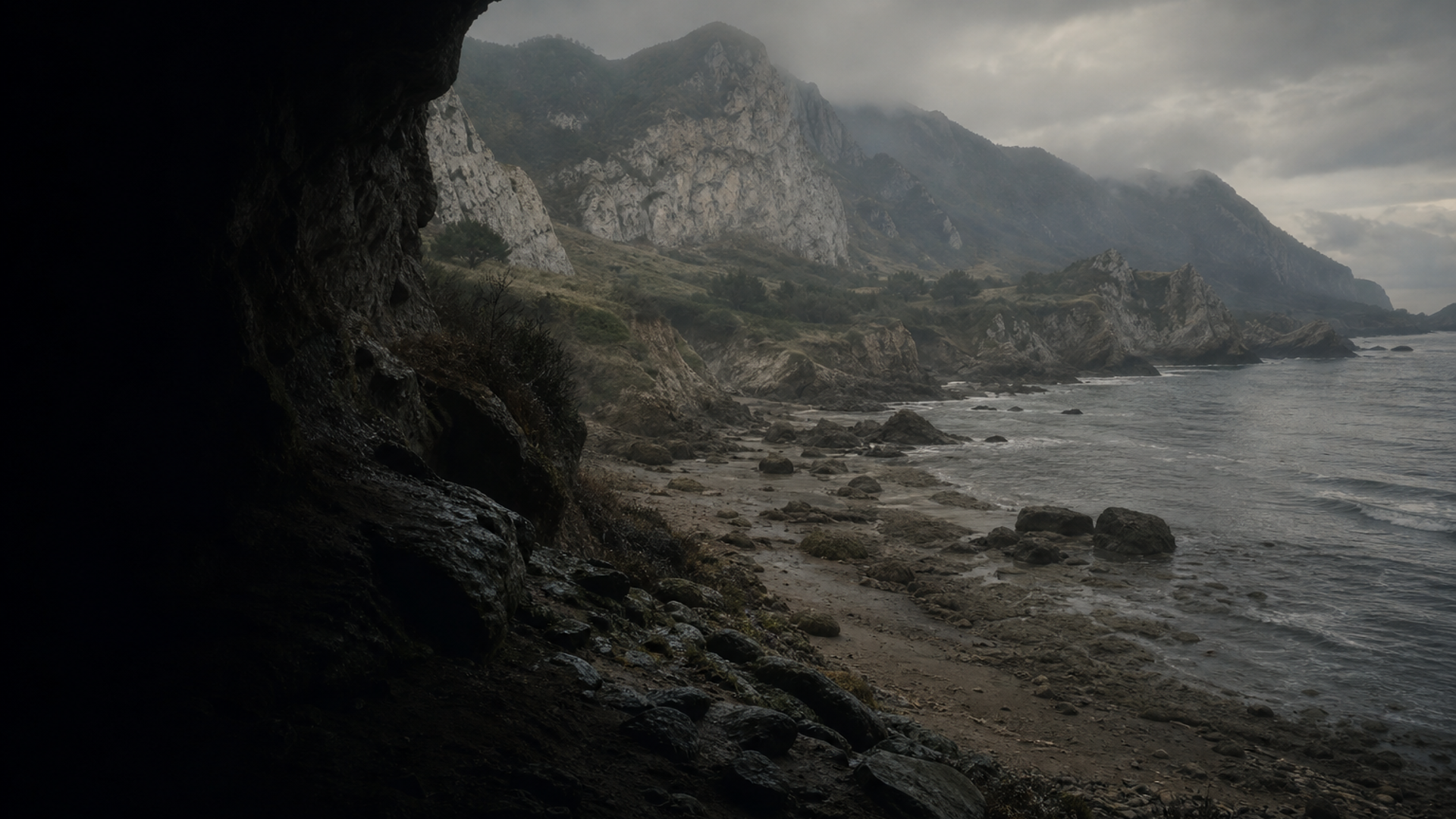
Along the jagged coastline of present-day Asturias, caves and rock-shelters preserve layered memories of Mesolithic life. El Mazo and El Toral-3 (Llanes) contain stratified deposits with shell middens, charcoal lenses and worked flint that archaeologists read as seasonal campsites and dense coastal foraging zones. Radiocarbon dates for the human remains sampled fall between 6589 and 5626 BCE, placing these individuals in the later Mesolithic phase in northern Iberia.

Archaeological data indicates repeated use of these shelters for generations, with material traces of marine exploitation — fish bone, mollusc shells — and small blade technologies. Limited evidence suggests mobility was often oriented along the shoreline, exploiting estuaries and rocky reefs. Environmental reconstructions place these communities in a temperate, postglacial landscape where sea levels and resources were stabilizing.

The cultural label "Asturian Mesolithic" groups local archaeological traits, but must be treated cautiously: the term reflects shared material patterns more than a single unified society. With only three genetic samples available, demographic inferences are preliminary. Nevertheless, the convergence of cave deposits, radiocarbon chronology, and emerging ancient DNA provides a coherent, if fragmentary, picture of Mesolithic life on the Cantabrian coast.

  • Sites: El Mazo and El Toral-3, Llanes, Principado de Asturias
  • Dates: 6589–5626 BCE (radiocarbon)
  • Context: coastal camps with shell middens and microlithic tools
Chapitre IV

Daily Life & Society

A cinematic image arises from the archaeology: low flames flickering inside a rock-shelter, the steady clack of flint tools, lines of shells drying in the sun. Faunal remains at El Mazo and El Toral-3 demonstrate a diet rich in marine foods — molluscs, fish, and occasional marine mammals — complemented by hunted terrestrial game and gathered plants. Lithic assemblages are characterized by small blades and retouched microliths suitable for composite tools and fishing implements.

Archaeological data indicates that social groups were likely small and mobile, tied to predictable seasonal rounds along the coast and estuaries. Spatial organization within shelters points to repeated, structured use of hearths and discard areas. Crafted personal items are rare but suggest subtle social signaling rather than elaborate display. Limited evidence suggests burial practices were simple and sometimes located within habitation contexts; however, funerary data from these sites remain sparse.

These lifeways reflect adaptive flexibility: intimate knowledge of tidal cycles, fish behavior, and foraging patches would have structured daily schedules and social networks. While evocative, the material record is fragmentary — interpretive caution is essential given the small number of preserved human remains.

  • Economy: primarily marine resources with complementary terrestrial hunting
  • Settlement: seasonal, nearshore camps with structured hearth and discard areas
Chapitre V

Genetic Profile

Three human individuals from the Asturian Mesolithic dataset provide a rare DNA window into northern Iberian foragers. All three carry mitochondrial haplogroups assigned to lineage U, a maternal lineage commonly found across Upper Paleolithic and Mesolithic Europe. One sampled male shows Y-chromosome haplogroup I, a lineage widely associated with European hunter-gatherer populations.

This genetic signal is consistent with a broader pattern: Mesolithic populations of western and northern Europe frequently show high proportions of U mtDNA and regional Y-haplogroups such as I. Genomic ancestry profiles (when available for more individuals) often cluster within the Western Hunter-Gatherer (WHG) genetic continuum. For the Asturian samples, the small count (n=3) demands restraint — these data are suggestive rather than definitive. Statistical power is limited, and low sample numbers can underrepresent genetic diversity and obscure rare lineages.

Archaeogenetic interpretation should therefore emphasize continuity in maternal U lineages and a presence of Y-haplogroup I consistent with hunter-gatherer demography. Future sampling from a wider temporal range and additional individuals could reveal admixture episodes, interactions with contemporaneous inland groups, or genetic continuity into later Neolithic populations of Iberia.

  • All three samples carry mtDNA U (consistent with Mesolithic Europe)
  • One male carries Y-haplogroup I; patterns align with Western Hunter-Gatherer ancestry
Chapitre VI

Legacy & Modern Connections

The Asturian Mesolithic people left a subtle but persistent imprint on the landscape and, potentially, on later population histories of Iberia. Maternally inherited U lineages are ancestral components that persist in variable frequencies across Europe and contribute to the genetic mosaic that later Neolithic and Bronze Age groups encountered. Genomic continuity in coastal refugia is a plausible scenario: the Cantabrian coast acted as a stable resource zone where hunter-gatherer groups may have endured alongside incoming farming communities.

However, any narrative of direct descent to modern Asturian populations must be tentative. The limited sample size and later demographic events — migrations, cultural shifts, and population replacements — complicate simple continuity claims. Archaeological continuity in tool traditions and settlement patterns hints at long-standing coastal strategies, while genetics offers tantalizing, preliminary confirmations that Mesolithic maternal and paternal lineages formed part of the deep ancestral substrate of western Europe.

  • mtDNA U contributes to the broader genetic ancestry of Europe
  • Coastal refugia like Asturias may have been long-term pockets of hunter-gatherer continuity
Propulsé par l'IA

Assistant IA

Posez des questions sur la culture Asturian Mesolithic Shores

Assistant IA par DNAGENICS

Débloquer cette fonction
Posez des questions sur la culture Asturian Mesolithic Shores. L'assistant IA peut expliquer les résultats génétiques, le contexte historique, les preuves archéologiques et les liens génétiques avec les populations actuelles, dans les limites de l'interprétation.
Exemple d'analyse IA

La culture Asturian Mesolithic Shores représente un chapitre fascinant de l'histoire humaine…

L'analyse génétique met en évidence des similarités avec des populations antérieures et des signes d'adaptations propres. Les échantillons d'ADN ancien éclairent les schémas migratoires et les liens entre populations, avec des limites qui dépendent de l'étude et du contexte archéologique.

Il s'agit d'un aperçu de l'analyse IA. Accédez à l'assistant complet pour explorer :

  • Composition et similarité génétique
  • Schémas migratoires et origines
  • Vie quotidienne et pratiques culturelles
  • Contexte génétique actuel

Explorez d'autres cultures antiques

Découvrez les récits de civilisations issues du monde antique