Préparation du rapport

Chargement des informations et références disponibles

Connexion au corpus archéologique…

Collecte des archives antiques

Aller au contenu principal
Beagle Channel Yamana (100 yrs ago)
Profil culturel

Beagle Channel Yamana (100 yrs ago)

Coastal hunter-gatherers of Tierra del Fuego revealed by archaeology and ancient DNA

1550 CE - 1960 CE
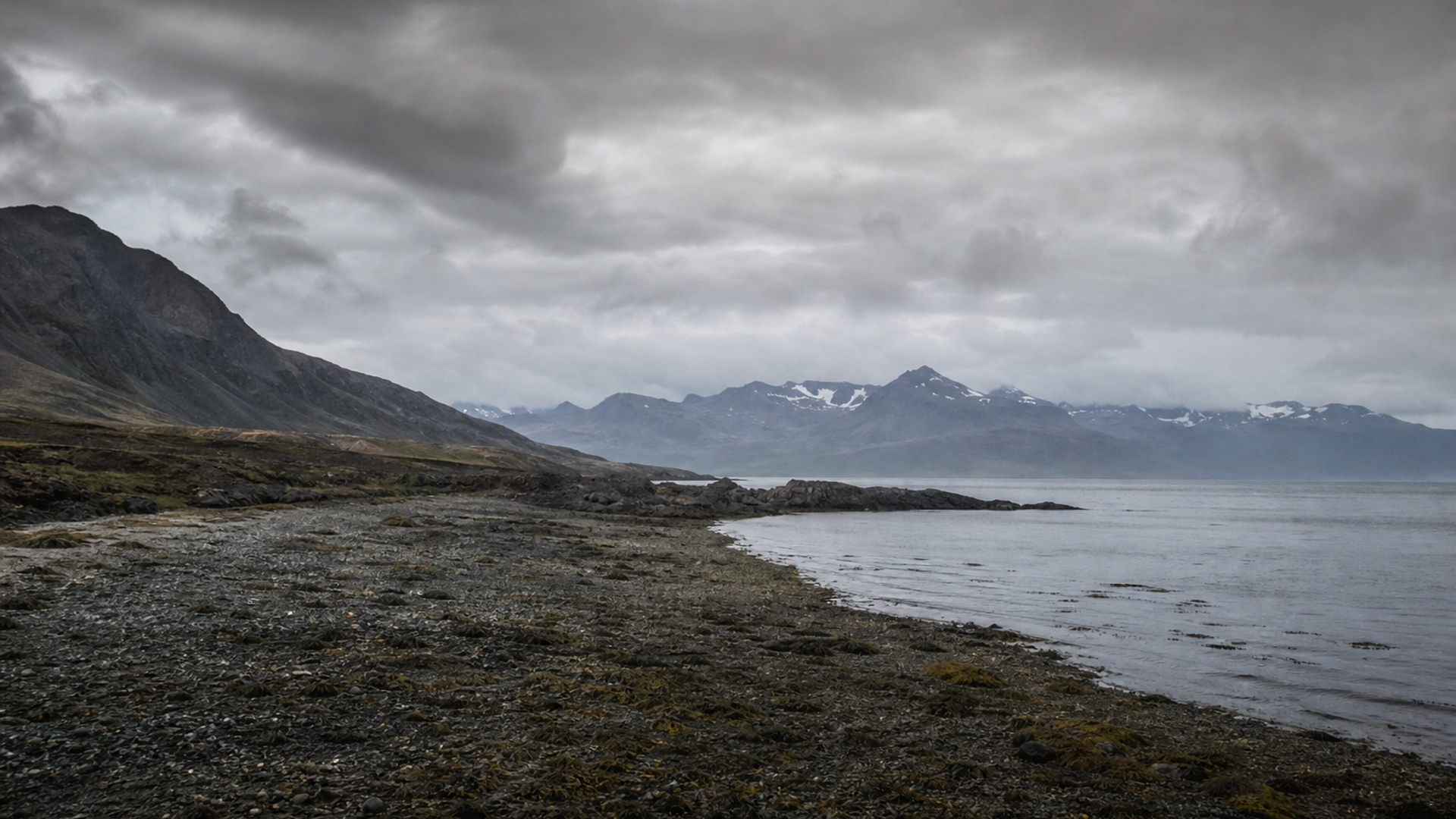
Beagle Channel, Tierra del Fuego, Argentina
Faites défiler pour commencer
Chapitre I

Le récit

Comprendre la culture Beagle Channel Yamana (100 yrs ago)

Archaeological remains and six ancient DNA samples from the Beagle Channel (Almanza, Acatushún) paint a picture of late Yamana maritime lifeways (1550–1960 CE). Preliminary genetic data show indigenous paternal Q lineages and mtDNA C1b and D, suggesting regional continuity amid historic disruption.

Time Period

1550–1960 CE

Region

Beagle Channel, Tierra del Fuego, Argentina

Common Y-DNA

Q (observed; 2 of 6 samples)

Common mtDNA

C1b (4 of 6), D (2 of 6)

Chapitre II

Chronologie

Moments clés de l'histoire de cette culture

1520 CE

European passage near Tierra del Fuego

Ferdinand Magellan's expedition passes the southern tip of South America, marking the beginning of recorded European awareness of the region.

1800 CE

Intensified outside contact

19th-century whalers, sealers, and missionaries increase regular contact with Beagle Channel communities, altering trade and lifeways.

1950 CE

Historic-period Yamana samples

Ancient DNA samples dated within the range 1550–1960 CE document genetic lineages from Almanza and Acatushún on the Beagle Channel.

Chapitre III

Origins & Emergence

The Yamana people of the Beagle Channel occupy the southernmost edge of human maritime adaptation. Archaeological data indicates long-term use of coastal resources—rich shell middens, fish and seal processing sites, and ephemeral camp spots—along channels and sheltered coves of Tierra del Fuego. Site names tied to the samples include Almanza and Acatushún on the Argentine side of the Beagle Channel.

Limited evidence suggests that these late-Holocene communities maintained a resilient, mobile lifeway well adapted to cold, wind-swept seas. Material traces from the historic period (circa 1550–1960 CE) show continuity in marine foraging technologies alongside growing impacts from external contacts in the 19th and 20th centuries. Archaeological layers often preserve bone, shell, and occasional trade goods; each element helps map cultural persistence and change.

While the archaeological record in this region is fragmentary and often disturbed by later activity, the combined pattern points to a people whose lifeways were shaped by navigation, small-group mobility, and deep ecological knowledge of tidal flats and kelp-lined channels.

  • Sites: Almanza and Acatushún on the Argentine Beagle Channel
  • Evidence: shell middens, marine resource processing, ephemeral camps
  • Context: late-Holocene maritime adaptation with historic-period contacts
Chapitre IV

Daily Life & Society

Imagine a shoreline sketched by tides and wind: families moving between sheltered bays, launching canoes at dawn, and processing fish and seal in hearth-scattered camps. Archaeological data indicates that Yamana daily life centered on marine foraging—shellfish, fish, seabirds, and marine mammals—supplemented by seasonal inland visits for plants and small game. Lightweight, portable technology and organic toolkits (many items do not preserve well) are consistent with a pattern of mobility.

Social groups were likely small and flexible, with kin networks sharing camps and resources. Ethnohistoric observations from the 19th century describe supple navigation skills and intimate environmental knowledge; archaeology supports this with concentrations of food refuse and artifact scatters close to the shoreline. Contact with sailors, missionaries, and colonists in the historic era introduced new materials and pressures, which are visible archaeologically as traded objects and changes in settlement patterns.

Because preservation of organic materials is uneven and many coastal deposits have been altered by later activity, interpretations rely on careful integration of artifact distributions, ecofacts, and the faint genetic signal preserved in a small number of samples.

  • Marine-focused diet: shellfish, fish, seabirds, seals
  • Small, mobile social groups adapted to tidal landscapes
Chapitre V

Genetic Profile

Six ancient DNA samples from the Beagle Channel region (Almanza, Acatushún, and nearby coastal localities) provide a small but valuable window into Yamana ancestry between roughly 1550 and 1960 CE. In these specimens, paternal lineages include haplogroup Q (observed in 2 of 6 individuals), a lineage widely recognized across Native American populations. Maternal haplogroups are dominated by C1b (4 of 6) and D (2 of 6), both of which are characteristic mtDNA branches in southern South America.

Archaeological and genetic lines converge to suggest continuity of indigenous lineages in the Beagle Channel into the historic period. However, because the sample count is low (<10), these results are preliminary and should not be overgeneralized. Limited evidence suggests local persistence of core Native American maternal and paternal markers, but the small dataset cannot resolve fine-scale population structure, mobility patterns, or the timing and extent of gene flow from outside groups.

Future sampling—ideally more individuals across multiple sites and tightly dated contexts—will be necessary to test hypotheses about demographic continuity, population size changes, and the genetic impact of 19th–20th century contact events. Until then, the current genetic profile offers a cautious but evocative glimpse: a maritime people whose DNA preserves elements of a deep southern American heritage.

  • Paternal: Haplogroup Q observed (2/6) — common in Native American lineages
  • Maternal: mtDNA C1b (4/6) and D (2/6) — indicative of indigenous southern haplogroups; conclusions are preliminary
Chapitre VI

Legacy & Modern Connections

The Yamana of the Beagle Channel remain present in regional memory and in ongoing Indigenous identities across Tierra del Fuego. Archaeology and ancient DNA together underscore threads of genetic continuity that link historic-period individuals to deeper Native American lineages.

At the same time, historic disruptions—disease, displacement, and cultural change following intensive 19th–20th century contact—changed demographic patterns and lifeways. Genetic data from a small set of late historic samples tentatively indicate persistence of indigenous maternal and paternal markers, but also highlight the fragility of biological and cultural continuities under colonial pressures.

Cautious interpretation and further study are needed to honor both the scientific record and the living descendants whose heritage is entwined with these landscapes.

  • Genetic continuity hints at deep indigenous roots in the Beagle Channel
  • Historic contact brought cultural and demographic disruptions visible archaeologically
Propulsé par l'IA

Assistant IA

Posez des questions sur la culture Beagle Channel Yamana (100 yrs ago)

Assistant IA par DNAGENICS

Débloquer cette fonction
Posez des questions sur la culture Beagle Channel Yamana (100 yrs ago). L'assistant IA peut expliquer les résultats génétiques, le contexte historique, les preuves archéologiques et les liens génétiques avec les populations actuelles, dans les limites de l'interprétation.
Exemple d'analyse IA

La culture Beagle Channel Yamana (100 yrs ago) représente un chapitre fascinant de l'histoire humaine…

L'analyse génétique met en évidence des similarités avec des populations antérieures et des signes d'adaptations propres. Les échantillons d'ADN ancien éclairent les schémas migratoires et les liens entre populations, avec des limites qui dépendent de l'étude et du contexte archéologique.

Il s'agit d'un aperçu de l'analyse IA. Accédez à l'assistant complet pour explorer :

  • Composition et similarité génétique
  • Schémas migratoires et origines
  • Vie quotidienne et pratiques culturelles
  • Contexte génétique actuel

Explorez d'autres cultures antiques

Découvrez les récits de civilisations issues du monde antique