Préparation du rapport

Chargement des informations et références disponibles

Connexion au corpus archéologique…

Collecte des archives antiques

Aller au contenu principal
Carmel Coast Ancestors (1300–1800 CE)
Profil culturel

Carmel Coast Ancestors (1300–1800 CE)

Fragments of shell, bone, and DNA illuminate a coastal people at the edge of Monterey Bay.

1300 CE - 1800 CE
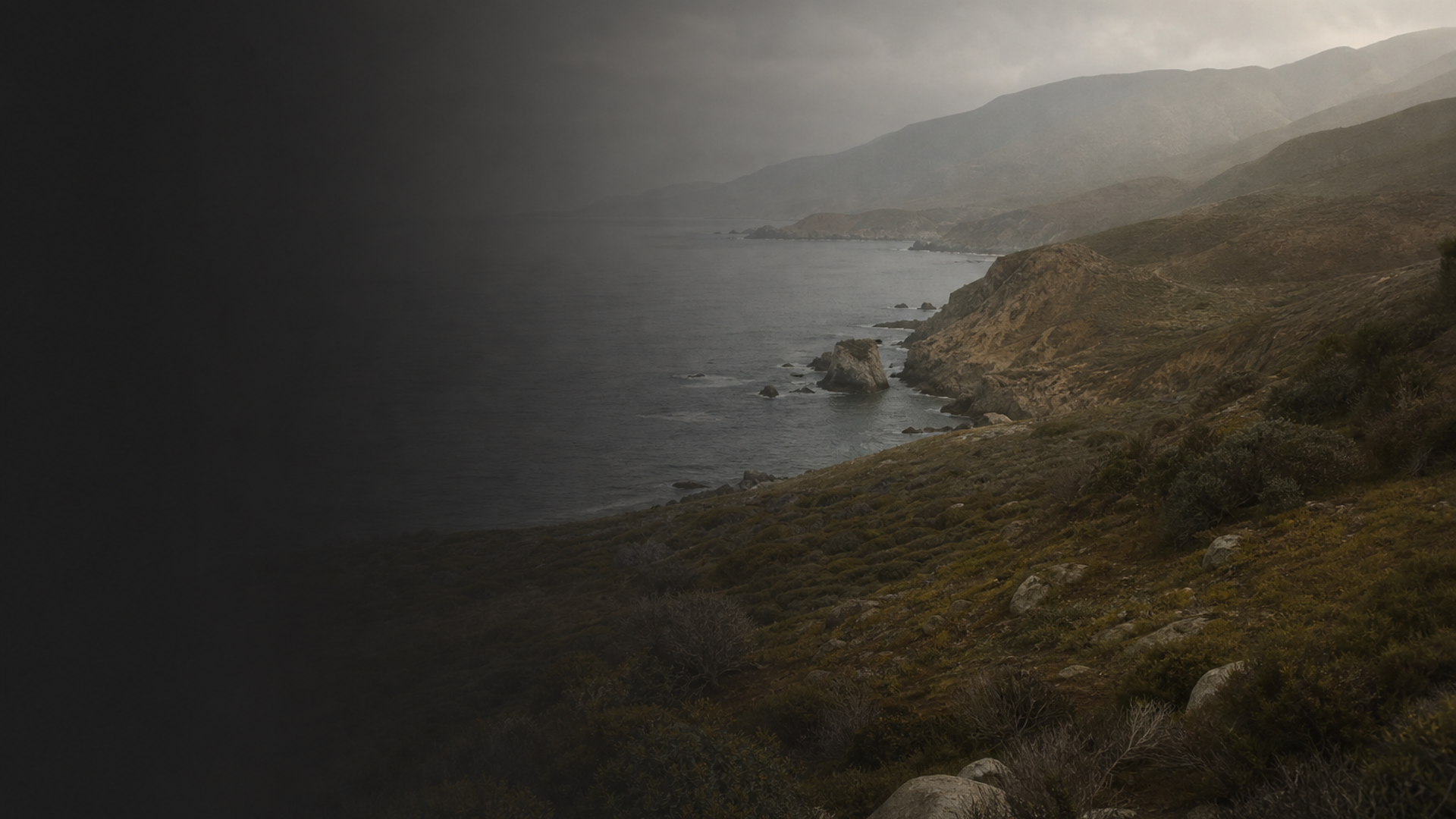
Carmel, California (USA)
Faites défiler pour commencer
Chapitre I

Le récit

Comprendre la culture Carmel Coast Ancestors (1300–1800 CE)

Archaeological remains from Carmel, California (1300–1800 CE) and five ancient genomes reveal a coastal Native American group dominated by Y-DNA Q and maternal lineages A/A2/C. Limited samples mean conclusions are preliminary; archaeology and genetics together suggest deep regional continuity.

Time Period

1300–1800 CE

Region

Carmel, California (USA)

Common Y-DNA

Q (predominant in samples — 4/5)

Common mtDNA

A, A2, C (3,1,1 in 5 samples)

Chapitre II

Chronologie

Moments clés de l'histoire de cette culture

1300 CE

Local coastal lifeways flourish

Archaeological layers indicate established shellfish harvesting, fishing, and seasonal occupation around Carmel.

1769 CE

First sustained European contact in region

Spanish exploratory expeditions reached the Monterey Bay area, initiating new cultural and epidemiological pressures.

1770 CE

Mission establishment and disruption

Mission foundations nearby mark the start of intensified colonial impacts on local Indigenous lifeways and demography.

Chapitre III

Origins & Emergence

Along the rocky shorelines and sheltered coves of Carmel, archaeological traces—layered shell middens, charcoal-stained hearths, and flaked stone—gesture toward a people adapted to the rhythms of the Pacific. Radiocarbon-calibrated contexts and stratigraphic relationships place the assemblage between roughly 1300 and 1800 CE, a window that captures both long-standing coastal lifeways and the first disruptions of the colonial era.

Archaeological data indicate intensive exploitation of marine resources: bivalves, fish vertebrae, and marine mammal remains are common in midden deposits. Lithic tools and ground stone fragments attest to plant processing and local tool manufacture. The material record aligns with broader patterns along central California’s coast where seasonal foraging, small-scale sedentism, and finely tuned maritime technologies prevailed.

Limited evidence suggests cultural connections to neighboring groups historically recorded in the region (for example, Rumsen Ohlone and Esselen territories), but settlement names and ethnographic boundaries should be treated cautiously. Genetic data from five individuals augment the picture by indicating uniparental lineages commonly associated with Indigenous populations of the Americas, hinting at regional continuity while underscoring the need for more samples and community collaboration.

  • Archaeological contexts dated to 1300–1800 CE along Carmel coast
  • Shell middens, hearths, and stone tools indicate marine-focused subsistence
  • Material culture suggests ties to broader central California coastal traditions
Chapitre IV

Daily Life & Society

Imagine a fog-bleached morning on the Carmel shore: clam racks steaming on low-lying fires, bone and shell tools drying on driftwood frames, and small camps clustering near year-round freshwater springs. Archaeological assemblages—densely packed shell deposits, fish bone concentrations, and hearth features—evoke a subsistence economy built on shellfish, nearshore fishing, and seasonal gathering of terrestrial plants.

Social life likely revolved around flexible household groups that moved seasonally between shore and upland resources. Ornament production—shell beads, pendants, and worked bone—points to personal adornment and possibly exchange networks along the coast. Spatial patterns in midden size and artifact types suggest both sedentary use of favored spots and mobility that tracked resource abundance.

By the late 18th century, historic-contact pressures (missionization, introduced disease, livestock) altered lifeways in profound ways. Archaeological layers near the end of the sequence sometimes show shifts in artifact frequency and new material types, consistent with disruption. Yet many aspects of daily practice recorded in the pre-contact deposits reflect deep ecological knowledge of the Monterey Bay coastline.

  • Marine harvesting (shellfish, fish) was central to subsistence
  • Shell beads and worked bone indicate craft production and exchange
Chapitre V

Genetic Profile

Five ancient individuals from Carmel produced uniparental markers that help anchor biological relationships in the landscape, but the small sample size makes all inferences provisional. Y-chromosome haplogroup Q appears in four samples — a lineage widely observed among Indigenous peoples across the Americas and consistent with deep Native American paternal ancestry. Maternal lineages are dominated by haplogroup A (three counts, including one designated A2) and a single occurrence of haplogroup C. Both A and C are canonical Native American mtDNA clades.

These uniparental results align with expectations for coastal California populations, supporting the interpretation that these individuals were part of broader Indigenous genetic variation in the region. However, uniparental markers reflect only single ancestral lines; they cannot reveal the full autosomal ancestry or subtle admixture events. Because the dataset comprises fewer than ten genomes, conclusions about population structure, continuity, or migration remain preliminary. Future analyses of additional samples and genome-wide data—combined with radiocarbon dates and robust community consultation—are essential to test hypotheses about long-term continuity versus recent influx or admixture, and to place these individuals within the wider tapestry of Native Californian genetic diversity.

  • Y-DNA Q dominant (4/5) — consistent with Native American paternal ancestry
  • mtDNA A/A2 and C present (3,1,1) — typical Native American maternal lineages; conclusions are preliminary due to small sample size
Chapitre VI

Legacy & Modern Connections

The bones and beads from Carmel are not just data points; they are traces of communities whose descendants survive today. Historical and ethnographic records identify groups such as Rumsen Ohlone and Esselen among the peoples of the Monterey and Carmel region, and the genetic signals identified here are consistent with Indigenous American ancestry common to the area. Archaeology and ancient DNA together can strengthen ties between past and present when research proceeds in partnership with descendant communities.

Because the genomic sample is small, genetic claims must be framed with humility. Rather than replacing oral histories or living traditions, ancient genomes can complement them—illuminating mobility, kinship patterns, and long-term resilience while foregrounding the ethical obligations of reburial, consultation, and shared stewardship. The true legacy of the Carmel coast ancestors lives in both the scientific record and the continuing cultural landscapes cared for by Indigenous communities today.

  • Genetic signals align with regional Indigenous ancestries; interpret cautiously
  • Collaboration with descendant communities is essential for ethical research and interpretation
Propulsé par l'IA

Assistant IA

Posez des questions sur la culture Carmel Coast Ancestors (1300–1800 CE)

Assistant IA par DNAGENICS

Débloquer cette fonction
Posez des questions sur la culture Carmel Coast Ancestors (1300–1800 CE). L'assistant IA peut expliquer les résultats génétiques, le contexte historique, les preuves archéologiques et les liens génétiques avec les populations actuelles, dans les limites de l'interprétation.
Exemple d'analyse IA

La culture Carmel Coast Ancestors (1300–1800 CE) représente un chapitre fascinant de l'histoire humaine…

L'analyse génétique met en évidence des similarités avec des populations antérieures et des signes d'adaptations propres. Les échantillons d'ADN ancien éclairent les schémas migratoires et les liens entre populations, avec des limites qui dépendent de l'étude et du contexte archéologique.

Il s'agit d'un aperçu de l'analyse IA. Accédez à l'assistant complet pour explorer :

  • Composition et similarité génétique
  • Schémas migratoires et origines
  • Vie quotidienne et pratiques culturelles
  • Contexte génétique actuel

Explorez d'autres cultures antiques

Découvrez les récits de civilisations issues du monde antique