Préparation du rapport

Chargement des informations et références disponibles

Connexion au corpus archéologique…

Collecte des archives antiques

Aller au contenu principal
Dongmaili: Iron Age Crossroads
Profil culturel

Dongmaili: Iron Age Crossroads

Three mitochondrial genomes from Dongmaili hint at east–west maternal threads in Iron Age Xinjiang

743 CE - 386 BCE
Xinjiang (Yili, Nileke County), China
Faites défiler pour commencer
Chapitre I

Le récit

Comprendre la culture Dongmaili: Iron Age Crossroads

Archaeological and genetic glimpses from Dongmaili (Nileke County, Yili, Xinjiang) dated 743–386 BCE reveal maternal lineages tied to both East and West Eurasia. Limited samples make conclusions preliminary, but the data suggest a borderland of interaction during the Iron Age.

Time Period

743–386 BCE

Region

Xinjiang (Yili, Nileke County), China

Common Y-DNA

Not reported / unknown

Common mtDNA

D (1), F (1), T2b (1)

Chapitre II

Chronologie

Moments clés de l'histoire de cette culture

743 BCE

Earliest dated Dongmaili individual

Human remains from Dongmaili have yielded dates as early as c. 743 BCE, anchoring part of the site’s Iron Age occupation.

Chapitre III

Origins & Emergence

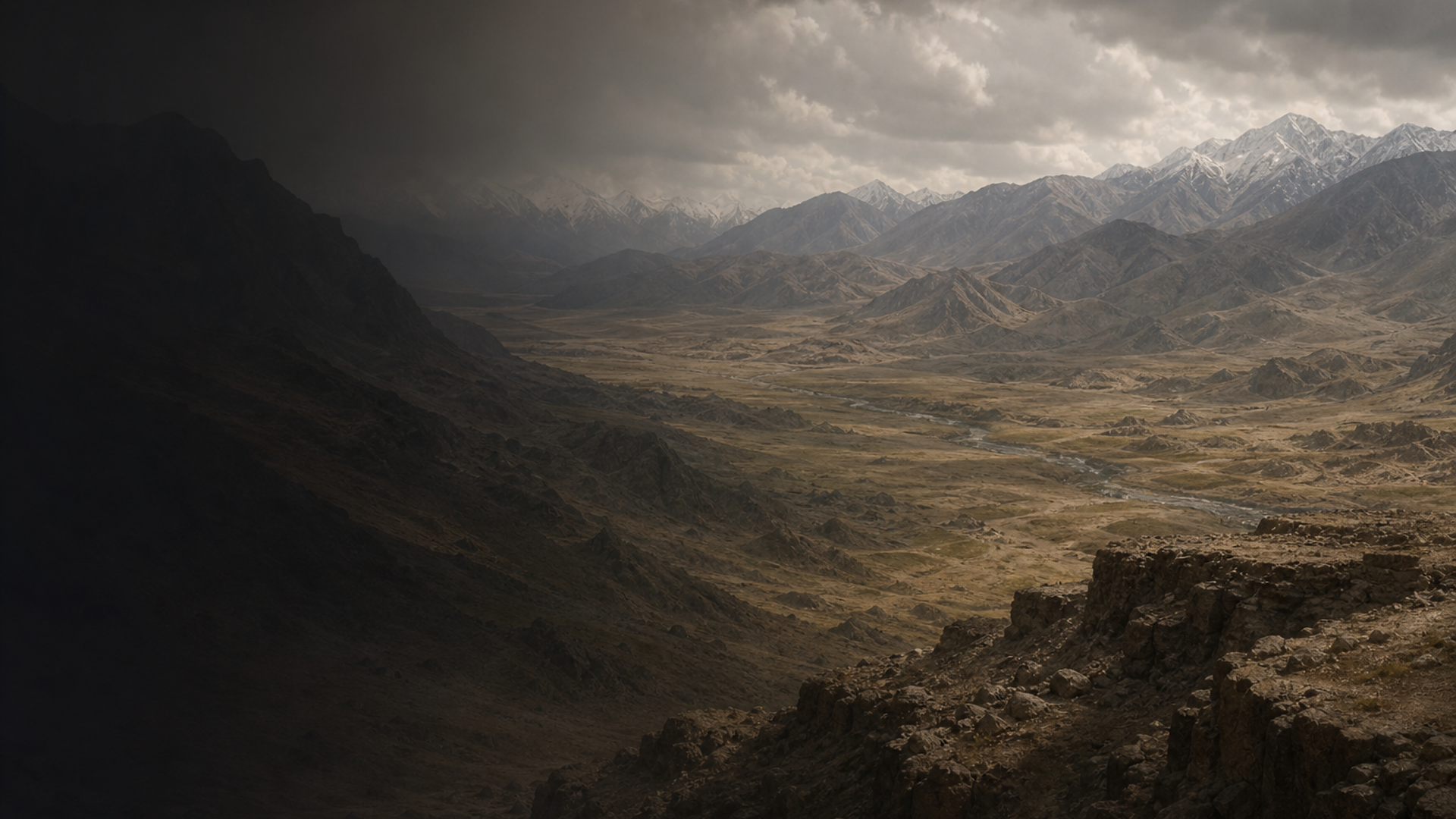
Perched on the northern fringes of the Yili Basin, the Dongmaili site (Nileke County, Xinjiang) evokes a landscape of river courses and upland routes where people moved, exchanged goods, and forged identities. Archaeological data indicates Iron Age occupation at Dongmaili during the late first millennium BCE (samples dated between c. 743 and 386 BCE). Material traces from this era in Xinjiang often reflect a mosaic of local steppe traditions and influences that arrived along corridors connecting the Eurasian interior.

Limited evidence suggests that communities in the Yili region engaged with networks that stretched both eastward into the Chinese cultural sphere and westward across the Tian Shan foothills. Dongmaili, in this sense, sits within a frontier zone: not a single homogeneous culture, but a palimpsest of mobile pastoralists, settled farmers, and itinerant traders. The small sample set from Dongmaili provides a tantalizing—though preliminary—window into how people at this crossroads may have been biologically connected to wider Eurasian lineages.

Because only three ancient individuals have been sampled, any narrative about origins must remain cautious. Archaeological contexts (burial placement, artifact assemblages) can suggest social links and mobility; genetic data begin to test those suggestions by revealing ancestral affinities and maternal lineages.

  • Dongmaili dates to c. 743–386 BCE, Yili Basin, Xinjiang
  • Site occupies a frontier position linking east and west
  • Evidence is preliminary—based on a very small sample set
Chapitre IV

Daily Life & Society

Archaeological indicators from Iron Age Xinjiang point to a mixed economy: irrigated agriculture in river valleys, pastoral herding on adjacent grasslands, and seasonal mobility. At Dongmaili, settlement traces and burial features (where present) suggest households tied to both farming cycles and animal management. Tools, ceramics, and personal ornaments recovered in regional Iron Age sites hint at craft production and differential wealth, but Dongmaili’s own material record remains only partly published.

The human story here is cinematic: families tending crops along braided streams, herds driven across morning frost, and caravans arriving with exotic goods as sunlight glints off metal. Social life likely folded together kin obligations, trade relationships, and rituals anchored by cemeteries and communal spaces. Osteological markers—when reported for the broader region—show diets blending cereals and animal protein, and pathologies consistent with hard physical labor.

Caveat: Dongmaili-specific reconstructions are constrained by limited excavation and the small number of genetic samples. Archaeology suggests possibilities; genetics can confirm kinship patterns and mobility when larger datasets become available.

  • Economy likely combined valley agriculture and pastoralism
  • Material culture suggests craft specialization and long-distance contacts
Chapitre V

Genetic Profile

Three individuals from Dongmaili yielded mitochondrial haplogroups D (1), F (1), and T2b (1). Mitochondrial haplogroup D is widespread across East Asia and Siberia and often reflects long-standing East Asian maternal ancestry. Haplogroup F is also common in East and Southeast Asia, while T2b is typically associated with West Eurasian maternal lineages and appears in Neolithic and later contexts across Europe and western Asia. The coexistence of these mtDNA types at Dongmaili indicates maternal diversity consistent with a frontier zone where eastern and western maternal lineages met.

No common Y-DNA haplogroups were reported for these three samples; therefore, paternal lineages remain unknown for Dongmaili. Likewise, autosomal ancestry profiles were not provided here, so fine-scale admixture estimates cannot be stated. Given the sample count is just three (<10), any inference about population structure, migration, or admixture must be treated as preliminary. Small-N datasets can reveal tantalizing patterns—such as the presence of a West Eurasian maternal lineage (T2b)—but robust population histories require larger, geographically comparative panels and autosomal data.

Future sampling and genome-wide analyses could test whether Dongmaili reflects temporary mobility of individuals, persistent mixed communities, or episodic gene flow along corridors linking the Eurasian steppe and the Chinese interior.

  • mtDNA: D, F (East Asian), and T2b (West Eurasian signal)
  • Sample count is small (n=3); conclusions are preliminary
Chapitre VI

Legacy & Modern Connections

Dongmaili’s modest genetic footprint resonates with a larger story: Xinjiang has long been a meeting zone of peoples and genes. The presence of both eastern (D, F) and western (T2b) maternal lineages in Iron Age Dongmaili foreshadows later centuries when the region became a keystone of intercontinental exchange. Modern populations in the broader Xinjiang area carry a mosaic of ancestries that reflect millennia of movement, marriage, and cultural blending.

However, because the Dongmaili dataset is so small, it cannot be read as representative of all Iron Age inhabitants. Instead, these samples serve as evocative markers—proof that diverse maternal ancestries were present at this locale during the late first millennium BCE. Expanding genetic sampling and integrating detailed archaeological context will clarify how local traditions and long-distance connections combined to shape the human story of the Yili Basin.

  • Signals of east–west maternal ancestry anticipate later regional admixture
  • More samples are needed to link ancient patterns to modern populations
Propulsé par l'IA

Assistant IA

Posez des questions sur la culture Dongmaili: Iron Age Crossroads

Assistant IA par DNAGENICS

Débloquer cette fonction
Posez des questions sur la culture Dongmaili: Iron Age Crossroads. L'assistant IA peut expliquer les résultats génétiques, le contexte historique, les preuves archéologiques et les liens génétiques avec les populations actuelles, dans les limites de l'interprétation.
Exemple d'analyse IA

La culture Dongmaili: Iron Age Crossroads représente un chapitre fascinant de l'histoire humaine…

L'analyse génétique met en évidence des similarités avec des populations antérieures et des signes d'adaptations propres. Les échantillons d'ADN ancien éclairent les schémas migratoires et les liens entre populations, avec des limites qui dépendent de l'étude et du contexte archéologique.

Il s'agit d'un aperçu de l'analyse IA. Accédez à l'assistant complet pour explorer :

  • Composition et similarité génétique
  • Schémas migratoires et origines
  • Vie quotidienne et pratiques culturelles
  • Contexte génétique actuel

Explorez d'autres cultures antiques

Découvrez les récits de civilisations issues du monde antique