Aller au contenu principal
Profil culturel

Echoes of the Upper Volga

Eneolithic life at Sakhtysh seen through archaeology and ancient DNA

4321 CE - 3193 BCE
Upper Volga, Russia (Sakhtysh sites)

Le récit

Archaeological and genetic evidence from 14 Eneolithic individuals (4321–3193 BCE) at Sakhtysh (Upper Volga, Russia) reveals a landscape of hunter‑gatherer continuity and regional connections. Maternal lineages are dominated by mtDNA U; paternal variation includes R, I and rare F.

Time Period

4321–3193 BCE

Region

Upper Volga, Russia (Sakhtysh sites)

Common Y-DNA

R (7), I (4), F (1)

Common mtDNA

U (14)

Chronologie

3600 BCE

Burials at Sakhtysh dated

Radiocarbon dates place cemetery burials at Sakhtysh-2/2a within the Eneolithic period, providing the temporal anchor for the genetic samples.

Origins & Emergence

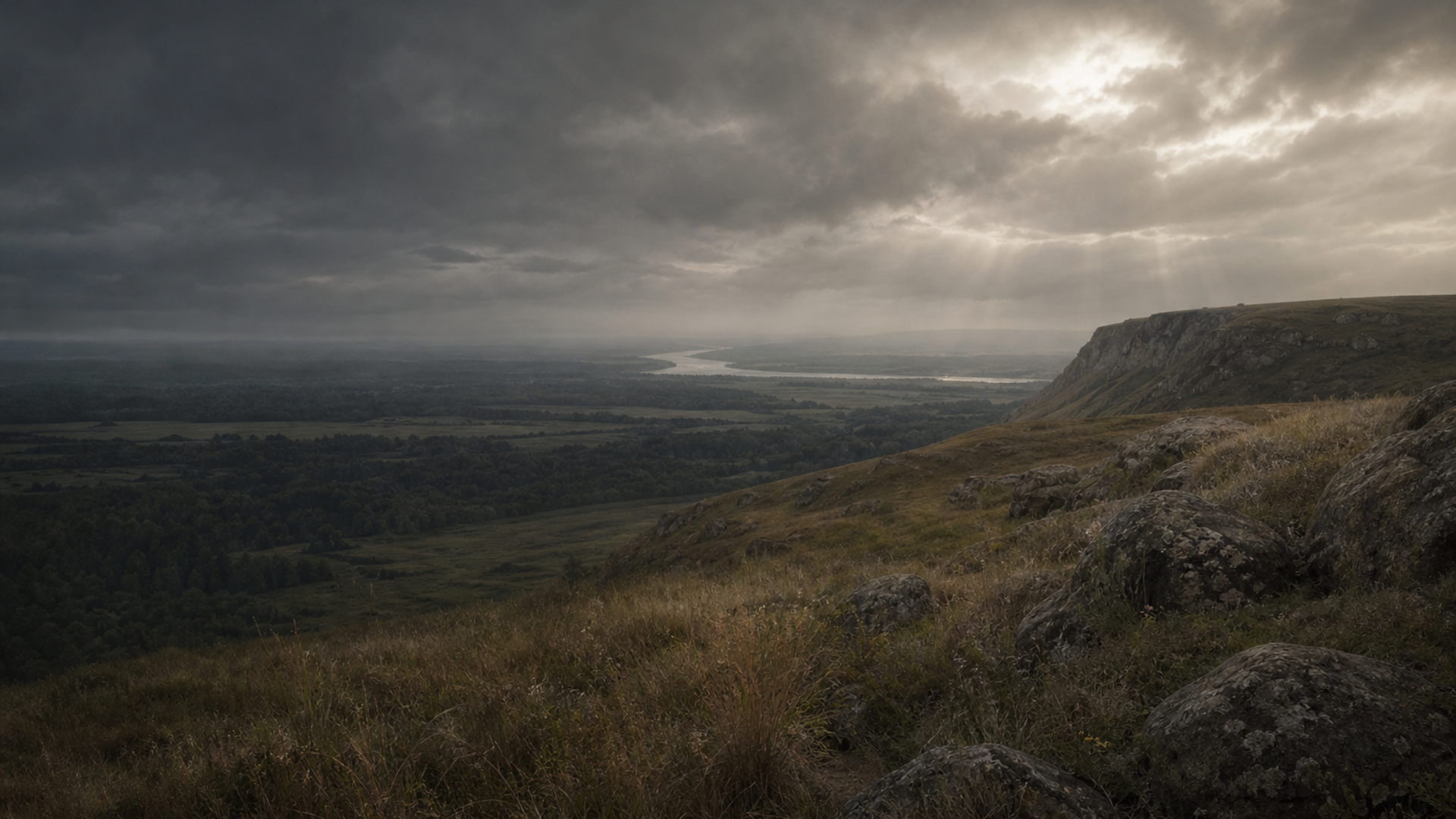
Along the sinuous floodplain of the Upper Volga, Eneolithic communities left layered traces of daily life and ritual. Excavations at Sakhtysh-2 and Sakhtysh-2a (Ivanovo Oblast, Teykovsky District) produce the primary archaeological record for this regional expression of the Volosovo tradition. Radiocarbon dates associated with the sampled burials fall between 4321 and 3193 BCE, placing these individuals in the later Neolithic to Eneolithic transition when local hunter‑gatherer societies negotiated new contacts with neighboring farmer and pastoralist groups.

Material culture from the broader Volosovo horizon is characterized in the literature by small settlements, diverse subsistence strategies, and distinctive portable art—features that suggest long‑established local lifeways rather than abrupt replacement. Archaeological data indicate sustained occupation of riverine landscapes where fishing, hunting, and seasonal mobility structured life. The clustering of genetic samples at two nearby Sakhtysh loci means the biological picture primarily reflects a localized population; broader regional generalizations should be made cautiously. Limited evidence suggests continuity in maternal lines (mtDNA U) even as paternal lineages show more variety, hinting at complex social interactions, mobility, and possibly male‑mediated gene flow during the Eneolithic.

  • Primary sites: Sakhtysh-2 and Sakhtysh-2a (Ivanovo Oblast)
  • Dates: 4321–3193 BCE, late Neolithic to Eneolithic
  • Evidence points to local continuity with episodic external contacts

Daily Life & Society

The archaeological imagination of Volosovo life at Sakhtysh evokes river margins shimmering with activity: people fishing in the spring thaw, processing hides and bone, and shaping distinctive pottery and tools. Human burials recovered at Sakhtysh provide windows into social practice—grave goods, position, and funerary treatment collectively hint at structured communities with ritualized responses to death. Settlement features in the wider Volosovo corpus include small hamlets and seasonal camps, consistent with an economy blending foraging, fishing, and localized plant exploitation.

Skeletal remains and the objects interred with them show variability in status markers and craftsmanship, suggesting households or kin groups with differentiated roles. Archaeological data indicate that mobility was an important element—seasonal rounds along rivers and lakes connected groups across the forest‑steppe mosaic. Organic technologies (bone, antler, wood) and fine flaked stone tools point to technical continuity with earlier Mesolithic traditions even as pottery becomes more common in the Eneolithic. The Sakhtysh cemetery evidence is localized; therefore, interpretations of broader Volosovo social organization must remain provisional until more geographically extensive sampling is available.

  • Economy: fishing, hunting, seasonal resource use and localized plant exploitation
  • Burials at Sakhtysh reveal ritual variation and potential social differentiation

Genetic Profile

Ancient DNA from 14 individuals associated with the Upper Volga Eneolithic (Sakhtysh-2 and -2a) offers a compact but informative glimpse of ancestry. Mitochondrial DNA is uniformly dominated by haplogroup U across all 14 samples. Haplogroup U is widely associated with European hunter‑gatherer maternal lineages and its ubiquity here points to substantial maternal continuity in the forest‑steppe zone during the Eneolithic.

Paternal markers show more variety: seven individuals carry Y‑chromosome haplogroup R, four carry haplogroup I, and one carries haplogroup F. Haplogroup I is often linked with long‑standing European hunter‑gatherer men, while R encompasses a broad set of lineages that later become prominent in northern Eurasia; without confident downstream subclade assignments we must avoid overinterpreting temporal dynamics. The presence of F — relatively rare in later European contexts — adds another layer of complexity.

Genetic signals align with an archaeological picture of local hunter‑gatherer continuity combined with episodic external contacts or male‑biased mobility. Because the dataset is limited to 14 individuals from two nearby cemetery loci, conclusions about population structure, sex‑biased gene flow, or links to far‑flung groups are preliminary. Broader sampling across the Upper Volga and neighboring regions will be necessary to refine models of population change in the Eneolithic.

  • mtDNA: U in all 14 samples indicates strong maternal continuity
  • Y-DNA: mixture of R (7), I (4), and F (1) suggests varied paternal inputs

Legacy & Modern Connections

The genetic and archaeological imprint of Upper Volga Eneolithic communities contributes to a longer story of northern Eurasian population dynamics. The persistence of mtDNA U through 4321–3193 BCE is part of a larger pattern in which hunter‑gatherer maternal lines survive even as paternal lineages fluctuate—an observation echoed in multiple regions of prehistoric Europe. Material traits and burial practices attributed to the Volosovo tradition also appear to seed later cultural developments in adjacent forest and lake districts.

Connecting these Eneolithic individuals directly to modern populations requires caution: genetic continuity at the level of haplogroups does not equate to simple, unbroken cultural or linguistic descent. Instead, the Sakhtysh genomes illuminate one thread in a braided tapestry of mobility, interaction, and local resilience. Future, geographically broader ancient DNA sampling will clarify how much of this Eneolithic legacy persisted into the Bronze Age and beyond.

  • Maternal continuity (mtDNA U) contributes to long‑term hunter‑gatherer legacy
  • Direct links to modern populations are uncertain; broader sampling is needed

Assistant IA

Assistant IA par DNAGENICS

Débloquer cette fonction
Posez des questions sur la culture Echoes of the Upper Volga. L'assistant IA peut expliquer les résultats génétiques, le contexte historique, les preuves archéologiques et les liens génétiques avec les populations actuelles, dans les limites de l'interprétation.
Exemple d'analyse IA

La culture Echoes of the Upper Volga représente un chapitre fascinant de l'histoire humaine…

L'analyse génétique met en évidence des similarités avec des populations antérieures et des signes d'adaptations propres. Les échantillons d'ADN ancien éclairent les schémas migratoires et les liens entre populations, avec des limites qui dépendent de l'étude et du contexte archéologique.

Il s'agit d'un aperçu de l'analyse IA. Accédez à l'assistant complet pour explorer :

  • Composition et similarité génétique
  • Schémas migratoires et origines
  • Vie quotidienne et pratiques culturelles
  • Contexte génétique actuel