Préparation du rapport

Chargement des informations et références disponibles

Connexion au corpus archéologique…

Collecte des archives antiques

Aller au contenu principal
Fujian Coast: Late Neolithic Seafarers
Profil culturel

Fujian Coast: Late Neolithic Seafarers

Tanshishan and Xitoucun communities on the Min River coast, 2850–2200 BCE

2850 CE - 2200 BCE
Fujian, southeast China
Faites défiler pour commencer
Chapitre I

Le récit

Comprendre la culture Fujian Coast: Late Neolithic Seafarers

Coastal Late Neolithic communities in Fujian (2850–2200 BCE) show maritime lifeways and a genetic profile dominated by Y haplogroup O. Archaeology and ancient DNA together hint at coastal networks that shaped later southern Chinese and island populations.

Time Period

2850–2200 BCE

Region

Fujian, southeast China

Common Y-DNA

O (dominant), NO, K, F

Common mtDNA

Diverse East Asian lineages (variable; low resolution)

Chapitre II

Chronologie

Moments clés de l'histoire de cette culture

2500 BCE

Tanshishan community at its height

Tanshishan and nearby villages intensify shellfish gathering, fishing, and craft production, leaving substantial middens and pottery assemblages along the Min River coast.

Chapitre III

Origins & Emergence

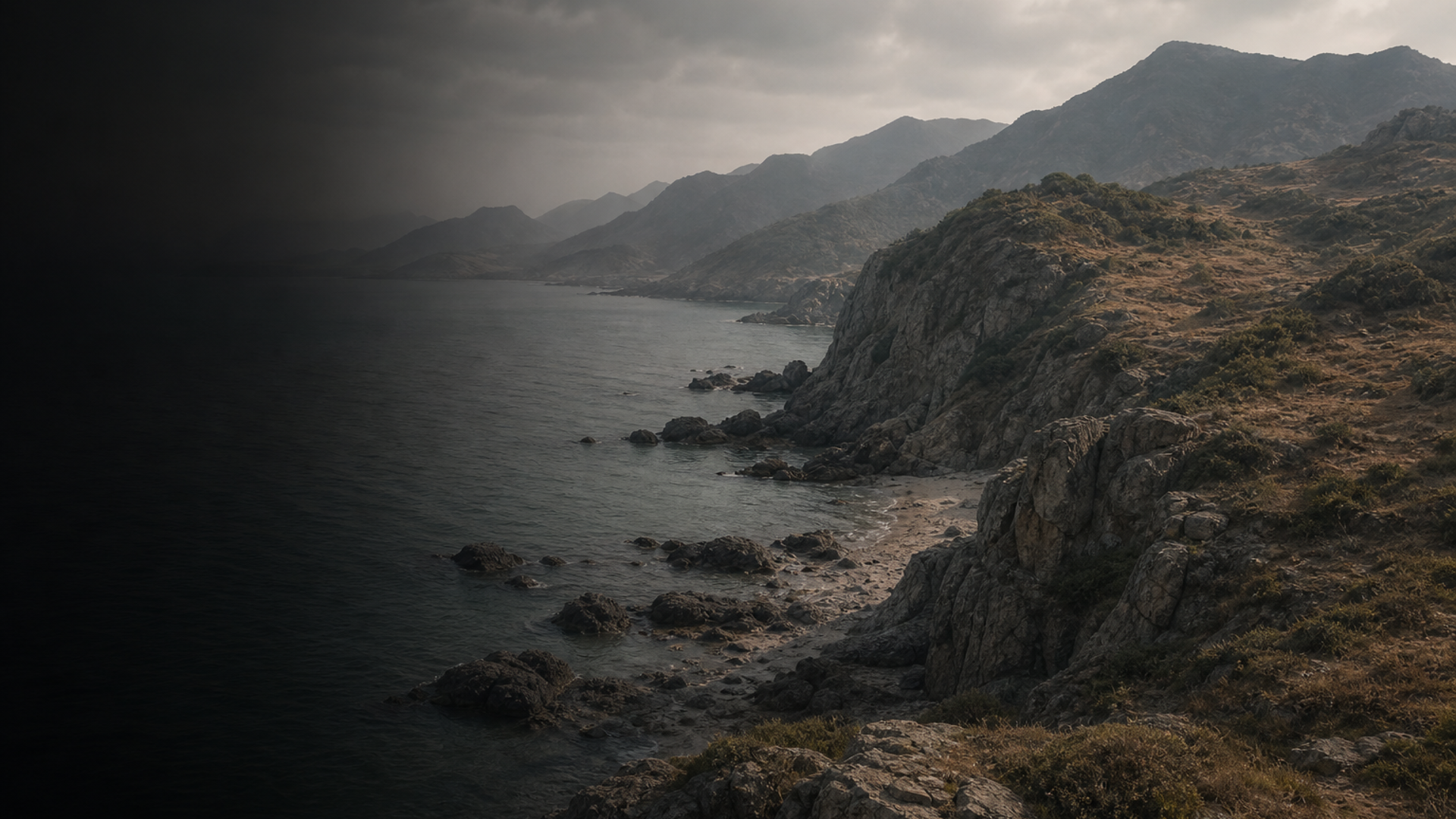
The Late Neolithic coastal communities of Fujian emerge from a shoreline stitched with shell middens, river channels, and small villages. Archaeological data from sites such as Tanshishan and Xitoucun (Minhou, along the Min River) indicate a landscape intensively exploited for marine and estuarine resources between roughly 2850 and 2200 BCE. Pottery styles, polished stone tools, and the composition of midden material suggest long-standing local traditions adapted to tidal flats and riverine floodplains.

Limited evidence suggests these communities participated in wider coastal networks. The Min River corridor and adjacent shores would have acted as arteries for people, goods, and ideas, connecting the Fujian littoral to islands and mainland coasts. Archaeological indicators — specialized fishing gear, shell assemblages, and distinctive ceramic types — point to a culture shaped by salt, sea breezes, and seasonal inundation. While the material record is increasingly detailed at Tanshishan, regional variation persists and must be read cautiously: preservation bias and uneven excavation mean our reconstruction is partial and provisional.

  • Primary sites: Tanshishan and Xitoucun (Minhou, Fujian)
  • Coastal adaptation: shell middens, fishing gear, riverine settlements
  • Evidence for participation in broader southeastern coastal networks (tentative)
Chapitre IV

Daily Life & Society

Life along the Min River mouth would have been shaped by the push and pull of tides and harvest seasons. Villages clustered on slightly raised ground above tidal flats; middens record diets rich in shellfish, fish, and riverine resources, while archaeological traces of cultivated plants indicate a mixed subsistence economy that likely included rice and other domesticates. The craft palette — cord-marked and incised pottery, ground and polished adzes, and net sinkers — evokes a people skilled in woodworking, boat building, and netting.

Settlement patterns suggest small, interlinked communities rather than large urban centers. Social life likely revolved around kin groups and seasonal cooperation for fishing and salt processing. Artistic expression appears in ceramic decoration and personal ornaments, though social differentiation is subtle in the material record. Archaeological data indicates resilience and adaptability: households balanced foraging and cultivation, exploiting both riverine fertility and the bounty of the South China Sea.

  • Mixed economy: shellfish, fish, and cultivated crops (archaeobotanical traces)
  • Material culture: pottery, polished adzes, net sinkers — evidence of maritime skill
Chapitre V

Genetic Profile

Eleven ancient individuals dated to 2850–2200 BCE from coastal Fujian (Tanshishan and Xitoucun) provide a modest but illuminating snapshot of population history. Among male-line markers reported, haplogroup O is the most frequent (4 individuals), accompanied by single occurrences of NO, K, and F. Haplogroup O is widespread in East Asia today and in many ancient East Asian samples, consistent with continuity of paternal lineages in southern China. Haplogroups NO, K, and F reflect deeper or complementary paternal ancestries that may record older population substructure or episodic contacts.

Mitochondrial data are less consistently reported for this sample set; available results point to diverse East Asian maternal lineages without a single dominant haplogroup. Given the modest sample size (n=11), conclusions must remain cautious: the dataset is sufficient to indicate coastal affinity with broader East Asian genetic profiles but is too small to resolve fine-scale demographic events. Archaeogenetic signals here are compatible with continuity of local coastal populations and with gene flow along littoral routes — possibilities that align with the archaeological picture of maritime connectivity. Further sampling, especially of maternally inherited mtDNA and autosomal genomes, is needed to clarify sex-biased processes, migration directionality, and links to contemporaneous mainland and island groups.

  • Y-DNA: O dominant (4), with NO, K, and F present
  • Small sample (11) — genetic inferences are preliminary and require more data
Chapitre VI

Legacy & Modern Connections

The echoes of Late Neolithic Fujian persist in both landscape and living populations. Coastal lifeways pioneered at sites like Tanshishan contributed cultural practices — maritime adaptation, shellfish harvesting, and riverine settlement strategies — that have continuity in the region. Genetically, the presence of Y haplogroup O and a diversity of maternal lineages is consistent with these communities forming part of the ancestral mosaic that shaped later southern Chinese populations.

Any link to modern groups — including speakers of Min dialects in Fujian or island populations farther afield — must be framed cautiously. Archaeological and genetic evidence together hint that Fujian’s Late Neolithic communities participated in coastal systems that later facilitated population movements and cultural exchange, but direct ancestry models are tentative until larger, higher-resolution ancient DNA datasets become available.

  • Cultural continuity in coastal subsistence and craft traditions
  • Genetic signals suggest contribution to regional ancestry but require more data
Propulsé par l'IA

Assistant IA

Posez des questions sur la culture Fujian Coast: Late Neolithic Seafarers

Assistant IA par DNAGENICS

Débloquer cette fonction
Posez des questions sur la culture Fujian Coast: Late Neolithic Seafarers. L'assistant IA peut expliquer les résultats génétiques, le contexte historique, les preuves archéologiques et les liens génétiques avec les populations actuelles, dans les limites de l'interprétation.
Exemple d'analyse IA

La culture Fujian Coast: Late Neolithic Seafarers représente un chapitre fascinant de l'histoire humaine…

L'analyse génétique met en évidence des similarités avec des populations antérieures et des signes d'adaptations propres. Les échantillons d'ADN ancien éclairent les schémas migratoires et les liens entre populations, avec des limites qui dépendent de l'étude et du contexte archéologique.

Il s'agit d'un aperçu de l'analyse IA. Accédez à l'assistant complet pour explorer :

  • Composition et similarité génétique
  • Schémas migratoires et origines
  • Vie quotidienne et pratiques culturelles
  • Contexte génétique actuel

Explorez d'autres cultures antiques

Découvrez les récits de civilisations issues du monde antique