Préparation du rapport

Chargement des informations et références disponibles

Connexion au corpus archéologique…

Collecte des archives antiques

Aller au contenu principal
Krems‑Wachtberg Ancients
Profil culturel

Krems‑Wachtberg Ancients

Two Upper Paleolithic individuals from Krems-Wachtberg, Austria, echoing deep European hunter‑gatherer lineages

29200 CE - 28600 BCE
Krems-Wachtberg, Austria (Central Europe)
2 échantillons d'ADN antique
Faites défiler pour commencer
Chapitre I

Le récit

Comprendre la culture Krems‑Wachtberg Ancients

Human remains from Krems-Wachtberg (c. 29,200–28,600 BCE) reveal Y-haplogroup I and mtDNA U5* — a tentative glimpse into Gravettian-era hunter‑gatherers in Central Europe. Limited samples mean conclusions are preliminary but connect archaeology with Paleolithic genetic signals.

Time Period

29,200–28,600 BCE

Region

Krems-Wachtberg, Austria (Central Europe)

Common Y-DNA

I (observed in 2 samples)

Common mtDNA

U5* (observed in 2 samples)

Chapitre II

Chronologie

Moments clés de l'histoire de cette culture

29200 BCE

Occupation at Krems‑Wachtberg

Human activity and burial at Krems‑Wachtberg dated to ca. 29,200–28,600 BCE, representing Upper Paleolithic hunter‑gatherer presence in Lower Austria.

Chapitre III

Origins & Emergence

Beneath loess and riverine terraces outside the modern town of Krems, the Krems‑Wachtberg 1 context preserves human remains dated to roughly 29,200–28,600 BCE. Archaeological data indicates an Upper Paleolithic occupation that aligns chronologically with Gravettian horizons in Central Europe. The material landscape of this time was a cold, open mosaic of steppe and parkland where small, mobile hunter‑gatherer bands pursued large herbivores and exploited seasonal plant resources.

Genetically, the two sequenced individuals both carry Y‑chromosome haplogroup I and maternal lineages classified as U5*. These markers fit a broader pattern seen across European Paleolithic and Mesolithic samples, linking them to longstanding hunter‑gatherer ancestries on the continent. Limited evidence suggests continuity of certain paternal and maternal lineages in Central Europe across millennia, but with only two samples the spatial and temporal variability at Krems remains poorly constrained.

Archaeological inference must therefore be cautious: burial features, stratigraphic context, and associated artifacts inform a narrative of skilled adaptation to cold‑climate ecologies, but demographic and cultural dynamics require larger sample sizes to resolve.

  • Dates: ca. 29,200–28,600 BCE, Upper Paleolithic
  • Location: Krems‑Wachtberg 1 Site, Lower Austria
  • Context: Gravettian‑era hunter‑gatherer occupation (preliminary)
Chapitre IV

Daily Life & Society

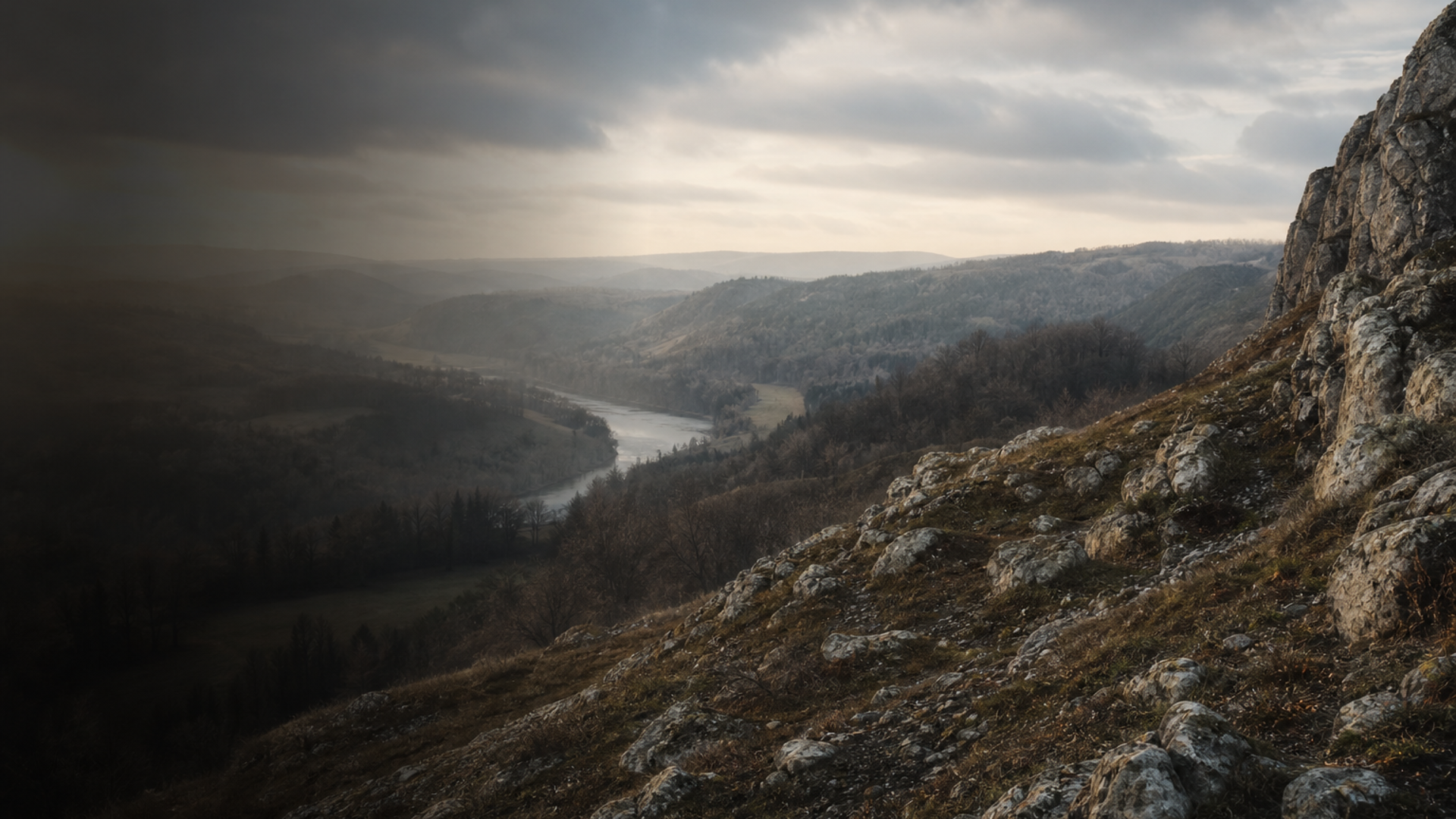
Picture a landscape of wind‑swept terraces above the Danube, where small groups moved seasonally with the herds. Archaeological indicators from nearby Gravettian contexts—stone toolkits with backed blades, hunting debris, and hearth features—imply a subsistence economy focused on big‑game procurement, skilled flaking technology, and intensive use of local raw materials. Organic artifacts do not always preserve well; where they do, they hint at clothing and hide working necessary for survival in cold conditions.

Social life in these bands likely centered on flexible kin networks. Burial contexts at Krems‑Wachtberg 1 suggest deliberate treatment of the dead, which can reflect social memory and group identity. Yet the small number of recovered and analyzed individuals prevents strong claims about social stratification, ritual complexity, or population size. Archaeological data indicates mobility, technological skill, and strong ecological knowledge—but many details of everyday life remain elusive and open to new discoveries.

  • Subsistence: Big‑game hunting and seasonal mobility inferred from toolkits
  • Social structure: Small kin groups with intentional burial practices (preliminary)
Chapitre V

Genetic Profile

Ancient DNA from two individuals at Krems‑Wachtberg yields a concise but meaningful genetic portrait: both males carry Y‑DNA haplogroup I, and both mitochondrial genomes fall within U5*. In broader Eurasian palaeogenomics, haplogroup I is strongly associated with European hunter‑gatherer populations, while U5 is one of the oldest maternal lineages known in Europe, often appearing in Upper Paleolithic and Mesolithic contexts.

These genetic assignments align the Krems samples with a continental tapestry of Pleistocene hunter‑gatherers, suggesting continuity of certain lineages in Central Europe through the Last Glacial Maximum and beyond. However, the sample count is very low (n = 2). With fewer than ten samples, population‑level inferences—such as frequency, diversity, or regional substructure—are preliminary. Future sequencing of additional burials and comparative analyses with contemporaneous sites will be necessary to test hypotheses about migrations, local persistence, or interactions with neighboring groups.

In short, the DNA points to deep European hunter‑gatherer ancestry at Krems, but the limited dataset mandates cautious interpretation.

  • Both samples: Y‑DNA I; mtDNA U5* — markers tied to Paleolithic European hunter‑gatherers
  • Sample size caveat: n = 2, so population inferences are preliminary
Chapitre VI

Legacy & Modern Connections

The genetic echoes from Krems‑Wachtberg resonate into later prehistory and the present: haplogroup I and U5* lineages survive in varying frequencies among modern Europeans, forming part of the ancestral substrate upon which later population movements were layered. Archaeological continuity in Central Europe suggests that elements of Upper Paleolithic lifeways contributed to the genetic and cultural foundations encountered by Later Stone Age and Neolithic populations.

Nevertheless, the picture is mosaic rather than simple. Successive migrations, climate shifts, and cultural transformations altered genetic landscapes repeatedly. The Krems data provide a cinematic snapshot of deep ancestry—an intimate chapter in the long story of human occupation in Europe—but its full significance will be revealed only through expanded sampling and careful integration of archaeology and genomics.

  • Lineage continuity: I and U5* contribute to the genetic heritage of later Europeans
  • Caveat: Successive migrations mean modern links are complex and multi-layered
Chapitre VII

Catalogue d'échantillons

2 échantillons d'ADN antique associés à la culture Krems‑Wachtberg Ancients offrent des repères génétiques sur les populations de cette période.

2 / 2 échantillons
Portrait Échantillon Pays Époque Date Culture Sexe Y-ADN ADNmt
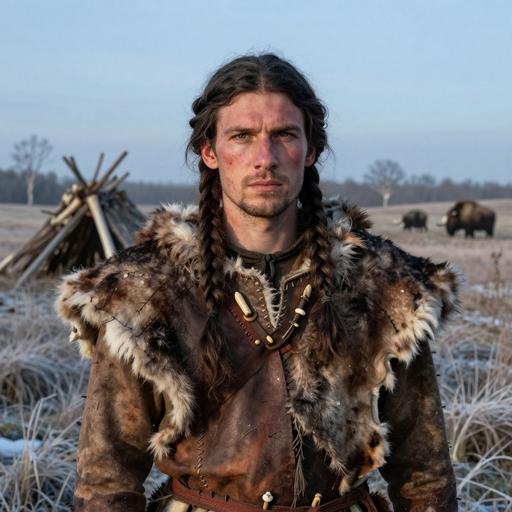
Reconstruction artistique de European Paleolithic individual, Austria
European Paleolithic individual, Austria
Austria Austria_Krems1_1 29200 BCE European Paleolithic M I-L758 U5*
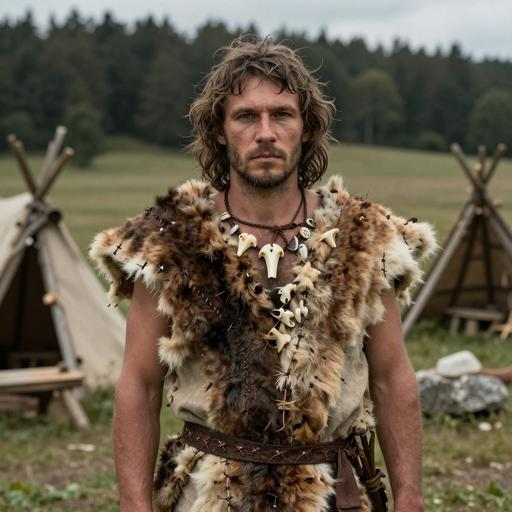
Reconstruction artistique de European Paleolithic individual, Austria
European Paleolithic individual, Austria
Austria Austria_Krems1_1 29200 BCE European Paleolithic M I-L758 U5*
Propulsé par l'IA

Assistant IA

Posez des questions sur la culture Krems‑Wachtberg Ancients

Assistant IA par DNAGENICS

Débloquer cette fonction
Posez des questions sur la culture Krems‑Wachtberg Ancients. L'assistant IA peut expliquer les résultats génétiques, le contexte historique, les preuves archéologiques et les liens génétiques avec les populations actuelles, dans les limites de l'interprétation.
Exemple d'analyse IA

La culture Krems‑Wachtberg Ancients représente un chapitre fascinant de l'histoire humaine…

L'analyse génétique met en évidence des similarités avec des populations antérieures et des signes d'adaptations propres. Les échantillons d'ADN ancien éclairent les schémas migratoires et les liens entre populations, avec des limites qui dépendent de l'étude et du contexte archéologique.

Il s'agit d'un aperçu de l'analyse IA. Accédez à l'assistant complet pour explorer :

  • Composition et similarité génétique
  • Schémas migratoires et origines
  • Vie quotidienne et pratiques culturelles
  • Contexte génétique actuel

Explorez d'autres cultures antiques

Découvrez les récits de civilisations issues du monde antique