Préparation du rapport

Chargement des informations et références disponibles

Connexion au corpus archéologique…

Collecte des archives antiques

Aller au contenu principal
Ląd: Voices of Early Medieval Poland
Profil culturel

Ląd: Voices of Early Medieval Poland

A compact portrait (1000–1225 CE) of life and lineage at Ląd through archaeology and ancient DNA

1000 CE - 1225 CE
Ląd, Greater Poland (Poland)
Faites défiler pour commencer
Chapitre I

Le récit

Comprendre la culture Ląd: Voices of Early Medieval Poland

Archaeological and aDNA evidence from Ląd (Greater Poland) paints a cautiously detailed picture of early medieval communities (1000–1225 CE). Maternal lineages (H, U) are broadly European; unusual Y labels require careful interpretation. Local context links to older Lusatian landscapes.

Time Period

1000–1225 CE

Region

Ląd, Greater Poland (Poland)

Common Y-DNA

L (4), R (3), M (3), S (2), CTS (2)

Common mtDNA

H (8), U (7), T (2), K (1), R (1)

Chapitre II

Chronologie

Moments clés de l'histoire de cette culture

2500 BCE

Corded Ware cultural horizon in Central Europe

Corded Ware traditions spread across Central Europe, contributing cultural and genetic elements that later Bronze and Iron Age groups built upon.

Chapitre III

Origins & Emergence

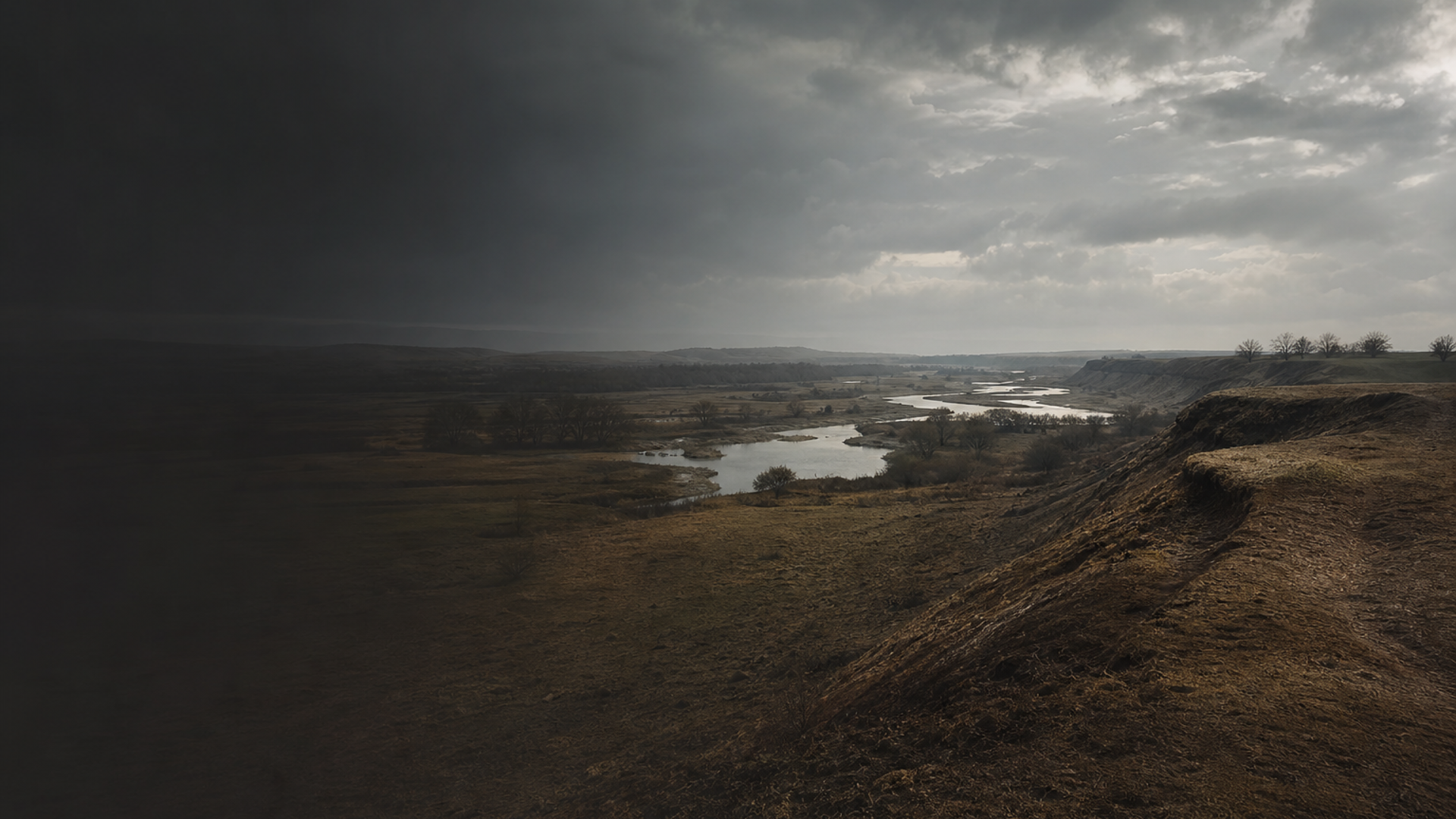
Ląd sits like a hinge between eras: a riverside node in Greater Poland whose medieval horizons (1000–1225 CE) rest upon a landscape long shaped by Bronze and Iron Age communities, including the Lusatian cultural sphere. Archaeological data indicates continuity of settlement and land use in the region, while documentary traces and the built legacy (for example the later Cistercian abbey at Ląd dating to the 12th–13th centuries) show the area's growing integration into medieval political and ecclesiastical networks.

The human story preserved in graves and soil here is a palimpsest. Limited excavation results and the 22 aDNA samples from the site provide a focused window into a single community across roughly two centuries. This sample set allows comparisons to broader Central European genetic patterns but must be read alongside regional archaeology: distribution of field systems, reused Iron Age features, and shifting trade routes. Where material culture is sparse, genetics offers a complementary voice — revealing affinities and anomalies that raise hypotheses about migration, marriage networks, and local resilience. Yet caution is essential: the geographic concentration of samples and gaps in the archaeological record mean interpretations remain provisional.

  • Site: Ląd (Greater Poland Province, Słupca County, Lądek), Poland
  • Date range: 1000–1225 CE; overlaps early medieval monastery expansion
  • Local landscape shaped earlier by the Lusatian Iron Age tradition
Chapitre IV

Daily Life & Society

Archaeological data indicates a community organized around agriculture, animal husbandry, and localized craft. The fertile plains of Greater Poland and proximity to waterways (the Warta basin) would have structured seasonal labor — sowing and harvest, care of livestock, and exchange at nearby market nodes. Stone and timber features, where preserved, hint at compact homesteads and field boundaries; funerary contexts reflect social distinctions in age and possibly status.

Material culture from early medieval Poland often shows continuity with earlier Iron Age traditions alongside new forms tied to expanding trade and ecclesiastical networks. In Ląd, the presence of ecclesiastical centers in the 12th–13th centuries suggests interaction with broader religious and administrative institutions, which could influence settlement organization, diet, and craft specializations. Isotopic studies (when available) and further excavation could clarify mobility and diet; until then, reconstruction relies on a synthesis of limited material remains and genetic signals that imply both local persistence and external connections.

  • Economy: mixed farming, animal husbandry, local craft
  • Social life mediated by nearby religious and market networks
Chapitre V

Genetic Profile

The 22 samples from Ląd provide a modest but informative genetic snapshot. On the maternal side, mtDNA haplogroups are dominated by H (8) and U (7), with smaller counts of T (2), K (1), and R (1). This distribution is consistent with broad European maternal ancestry common across medieval Central Europe and suggests continuity with earlier regional maternal lineages documented in Iron Age and later populations.

The Y-chromosome picture is more complex. Reported Y labels include L (4), R (3), M (3), S (2), and CTS (2). Some of these labels (L, M, S) are uncommon in medieval Europe and may reflect deep-rooted rare lineages, incomplete haplogroup assignment, reference-database mismatches, or post-excavation labeling conventions. Archaeogenetic interpretation therefore emphasizes caution: the presence of R-types aligns with expected West Eurasian paternal ancestry, while the atypical labels prompt reanalysis and comparison with wider genomic data. Because the dataset is concentrated at one site, population-level claims should be provisional. Further genomic sequencing, higher-resolution Y-SNP hierarchies, and comparison with regional medieval and Iron Age samples are needed to resolve whether these patterns reflect local admixture, long-distance migration, or analytical artifacts.

  • Maternal lineages dominated by H and U — typical for medieval Central Europe
  • Paternal labels include unexpected haplogroups; further reanalysis is required
Chapitre VI

Legacy & Modern Connections

The genetic echoes from Ląd resonate into the present but with caveats. The prevalence of mtDNA H and U links the community to maternal lineages that remain common in modern Poland and wider Europe, suggesting a degree of maternal continuity in the region. The paternal signal is ambiguous and highlights how singular sites can reveal surprising variation that complicates simple continuity models.


From a cultural perspective, Ląd stands at a crossroads: its medieval footprint overlies Iron Age landscapes shaped by the Lusatian tradition. This layered history mirrors broader Central European dynamics — long-term local persistence punctuated by episodes of movement and institution-building (including monastic expansion). For modern descendant communities, these data invite a nuanced narrative: genetic continuity in some lineages, complex and partly unresolved paternal histories, and the need for broader sampling to turn intriguing snapshots into robust regional stories.

  • Maternal continuity likely with modern regional populations
  • Paternal diversity underlines need for expanded, high-resolution sampling
Propulsé par l'IA

Assistant IA

Posez des questions sur la culture Ląd: Voices of Early Medieval Poland

Assistant IA par DNAGENICS

Débloquer cette fonction
Posez des questions sur la culture Ląd: Voices of Early Medieval Poland. L'assistant IA peut expliquer les résultats génétiques, le contexte historique, les preuves archéologiques et les liens génétiques avec les populations actuelles, dans les limites de l'interprétation.
Exemple d'analyse IA

La culture Ląd: Voices of Early Medieval Poland représente un chapitre fascinant de l'histoire humaine…

L'analyse génétique met en évidence des similarités avec des populations antérieures et des signes d'adaptations propres. Les échantillons d'ADN ancien éclairent les schémas migratoires et les liens entre populations, avec des limites qui dépendent de l'étude et du contexte archéologique.

Il s'agit d'un aperçu de l'analyse IA. Accédez à l'assistant complet pour explorer :

  • Composition et similarité génétique
  • Schémas migratoires et origines
  • Vie quotidienne et pratiques culturelles
  • Contexte génétique actuel

Explorez d'autres cultures antiques

Découvrez les récits de civilisations issues du monde antique