Préparation du rapport

Chargement des informations et références disponibles

Connexion au corpus archéologique…

Collecte des archives antiques

Aller au contenu principal
Landbogården: Voices from Northern Neolithic
Profil culturel

Landbogården: Voices from Northern Neolithic

Fifteen individuals from Landbogården (3350–2650 BCE) link archaeology and maternal ancestry in northern Sweden.

3350 CE - 2650 BCE
Landbogården, Sweden
Faites défiler pour commencer
Chapitre I

Le récit

Comprendre la culture Landbogården: Voices from Northern Neolithic

Ancient DNA from 15 individuals at Landbogården (Sweden, 3350–2650 BCE) shows a strong maternal signal of haplogroup J, alongside H, H2a and X. Archaeological data situates them within the Northern Swedish Landbo Farm Culture; genetics suggest farmer-associated maternal lines with local admixture.

Time Period

3350–2650 BCE

Region

Landbogården, Sweden

Common Y-DNA

Not reported / limited paternal data

Common mtDNA

J (8), H (2), H2a (1), X (1)

Chapitre II

Chronologie

Moments clés de l'histoire de cette culture

2500 BCE

Peak occupation snapshot

Around 2500 BCE Landbogården individuals lived in a landscape of farms, forests and coasts; genetic data from this period show strong maternal ties to Neolithic farmers.

Chapitre III

Origins & Emergence

Archaeological data indicates that Landbogården sits within a northern expression of agrarian life traditionally grouped under the Northern Swedish Landbo Farm Culture. Radiocarbon dates bracketing human remains and associated contexts fall between roughly 3350 and 2650 BCE, placing these people in the later Neolithic when farming practices, long-distance exchange and new ceramic styles shaped Scandinavian coasts and inland valleys.

Limited excavation records and regional surveys suggest small farmsteads, seasonal use of coastal resources, and burial practices that vary across sites. At Landbogården itself, the human remains sampled for DNA were recovered from contexts interpreted as domestic or funerary deposits; however, preservation and excavation histories limit how finely we can reconstruct social organization. Material culture in the broader Landbo horizon shows continuities with central Scandinavian farmer assemblages but also local adaptations to northern environments.

Genetically, the dominance of mitochondrial haplogroup J among these 15 individuals ties them to maternal lineages commonly associated with Neolithic farmers in Europe, supporting an archaeological picture of agrarian connections into northern Sweden. Yet archaeological and genetic evidence together point to a dynamic frontier where migrating farmers, descendant communities, and resident hunter-gatherer groups interacted—creating a landscape of blending rather than abrupt replacement. Caution is warranted: 15 individuals give a useful snapshot but cannot capture full regional diversity.

  • Dates: 3350–2650 BCE at Landbogården
  • Associated with Northern Swedish Landbo Farm Culture
  • Evidence for farmer-linked maternal ancestry mixed with local traditions
Chapitre IV

Daily Life & Society

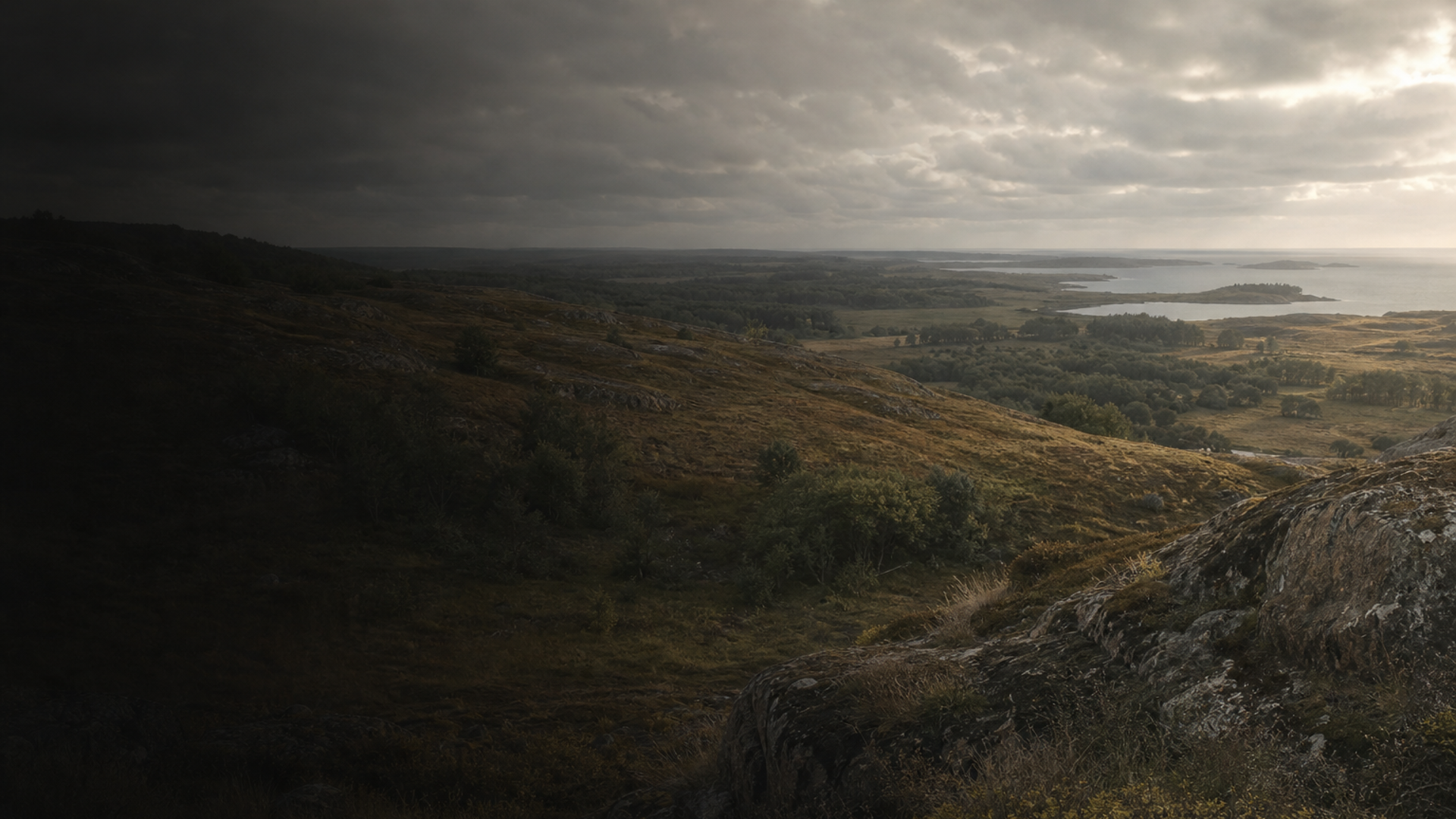
Archaeological remains attributed to the Landbo Farm cultural horizon suggest lives shaped by a harsh, evocative northern landscape: short growing seasons, rich nearshore fisheries, and forests that provided timber and game. Settlement traces in northern Sweden from this period are often modest farmsteads where mixed economies blended cereal cultivation, animal husbandry, hunting and fishing. Seasonal mobility—spring and autumn resource rounds—likely punctuated the agricultural year.

The social world at Landbogården would have been organized around households and kin groups, reflected in clustered domestic features and variable burial practices seen across the region. Craft traditions—ceramics, bone and antler working—bear marks of local expression layered over incoming technological styles. Trade and social ties extended along coastlines and river corridors, moving raw materials and ideas into these northern farm networks.

Osteological data, where preserved, provide insights into diet and health: elevated marine protein signatures are common in northern assemblages, while isotopic contrasts can reveal mobility or exchange. From an archaeological standpoint, Landbogården occupies a liminal world: grounded in farming lifeways yet attuned to maritime and forest resources. Such an economy would have shaped kinship, ritual practice, and resilience in the face of climate variability.

  • Mixed economy: cereal cultivation, herding, fishing, hunting
  • Household-centered settlements with regional coastal ties
Chapitre V

Genetic Profile

The genetic dataset from Landbogården comprises 15 individuals, a moderate sample that allows cautious inferences about maternal ancestry but leaves paternal and autosomal nuances less resolved—particularly because common Y-DNA haplogroups are not reported for these samples. Mitochondrial DNA is dominated by haplogroup J (8 of 15 individuals), with smaller counts of H (2), H2a (1) and X (1).

Haplogroup J is widely documented in Neolithic farming communities across Europe and is often interpreted as a maternal signal of Near Eastern–derived agricultural populations spreading into the continent during the early and middle Neolithic. Its predominance at Landbogården therefore supports archaeological interpretations of farmer-linked cultural influence in northern Sweden. Haplogroup H and subclade H2a are common in many European contexts from the Neolithic onward and may reflect either earlier European maternal lines or later regional admixture. Haplogroup X, present at lower frequency, has a wide geographic distribution and can represent multiple maternal ancestries.

Without extensive autosomal data or robust paternal markers from these 15 individuals, inferences about admixture proportions—such as the relative contributions of incoming farmers versus local hunter-gatherers or later steppe-derived ancestry—remain provisional. Archaeogenetic comparisons with contemporaneous Scandinavian and Baltic populations could clarify whether the J dominance at Landbogården is a local hotspot or part of a broader northern pattern. Given sample size and missing paternal data, conclusions should be framed as suggestive rather than definitive.

  • mtDNA dominated by J (8/15), indicating farmer-linked maternal ancestry
  • Lack of reported Y-DNA limits paternal-line inferences; autosomal signals remain provisional
Chapitre VI

Legacy & Modern Connections

The genetic echoes from Landbogården connect a small group of Neolithic individuals to broader movements that reshaped Europe. The prominence of mitochondrial haplogroup J links these people, maternally, to the wave of farmer-associated lineages that traveled from the Near East into Europe and ultimately into Scandinavia. Such maternal continuity may be one thread among many in the tapestry of northern Swedish ancestry.

However, cultural and genetic continuity are not identical. Archaeological shifts, later migrations, and centuries of regional interaction have layered over early Neolithic signals. Modern populations of Sweden carry a mosaic of ancestries—paleolithic, Neolithic farmer, and Bronze Age/steppe contributions—and the Landbogården data illuminate one episode in that long story. For local communities and museum audiences, these remains offer a cinematic window: the faces of people adapting farming lifeways to a northern realm, leaving traces in both soil and DNA. Future studies with larger sample sizes and autosomal analyses will refine how strongly Landbogården’s maternal lines contributed to later gene pools.

  • Maternal links to Neolithic farmer expansions into northern Europe
  • Represents one chapter in a layered genetic history of modern Swedes
Propulsé par l'IA

Assistant IA

Posez des questions sur la culture Landbogården: Voices from Northern Neolithic

Assistant IA par DNAGENICS

Débloquer cette fonction
Posez des questions sur la culture Landbogården: Voices from Northern Neolithic. L'assistant IA peut expliquer les résultats génétiques, le contexte historique, les preuves archéologiques et les liens génétiques avec les populations actuelles, dans les limites de l'interprétation.
Exemple d'analyse IA

La culture Landbogården: Voices from Northern Neolithic représente un chapitre fascinant de l'histoire humaine…

L'analyse génétique met en évidence des similarités avec des populations antérieures et des signes d'adaptations propres. Les échantillons d'ADN ancien éclairent les schémas migratoires et les liens entre populations, avec des limites qui dépendent de l'étude et du contexte archéologique.

Il s'agit d'un aperçu de l'analyse IA. Accédez à l'assistant complet pour explorer :

  • Composition et similarité génétique
  • Schémas migratoires et origines
  • Vie quotidienne et pratiques culturelles
  • Contexte génétique actuel

Explorez d'autres cultures antiques

Découvrez les récits de civilisations issues du monde antique