Préparation du rapport

Chargement des informations et références disponibles

Connexion au corpus archéologique…

Collecte des archives antiques

Aller au contenu principal
Macao Ceramic Coast (850–1200 CE)
Profil culturel

Macao Ceramic Coast (850–1200 CE)

Coastal potters and fishers of northeastern Hispaniola revealed by ceramics and ancient DNA

850 CE - 1200 CE
Macao, Dominican Republic (northeast Hispaniola)
Faites défiler pour commencer
Chapitre I

Le récit

Comprendre la culture Macao Ceramic Coast (850–1200 CE)

Archaeological and aDNA data from Macao, Dominican Republic (850–1200 CE) reveal a coastal Ceramic-period community. Four ancient genomes show maternal mtDNA C5b continuity and a single Y haplogroup Q, suggesting Indigenous Caribbean ancestry; conclusions remain preliminary.

Time Period

850–1200 CE

Region

Macao, Dominican Republic (northeast Hispaniola)

Common Y-DNA

Q (observed in 1 sample)

Common mtDNA

C5b (observed in 4 samples)

Chapitre II

Chronologie

Moments clés de l'histoire de cette culture

850 CE

Ceramic traditions established at Macao

Ceramic-period occupation and pottery production become archaeologically visible at Macao, marking sustained coastal settlement and craft traditions.

Chapitre III

Origins & Emergence

The Macao Ceramic community sits within the broader Ceramic Period of the Greater Antilles, dated here between 850 and 1200 CE by ceramic typology and regional radiocarbon sequences. Archaeological data from Macao (northeastern Hispaniola) indicate coastal settlements that developed pottery traditions characterized by decorated and utilitarian wares typical of Ceramic-period assemblages across Hispaniola.

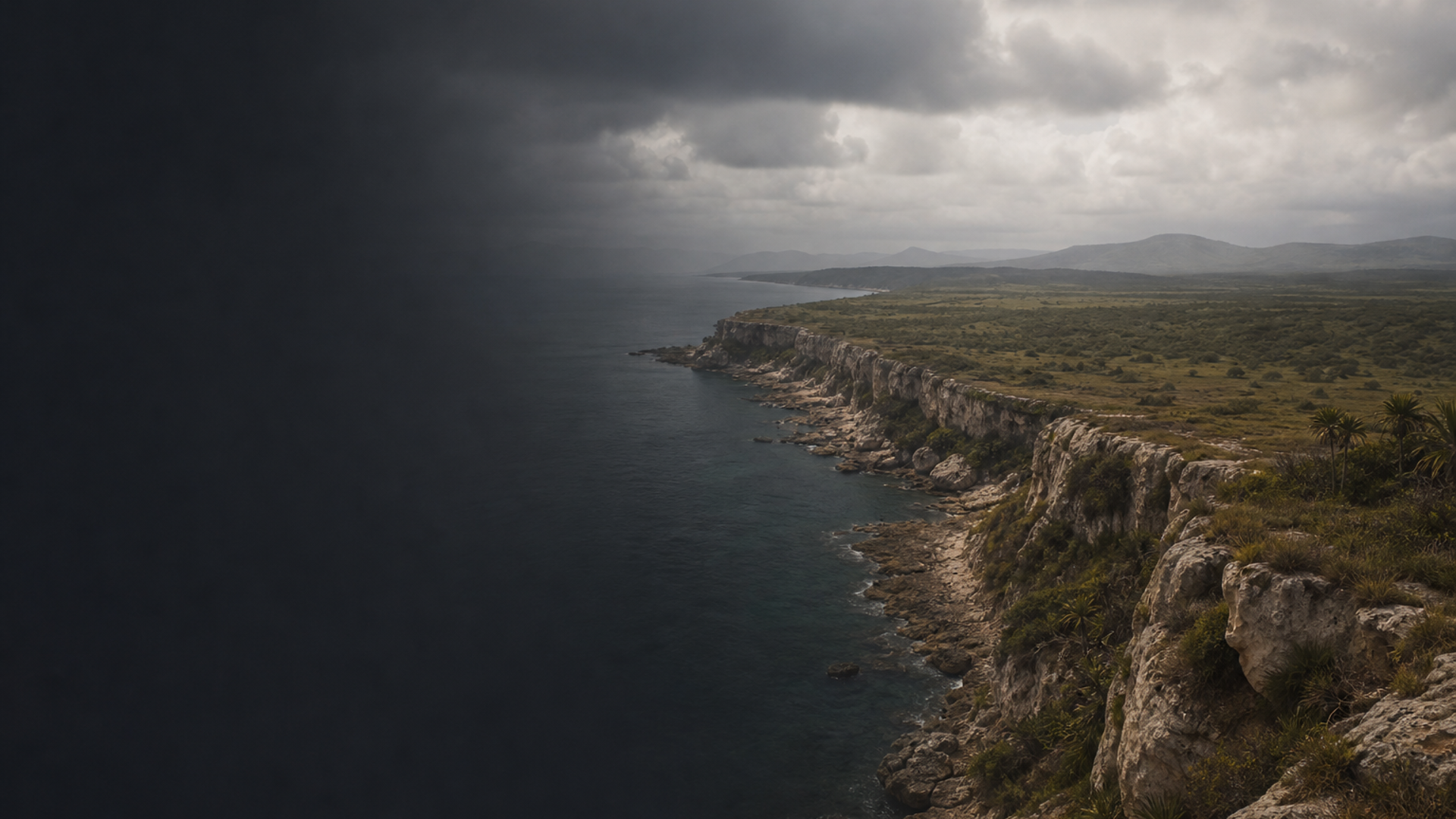
A cinematic shoreline of mangroves and reefs framed everyday life: the arrival and local refinement of ceramic technology are visible in stratified sherds, hearth features, and coastal midden deposits. Limited evidence suggests these communities were part of inter-island exchange networks, sharing stylistic motifs and raw materials across the Caribbean.

Genetic sampling at Macao is scarce (four individuals), so demographic reconstructions must be treated as preliminary. Nonetheless, when combined with artifacts and settlement patterns, the archaeological record points to a resilient coastal lifeway that emerged from long-standing Indigenous traditions and regional connections during the late first and early second millennium CE.

  • Ceramic-period emergence in Macao: 850–1200 CE
  • Coastal settlement with pottery and shell midden evidence
  • Preliminary aDNA sample set (n=4) limits firm demographic claims
Chapitre IV

Daily Life & Society

Archaeological deposits at Macao evoke a life shaped by sea and soil. Ceramic vessels—cooking pots, serving bowls, and small bowls for processing—suggest routine tasks of food preparation, storage, and communal meals. Shell middens and fish remains indicate a heavy reliance on marine resources, supplemented by cultivated and gathered plant foods.

Material culture implies skilled craft production: potting traditions required organized household labor and knowledge transmission. Spatial patterns in modest coastal settlements point to family-based households, seasonal fishing activities, and possibly specialized areas for food processing and tool repair. Archaeological contexts at Macao occasionally yield personal ornaments and worked shell, hinting at social signaling and regional exchange.

Mortuary evidence is fragmentary; limited burial contexts mean funerary practice at Macao remains poorly known. As with many Ceramic-period sites, daily life appears rooted in pragmatic coastal adaptation balanced with broader cultural ties across Hispaniola and neighboring islands.

  • Marine-focused diet with complementary horticulture and foraging
  • Pottery and shell tools indicate household craft specialization
Chapitre V

Genetic Profile

Ancient DNA from four individuals from Macao provides a cautious glimpse into the community’s biological ancestry. All four mitochondrial genomes belong to mtDNA subclade C5b, while one male carries Y-haplogroup Q. Both markers are broadly associated with Indigenous American lineages, making these results consistent with pre-contact Indigenous ancestry in the Greater Antilles.

Interpretation must emphasize limits: a sample size of four is small (<10), so patterns of diversity, sex-biased migration, and population structure cannot be robustly inferred. The uniform mtDNA signal (C5b in all four samples) may reflect local maternal continuity or sampling bias toward closely related individuals. The single observed Y-haplogroup Q fits expectations for Indigenous paternal lineages in the Americas, but with one male it is not evidence for wide paternal homogeneity.

Genetic affinities tentatively place Macao individuals within the spectrum of Caribbean and circum-Caribbean Indigenous variation. Comparative genomic work with larger samples from neighboring islands and mainland populations will be required to test hypotheses about migration routes, relatedness to other Ceramic-period groups, and potential ties to earlier Archaic inhabitants. For now, the Macao aDNA underscores Indigenous presence at this coastal site and highlights the value—and current limits—of integrating archaeology with ancient genomes.

  • mtDNA C5b found in all four samples suggests maternal continuity or sampling bias
  • Y-haplogroup Q observed in one male aligns with Indigenous American paternal lineages
Chapitre VI

Legacy & Modern Connections

The archaeological and genetic traces from Macao speak to Indigenous lifeways on Hispaniola before European contact. While colonial demographic upheavals transformed the Caribbean, ancient mtDNA and archaeological ceramics preserve a tangible echo of those coastal communities.

Because modern population histories in the Dominican Republic involve complex admixture and population movements, direct lines of descent are difficult to prove from four ancient genomes alone. Nonetheless, these data contribute to a growing picture: Indigenous Caribbean peoples left material and biological legacies that researchers can now begin to map. Continued collaboration between archaeologists, geneticists, and descendant communities will be essential to deepen understanding and to place these coastal lives within a respectful, human narrative.

  • Highlights pre-contact Indigenous presence in northeastern Hispaniola
  • Small aDNA sample underscores need for further study and community collaboration
Propulsé par l'IA

Assistant IA

Posez des questions sur la culture Macao Ceramic Coast (850–1200 CE)

Assistant IA par DNAGENICS

Débloquer cette fonction
Posez des questions sur la culture Macao Ceramic Coast (850–1200 CE). L'assistant IA peut expliquer les résultats génétiques, le contexte historique, les preuves archéologiques et les liens génétiques avec les populations actuelles, dans les limites de l'interprétation.
Exemple d'analyse IA

La culture Macao Ceramic Coast (850–1200 CE) représente un chapitre fascinant de l'histoire humaine…

L'analyse génétique met en évidence des similarités avec des populations antérieures et des signes d'adaptations propres. Les échantillons d'ADN ancien éclairent les schémas migratoires et les liens entre populations, avec des limites qui dépendent de l'étude et du contexte archéologique.

Il s'agit d'un aperçu de l'analyse IA. Accédez à l'assistant complet pour explorer :

  • Composition et similarité génétique
  • Schémas migratoires et origines
  • Vie quotidienne et pratiques culturelles
  • Contexte génétique actuel

Explorez d'autres cultures antiques

Découvrez les récits de civilisations issues du monde antique