Préparation du rapport

Chargement des informations et références disponibles

Connexion au corpus archéologique…

Collecte des archives antiques

Aller au contenu principal
Mayahak Cab Pek — 4400 BP Echo
Profil culturel

Mayahak Cab Pek — 4400 BP Echo

Single ancient individual from Belize linking archaeological context and mtDNA evidence

2561 CE - 23444400 BCE
Belize (Maya Mountains, Toledo District)
1 échantillons d'ADN antique
Faites défiler pour commencer
Chapitre I

Le récit

Comprendre la culture Mayahak Cab Pek — 4400 BP Echo

An individual dated 2561–2344 BCE from Mayahak Cab Pek (Toledo District, Belize) offers a preliminary ancient-DNA glimpse into Archaic-period populations of the Maya Mountains, carrying mtDNA haplogroup A. Limited sample size makes conclusions tentative.

Time Period

2561–2344 BCE (≈4400 BP)

Region

Belize (Maya Mountains, Toledo District)

Common Y-DNA

Unknown / not reported (no male data)

Common mtDNA

A (1 sample; preliminary)

Chapitre II

Chronologie

Moments clés de l'histoire de cette culture

2500 BCE

Individual sampled at Mayahak Cab Pek

A single ancient individual dated to 2561–2344 BCE was sampled at Mayahak Cab Pek, providing the first aDNA glimpse into Belize's Archaic populations (sample count = 1).

Chapitre III

Origins & Emergence

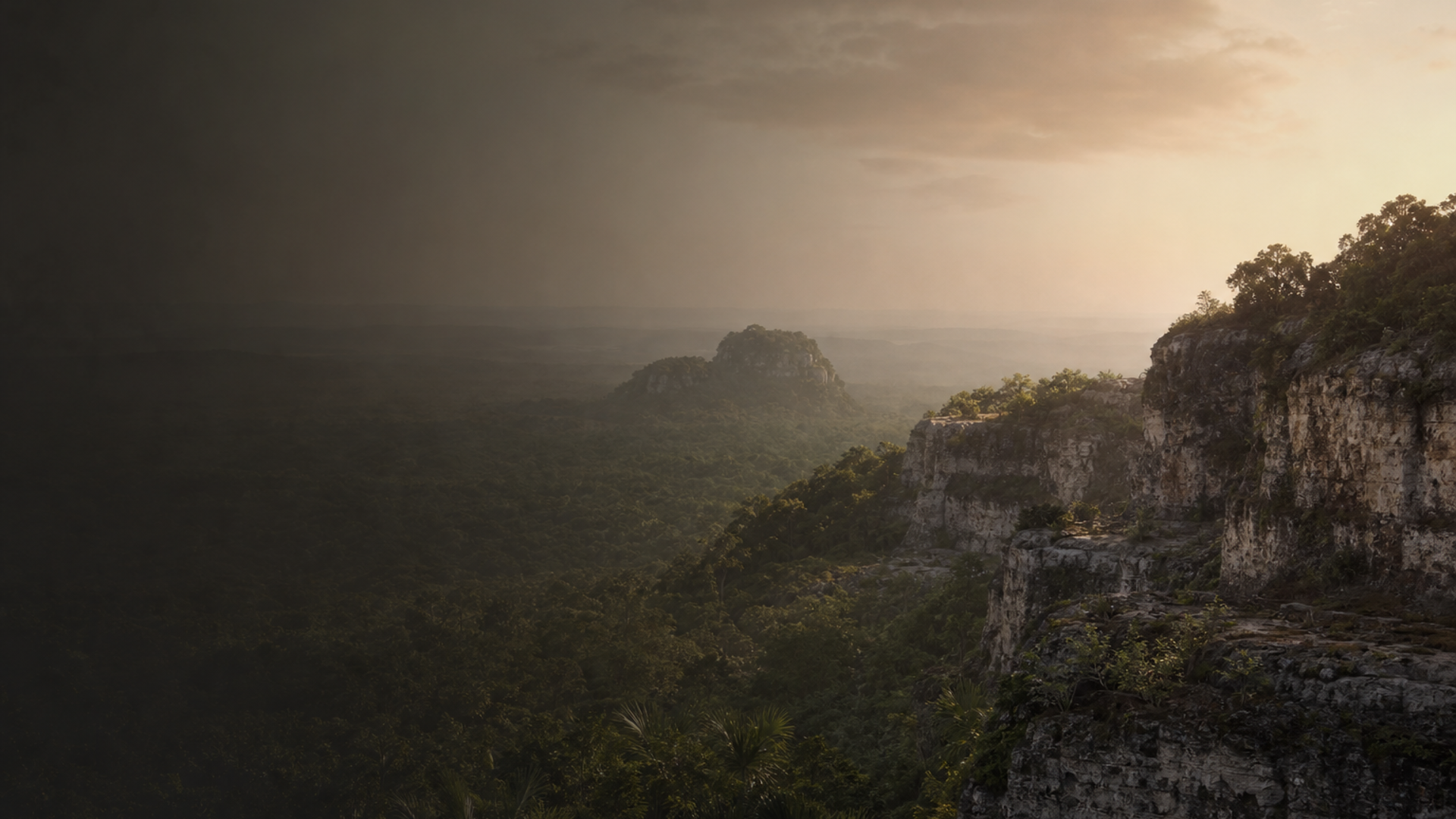
In the shadowed ridges of the Maya Mountains, archaeological data indicates human activity across the Archaic Period. The single ancient individual from Mayahak Cab Pek (located in the Bladen Nature Reserve, Toledo District) dates to 2561–2344 BCE, placing this person within a long era of mobile hunter‑forager and early horticultural adaptations in southern Belize. The landscape then was a mosaic of riverine corridors, seasonally flooded lowlands, and upland forest where wild plants and fauna supported small, mobile groups.

Limited evidence suggests a gradual intensification of plant management in the region during the late Archaic — an incipient trajectory toward the fuller agricultural economies that would shape later Maya societies. Stone tools, ephemeral hearths, and plant processing residues found across contemporaneous sites in southern Belize point to diverse subsistence strategies. The Mayahak Cab Pek individual now provides a rare biological anchor for this material sequence: a human life dated precisely within the Archaic horizon, offering a moment to connect skeletal remains, site taphonomy, and cultural change.

Because this dataset is built on a single sampled individual, any model of population origins or migration for the area must remain provisional. Future excavations and aDNA sampling are needed to trace demographic continuity, regional contacts, and the tempo of cultural transformation in the Maya Mountains.

  • Individual dated to 2561–2344 BCE in Maya Mountains
  • Archaic-period context: hunting, foraging, early plant management
  • Single-sample evidence provides a provisional chronological anchor
Chapitre IV

Daily Life & Society

Archaic communities in southern Belize inhabited a richly productive rainforest frontier where daily life was shaped by waterways, seasonal fruits, and game. Archaeological traces from the broader region—stone flake scatters, ground stone tools, and plant-processing features—indicate diverse tasks: fishing and netting in rivers, hunting small and medium mammals, gathering wild tubers and tree fruits, and experimenting with managed plants such as squash and manioc. Rock shelters and ephemeral camps in the Maya Mountains would have offered dry, protected living spaces during seasonal mobility.

Material culture at sites coeval with Mayahak Cab Pek suggests small social units with flexible territoriality rather than dense sedentary villages. Exchange likely coursed along river valleys, enabling long-distance movement of exotic stone, shell, and perhaps ritual objects. Social life was woven from kin networks, seasonal aggregation events, and knowledge of ecological microzones — knowledge now partly recoverable through archaeobotany and wear patterns on stone tools. Human remains from the period are rare in the region; the single individual from Mayahak Cab Pek therefore carries outsized value for reconstructing diet, health, and mortuary behavior.


Archaeological interpretations remain cautious: preservation bias and limited excavation mean many aspects of daily social life remain hypotheses awaiting further fieldwork and multi-proxy analysis.

  • Foraging, fishing, and early plant management in a rainforest setting
  • Mobile social units with riverine exchange networks
Chapitre V

Genetic Profile

The ancient DNA result from Mayahak Cab Pek is centered on a single mitochondrial lineage: haplogroup A. Haplogroup A is one of the founding maternal lineages widely documented across the Americas today and in ancient samples, and its presence here is consistent with broader pan‑American maternal diversity. Archaeogenetic context ties this result to deep First American ancestries that dispersed into Mesoamerica in the late Pleistocene and early Holocene.

However, with only one sampled individual (sample count = 1), any population-level inference must be conservatively framed. The data point does not reveal Y‑chromosome diversity, autosomal structure, or fine-scale affinities to later Maya groups. It is possible that this individual represents a local matrilineal lineage that persisted regionally, but equally possible that later demographic processes introduced new lineages or altered frequencies. Archaeological evidence of continuity or disruption (site reuse, changes in material culture) will be essential to test genetic continuity hypotheses.

Synthesis of archaeology and genetics is most powerful when multiple individuals across time and space are available. For Mayahak Cab Pek, the mtDNA A result is an evocative hint — it anchors biological data to a rooted archaeological context while underscoring how sparse sampling constrains interpretation. Expanded aDNA recovery, radiocarbon-dated series, and comparison with other Mesoamerican genomes are required to move from promising anecdote to robust population history.

  • mtDNA haplogroup A discovered in one individual
  • Single-sample result is suggestive but preliminary; broader aDNA needed
Chapitre VI

Legacy & Modern Connections

The Mayahak Cab Pek individual speaks across millennia: a human presence in the same mountains that later generations would fold into the cultural tapestry of the Maya region. While the mtDNA haplogroup A aligns with lineages seen across indigenous peoples of the Americas, direct links between this Archaic individual and specific modern groups cannot be asserted on the basis of one mitochondrial genome. Genetic continuity is a testable hypothesis, not an assumption.

Culturally, the site reinforces the deep time depth of human adaptation in southern Belize — people learned to navigate, exploit, and eventually transform these landscapes long before the Classic Maya florescence. For communities, researchers, and visitors, the find is a reminder that modern cultural landscapes rest upon many earlier human stories. Ongoing collaboration with descendant communities, expanded sampling, and transparent reporting of uncertainty will allow this early voice from Mayahak Cab Pek to be placed responsibly within a longer human biography of the region.

  • mtDNA A links the individual to wider Native American maternal lineages
  • Direct continuity to modern groups remains unproven; further data needed
Chapitre VII

Catalogue d'échantillons

1 échantillons d'ADN antique associés à la culture Mayahak Cab Pek — 4400 BP Echo offrent des repères génétiques sur les populations de cette période.

1 / 1 échantillons
Portrait Échantillon Pays Époque Date Culture Sexe Y-ADN ADNmt
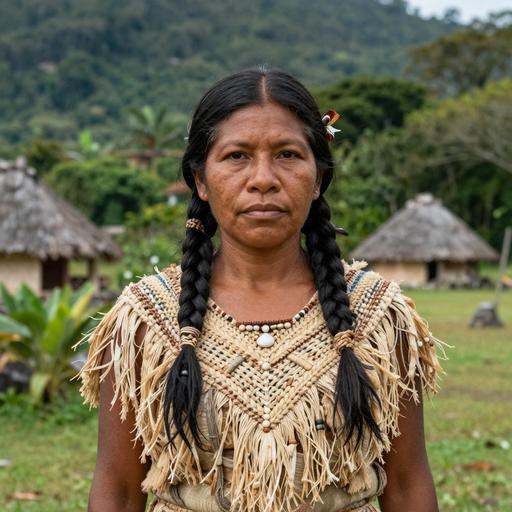
Reconstruction artistique de Archaic Maya individual, Belize
Archaic Maya individual, Belize
Belize Belize_4400BP 2561-2344 calBCE (3940±20 BP, UCIAMS-228025) Pre-Maya F - A2ap
Propulsé par l'IA

Assistant IA

Posez des questions sur la culture Mayahak Cab Pek — 4400 BP Echo

Assistant IA par DNAGENICS

Débloquer cette fonction
Posez des questions sur la culture Mayahak Cab Pek — 4400 BP Echo. L'assistant IA peut expliquer les résultats génétiques, le contexte historique, les preuves archéologiques et les liens génétiques avec les populations actuelles, dans les limites de l'interprétation.
Exemple d'analyse IA

La culture Mayahak Cab Pek — 4400 BP Echo représente un chapitre fascinant de l'histoire humaine…

L'analyse génétique met en évidence des similarités avec des populations antérieures et des signes d'adaptations propres. Les échantillons d'ADN ancien éclairent les schémas migratoires et les liens entre populations, avec des limites qui dépendent de l'étude et du contexte archéologique.

Il s'agit d'un aperçu de l'analyse IA. Accédez à l'assistant complet pour explorer :

  • Composition et similarité génétique
  • Schémas migratoires et origines
  • Vie quotidienne et pratiques culturelles
  • Contexte génétique actuel

Explorez d'autres cultures antiques

Découvrez les récits de civilisations issues du monde antique