Préparation du rapport

Chargement des informations et références disponibles

Connexion au corpus archéologique…

Collecte des archives antiques

Aller au contenu principal
Norwegian Iron Age Echoes
Profil culturel

Norwegian Iron Age Echoes

Fragments of life from fjords to Arctic coast, revealed by archaeology and ancient DNA

1 CE - 1000 CE
Norway (Telemark, Trøndelag, Nordland)
Faites défiler pour commencer
Chapitre I

Le récit

Comprendre la culture Norwegian Iron Age Echoes

Archaeological finds from Telemark to Nordland (1–1000 CE) paired with four ancient genomes reveal a mixed Iron Age Norway heritage. Limited samples hint at common R Y-lineages and diverse maternal lines (K, I, J), suggesting continuity and layered ancestry.

Time Period

1–1000 CE

Region

Norway (Telemark, Trøndelag, Nordland)

Common Y-DNA

R (2 of 4 samples)

Common mtDNA

K, I, J, I3 (each 1 of 4)

Chapitre II

Chronologie

Moments clés de l'histoire de cette culture

2500 BCE

Bronze Age transformations

Regional shifts in material culture and population movement during the Bronze Age set demographic and technological foundations later visible in Iron Age Norway.

Chapitre III

Origins & Emergence

Across a thousand years of fjord-sculpted coastline, Iron Age Norway coalesced from deep regional threads. Archaeological data indicates settled farmsteads, boat-oriented economies, and burial practices that vary from mound interments to simple cemeteries, reflecting local adaptation to environment and trade.

The four genetic samples in this dataset come from southern Telemark, central Trøndelag, and northern Nordland and date between 1 and 1000 CE. Limited evidence suggests these individuals carried a mix of ancestries typical for northwestern Europe: paternal lineages assigned broadly to haplogroup R and maternal haplogroups K, I, J, and the sublineage I3. Archaeological contexts — long-term farming sites, coastal settlements, and regional cemeteries — imply communities connected by boat and seasonal exchange.

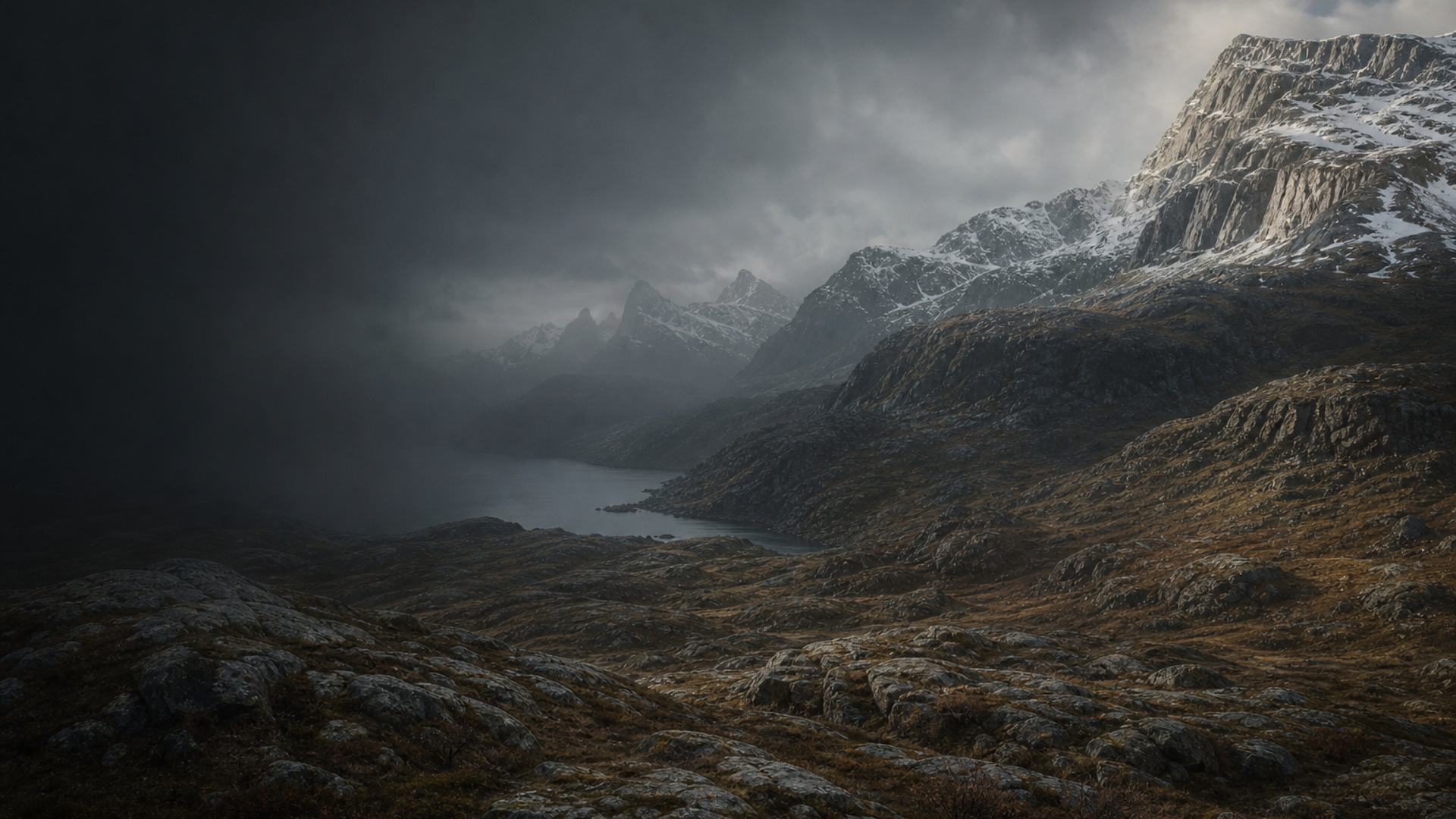
Cinematically, imagine smoke-wreathed longhouses set against steep fjords, where metalworkers sharpened iron tools and traders moved amber and salt along coastal routes. Archaeology paints the physical stage; genetic data begins to illuminate the actors. However, with only four genomes, any reconstruction is provisional: these individuals offer windows into local variation rather than a full portrait of population dynamics across the Iron Age.

  • Samples from Telemark, Trøndelag, and Nordland (1–1000 CE)
  • Material culture shows farming, coastal trade, and regional burial traditions
  • Sparse genetic sampling means conclusions are preliminary
Chapitre IV

Daily Life & Society

Archaeological remains suggest Iron Age Norwegian life was attuned to a harsh but productive landscape. Farmsteads clustered on fertile valleys and sheltered fjord inlets; livestock and cereal cultivation formed an economic backbone. Iron tools and loom weights indicate skilled craft production, while coastal settlements and boat finds speak to fishing, navigation, and exchange along the seaways.

Grave goods, when present, range from simple personal items to weapons and imported objects, implying variation in wealth and connections to broader trade networks. Wooden architecture and organic materials rarely survive intact, but posthole patterns and hearth remains reveal communal longhouses where seasonal rhythms and kin duties structured daily life. Runic inscriptions appear later in the era and attest to growing literacy and identity expression.

Archaeological data indicates social landscapes were locally organized but not isolated: goods and ideas traversed the coast, and mortuary variability suggests diverse social roles. These cultural patterns form the backdrop against which genetic snapshots can be interpreted — showing how people lived, moved, and maintained ties across Norway’s dramatic geography.

  • Farming, fishing, ironworking, and coastal trade shaped livelihoods
  • Burial variability reflects social differences and long-distance connections
Chapitre V

Genetic Profile

The genetic signal from these four Iron Age Norwegian individuals is tentative but informative. Two of four males carry Y-chromosome haplogroup R — a broad lineage common across Europe and frequent in later Scandinavian datasets. Maternal diversity is notable: mtDNA lineages K, I, J, and I3 each appear once, reflecting a blend of ancestries. Haplogroup K is often associated with Neolithic farmer-derived maternal lineages; I and its subclades are frequently seen in Mesolithic and later northern European contexts; J has wide Eurasian distribution, including Neolithic expansions.

Taken together with archaeological context, the genetic mix hints at continuity from earlier Scandinavian populations combined with incoming influences over millennia. Broader ancient DNA studies in the region (outside this dataset) document substantial farmer, hunter-gatherer, and Steppe-derived ancestries in varying proportions; the small Norway_IA sample is consistent with that complex mosaic but cannot resolve proportions or timing. Because the sample count is only four, all genetic inferences must be framed as preliminary: these genomes may represent local family groups, mobile traders, or typical rural inhabitants — each interpretation remains plausible.

Future sampling across more sites and time slices would clarify how these haplogroups fit into regional demographic shifts from the Iron Age into the Viking Age and modern populations.

  • Y-DNA dominated by haplogroup R (2/4); maternal lines K, I, J, I3 indicate mixed ancestry
  • Small sample size (n=4) makes population-level conclusions preliminary
Chapitre VI

Legacy & Modern Connections

The echoes of Iron Age Norway ripple into later eras. Archaeological continuity in settlement patterns and maritime orientation helps explain cultural developments in the Viking Age, while some genetic lineages observed here persist in modern Norwegians. Haplogroup R remains common in Scandinavia today, and maternal lineages like K, I, and J continue to be part of the Nordic genetic landscape.

However, the limited number of ancient genomes in this dataset means any link to contemporary populations should be cautious. These four individuals provide glimpses of ancestry that were later reshaped by migrations, trade, and centuries of demographic change. Viewed together, archaeology and genetics form a cinematic tapestry: landscapes, artifacts, and DNA threads that together tell a story of resilience, exchange, and gradual transformation in Norway from the Iron Age into the medieval world.

  • Some lineages observed may persist into modern Norwegian gene pools
  • Archaeology + genetics together illuminate long-term cultural continuity and change
Propulsé par l'IA

Assistant IA

Posez des questions sur la culture Norwegian Iron Age Echoes

Assistant IA par DNAGENICS

Débloquer cette fonction
Posez des questions sur la culture Norwegian Iron Age Echoes. L'assistant IA peut expliquer les résultats génétiques, le contexte historique, les preuves archéologiques et les liens génétiques avec les populations actuelles, dans les limites de l'interprétation.
Exemple d'analyse IA

La culture Norwegian Iron Age Echoes représente un chapitre fascinant de l'histoire humaine…

L'analyse génétique met en évidence des similarités avec des populations antérieures et des signes d'adaptations propres. Les échantillons d'ADN ancien éclairent les schémas migratoires et les liens entre populations, avec des limites qui dépendent de l'étude et du contexte archéologique.

Il s'agit d'un aperçu de l'analyse IA. Accédez à l'assistant complet pour explorer :

  • Composition et similarité génétique
  • Schémas migratoires et origines
  • Vie quotidienne et pratiques culturelles
  • Contexte génétique actuel

Explorez d'autres cultures antiques

Découvrez les récits de civilisations issues du monde antique