Aller au contenu principal
Profil culturel

Poznań-Śródka: Echoes of a Borderland

Medieval Poznań community whose bones and genomes reveal layered ancestry

1000 CE - 1200 CE
Poznań-Śródka, Greater Poland, Poland

Le récit

Human remains from Poznań-Śródka (1000–1200 CE) link archaeological traces to diverse genetic lineages. Eighteen samples show uncommon Y-DNA diversity and largely European mtDNA, suggesting complex local histories and contacts in Greater Poland. Interpretations remain cautious and preliminary.

Time Period

1000–1200 CE

Region

Poznań-Śródka, Greater Poland, Poland

Common Y-DNA

L (4), P (2), CTS (2), Page (1), P38 (1)

Common mtDNA

U (5), H (3), T (3), H3d (2), H79 (1)

Chronologie

1000 CE

Community activity at Poznań-Śródka

Archaeological and genetic data place human occupation and burials at Poznań-Śródka around 1000 CE, continuing into the early 2nd millennium.

Origins & Emergence

The Poznań-Śródka assemblage sits at the crossroads of Greater Poland, a landscape of river meadows and long‑lived trade routes. Archaeological data from excavations in Poznań-Śródka indicate continuity of occupation through the early medieval centuries; the site yields house traces, fragmented ceramics, and human burial contexts that speak to a settled community between 1000 and 1200 CE. Although the cultural label “Iron Age Poznań Środka Culture” appears in comparative literature, the radiocarbon and stratigraphic evidence for these particular human remains place them squarely in the medieval period.

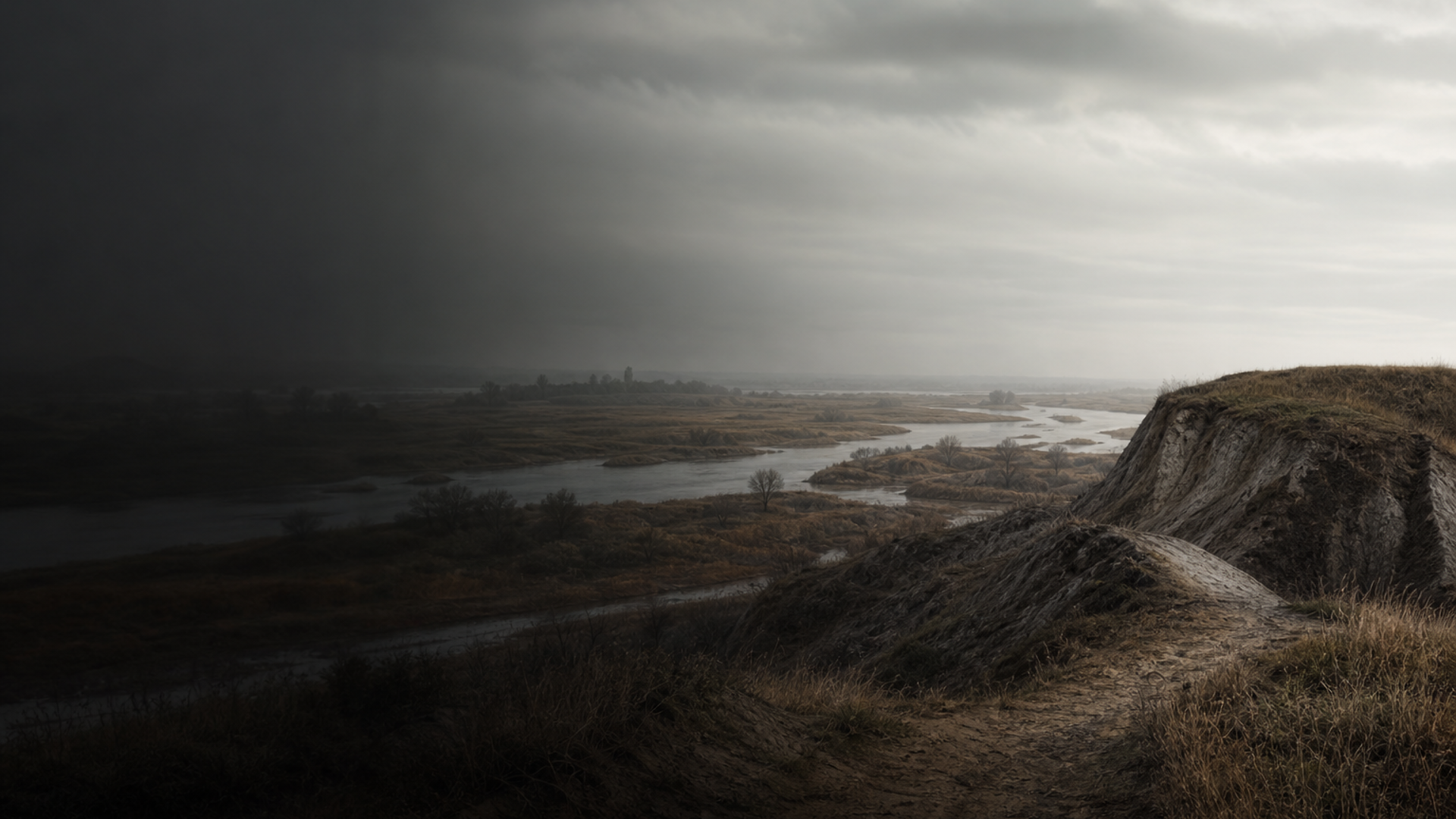
Material culture recovered nearby—pottery sherds, worked bone, and modest metal finds—suggests local craft and agrarian lifeways tied into regional exchange networks. Limited evidence suggests episodes of population movement or contact, visible in non‑local raw materials and architectural variants. The cinematic sweep of the site—timber houses huddled along floodplain margins, smoke lifting under low clouds—helps us imagine inhabitants negotiating local resources and wider connections.

Archaeologically, the emergence of this community is best seen as cumulative: deep local roots with intermittent influxes of people and ideas. Genetic data from 18 individuals provide a complementary lens, revealing signals of diversity that archaeological indicators alone cannot fully resolve. Interpretations remain tentative where sample sizes or contextual resolution are limited.

  • Occupation attested at Poznań-Śródka between 1000–1200 CE
  • Local agrarian settlement with craft and exchange indicators
  • Material continuity with earlier regional traditions, but signs of outside contact

Daily Life & Society

Archaeological traces paint a textured portrait of daily life: compact timber buildings, household debris, animal bone assemblages, and simple personal items. Archaeological data indicates mixed farming topped by small‑scale husbandry, with cattle and pig remains commonly present and cereal processing tools in domestic contexts. The burial contexts at Poznań-Śródka are modest rather than monumental, implying a community with ordinary social differentiation rather than extreme elites.

Craft activity appears domestic and community‑oriented. Pottery sherds with regional forms point to local ceramic traditions; occasional non‑local imports hint at trade or movement along river corridors. Grave goods are sparse in many contexts, a pattern consistent with pragmatic burial practices recorded in parts of medieval Poland. Limited evidence suggests that households were kin-based and that mobility—seasonal or permanent—played a role in life histories for some individuals.

The archaeological record emphasizes resilience: structures adapted to floodplain conditions, assemblages indicating reuse of materials, and a continuity of local lifeways. When read alongside genetic data, these material remains allow us to explore how everyday practices might intersect with patterns of kinship, marriage, and migration.

  • Mixed farming economy with domestic crafts
  • Modest burial practices suggesting limited social stratification

Genetic Profile

Eighteen samples from Poznań-Śródka provide a preliminary genetic snapshot of this medieval population. Mitochondrial DNA is dominated by common European lineages—haplogroups U (5), H (3), and T (3), with more specific types such as H3d (2) and H79 (1)—a pattern consistent with long‑standing maternal continuity in northern and central Europe. These maternal lineages mirror many regional ancient and modern mtDNA distributions, indicating a substantial local maternal heritage.

The Y‑chromosome pattern is notable for the presence of several lineages that are relatively uncommon in west‑central Europe today: haplogroup L (4 samples) appears more frequently than might be expected, alongside P (2), CTS (2), Page (1), and P38 (1). These Y‑lineages may reflect complex male ancestry—possible introductions via long‑distance contacts, patrilineal founder effects, or rare local survival of uncommon lineages. Because some haplogroup labels (e.g., P and CTS) represent high‑level clades, precise phylogeographic interpretation requires deeper subclade resolution.

Importantly, not all 18 samples produced complete haplogroup data; the counts above reflect the subset of assigned lineages. With a moderate sample size and geographically restricted context, conclusions about population movements or demographic processes must remain cautious. Nevertheless, the contrast between broadly European maternal lines and a more heterogeneous set of paternal markers suggests sex‑biased admixture or differing mobility patterns for men and women. Future sampling and higher‑resolution sequencing will be needed to test these scenarios and to place Poznań-Śródka in a finer regional genetic framework.

  • mtDNA dominated by European lineages (U, H, T) indicating maternal continuity
  • Y-DNA shows unexpected diversity (notably haplogroup L), suggesting complex male ancestry

Legacy & Modern Connections

The human story at Poznań-Śródka speaks to layered ancestry in a Polish river landscape. Archaeological continuity and common European maternal lineages point to deep local roots, while the unusual mix of paternal markers hints at episodes of contact or movement that left genetic traces. For modern residents of Greater Poland, these data reinforce the idea that local populations are products of long, entangled histories rather than simple, single‑source origins.

Genetic signals from Poznań-Śródka are a starting point for conversation: they invite comparison with nearby medieval and later populations and challenge researchers to integrate archaeology, history, and genetics. Because the sample set is geographically concentrated and modest in size, any direct claims about modern population ancestry should be made with caution. Still, the site exemplifies how ancient DNA can illuminate everyday lives—how households, migrations, and networks shape the genetic fabric we inherit today.

  • Evidence for long‑term local maternal heritage alongside diverse paternal inputs
  • Findings encourage integrated archaeological and genetic study, but remain preliminary

Assistant IA

Assistant IA par DNAGENICS

Débloquer cette fonction
Posez des questions sur la culture Poznań-Śródka: Echoes of a Borderland. L'assistant IA peut expliquer les résultats génétiques, le contexte historique, les preuves archéologiques et les liens génétiques avec les populations actuelles, dans les limites de l'interprétation.
Exemple d'analyse IA

La culture Poznań-Śródka: Echoes of a Borderland représente un chapitre fascinant de l'histoire humaine…

L'analyse génétique met en évidence des similarités avec des populations antérieures et des signes d'adaptations propres. Les échantillons d'ADN ancien éclairent les schémas migratoires et les liens entre populations, avec des limites qui dépendent de l'étude et du contexte archéologique.

Il s'agit d'un aperçu de l'analyse IA. Accédez à l'assistant complet pour explorer :

  • Composition et similarité génétique
  • Schémas migratoires et origines
  • Vie quotidienne et pratiques culturelles
  • Contexte génétique actuel