Préparation du rapport

Chargement des informations et références disponibles

Connexion au corpus archéologique…

Collecte des archives antiques

Aller au contenu principal
Shadows of Late Bronze Crete
Profil culturel

Shadows of Late Bronze Crete

Chania’s Late Minoan world seen through archaeology and ancient DNA

1700 CE - 1100 BCE
Chania, Crete, Greece
Faites défiler pour commencer
Chapitre I

Le récit

Comprendre la culture Shadows of Late Bronze Crete

Archaeological remains from Chania, Crete (1700–1100 BCE) paired with 27 ancient genomes reveal a mosaic of Aegean, Anatolian, and wider Mediterranean ancestries. Genetic signals complement material traces of Late Minoan society but remain regionally specific and partly tentative.

Time Period

1700–1100 BCE (Late Bronze Age)

Region

Chania, Crete, Greece

Common Y-DNA

J (4), G (3), F (1), E (1), R (1)

Common mtDNA

H (3), HV (2), J (2), H7c (1), H1 (1)

Chapitre II

Chronologie

Moments clés de l'histoire de cette culture

1700 BCE

Rise of Late Minoan phases around Chania

Regional assemblages evolve into the Late Minoan horizon; increased maritime exchange is archaeologically visible around Chania.

1450 BCE

Intensified Aegean–Anatolian contacts

Material links with Anatolia and the broader eastern Mediterranean increase; genetic signals consistent with eastern contacts appear at low frequency.

1100 BCE

End of the Late Bronze Age transformations

Collapse and reorganization across the Aegean mark the close of the period; archaeological and genetic legacies persist into the early Iron Age.

Chapitre III

Origins & Emergence

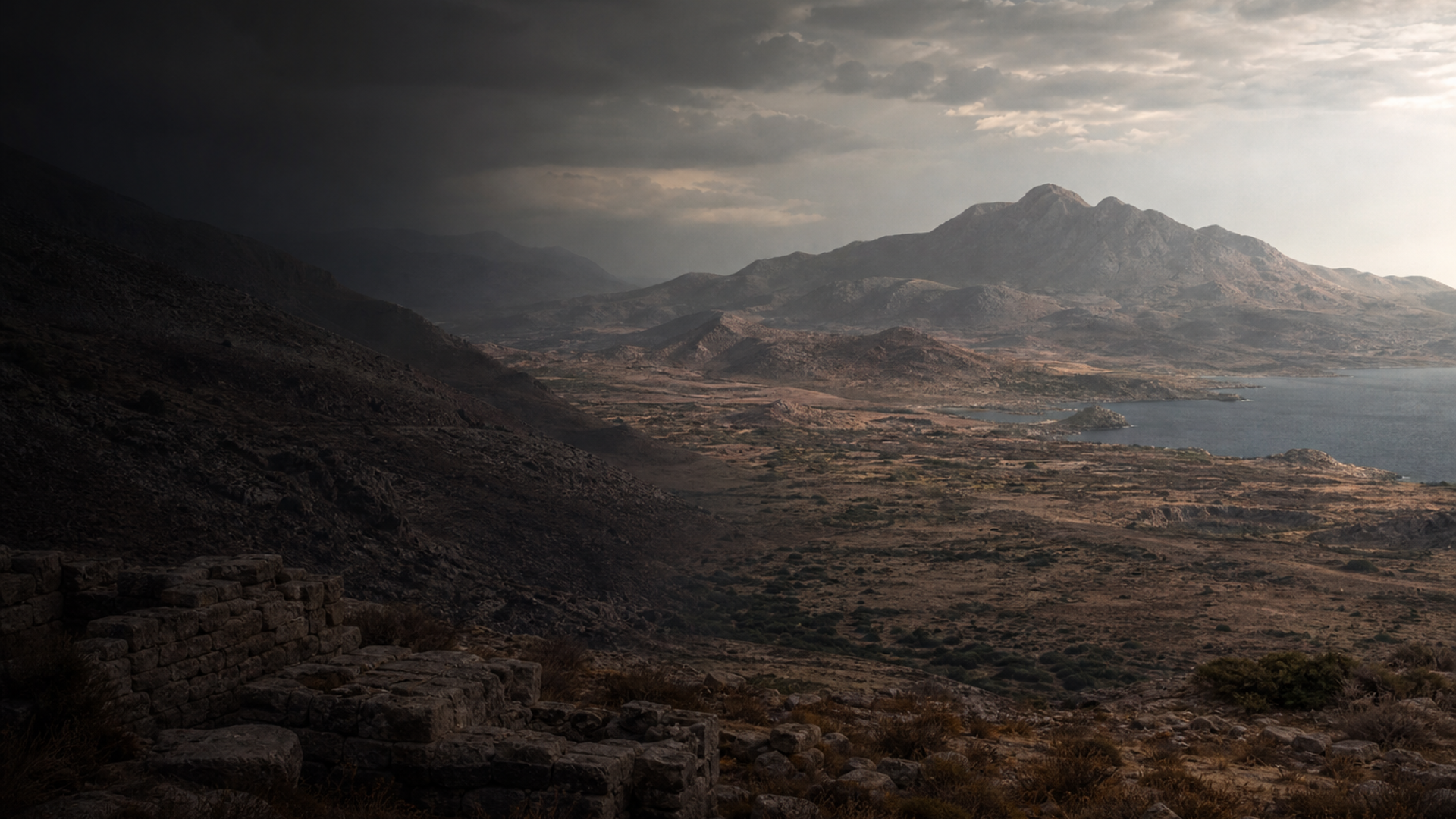
On the western shores of Crete, around the harbor settlements that would become Chania, the Late Minoan world unfolded amid palaces, villas, and vibrant maritime exchange. Archaeological layers dated between 1700 and 1100 BCE record pottery styles, fresco fragments, and architectural repairs that speak of resilience after earlier seismic and social upheavals. Material culture links these communities to the broader Late Minoan horizon: imported ceramics, metallurgy, and administrative objects suggest ongoing networks across the Aegean and into Anatolia.

Ancient DNA from 27 individuals sampled in the Chania area offers a new lens on who inhabited these places. Genetic signatures are not a one-to-one map of language or political allegiance, but they do complement the archaeological record: distributions of Y-chromosome and mitochondrial lineages indicate long-standing Aegean continuity together with contacts that likely reflect movement of people and ideas. Limited evidence suggests influence from Anatolian and eastern Mediterranean gene pools, while occasional lineages associated elsewhere in the Bronze Age Aegean appear at low frequency.

Archaeological data indicate that the communities around Chania were dynamic and interconnected. The genetic picture is consistent with a mosaic of local continuity and episodic incoming ancestry — a human landscape shaped by seafaring trade, craft exchange, and changing political ties. Because sampling is geographically focused and moderate in size, broader population-level conclusions remain cautious and provisional.

  • Late Minoan material culture in Chania: pottery, fresco fragments, and metallurgy
  • Genetic data from 27 individuals reveal localized continuity with episodes of external contact
  • Evidence points to Aegean–Anatolian connections but interpretations remain tentative
Chapitre IV

Daily Life & Society

The world of Late Bronze Age Chania was textured and tactile: fishermen and traders navigated the harbor, artisans shaped clay and bronze, and households curated heirlooms that tied families to place. Excavations around Chania reveal domestic architecture, storage vessels, and tool assemblages consistent with a mixed economy of agriculture, craft production, and maritime trade. Archaeobotanical and zooarchaeological remains from the region show cereals, pulse crops, olives, and domesticated animals as staples — a diet tied to both land and sea.

Social life in Late Minoan Crete likely combined local kinship groups with wider social networks. Material signals—luxury imports, specialized workshops, and shared ritual spaces—suggest hierarchies and communal identities without a single centralized authority across the island after palatial declines. Funerary contexts in the Chania area are varied; burial practices and grave goods indicate social differentiation but also a spectrum of local traditions.

When placed alongside genetic evidence, the archaeological picture suggests households that were primarily local in ancestry but participated in long-distance exchange. Biological kinship inferred from genomes can illuminate family structure in graves and settlement clusters, but in Chania these patterns are still being mapped: archaeological context and moderate sample sizes mean reconstructions of daily life remain interpretive and provisional.

  • Economy: mixed agriculture, craft production, and maritime exchange
  • Burials and material culture indicate social differentiation and local traditions
Chapitre V

Genetic Profile

The genetic data from 27 individuals sampled in the Chania region provide a modest but revealing snapshot of Late Minoan Crete. Among individuals with assignable Y-chromosome haplogroups, several lineages appear repeatedly: J (4) and G (3) are the most common, with single occurrences of F, E, and R. These male-line markers are informative in broad strokes: haplogroups J and G have deep histories in the Near East and Anatolia and are well attested in Aegean contexts; haplogroup E can reflect Mediterranean connections; and the presence of R, albeit singularly, may indicate low-frequency admixture from lineages that are widespread in Bronze Age Europe. However, Y-haplogroup counts here are small and only represent the subset of males with confident calls.

Mitochondrial profiles (maternal lineages) are dominated by H and related HV subclades: H (3), HV (2), J (2), and rarer subtypes such as H7c and H1. These mtDNA lineages are common across Europe and the Near East in the Bronze Age and are consistent with long-standing maternal continuity within the Aegean basin.

Genomic ancestry components inferred from autosomal data (where available) tend to show a mixture: predominant Aegean-related ancestry with detectable inputs from Anatolian/Near Eastern sources and limited signals compatible with wider European Bronze Age gene flow. Because the dataset is geographically limited to Chania and counts for many haplogroups are low, conclusions about island-wide population dynamics should be treated as provisional. Further sampling across Crete and more complete genome-wide coverage will refine these initial patterns.

  • Y-DNA: dominance of J and G; single occurrences of F, E, and R (counts based on typed males)
  • mtDNA: H and HV maternal lineages predominate, consistent with Aegean–Mediterranean continuity
Chapitre VI

Legacy & Modern Connections

The material and biological imprint of Late Bronze Age Chania endures in the cultural memory of Crete. Archaeological continuities in craft traditions, agricultural practices, and settlement patterns helped shape later Cretan identities. Genetically, many modern inhabitants of Crete carry lineages that have deep roots in the island and surrounding region; the mtDNA and Y-DNA types observed in these ancient samples echo patterns still visible in parts of the modern Aegean.

It is important to avoid simplistic narratives: genetic continuity does not equate to cultural stasis, and the arrival of new lineages does not always map onto clean historical episodes. The Chania dataset highlights continuity alongside episodes of contact — a nuanced legacy of mobility, exchange, and local resilience. Ongoing archaeological and genomic research will continue to refine how Bronze Age Crete connects to later populations across the Mediterranean.

  • Modern genetic affinities reflect a complex mix of continuity and historical contact
  • Cultural traditions in Crete show long-term persistence alongside episodes of change
Propulsé par l'IA

Assistant IA

Posez des questions sur la culture Shadows of Late Bronze Crete

Assistant IA par DNAGENICS

Débloquer cette fonction
Posez des questions sur la culture Shadows of Late Bronze Crete. L'assistant IA peut expliquer les résultats génétiques, le contexte historique, les preuves archéologiques et les liens génétiques avec les populations actuelles, dans les limites de l'interprétation.
Exemple d'analyse IA

La culture Shadows of Late Bronze Crete représente un chapitre fascinant de l'histoire humaine…

L'analyse génétique met en évidence des similarités avec des populations antérieures et des signes d'adaptations propres. Les échantillons d'ADN ancien éclairent les schémas migratoires et les liens entre populations, avec des limites qui dépendent de l'étude et du contexte archéologique.

Il s'agit d'un aperçu de l'analyse IA. Accédez à l'assistant complet pour explorer :

  • Composition et similarité génétique
  • Schémas migratoires et origines
  • Vie quotidienne et pratiques culturelles
  • Contexte génétique actuel

Explorez d'autres cultures antiques

Découvrez les récits de civilisations issues du monde antique