Préparation du rapport

Chargement des informations et références disponibles

Connexion au corpus archéologique…

Collecte des archives antiques

Aller au contenu principal
Shekshovo-9: Medieval Voices from Ivanovo
Profil culturel

Shekshovo-9: Medieval Voices from Ivanovo

A small medieval assemblage where archaeology and ancient DNA begin to speak.

986 CE - 1400 CE
Shekshovo-9, Ivanovo Oblast, Russia
Faites défiler pour commencer
Chapitre I

Le récit

Comprendre la culture Shekshovo-9: Medieval Voices from Ivanovo

Shekshovo-9 (Ivanovo Oblast, Russia) preserves five medieval samples (986–1400 CE). Archaeological context and limited genetic data (Y: R, I) hint at local Eastern European connections; conclusions remain preliminary given the small sample size.

Time Period

986–1400 CE (High Medieval)

Region

Shekshovo-9, Ivanovo Oblast, Russia

Common Y-DNA

R (2), I (1) — small sample

Common mtDNA

Undetermined / varied — limited reporting

Chapitre II

Chronologie

Moments clés de l'histoire de cette culture

986 CE

Earliest dated individual from Shekshovo-9

The oldest directly dated sample from the Shekshovo-9 assemblage falls to 986 CE, marking the start of the site's High Medieval sequence.

Chapitre III

Origins & Emergence

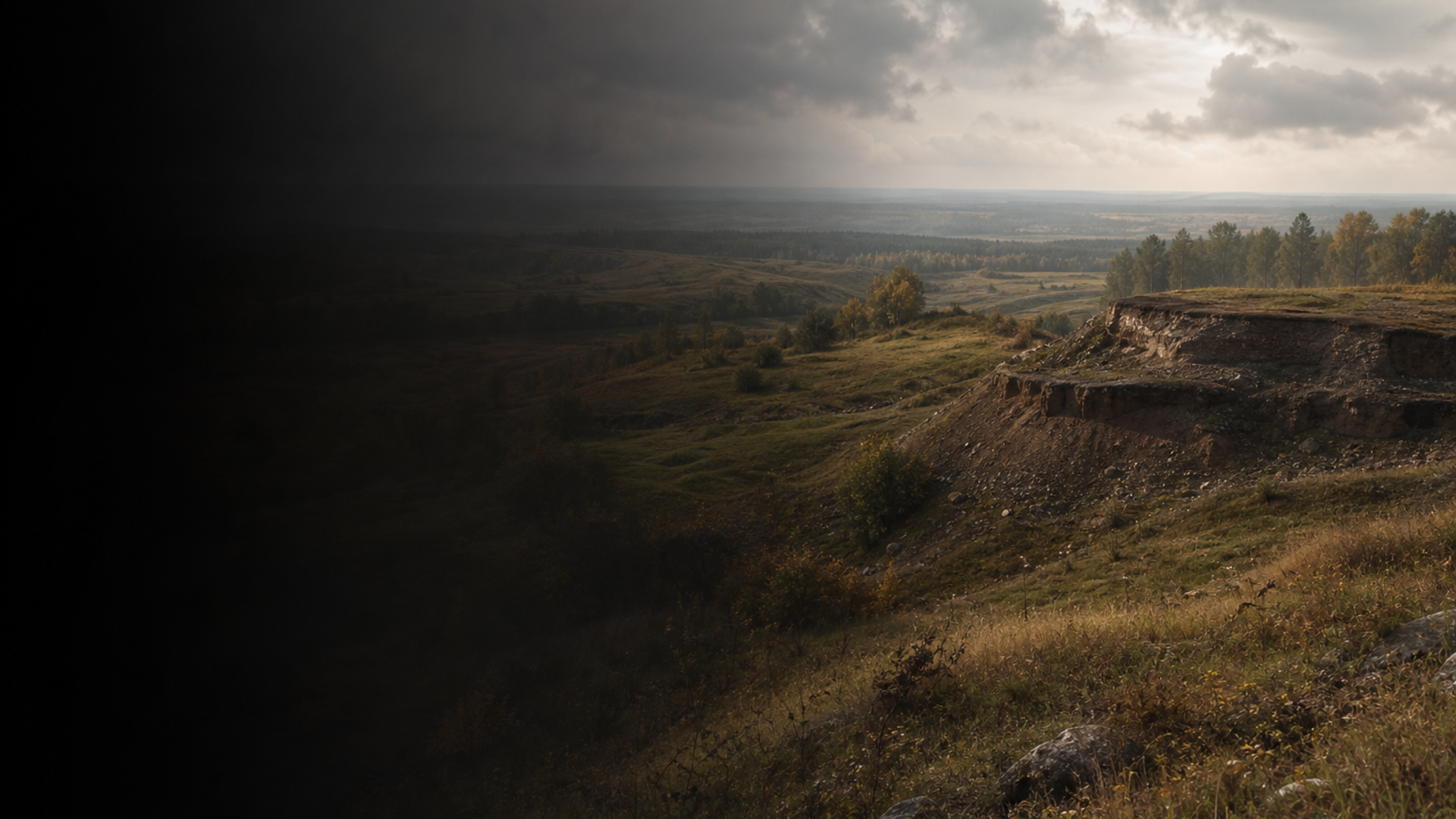
Shekshovo-9 sits amid the gentle river valleys of Ivanovo Oblast, in the Gavrilovo-Posadsky District near Sheksnovo Village. Excavations and survey have identified this place as part of the broader Medieval Shekshovo cultural horizon dated here between 986 and 1400 CE. The site captures a horizon when local settlement networks in the upper Volga basin rearranged in response to shifting political and economic ties across Rus' lands.

Archaeological data indicates inhumations and settlement traces at Shekshovo-9; however, the corpus is modest. Material culture shows continuity with regional medieval traditions rather than dramatic migration signatures. Limited evidence suggests interaction with regional trade routes and neighboring communities, but the scale and intensity of those connections remain uncertain.

In cinematic terms: these are places of layered silence — fields where clay, bone and metal keep the faint rhythms of village life. Scientifically, they provide snapshots. With only five directly sampled individuals, claims about population origins or large‑scale movements must be phrased as tentative, awaiting broader sampling and clearer stratigraphic ties.

  • Site: Shekshovo-9 (Gavrilovo-Posadsky District, Ivanovo Oblast)
  • Date range based on samples: 986–1400 CE (High Medieval)
  • Evidence indicates local medieval settlement patterns; broader connections remain tentative
Chapitre IV

Daily Life & Society

The everyday world implied at Shekshovo-9 is a tapestry of agrarian rhythms, household craft and regional exchange. Archaeological indicators for the Medieval Shekshovo Culture point toward mixed farming settlements, seasonal cycles of planting and harvest, and small-scale craft production that anchored village life. Burials preserve human traces of kinship and ritual, while settlement features suggest domestic architecture adapted to the northern forest-steppe edge.

Material signals — compact middens, hearths, and domestic debris — often speak more loudly than monumental architecture in rural medieval contexts. Social organization likely centered on extended family groups and local leadership embedded within a patchwork of neighboring villages. Trade and travelers would have introduced exotic goods and ideas in small quantities; archaeological data indicates contacts but not mass migration.

All reconstructions must be cautious: the archaeological record at Shekshovo-9 is incomplete and the sampled burials are few. What we can say confidently is that the site belongs to a living landscape of medieval Rus', where local lifeways persisted alongside long-distance connections.

  • Economy: mixed farming and household crafts inferred from settlement traces
  • Social structure: small village and kin-oriented communities; ceremonial burial practices present
Chapitre V

Genetic Profile

Ancient DNA results from five individuals at Shekshovo-9 provide early genetic glimpses into this medieval community. Y-chromosome results include two individuals assigned to haplogroup R and one to haplogroup I; mitochondrial haplogroups are not consistently reported across the dataset. These Y-lineages are common in Eastern and Northern Europe today and in many medieval-period samples across the region, but without fine-grained subclade resolution we must avoid over-interpretation.

With only five samples, statistical power is minimal. Limited evidence suggests the male lineages at Shekshovo-9 fit within the broad genetic landscape of medieval Eastern Europe, consistent with archaeological indications of local continuity. However, the small sample count (<10) means patterns may reflect family-level kinship or chance survival rather than population-wide signatures.

Genetic and archaeological datasets together hint at continuity between local medieval populations and later regional gene pools, but confirmatory data are required. Future sampling — more burials, better mtDNA resolution, and autosomal analyses — will be necessary to test hypotheses about ancestry, mobility, and social structure at Shekshovo-9.

  • Y-DNA: R (2), I (1) — consistent with broader medieval Eastern European lineages
  • Sample size is small (5); conclusions about population history are preliminary
Chapitre VI

Legacy & Modern Connections

Shekshovo-9 offers a fragile bridge between the medieval past and contemporary genetics. The modest genetic signal recorded so far suggests affinities typical of regional medieval populations, but the story is far from complete. For inhabitants of Ivanovo Oblast today, these remains may represent elements of deep local ancestry interwoven with centuries of regional continuity and interaction.

Archaeogenetics here serves as an invitation: to expand sampling, to refine mitochondrial and autosomal data, and to place Shekshovo-9 within a denser lattice of medieval sites. Until then, the site remains a poignant reminder that each sample is a single voice in a larger chorus — evocative, informative, but not yet definitive.

  • Preliminary genetic affinities align with regional medieval populations
  • Further sampling and higher-resolution DNA analyses needed to clarify modern connections
Propulsé par l'IA

Assistant IA

Posez des questions sur la culture Shekshovo-9: Medieval Voices from Ivanovo

Assistant IA par DNAGENICS

Débloquer cette fonction
Posez des questions sur la culture Shekshovo-9: Medieval Voices from Ivanovo. L'assistant IA peut expliquer les résultats génétiques, le contexte historique, les preuves archéologiques et les liens génétiques avec les populations actuelles, dans les limites de l'interprétation.
Exemple d'analyse IA

La culture Shekshovo-9: Medieval Voices from Ivanovo représente un chapitre fascinant de l'histoire humaine…

L'analyse génétique met en évidence des similarités avec des populations antérieures et des signes d'adaptations propres. Les échantillons d'ADN ancien éclairent les schémas migratoires et les liens entre populations, avec des limites qui dépendent de l'étude et du contexte archéologique.

Il s'agit d'un aperçu de l'analyse IA. Accédez à l'assistant complet pour explorer :

  • Composition et similarité génétique
  • Schémas migratoires et origines
  • Vie quotidienne et pratiques culturelles
  • Contexte génétique actuel

Explorez d'autres cultures antiques

Découvrez les récits de civilisations issues du monde antique