Préparation du rapport

Chargement des informations et références disponibles

Connexion au corpus archéologique…

Collecte des archives antiques

Aller au contenu principal
Whispers from the West Liao River
Profil culturel

Whispers from the West Liao River

Late Neolithic lives at Erdaojingzi, where pottery, millet, and DNA trace fragile connections

2050 CE - 1517 BCE
Inner Mongolia, China (Chifeng, Erdaojingzi)
Faites défiler pour commencer
Chapitre I

Le récit

Comprendre la culture Whispers from the West Liao River

Three Late Neolithic individuals from Erdaojingzi (Chifeng, Inner Mongolia; 2050–1517 BCE) illuminate local West Liao River lifeways. Archaeological context and preliminary aDNA reveal East Asian paternal and diverse maternal lineages; conclusions remain tentative due to small sample size.

Time Period

2050–1517 BCE

Region

Inner Mongolia, China (Chifeng, Erdaojingzi)

Common Y-DNA

NO, O

Common mtDNA

N, A22, B

Chapitre II

Chronologie

Moments clés de l'histoire de cette culture

2050 BCE

Erdaojingzi burials begin (sample range)

Radiocarbon-calibrated dates for the three sampled individuals fall into the period around 2050–1517 BCE, marking Late Neolithic activity at Erdaojingzi in the West Liao River basin.

Chapitre III

Origins & Emergence

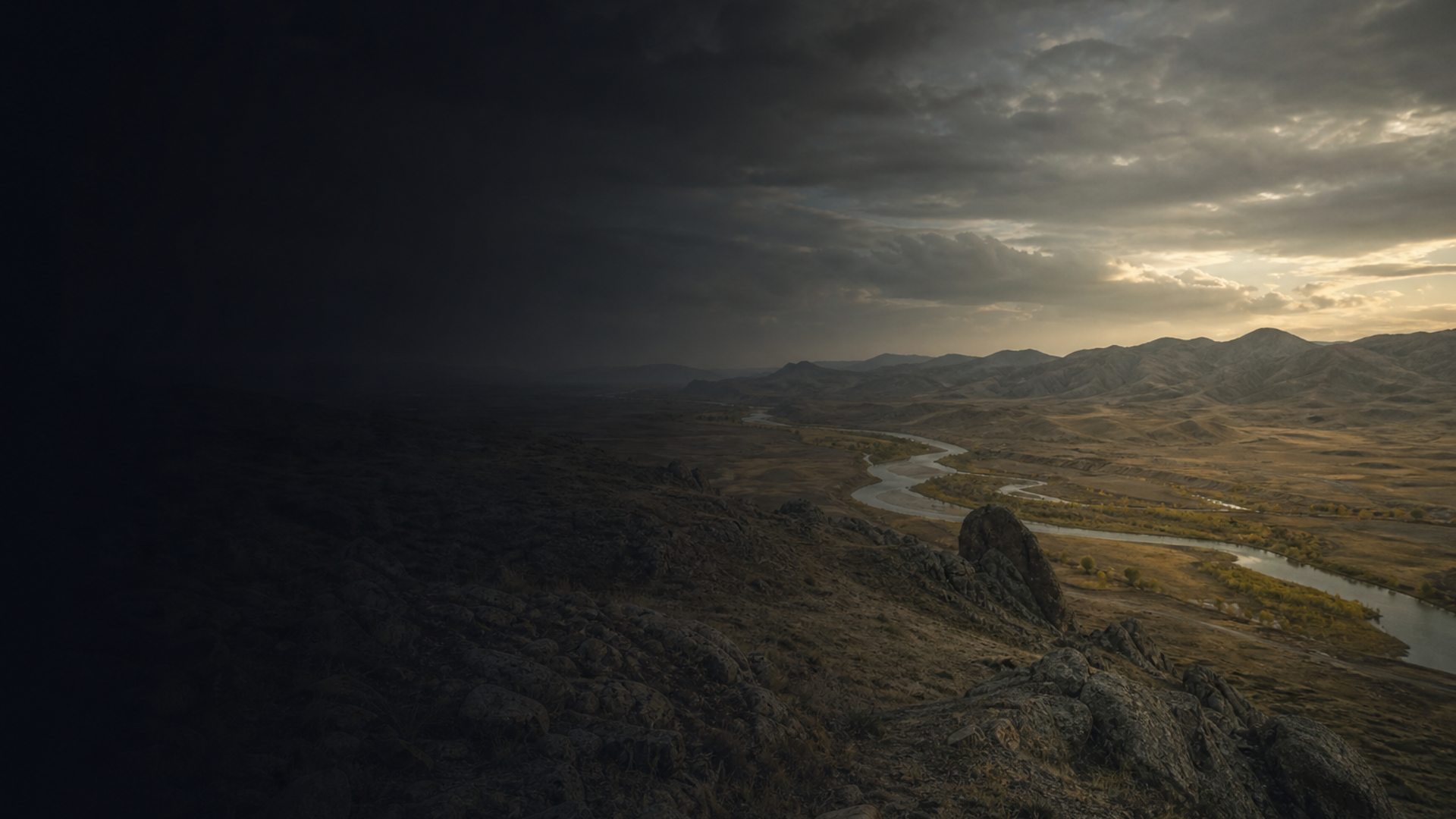
The Erdaojingzi burials in Chifeng sit within the Late Neolithic horizon of the West Liao River basin, a landscape of braided rivers and loess terraces that long nurtured millet farmers and pastoralists. Archaeological data indicates a continuity of local pottery traditions and stone-tool technologies, punctuated by increasing regional exchange as Bronze Age metallurgy began to ripple outward. Radiocarbon dates associated with the samples fall between 2050 and 1517 BCE, placing these individuals at a threshold when local communities were negotiating new social and technological networks.

Limited evidence suggests that settlements in the region combined small-scale farming with seasonal movement of herds. Material culture — coarse and fine pottery, grindstones, and occasional bronze objects in contemporaneous sites across the basin — evokes communities engaged in crop processing, storage, and long-distance exchange of goods and ideas. The name “West Liao River” reflects this hydrological anchor: river valleys funneled people, plants, and technologies across northeastern China.

Because the genetic dataset from Erdaojingzi currently includes only three individuals, any reconstruction of origins or population dynamics must remain tentative. Nonetheless, when combined with broader archaeological patterns from the Late Neolithic West Liao River zone, these remains offer a cinematic glimpse of communities at a cultural and genetic crossroads.

  • Late Neolithic context in West Liao River basin (2050–1517 BCE)
  • Local pottery and stone-tool continuity with growing external contacts
  • Small sample size means origin models are preliminary
Chapitre IV

Daily Life & Society

Archaeological traces from the Erdaojingzi locality suggest everyday life shaped by seasonal cycles and riverine resources. Millet cultivation dominates botanical assemblages across the West Liao River Late Neolithic, implying dedicated processing and storage practices — grindstones, storage pits, and varied vessel types speak to a cereal-oriented economy. Animal bones from nearby sites show a mix of domesticated taxa and wild game, pointing to diversified diets and flexible subsistence strategies.

Household remains, cremation and inhumation burials, and grave goods recorded in regional excavations imply social differentiation: some burials contain utilitarian pottery or ornaments, while others show minimal accoutrements. Ceramic styles and decoration patterns connect Erdaojingzi communities to broader stylistic networks that extend into northeastern China, suggesting exchange of ideas or marriage ties across valleys. Seasonal mobility for pasturing animals may have complemented sedentary farming, creating a social rhythm of fields, herds, and riverine trade.

Material culture evokes sensory landscapes: the scrape of millet husks, the smoke-streaked interiors of longhouses or pit-houses, and footprints trailing to riverbanks. Yet the archaeological record is fragmentary, and direct inference about social institutions, ritual practice, or household size at Erdaojingzi remains cautious without more extensive excavation and sampling.

  • Millet-based agriculture with mixed hunting and herding
  • Regional ceramic styles and burial variability suggest social networks and differentiation
Chapitre V

Genetic Profile

Three ancient genomes recovered from Erdaojingzi provide an initial genetic window into the Late Neolithic West Liao River population. Y-chromosome results show two distinct paternal markers among analyzed males: lineage NO in one individual and lineage O in another. Both haplogroups are broadly associated with East Asian paternal diversity; NO is commonly found across northern East Asia and parts of northeast Eurasia, while O is widespread in many East and Southeast Asian populations. These assignments suggest local continuity with regional East Asian male lineages rather than a large, recent influx from distant steppe populations.

Mitochondrial haplogroups among the three individuals are N, A22, and B — a mix consistent with the maternal diversity observed across ancient and modern East Asia. Haplogroup N has deep Eurasian roots; A22 and B are frequently encountered in northern and eastern Asian contexts. Together, these maternal markers imply diverse maternal ancestries in a relatively small community.

Because the sample count is very low (n=3), all genetic interpretations must be framed as provisional. Limited sampling can miss population heterogeneity, sex-biased migration, or rare lineages. Nevertheless, in combination with regional aDNA from the Late Neolithic and Bronze Age of northeast China, the Erdaojingzi individuals tentatively point to predominantly East Asian ancestry with local maternal diversity and paternal lineages typical for the region.

  • Y-DNA: NO and O — East Asian-associated paternal lineages
  • mtDNA: N, A22, B — diverse maternal ancestries; conclusions preliminary (n=3)
Chapitre VI

Legacy & Modern Connections

The genetic and archaeological hints from Erdaojingzi knit into a larger story of northeastern China’s Late Neolithic communities contributing to the genetic tapestry of East Asia. Lineages like Y-haplogroups NO and O and mtDNA types N, A22, and B persist in various frequencies across modern East Asian populations, suggesting threads of continuity alongside millennia of movement and admixture.

Archaeologically, the West Liao River basin emerges as a crossroads where riverine corridors channeled people, crops, and technologies. The legacy of millet agriculture, ceramic traditions, and mobility strategies shaped later Bronze Age societies in the region. Yet, because evidence from Erdaojingzi is limited to three samples, claims about direct ancestry to specific modern groups should be made cautiously. Future sampling and interdisciplinary study will better resolve how these Late Neolithic lifeways contributed to the deep genetic history of East Asia.

  • Genetic lineages observed have modern continuities in East Asia
  • Broader archaeological patterns suggest long-term cultural impacts, but direct links remain tentative
Propulsé par l'IA

Assistant IA

Posez des questions sur la culture Whispers from the West Liao River

Assistant IA par DNAGENICS

Débloquer cette fonction
Posez des questions sur la culture Whispers from the West Liao River. L'assistant IA peut expliquer les résultats génétiques, le contexte historique, les preuves archéologiques et les liens génétiques avec les populations actuelles, dans les limites de l'interprétation.
Exemple d'analyse IA

La culture Whispers from the West Liao River représente un chapitre fascinant de l'histoire humaine…

L'analyse génétique met en évidence des similarités avec des populations antérieures et des signes d'adaptations propres. Les échantillons d'ADN ancien éclairent les schémas migratoires et les liens entre populations, avec des limites qui dépendent de l'étude et du contexte archéologique.

Il s'agit d'un aperçu de l'analyse IA. Accédez à l'assistant complet pour explorer :

  • Composition et similarité génétique
  • Schémas migratoires et origines
  • Vie quotidienne et pratiques culturelles
  • Contexte génétique actuel

Explorez d'autres cultures antiques

Découvrez les récits de civilisations issues du monde antique