Aller au contenu principal
Profil culturel

Yasynuvatka Neolithic Echoes

Three early Neolithic individuals from Zaporizhia revealing maternal threads and regional entanglements

5314 CE - 4997 BCE
Yasynuvatka, Zaporizhia Oblast, Ukraine

Le récit

Preliminary genetic and archaeological portrait of the Yasinovatka Neolithic (5314–4997 BCE) from Yasynuvatka, Zaporizhia Oblast. Limited samples (n=3) show mtDNA U and T lineages, hinting at mixed local hunter‑gatherer and incoming farmer ancestry.

Time Period

5314–4997 BCE

Region

Yasynuvatka, Zaporizhia Oblast, Ukraine

Common Y-DNA

Not reported (limited data)

Common mtDNA

U (2), T (1)

Chronologie

5314 BCE

Early Neolithic occupation at Yasynuvatka

Radiocarbon‑anchored human remains and artifacts indicate activity at Yasynuvatka beginning around 5314 BCE, representing early Neolithic lifeways in Zaporizhia Oblast.

Origins & Emergence

The Yasinovatka Neolithic horizon at Yasynuvatka (Petro‑Mykhailivka municipality, Zaporizhia District) belongs to the early sixth millennium BCE in southern Ukraine, dated here between 5314 and 4997 BCE. Archaeological data indicates a local manifestation of Neolithic lifeways on the southern Ukrainian plains: site deposits produce ceramics and lithic assemblages that fit regional early farmer-forager interactions.

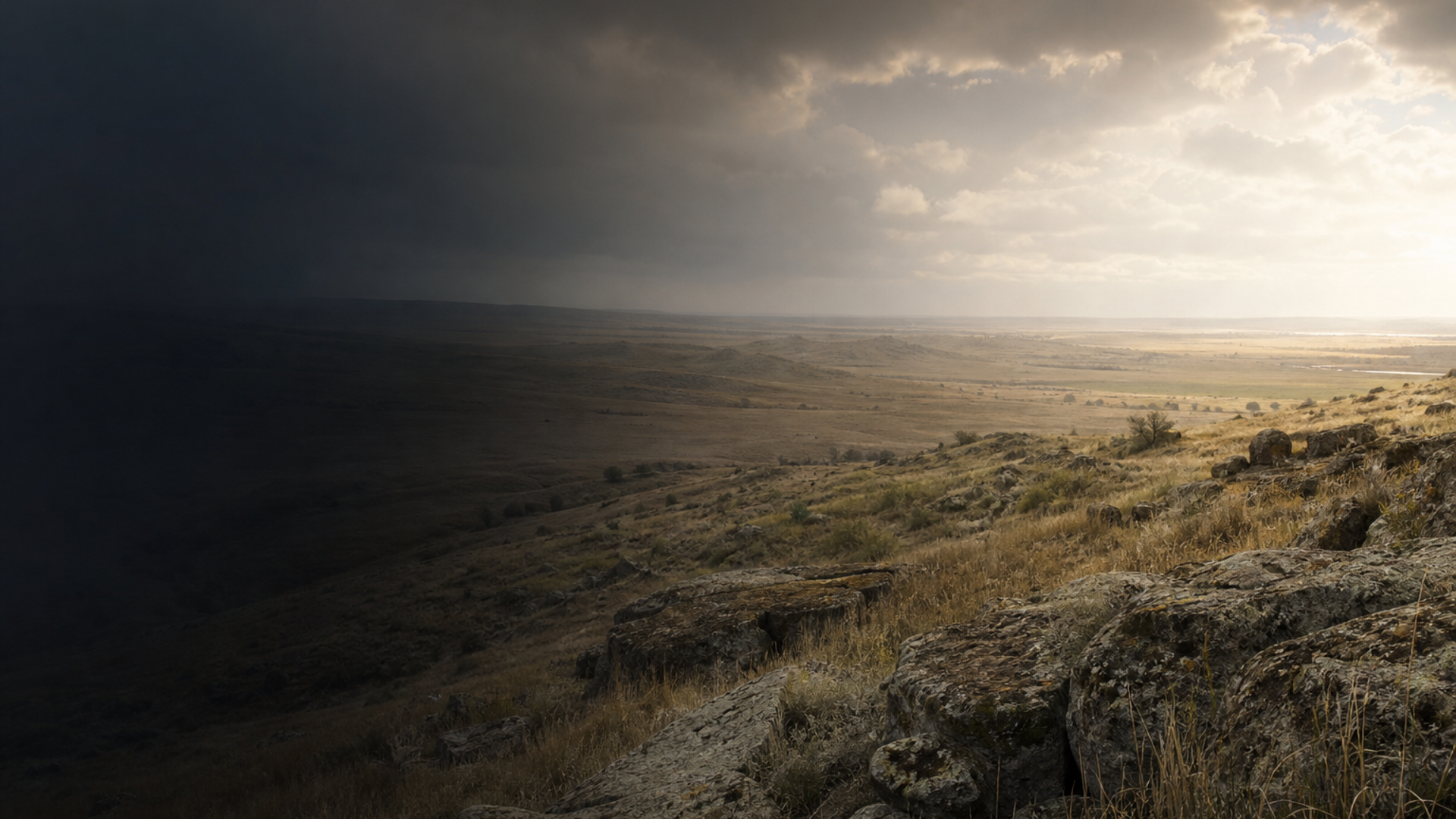
Cinematic in its silence, the site sits where seasonal rivers and plains meet, a landscape conducive to both foraging and nascent cultivation. Limited evidence suggests communities exploited a mosaic of resources and participated in exchange networks that carried pottery styles and technologies across the steppe and forest‑steppe ecotones.

Because this profile is based on a very small number of individuals and site records, conclusions must remain tentative. Archaeological patterns are best interpreted alongside genetic data to explore whether cultural change reflected movement of people, the spread of ideas, or both. Comparative study with nearby Neolithic localities helps place Yasynuvatka within broader demographic and cultural processes unfolding in eastern Europe during the sixth millennium BCE.

  • Occupation dated 5314–4997 BCE in Zaporizhia Oblast
  • Material culture consistent with Neolithic Yasinovatka assemblages
  • Interpretations remain provisional due to limited samples

Daily Life & Society

Archaeological indicators across Yasinovatka contexts suggest communities balancing foraging with incipient farming and animal use. Ceramic fragments, ground and flaked stone tools, and faunal remains in the regional Neolithic record point to processing plants, hunting and managed herds — a mixed subsistence economy adapted to riverside and steppe margins.

Social life can be imagined through the material traces: people shaping clay by hand, repairing tools, and moving seasonally between fields and rich wetlands. Burial practices in the wider Yasinovatka tradition are unevenly preserved; where present they provide glimpses of kinship and social differentiation. At Yasynuvatka specifically, the archaeological record is fragmentary, so narratives of daily routine emphasize plausible behaviors consistent with contemporaneous Neolithic communities rather than specific household reconstructions.

Archaeological data indicates mobility and interaction were important — networks of exchange could transmit pottery styles, raw materials, and possibly marriage ties across hundreds of kilometers.

  • Mixed economy: foraging, early cultivation, and animal use inferred regionally
  • Material culture implies seasonal mobility and exchange networks

Genetic Profile

Three genome samples from Yasynuvatka (n=3) yield mitochondrial haplogroups U (two individuals) and T (one individual). These maternal lineages evoke broader Late Pleistocene–Holocene dynamics in Europe: mtDNA U is frequently associated with Mesolithic hunter‑gatherer populations, while haplogroup T appears in Neolithic farmer contexts across Europe and western Asia. Archaeogenetic interpretation suggests a possible admixture of local hunter‑gatherer maternal ancestry with incoming farmer‑related lineages — a pattern echoed in many eastern European Neolithic sites.

However, the sample count is very small (<10), so any demographic inference is preliminary. No consistent Y‑chromosome haplogroup is reported from these samples, so paternal lineages remain unresolved. In the broader genetic landscape, populations in this region show varying contributions from western and eastern hunter‑gatherers (WHG, EHG) and Anatolian‑related farmers; Yasynuvatka’s mtDNA hints at such complexity but cannot alone determine precise ancestry proportions.

Future sampling and genome‑wide analyses will be needed to test whether Yasynuvatka individuals reflect local continuity, migration of farming groups, or structured admixture. For now, the DNA threads are evocative but incomplete.

  • mtDNA: U (2) — often linked to Mesolithic hunter‑gatherer ancestry
  • mtDNA: T (1) — appears in Neolithic farmer‑related contexts; Y‑DNA not reported

Legacy & Modern Connections

The maternal lineages observed at Yasynuvatka (U and T) persist in modern Eurasian populations, a molecular echo of deep prehistory. These haplogroups contribute to the complex genetic tapestry of modern Ukrainians and neighboring peoples. Archaeogenetic continuity should not be read as direct one‑to‑one descent from a single site; instead, Yasynuvatka offers a localized snapshot of ancestral threads that later wove into larger regional populations.

For museum audiences and descendants alike, the site humanizes distant centuries: three individuals whose mitochondrial DNA connects them to wider migratory and cultural currents. The story they tell is partial but powerful — a reminder that ancient genomes and archaeological remains together illuminate migration, interaction, and the slow reconfiguration of communities across the Neolithic landscape. Continued excavation and ancient DNA sampling will refine these connections and transform preliminary hints into robust narratives.

  • mtDNA haplogroups at Yasynuvatka link to lineages present in modern Europe
  • Small sample size limits direct claims of continuity; further research needed

Assistant IA

Assistant IA par DNAGENICS

Débloquer cette fonction
Posez des questions sur la culture Yasynuvatka Neolithic Echoes. L'assistant IA peut expliquer les résultats génétiques, le contexte historique, les preuves archéologiques et les liens génétiques avec les populations actuelles, dans les limites de l'interprétation.
Exemple d'analyse IA

La culture Yasynuvatka Neolithic Echoes représente un chapitre fascinant de l'histoire humaine…

L'analyse génétique met en évidence des similarités avec des populations antérieures et des signes d'adaptations propres. Les échantillons d'ADN ancien éclairent les schémas migratoires et les liens entre populations, avec des limites qui dépendent de l'étude et du contexte archéologique.

Il s'agit d'un aperçu de l'analyse IA. Accédez à l'assistant complet pour explorer :

  • Composition et similarité génétique
  • Schémas migratoires et origines
  • Vie quotidienne et pratiques culturelles
  • Contexte génétique actuel