Menu
Store
Blog
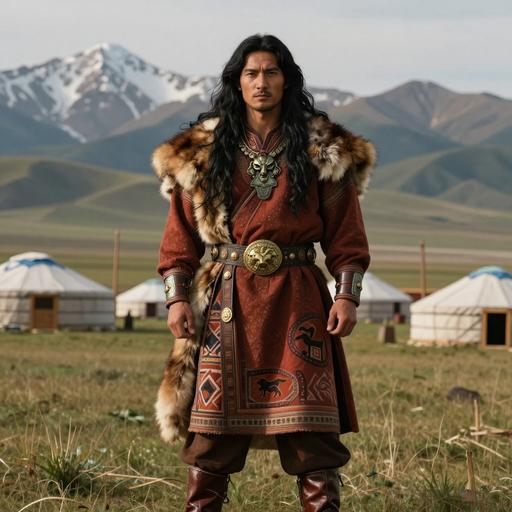
Portrait reconstruction of DA127
Ancient Individual

A man buried in Kazakhstan in the Medieval era

DA127
214 CE - 528 CE
Male
The Hun Period in Kazakhstan
Kazakhstan
Scroll to begin
Chapter I

Identity

The biological and cultural markers that define this ancient individual

Sample ID

DA127

Date Range

214 CE - 528 CE

Biological Sex

Male

mtDNA Haplogroup

D4b1a2a1

Y-DNA Haplogroup

Q-YP4495

Cultural Period

The Hun Period in Kazakhstan

Chapter II

Place

Where this individual was discovered

Country Kazakhstan
Locality Tian Shan. Central Steppe
Coordinates 42.9906, 79.3692
Chapter III

Time

When this individual lived in the broader context of human history

DA127 214 CE - 528 CE
Chapter IV

Story

The narrative of this ancient life

The Hun Period in Kazakhstan is a fascinating era marked by the movements and influences of nomadic steppe cultures, particularly those associated with the Huns. This period, roughly spanning from the 4th to the 6th centuries CE, is characterized by dynamic social, military, and cultural developments that left a lasting impact on the region and beyond.

Historical Context

The Huns are often linked to the broader group of Eurasian nomads originating from Central Asia. Their presence in the region of modern-day Kazakhstan is part of a larger migratory movement that saw them expand westward, significantly influencing the political and cultural landscapes of Europe and Asia. The decline of the Xiongnu in the east and pressures from other migratory tribes may have contributed to the westward movement of the Huns.

Social Structure

The Huns in Kazakhstan operated within a highly mobile, clan-based society. The steppe was inhabited by tribes led by chieftains or khans who commanded warriors skilled in horseback riding and archery—essential skills for survival and dominance on the vast plains. Social structure was hierarchical yet flexible, allowing strong leaders to emerge based on merit and success in battle.

Economy

The economy of the Hun period in Kazakhstan was largely pastoral, centered on the herding of livestock such as horses, sheep, and cattle. This nomadic lifestyle necessitated a deep understanding of the ecology of the steppe, with seasonal migrations in search of pastureland. Trade also played a significant role. The Huns, through their expansion and interactions with neighboring cultures, facilitated and controlled trade routes that connected East and West, contributing to the economic complexity of the region.

Warfare and Expansion

The Huns are renowned for their military prowess, largely due to their skills in mounted archery and the use of composite bows crafted for both power and flexibility. Their tactics often involved swift, surprise attacks, which led to their feared reputation among settled civilizations. The strategic and military capabilities of the Huns were instrumental in their westward expansion, influencing a vast area that extended into Eastern Europe and contributed to the destabilizing of the Roman Empire.

Cultural Impacts

Culturally, the Hun period in Kazakhstan was a melting pot of influences due to the interactions with various nomadic tribes, as well as sedentary cultures along trade routes such as the Silk Road. The blending of these cultures led to unique syncretic developments in art, language, and religion. Innovations in metalwork, particularly in weaponry and jewelry, are notable achievements from this era.

Religious Beliefs

Religion during the Hun period was diverse, with practices rooted in animism and shamanism. These beliefs were characterized by a reverence for nature and the land, along with spiritual practices conducted by shamans. As the Huns interacted with Persian and other Eurasian cultures, elements of Zoroastrianism and later, early influences of Buddhism and Christianity, were also integrated into their spiritual life.

Archaeological Evidence

Archaeological sites in Kazakhstan provide valuable insights into the Hun period. Burial mounds, known as kurgans, have unveiled artifacts that illustrate the artistry and lifestyle of the Huns. These include intricate gold jewelry, weaponry, and horse gear. Additionally, the remains of settlements and fortifications suggest that while the Huns were primarily nomadic, there were periods and areas where sedentary life was adopted or necessary for strategic purposes.

Legacy

The legacy of the Hun period in Kazakhstan is a testament to the richness and influence of nomadic cultures on world history. The Huns’ adaptability, military innovations, and cultural exchanges played a significant role in shaping the historical trajectory of not just Central Asia, but also of the broader European and Asian continents. The movements and interactions forged during this era set the stage for subsequent waves of nomadic cultures that continued to influence the region for centuries.

In summary, the Hun Period in Kazakhstan is emblematic of the transformative power of nomadic societies and their ability to influence far-reaching historical, cultural, and economic changes across continents.

Chapter V

Genetics

The genetic ancestry of this ancient individual

Ancient Genetic Admixture

This analysis compares the DNA profile of DA127 with ancient reference populations, showing the genetic composition in terms of prehistoric ancestral groups.

Ancient Asians 75.7%
Neolithic Farmers 10.0%
Western Steppe Pastoralists 8.6%
Ancient Native Americans 3.5%
European Hunter-Gatherers 2.1%

Modern Genetic Admixture

This analysis compares the DNA profile with present-day reference populations, showing what percentage of genetic makeup resembles modern populations from different regions.

Asia 91.7%
Northern Asian 40.6%
Siberian 24.1%
Mongolian 16.5%
Central Asian, Northern Indian & Pakistani 28.4%
Central Asian 28.4%
Chinese & Southeast Asian 15.7%
Chinese 12.0%
Tibetan 3.8%
Japanese & Korean 7.1%
Japanese 7.1%
Europe 4.4%
Northwestern European 4.4%
Finnish 4.1%
America 3.4%
America 3.4%
Native American 3.4%

Closest Modern Populations

These are the modern populations showing the closest statistical alignment to A man buried in Kazakhstan in the Medieval era, ranked by genetic distance. Lower distance values indicate closer statistical similarity.

1
Mongol Xinjiang
3.4053
2
Mongol
5.9160
3
Mon
20.4889
Chapter VI

Context

Other ancient individuals connected to this sample

Sources

References

Scientific publications and genetic data

Scientific Publication

137 ancient human genomes from across the Eurasian steppes

Authors Damgaard PB, Marchi N, Rasmussen S
Abstract

For thousands of years the Eurasian steppes have been a centre of human migrations and cultural change. Here we sequence the genomes of 137 ancient humans (about 1× average coverage), covering a period of 4,000 years, to understand the population history of the Eurasian steppes after the Bronze Age migrations. We find that the genetics of the Scythian groups that dominated the Eurasian steppes throughout the Iron Age were highly structured, with diverse origins comprising Late Bronze Age herders, European farmers and southern Siberian hunter-gatherers. Later, Scythians admixed with the eastern steppe nomads who formed the Xiongnu confederations, and moved westward in about the second or third century BC, forming the Hun traditions in the fourth-fifth century AD, and carrying with them plague that was basal to the Justinian plague. These nomads were further admixed with East Asian groups during several short-term khanates in the Medieval period. These historical events transformed the Eurasian steppes from being inhabited by Indo-European speakers of largely West Eurasian ancestry to the mostly Turkic-speaking groups of the present day, who are primarily of East Asian ancestry.

G25 Coordinates

The G25 coordinates for sample DA127 can be used for detailed admixture analysis in our G25 Studio tool.

DA127,0.05065734,-0.3171159,0.06738914,-0.00770566,-0.04499348,-0.01854886,0.00528338,0.00701164,0.00222802,0.00296492,-0.01498764,-0.00341968,0.00264538,-0.00792802,-0.00124938,-0.00669926,-0.00861116,0.00167638,0.00772002,0.00815284,-0.01042754,-0.00380114,-0.00153332,0.00440052,0.00605038
Analyze in G25 Studio
Use code for 40% off Expires Feb 27