Menu
Currency
Main
Store
Blog

Loading Report

Preparing your ancestry journey

Connecting to ancient matches...

Preparing your report

Skip to main content
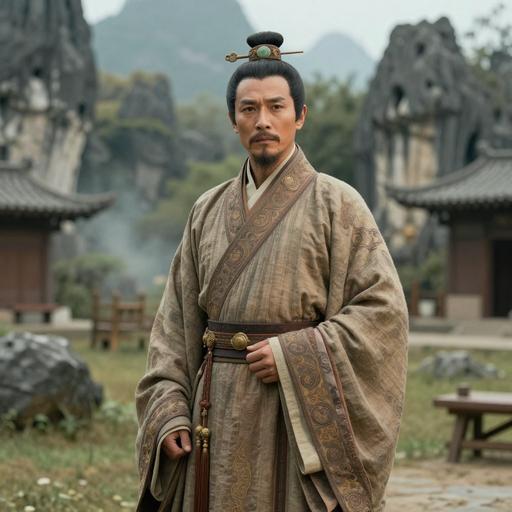
Portrait reconstruction of A man buried in China in the Historical era
Ancient Individual

A man buried in China in the Historical era

A man buried in China during the Balong Jin Period China

A fragment of the ancient world, preserved across millennia in strands of DNA.

BalongKD10
382 CE - 541 CE
Male
China
Scroll to begin
Chapter I

Identity

The biological and cultural markers that define this ancient individual

Sample ID

BalongKD10

Date Range

382 CE - 541 CE

Cultural Period

Balong Jin Period China

Biological Sex

Male

mtDNA Haplogroup

M7b1a1

Y-DNA Haplogroup

Not available

Social Role

Farmer (AI estimate, era-typical)

Chapter II

Place

Where this individual was discovered

Country China
Locality Guangxi. Hechi City. Dahua Yao Autonomous County. Beijing Town. Balong Cave
Chapter III

Time

When this individual lived in the broader context of human history

BalongKD10 382 CE - 541 CE
Chapter IV

Story

The narrative of this ancient life

The Balong Jin period in the context of the Northern and Southern Dynasties in China represents a crucial era in Chinese history marked by significant cultural, political, and social developments. This period, roughly spanning from the 5th to the 6th century CE, was characterized by both turmoil and cultural flourishing and takes place within the broader historical framework of the Northern and Southern Dynasties.

Historical Context

Division of China

The era of the Northern and Southern Dynasties (420-589 CE) was a time of disunity following the collapse of the Western Jin Dynasty. China was divided into multiple competing regimes: the Northern Dynasties, ruled predominantly by non-Han Chinese peoples, and the Southern Dynasties, governed by Han-Chinese aristocratic families. This division resulted in a rich blend of cultural exchanges alongside military conflicts.

Balong Jin's Role

Within this fragmented political landscape, the Balong Jin region in Guangxi played a role as a cultural and geographical nexus. While not as central as the northern capitals like Luoyang or southern centers like Jiankang (present-day Nanjing), areas such as Balong Jin (likely hypothetical or an under-documented site considering current academic resources) could have served as important local power bases balancing between northern and southern influences.

Cultural and Social Dynamics

Cultural Syncretism

The Balong Jin era and location may have experienced a unique form of cultural syncretism. The blending of northern Buddhist influences, brought by foreign Turkic and Mongolic rulers, with traditional Chinese Confucianism and Daoism in the south created a vibrant intellectual and artistic scene. Buddhism, in particular, flourished due to the patronage of state and local rulers, leading to the construction of temples, the carving of grottoes, and the translation of Buddhist texts.

Artistic Developments

Art from this era likely displayed a mix of styles, integrating steppe motifs from the north with southern aesthetics. This amalgamation can be seen in sculpture, pottery, and textiles, showcasing distinct artistic exchanges and innovations that laid the foundation for future developments during the Tang Dynasty.

Political Landscape

Fragmented Rulership

Politics in the region would have been characterized by decentralization. Local warlords or military governors might have exerted significant control, alternating allegiance between northern and southern powers as the geopolitical situation evolved. These local leaders often maintained a tenuous balance by adopting customs and practices advantageous to securing their rule in such a contested landscape.

Diplomacy and Warfare

Conflict was frequent, with the Northern and Southern Dynasties constantly at odds. Balong Jin, potentially serving as a borderland, might have been strategically vital, experiencing numerous military campaigns. Conversely, its position could have allowed for diplomatic roles in negotiations or even trade, acting as intermediaries between the north and south.

Social Structure

Urban and Rural Life

The social structure of Balong Jin would have been quite layered. Urban centers, though not as prominent as those in the political heartlands, provided hubs for trade, exchange, and cultural activity. In contrast, the rural areas were likely dominated by agricultural economy, with peasants, farmers, and smaller clan groups forming the majority populace.

Ethnic and Cultural Diversity

Guangxi, historically known for its ethnic diversity, would have hosted a variety of groups including Han Chinese, local indigenous tribes, and traders or soldiers from northern ethnicities. This diversity undoubtedly contributed to the unique cultural aspects of the Balong Jin period.

Conclusion

Although specific records on Balong Jin during the Northern and Southern Dynasties might be scarce, understanding this area's potential role helps illuminate the complex tapestry of Chinese civilization during this era. This period set the stage for the eventual reunification under the Sui and the subsequent cultural zenith of the Tang Dynasty, emphasizing the importance of regional histories in shaping the broader narrative of China's past.

Context

Related Samples

This individual exists within a broader network of ancient samples. No ancient genome stands alone.

Sample ID Culture/Period Date Location Action
BalongKD06 Balong Jin Period China 250 CE Guangxi. Hechi City. Dahua Yao Autonomous County. Beijing Town. Balong Cave, China View
BalongKD07 Balong Jin Period China 262 CE Guangxi. Hechi City. Dahua Yao Autonomous County. Beijing Town. Balong Cave, China View
BalongKD08 Balong Jin Period China 250 CE Guangxi. Hechi City. Dahua Yao Autonomous County. Beijing Town. Balong Cave, China View
BalongKD10 Balong Jin Period China 382 CE Guangxi. Hechi City. Dahua Yao Autonomous County. Beijing Town. Balong Cave, China View
BandaKD11 Banda Period China 484 CE Guangxi. Hechi City. Dahua Yao Autonomous County. Banda Cave, China View
BandaKD15 Banda Period China 433 CE Guangxi. Hechi City. Dahua Yao Autonomous County. Banda Cave, China View
Baojianshan5_M1 China Guangxi Baojianshan Neolithic 6400 BCE Guangxi. Chongzuo City. Longzhou County. Baojianshan Cave A, China View
Baojianshan5_M2 China Guangxi Baojianshan Neolithic 6400 BCE Guangxi. Chongzuo City. Longzhou County. Baojianshan Cave A, China View
CenxunKP05 Tang Dynasty China 484 CE Guangxi. Baise City. Pingguo County. Taiping Town. Cenxun Cave, China View
CenxunKP07 Tang Dynasty China 584 CE Guangxi. Baise City. Pingguo County. Taiping Town. Cenxun Cave, China View
CenxunKP13 Tang Dynasty China 440 CE Guangxi. Baise City. Pingguo County. Taiping Town. Cenxun Cave, China View
Dushan4_1 Neolithic Guangxi Dushan, China 7025 BCE Guangxi. Dushan, China View
GaofengNL23 Qing Dynasty China 1530 CE Guangxi. Hechi City. Nandan County. Lihu Yaozu Town. Huatu Village. Gaofeng Cave, China View
HuaqiaoNL26 Ming Dynasty China 1437 CE Guangxi. Hechi City. Nandan County. Lihu Yaozu Town. Huaqiao Village. Baitai Mountain. Huaqiao Caves, China View
HuatuyanNL02 China Guangxi Huatuyan Ming 1484 CE Guangxi. Hechi City. Nandan County. Lihu Yaozu Town. Huatu Village. Huatuyan Cave, China View
HuatuyanNL04 China Guangxi Huatuyan Ming 1400 CE Guangxi. Hechi City. Nandan County. Lihu Yaozu Town. Huatu Village. Huatuyan Cave, China View
HuatuyanNL06 China Guangxi Huatuyan Ming 1400 CE Guangxi. Hechi City. Nandan County. Lihu Yaozu Town. Huatu Village. Huatuyan Cave, China View
HuatuyanNL11 China Guangxi Huatuyan Ming 1474 CE Guangxi. Hechi City. Nandan County. Lihu Yaozu Town. Huatu Village. Huatuyan Cave, China View
HuatuyanNL17 China Guangxi Huatuyan Ming 1442 CE Guangxi. Hechi City. Nandan County. Lihu Yaozu Town. Huatu Village. Huatuyan Cave, China View
HuatuyanNL18 China Guangxi Huatuyan Ming 1400 CE Guangxi. Hechi City. Nandan County. Lihu Yaozu Town. Huatu Village. Huatuyan Cave, China View
HuatuyanNL19 China Guangxi Huatuyan Ming 1495 CE Guangxi. Hechi City. Nandan County. Lihu Yaozu Town. Huatu Village. Huatuyan Cave, China View
HuatuyanNL21 China Guangxi Huatuyan Ming 1456 CE Guangxi. Hechi City. Nandan County. Lihu Yaozu Town. Huatu Village. Huatuyan Cave, China View
LadaKH01 China Guangxi Lada Northern And Southern Dynasties Sui Tang 484 CE Guangxi. Hechi City. Jinchengjiang District. Lada Cave, China View
LayiKD01 Layi Period China 419 CE Guangxi. Hechi City. Dahua Yao Autonomous County. Beijing Town. Baida Village. Layi Cave, China View
Longlin_1 Epipaleolithic Guangxi Longlin, China 9853 BCE Guangxi. Longlin Cave, China View
Qihe3 Epipaleolithic China 9798 BCE Fujian. Zhangping. Qihe Cave, China View
QinchangKD13 Qinchang Period China 431 CE Guangxi. Hechi City. Dahua Yao Autonomous County. Yantan Town. Qinchang Cave, China View
QinchangKD14 Qinchang Period China 406 CE Guangxi. Hechi City. Dahua Yao Autonomous County. Yantan Town. Qinchang Cave, China View
ShenxianKP09 China Guangxi Shenxian Sui Tang 601 CE Guangxi. Baise City. Pingguo County. Shenxian Cave, China View
Yinwang China Guangxi Yinwang Ming 1400 CE Guangxi. Baise City. Pingguo County. Liming Township. Liming Village. Nian Mountain. Yinwang Cave, China View
YiyangKP17 Northern and Southern Dynasties 484 CE Guangxi. Baise City. Pingguo County. Yiyang Cave, China View
Sample ID Culture/Period Date Location Action
BalongKD06 Balong Jin Period China 250 CE Guangxi. Hechi City. Dahua Yao Autonomous County. Beijing Town. Balong Cave, China View
BalongKD07 Balong Jin Period China 262 CE Guangxi. Hechi City. Dahua Yao Autonomous County. Beijing Town. Balong Cave, China View
BalongKD08 Balong Jin Period China 250 CE Guangxi. Hechi City. Dahua Yao Autonomous County. Beijing Town. Balong Cave, China View
BalongKD10 Balong Jin Period China 382 CE Guangxi. Hechi City. Dahua Yao Autonomous County. Beijing Town. Balong Cave, China View
Sources

References

Scientific publications and genetic data that inform this profile.

Scientific Publication

Human population history at the crossroads of East and Southeast Asia since 11,000 years ago

Authors Wang T, Wang W, Xie G, Li Z, Fan X et al.
Abstract

Past human genetic diversity and migration between southern China and Southeast Asia have not been well characterized, in part due to poor preservation of ancient DNA in hot and humid regions. We sequenced 31 ancient genomes from southern China (Guangxi and Fujian), including two ∼12,000- to 10,000-year-old individuals representing the oldest humans sequenced from southern China. We discovered a deeply diverged East Asian ancestry in the Guangxi region that persisted until at least 6,000 years ago. We found that ∼9,000- to 6,000-year-old Guangxi populations were a mixture of local ancestry, southern ancestry previously sampled in Fujian, and deep Asian ancestry related to Southeast Asian Hòabìnhian hunter-gatherers, showing broad admixture in the region predating the appearance of farming. Historical Guangxi populations dating to ∼1,500 to 500 years ago are closely related to Tai-Kadai and Hmong-Mien speakers. Our results show heavy interactions among three distinct ancestries at the crossroads of East and Southeast Asia.

Use code for 20% off Expires Jul 22