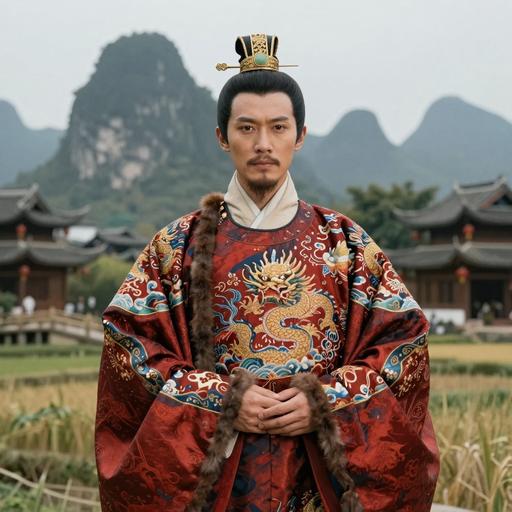
The timeframe from 1368 to 1644 CE corresponds to the Ming Dynasty in Chinese history, a period characterized by significant cultural, economic, and social developments. While 'Guangxi Yinwang' and 'Yinwang Culture' are not explicitly recognized historical terms, I will interpret and describe the era with a focus on the Guangxi region and possible cultural undertones of this timeframe within the context of the greater Ming Dynasty.
The Ming Dynasty: An Overview
The Ming Dynasty, established by Zhu Yuanzhang following the fall of the Mongol-led Yuan Dynasty, is often regarded as one of China's greatest eras of orderly government and social stability. Spanning nearly three centuries, the Ming Dynasty was marked by a return to native Han Chinese rule. It saw the consolidation of control, reformation of government structures, and flourishing of culture.
Guangxi Region During the Ming Dynasty
Guangxi, located in southern China, is noted for its diverse topography, including rivers, mountains, and lush landscapes. During the Ming era, it was a frontier region, somewhat isolated due to its geographic location from the central Han Chinese cultural heartland in the north. The region was home to numerous ethnic minorities, including the Zhuang, Yao, Miao, and others, who contributed to the area's unique cultural tapestry.
Ethnic Diversity
Guangxi's cultural milieu during the Ming Dynasty was distinct due to its ethnolinguistic diversity. The relationships between the Han majority settlers who moved into the region and indigenous ethnic groups were complex, resulting in a syncretism of cultural practices, beliefs, and traditions. The Ming government worked to integrate these groups into the broader Chinese sociopolitical framework, often through military and administrative means, but also through intermarriage and cultural exchanges.
Economic Activities
During this period, Guangxi's economy was primarily agrarian, with rice being the staple crop. The region's rivers and access to the sea facilitated trade and communication with other parts of China and Southeast Asia. Timber, minerals, and exotic goods such as spices and medicinal herbs from the region were significant trade commodities. The Ming recognized the strategic importance of Guangxi in trade routes, particularly with regions to the south like Vietnam.
Yinwang Culture (Hypothetical Interpretation)
If we are to hypothesize about a cultural aspect termed 'Yinwang' (which does not directly translate or correspond to a known cultural term), it would likely involve a blend of indigenous practices with Ming influences, reflecting the unique cultural synergy found in Guangxi during the Ming Dynasty.
Social Practices and Traditions
Marriage and Family: Social structures might have been influenced both by Confucian Han customs and indigenous matrilineal practices common among some ethnic groups in Guangxi.
Festivals and Rituals: A blend of traditional Chinese festivals such as the Dragon Boat and Mid-Autumn festivals alongside local indigenous celebrations would define the cultural calendar.
Religious Beliefs: Buddhism, Daoism, and local animistic and shamanistic practices would coexist, often syncretized into unique forms of worship and spirituality.
Artistic Expressions
Textiles and Crafts: Unique textile patterns reflecting local ethnic styles might be prominent, incorporating bright colors and intricate designs symbolic of regional identity.
Performing Arts: Traditional Chinese operas could blend with local music and dance traditions, creating a regional form of entertainment that communicates societal values and stories.
Architecture: The architectural styles might mix traditional Chinese elements with local indigenous styles, especially in religious and communal buildings.
Legacy and Influence
The Ming Dynasty's efforts to integrate regions like Guangxi into the national fold laid groundwork for the future development of Chinese nationalism and unity. The era's cultural developments influenced later policies and interactions between the Han majority and ethnic minorities. The unique cultural identity that could be labeled as 'Yinwang' in Guangxi during the Ming period represents a microcosm of China's broader dynamic history; it demonstrates the capacity for cultural adaptation and resilience in response to external administrative and cultural pressures.
In conclusion, the era of the Ming Dynasty in Guangxi was a period of cultural convergence and diversity, marked by the interaction between the central government and local traditions. This interaction fostered a unique cultural identity within the historical framework of the Ming Dynasty.