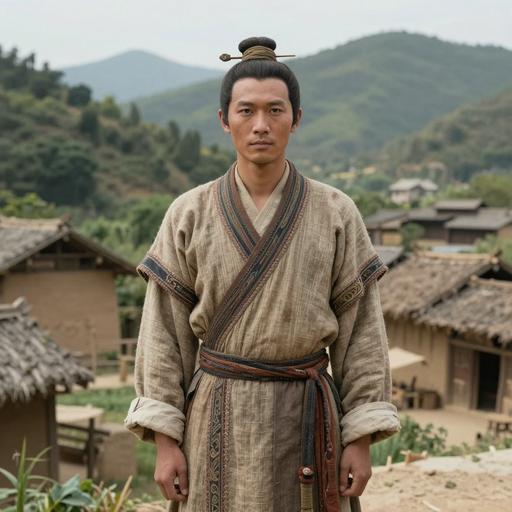
The Layi Period in the context of the Northern and Southern Dynasties is not a widely recognized or directly documented historical era within mainstream Chinese history. Perhaps there is some confusion or mislabeling in your request. However, the Northern and Southern Dynasties (420-589 AD) period itself is a fascinating and complex era in Chinese history, marked by political fragmentation, cultural development, and significant social transformation.
Historical Context:
The Northern and Southern Dynasties period followed the fall of the Jin Dynasty and preceded the Sui Dynasty, representing a time of disunity and division. China was split into the Northern Dynasties (comprising Northern Wei, Eastern Wei, Western Wei, Northern Qi, and Northern Zhou) and the Southern Dynasties (including Liu Song, Southern Qi, Liang, and Chen). This division was largely due to ethnic and cultural differences, as well as political and military conflicts.
Cultural Developments:
Despite the political fragmentation, this period was rich in cultural and religious development. Buddhism, which had been introduced to China earlier, flourished and adapted to the Chinese cultural context, resulting in the creation of distinctive Chinese Buddhist art, temples, and sculpture. The famous Yungang and Longmen Grottoes, with their intricate carvings and statues, are prime examples of this Buddhist artistic influence.
Confucianism, which had traditionally dominated Chinese thought, saw transformations as scholars integrated it with Buddhist and Daoist ideas, leading to new schools of thought and interpretations.
Social Transformations:
During the Northern and Southern Dynasties, there was significant movement and interaction between nomadic and Han Chinese cultures, especially in the north. The Northern Wei, in particular, initiated reforms and policies to integrate and sinicize the largely nomadic Tuoba people. This included adopting Chinese-style governance, clothing, and marriage practices, which significantly affected the social structure and cultural landscape.
In the south, life was relatively more stable, and the region became a refuge for northern elites fleeing the political instability and invasions. This migration stimulated economic development and urbanization in southern China, creating a foundation for future prosperity in regions like the Yangtze River Delta.
Technological and Artistic Achievements:
The period witnessed advancements in technology and arts. Innovations in metallurgy, ceramics, and agriculture spread across the divided regions. Southern China, with its focus on sophisticated urban culture, made significant contributions to arts, especially in poetry, calligraphy, and painting. The development of landscape painting during this time laid the groundwork for what would become a hallmark of Chinese art.
Conclusion:
Overall, the Northern and Southern Dynasties period was characterized by diversity and dynamism. It was an era of significant internal transformation that laid the cultural, social, and political foundations for the eventual reunification under the Sui and Tang Dynasties. Despite being a time of division, the cultural syncretism and evolution that occurred during this period had a lasting impact on Chinese civilization. If \Layi" refers to a specific local tradition or culture within this broader context, further clarification or a more precise identifier would be necessary to provide an accurate description."