Menu
Currency
Main
Store
Blog

Loading Report

Preparing your ancestry journey

Connecting to ancient matches...

Preparing your report

Skip to main content
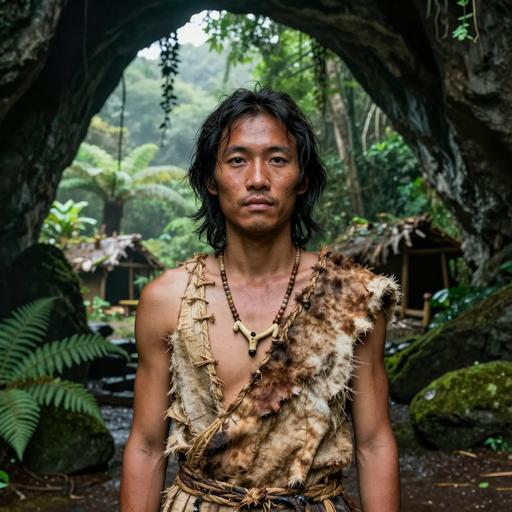
Portrait reconstruction of A man buried in China in the Paleolithic era
Ancient Individual

A man buried in China in the Paleolithic era

A man buried in China during the Epipaleolithic China

A fragment of the ancient world, preserved across millennia in strands of DNA.

Qihe3
9798 BCE - 9407 BCE
Male
China
Scroll to begin
Chapter I

Identity

The biological and cultural markers that define this ancient individual

Sample ID

Qihe3

Date Range

9798 BCE - 9407 BCE

Cultural Period

Epipaleolithic China

Biological Sex

Male

mtDNA Haplogroup

R9c1b

Y-DNA Haplogroup

Not available

Social Role

Hunter (AI estimate, era-typical)

Chapter II

Place

Where this individual was discovered

Country China
Locality Fujian. Zhangping. Qihe Cave
Chapter III

Time

When this individual lived in the broader context of human history

Qihe3 9798 BCE - 9407 BCE
Chapter IV

Story

The narrative of this ancient life

The Epipaleolithic period, often referred to as the final phase of the Stone Age, marks a transitional era between the Upper Paleolithic and the Neolithic periods. In the context of East Asia, and more specifically in regions like Fujian Province in China, the Epipaleolithic period is an intriguing chapter that sheds light on early human adaptation and innovation.

Timeframe and Climate

The Epipaleolithic era in China typically spans from approximately 10,000 to 5,000 BCE, though these dates can vary slightly depending on specific archaeological findings and advancements in dating techniques. This period follows the Last Glacial Maximum and precedes the full emergence of agriculture and sedentism, thereby characterized by hunting-gathering and early attempts at cultivation.

The climate during this period was gradually warming after the Ice Age. The environment in regions such as Fujian was becoming increasingly hospitable, with a rise in biodiversity and available resources. This climatic transformation greatly influenced human settlement patterns and subsistence strategies.

Archaeological Discoveries and Settlements

In Fujian and the broader East Asian region, archaeological excavations have unearthed a variety of lithic (stone) tools and artifacts that characterize the Epipaleolithic era. These include microliths, which are small stone tools that were often hafted onto wood to create composite tools like sickles or spears. The technology reflects an adaptation to diverse environments, with a shift towards more efficient use of available resources.

Sites from this era are often found near coastlines, rivers, or areas that would have had easy access to fresh water and abundant plant and animal life. These locations hint at a semi-nomadic lifestyle, where small groups of humans would move seasonally to optimize resource gathering.

Cultural Practices

The people of the Epipaleolithic period employed diverse subsistence strategies that included hunting, gathering, and fishing. The warmer climate allowed for a wider array of plant life, which became a crucial part of their diet. Evidence of early cultivation practices, such as the management of wild plant species, has been discovered, suggesting the incipient stages of agriculture.

Tools from this period also show signs of increasing sophistication, not only in their production but also in their use. Aside from hunting implements, there's evidence of grinding stones and other tools that imply processing activities like grinding seeds or other plant materials.

Social Structure and Art

Though concrete details about social structure during this time are scarce, the spread and variability of artifacts suggest a degree of cultural exchange and development. Small social groups, possibly extended family units, were likely the primary social structure, with social networks forming amongst different groups for exchange and information sharing.

Artistic expression during the Epipaleolithic, as evidenced by occasional findings, includes simple carvings and ornaments, which may have been used for personal adornment or as symbolic objects. The presence of such items suggests an emerging complexity in cultural expression and an early form of what might later develop into more structured religious or spiritual beliefs.

Transition to Neolithic

The Epipaleolithic period is crucial in understanding the eventual transition to the Neolithic era, marked by the advent of agriculture and permanent settlements. Over time, the innovations from this period would lay the groundwork for the more settled, agrarian-based societies that characterized the Neolithic. In East Asia, and particularly in places like Fujian, this transition signifies a shift from a primarily foraging lifestyle to one increasingly dependent on farming and domestication of plants and animals.

Overall, the Epipaleolithic period in East Asia represents a dynamic phase of human history characterized by adaptation, innovation, and the seeds of future societal development. The archaeological record, though incomplete, provides invaluable insights into how early humans navigated and thrived in their changing world.

Context

Related Samples

This individual exists within a broader network of ancient samples. No ancient genome stands alone.

Sample ID Culture/Period Date Location Action
BalongKD06 Balong Jin Period China 250 CE Guangxi. Hechi City. Dahua Yao Autonomous County. Beijing Town. Balong Cave, China View
BalongKD07 Balong Jin Period China 262 CE Guangxi. Hechi City. Dahua Yao Autonomous County. Beijing Town. Balong Cave, China View
BalongKD08 Balong Jin Period China 250 CE Guangxi. Hechi City. Dahua Yao Autonomous County. Beijing Town. Balong Cave, China View
BalongKD10 Balong Jin Period China 382 CE Guangxi. Hechi City. Dahua Yao Autonomous County. Beijing Town. Balong Cave, China View
BandaKD11 Banda Period China 484 CE Guangxi. Hechi City. Dahua Yao Autonomous County. Banda Cave, China View
BandaKD15 Banda Period China 433 CE Guangxi. Hechi City. Dahua Yao Autonomous County. Banda Cave, China View
Baojianshan5_M1 China Guangxi Baojianshan Neolithic 6400 BCE Guangxi. Chongzuo City. Longzhou County. Baojianshan Cave A, China View
Baojianshan5_M2 China Guangxi Baojianshan Neolithic 6400 BCE Guangxi. Chongzuo City. Longzhou County. Baojianshan Cave A, China View
CenxunKP05 Tang Dynasty China 484 CE Guangxi. Baise City. Pingguo County. Taiping Town. Cenxun Cave, China View
CenxunKP07 Tang Dynasty China 584 CE Guangxi. Baise City. Pingguo County. Taiping Town. Cenxun Cave, China View
CenxunKP13 Tang Dynasty China 440 CE Guangxi. Baise City. Pingguo County. Taiping Town. Cenxun Cave, China View
Dushan4_1 Neolithic Guangxi Dushan, China 7025 BCE Guangxi. Dushan, China View
GaofengNL23 Qing Dynasty China 1530 CE Guangxi. Hechi City. Nandan County. Lihu Yaozu Town. Huatu Village. Gaofeng Cave, China View
HuaqiaoNL26 Ming Dynasty China 1437 CE Guangxi. Hechi City. Nandan County. Lihu Yaozu Town. Huaqiao Village. Baitai Mountain. Huaqiao Caves, China View
HuatuyanNL02 China Guangxi Huatuyan Ming 1484 CE Guangxi. Hechi City. Nandan County. Lihu Yaozu Town. Huatu Village. Huatuyan Cave, China View
HuatuyanNL04 China Guangxi Huatuyan Ming 1400 CE Guangxi. Hechi City. Nandan County. Lihu Yaozu Town. Huatu Village. Huatuyan Cave, China View
HuatuyanNL06 China Guangxi Huatuyan Ming 1400 CE Guangxi. Hechi City. Nandan County. Lihu Yaozu Town. Huatu Village. Huatuyan Cave, China View
HuatuyanNL11 China Guangxi Huatuyan Ming 1474 CE Guangxi. Hechi City. Nandan County. Lihu Yaozu Town. Huatu Village. Huatuyan Cave, China View
HuatuyanNL17 China Guangxi Huatuyan Ming 1442 CE Guangxi. Hechi City. Nandan County. Lihu Yaozu Town. Huatu Village. Huatuyan Cave, China View
HuatuyanNL18 China Guangxi Huatuyan Ming 1400 CE Guangxi. Hechi City. Nandan County. Lihu Yaozu Town. Huatu Village. Huatuyan Cave, China View
HuatuyanNL19 China Guangxi Huatuyan Ming 1495 CE Guangxi. Hechi City. Nandan County. Lihu Yaozu Town. Huatu Village. Huatuyan Cave, China View
HuatuyanNL21 China Guangxi Huatuyan Ming 1456 CE Guangxi. Hechi City. Nandan County. Lihu Yaozu Town. Huatu Village. Huatuyan Cave, China View
LadaKH01 China Guangxi Lada Northern And Southern Dynasties Sui Tang 484 CE Guangxi. Hechi City. Jinchengjiang District. Lada Cave, China View
LayiKD01 Layi Period China 419 CE Guangxi. Hechi City. Dahua Yao Autonomous County. Beijing Town. Baida Village. Layi Cave, China View
Longlin_1 Epipaleolithic Guangxi Longlin, China 9853 BCE Guangxi. Longlin Cave, China View
Qihe3 Epipaleolithic China 9798 BCE Fujian. Zhangping. Qihe Cave, China View
QinchangKD13 Qinchang Period China 431 CE Guangxi. Hechi City. Dahua Yao Autonomous County. Yantan Town. Qinchang Cave, China View
QinchangKD14 Qinchang Period China 406 CE Guangxi. Hechi City. Dahua Yao Autonomous County. Yantan Town. Qinchang Cave, China View
ShenxianKP09 China Guangxi Shenxian Sui Tang 601 CE Guangxi. Baise City. Pingguo County. Shenxian Cave, China View
Yinwang China Guangxi Yinwang Ming 1400 CE Guangxi. Baise City. Pingguo County. Liming Township. Liming Village. Nian Mountain. Yinwang Cave, China View
YiyangKP17 Northern and Southern Dynasties 484 CE Guangxi. Baise City. Pingguo County. Yiyang Cave, China View
Sample ID Culture/Period Date Location Action
Qihe3 Epipaleolithic China 9798 BCE Fujian. Zhangping. Qihe Cave, China View
Sources

References

Scientific publications and genetic data that inform this profile.

Scientific Publication

Human population history at the crossroads of East and Southeast Asia since 11,000 years ago

Authors Wang T, Wang W, Xie G, Li Z, Fan X et al.
Abstract

Past human genetic diversity and migration between southern China and Southeast Asia have not been well characterized, in part due to poor preservation of ancient DNA in hot and humid regions. We sequenced 31 ancient genomes from southern China (Guangxi and Fujian), including two ∼12,000- to 10,000-year-old individuals representing the oldest humans sequenced from southern China. We discovered a deeply diverged East Asian ancestry in the Guangxi region that persisted until at least 6,000 years ago. We found that ∼9,000- to 6,000-year-old Guangxi populations were a mixture of local ancestry, southern ancestry previously sampled in Fujian, and deep Asian ancestry related to Southeast Asian Hòabìnhian hunter-gatherers, showing broad admixture in the region predating the appearance of farming. Historical Guangxi populations dating to ∼1,500 to 500 years ago are closely related to Tai-Kadai and Hmong-Mien speakers. Our results show heavy interactions among three distinct ancestries at the crossroads of East and Southeast Asia.

Use code for 20% off Expires Jul 22