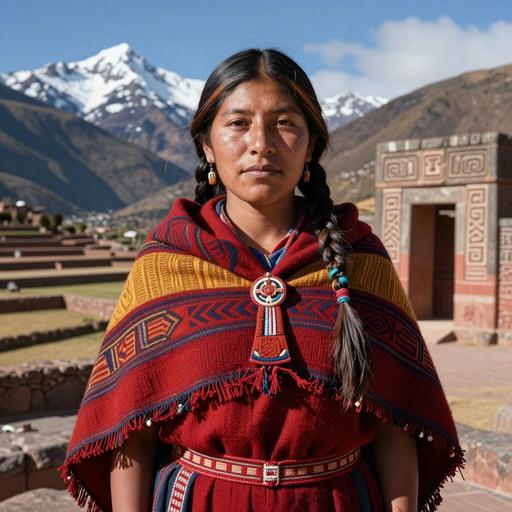
The Tiwanaku culture, also known as Tiahuanaco, is a pre-Columbian civilization that flourished in the Andean region of South America, primarily around what is now western Bolivia near Lake Titicaca. Although the epicenter of this culture was Tiwanaku itself, the civilization's influence extended into parts of modern-day Peru, Chile, and Argentina between approximately 300 and 1000 CE. When analyzing the specific subset referred to as the Tiwanaku Culture Antaura in Peru, one examines an area believed to be influenced by the social, cultural, and religious practices of this remarkable civilization.
Geographical Context
The Tiwanaku culture in Antaura, Peru, would have been characterized by the high-altitude plains of the Andean altiplano. This landscape is marked by stark, rugged terrain, interspersed with vast grasslands and precious water sources, including the crucial Lake Titicaca. The environmental pressures of this region demanded careful planning and sophisticated agricultural techniques, hallmarks of the Tiwanaku civilizations.
Economy and Agriculture
Tiwanaku's economy was intricately tied to its advanced agricultural practices. They developed innovative farming techniques such as raised fields (known as \suka kollus") designed to boost productivity in the challenging high-altitude environment. These fields had channels that both irrigated the crops and absorbed heat during the day, helping to mitigate the effects of frosty nights. In Peru's Antaura region, similar techniques would have been employed to support a diverse diet consisting of potatoes, quinoa, and other crops native to the Andes.
Social Structure and Governance
The Tiwanaku society was hierarchical, with a strong centralized authority rooted in religious ideology. This society was likely governed by a theocratic elite who wielded power through religious rituals and controlled essential economic activities, including trade. This power structure reinforced the social cohesion necessary to manage the complex hydraulic and agrarian systems developed by the Tiwanaku.
Religion and Cosmology
Religion played a central role in Tiwanaku culture, influencing art, architecture, and daily life. Within Peru's segment of this civilization, religious practices likely mirrored those at the heart of the empire, involving worship of deities linked to natural elements, such as the sun, moon, and mountains. Iconography often depicted figures with elaborate headdresses, staffs, and a mixture of human and animal features, suggesting shamanistic traditions. Ceremonial centers were adorned with monolithic structures and intricate carvings that emphasized these spiritual themes.
Architecture and Art
Tiwanaku's architecture is a testament to its sophisticated engineering skills. Monumental structures, such as the Akapana Pyramid and the semi-subterranean temple, reflect a higher understanding of stonework and specific alignment with astronomical events. In Antaura, Peru, similar architectural influences would be evident, along with distinct regional styles. Tiwanaku art is characterized by its iconographic stone carvings, pottery, and textiles, all featuring geometric patterns and depictions of deities. These artifacts reveal a society rich in aesthetic expressions and ritual significance.
Influence and Legacy
The influence of Tiwanaku extended far beyond their core territory through trade, cultural exchange, and the establishment of colonies. The Antaura region would have absorbed and integrated these elements into its own local traditions, creating a unique but related cultural synthesis. The legacy of the Tiwanaku is evident in the archaeological record of Peru, where elements of architectural design, agricultural techniques, and artistic motifs continued to resonate even after the civilization's decline.
In summary, the Tiwanaku Culture Antaura in Peru serves as a fascinating subset of the larger Tiwanaku phenomenon. Marked by advanced agricultural practices, a complex social structure rooted in religious ideologies, sophisticated architecture, and distinctive art, this culture exemplifies the innovative spirit and enduring influence of the Andean civilizations in pre-Columbian South America."