Menu
Currency
Main
Store
Blog

Loading Report

Preparing your ancestry journey

Connecting to ancient matches...

Preparing your report

Skip to main content
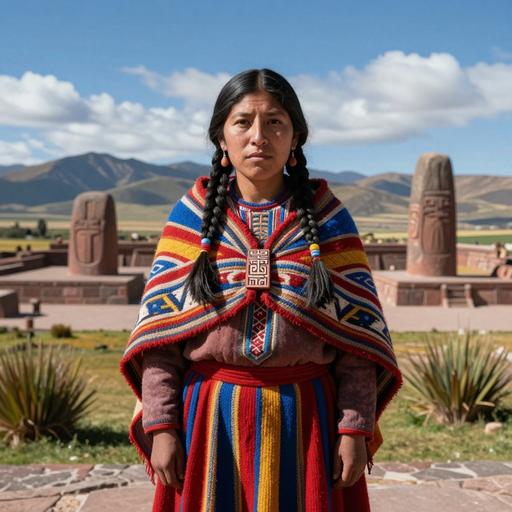
Portrait reconstruction of A woman buried in Bolivia in the Pre-Columbian South America era
Ancient Individual

A woman buried in Bolivia in the Pre-Columbian South America era

A woman buried in Bolivia during the Tiwanaku Culture at Monolito Descabezado, Bolivia

A fragment of the ancient world, preserved across millennia in strands of DNA.

TW056
893 CE - 990 CE
Female
Bolivia
Scroll to begin
Chapter I

Identity

The biological and cultural markers that define this ancient individual

Sample ID

TW056

Date Range

893 CE - 990 CE

Cultural Period

Tiwanaku Culture at Monolito Descabezado, Bolivia

Biological Sex

Female

mtDNA Haplogroup

C1d1

Y-DNA Haplogroup

N/A (Female)

Chapter II

Place

Where this individual was discovered

Country Bolivia
Locality Monolito Descabezado
Chapter III

Time

When this individual lived in the broader context of human history

TW056 893 CE - 990 CE
Chapter IV

Story

The narrative of this ancient life

The Tiwanaku culture, which thrived from approximately 300 to 1000 CE, represents one of the most significant pre-Columbian civilizations in South America. Central to this Andean civilization was the city of Tiwanaku, located near the southern shore of Lake Titicaca in present-day Bolivia. The Monolito Descabezado, or the \Decapitated Monolith," is one of the intriguing artifacts from this site, offering insights into the religious, cultural, and political life of the Tiwanaku people.

Cultural Context

Origins and Development

The Tiwanaku culture emerged in the Tiwanaku Valley and expanded its influence widely through trade, religion, and possibly military conquests. Tiwanaku itself became the focal point of a sprawling network connecting various highland and coastal regions, linking different cultures across the Andes.

Social Structure and Economy

The society was highly stratified, with elites exerting control over large areas through the establishment of colonies and trade routes. The economy was predominantly agrarian, relying heavily on sophisticated agricultural techniques such as raised fields (waru waru) that allowed for the maximization of productivity in the challenging Andean environment. These methods demonstrated an advanced understanding of hydrology and ecology.

Religious and Cultural Significance

The Monolito Descabezado

The Monolito Descabezado, like many monoliths from Tiwanaku, likely held religious or ceremonial significance. Although details about the specific deity or mythological narrative it represents are not fully understood, such monoliths are considered to have been integral to ritual practices. Their iconography often depicts deities associated with the sky, earth, and water—fundamental elements in Andean cosmology.

Architectural and Artistic Achievements

Tiwanaku is renowned for its monumental architecture, with the Monolito Descabezado being a part of this larger tradition. The monoliths and other sculptures from Tiwanaku are characterized by intricate carvings and iconography, blending anthropomorphic and geometric patterns. These figures were likely part of a complex religious belief system that included ancestor worship, shamanic practices, and veneration of natural forces.

Technological and Scientific Innovations

Construction Techniques

The Tiwanaku civilization is noted for its advanced construction techniques, which included precisely cut stone blocks that fit together without mortar. This has often been a source of fascination, illustrating a high level of craftsmanship and understanding of structural engineering.

Agricultural Innovations

In addition to their architectural prowess, the Tiwanaku people developed advanced agricultural techniques that allowed for sustained food production in a challenging environment. The use of raised fields, irrigation networks, and terraces significantly boosted their agricultural output, supporting a large population and facilitating trade.

Decline and Legacy

The decline of Tiwanaku around 1000 CE is attributed to a combination of social upheaval, climatic changes, and overextension of resources. Despite its collapse, the legacy of the Tiwanaku culture endured, influencing subsequent Andean civilizations such as the Inca. Many cultural practices, technologies, and artistic traditions continued to resonate throughout the Andes, highlighting Tiwanaku's lasting impact on South American history.

The Monolito Descabezado and other archaeological remains at Tiwanaku continue to be critical to understanding the complexity and achievements of this ancient civilization. Ongoing research and excavations provide valuable insights into the social, religious, and technological aspects of Tiwanaku, painting a comprehensive picture of life in this eminent civilization of the ancient Andes."

Context

Related Samples

This individual exists within a broader network of ancient samples. No ancient genome stands alone.

Sample ID Culture/Period Date Location Action
CO001 Tiwanaku Culture Cullcunche, Peru 771 CE Cullcunche, Peru View
CO066 Tiwanaku Culture Maucallacta, Peru 1455 CE Maucallacta, Peru View
CO154 Tiwanaku Culture Antaura, Peru 1499 CE Antaura, Peru View
CO193 Tiwanaku Culture Cotahuasi, Peru 1285 CE Cotahuasi, Peru View
TW004 Tiwanaku Culture at Akapana, Bolivia 773 CE Akapana, Bolivia View
TW008 Tiwanaku Culture at Akapana, Bolivia 778 CE Akapana, Bolivia View
TW013 Tiwanaku Culture at Lukurmata, Bolivia 211 CE Lukurmata, Bolivia View
TW020 Tiwanaku Culture at Lukurmata, Bolivia 1030 CE Lukurmata, Bolivia View
TW027 Tiwanaku Culture at Lukurmata, Bolivia 990 CE Lukurmata, Bolivia View
TW028 Tiwanaku Culture at Lukurmata, Bolivia 1435 CE Lukurmata, Bolivia View
TW033 Tiwanaku Culture at Totocachi, Bolivia 1393 CE Totocachi, Bolivia View
TW056 Tiwanaku Culture at Monolito Descabezado, Bolivia 893 CE Monolito Descabezado, Bolivia View
TW059 Tiwanaku Culture at Pumapunku, Bolivia 670 CE Pumapunku, Bolivia View
TW060 Tiwanaku Culture at Akapana, Bolivia 901 CE Akapana, Bolivia View
TW061 Tiwanaku Culture at Akapana, Bolivia 991 CE Akapana, Bolivia View
TW063 Tiwanaku Culture at Putuni, Bolivia 675 CE Putuni, Bolivia View
TW097 Tiwanaku Culture at Akapana, Bolivia 885 CE Akapana, Bolivia View
Sample ID Culture/Period Date Location Action
TW056 Tiwanaku Culture at Monolito Descabezado, Bolivia 893 CE Monolito Descabezado, Bolivia View
Sources

References

Scientific publications and genetic data that inform this profile.

Scientific Publication

Ancient genomes reveal long-range influence of the pre-Columbian culture and site of Tiwanaku

Authors Popović D, Molak M, Ziółkowski M, Vranich A, Sobczyk M et al.
Abstract

Tiwanaku civilization flourished in the Lake Titicaca basin between 500 and 1000 CE and at its apogee influenced wide areas across the southern Andes. Despite a considerable amount of archaeological data, little is known about the Tiwanaku population. We analyzed 17 low-coverage genomes from individuals dated between 300 and 1500 CE and demonstrated genetic continuity in the Lake Titicaca basin throughout this period, which indicates that the substantial cultural and political changes in the region were not accompanied by large-scale population movements. Conversely, the ritual center of Tiwanaku revealed high diversity, including individuals with primarily local genetic ancestry and those with foreign admixture or provenance from as far as the Amazon. Nonetheless, most human offerings associated with the Akapana platform exhibited pure Titicaca basin ancestry and dated to ca. 950 CE—the onset of Tiwanaku’s decline as a sociopolitical center. Our results strengthen the view of Tiwanaku as a complex and far-reaching polity.

Use code for 25% off Expires Jul 12