Menu
Currency
Main
Store
Blog

Loading Report

Preparing your ancestry journey

Connecting to ancient matches...

Preparing your report

Skip to main content
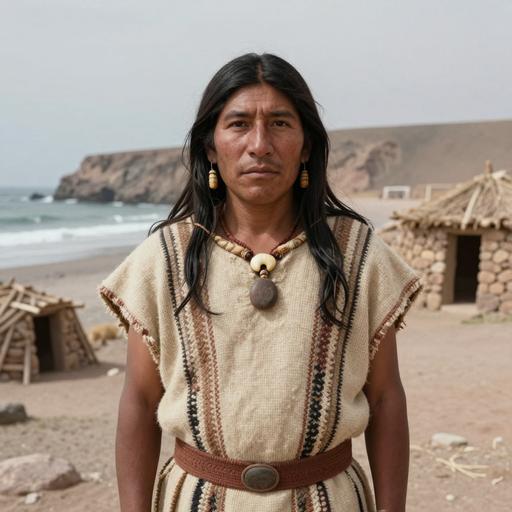
Portrait reconstruction of A man buried in Chile in the Ancient South America era
Ancient Individual

A man buried in Chile in the Ancient South America era

A man buried in Chile during the Los Rieles Site, Chile 5,100 Years Ago

A fragment of the ancient world, preserved across millennia in strands of DNA.

I1753
3360 BCE - 2930 BCE
Male
Chile
Scroll to begin
Chapter I

Identity

The biological and cultural markers that define this ancient individual

Sample ID

I1753

Date Range

3360 BCE - 2930 BCE

Cultural Period

Los Rieles Site, Chile 5,100 Years Ago

Biological Sex

Male

mtDNA Haplogroup

C1b

Y-DNA Haplogroup

Q-M3

Chapter II

Place

Where this individual was discovered

Country Chile
Locality Coquimbo. Los Vilos. Los Rieles
Chapter III

Time

When this individual lived in the broader context of human history

I1753 3360 BCE - 2930 BCE
Chapter IV

Story

The narrative of this ancient life

The Los Rieles site, situated in the Andean region of present-day Chile, provides a fascinating glimpse into prehistoric Andean civilizations around 5,100 years ago, approximately 3,100 BCE. This period was marked by significant cultural and societal developments influenced by the diverse and challenging environment of the Andes.

Geographical and Environmental Context

The Los Rieles site lies within a diverse and complex geographical setting characterized by the towering Andes mountain range, arid coastal zones, and fertile valleys. This varied landscape offered both challenges and opportunities for early inhabitants. The harsh climate, with its extreme altitude and temperature variations, required adaptive strategies for survival and resource management.

Societal and Cultural Features

  1. Subsistence Strategies: The people of Los Rieles engaged in a mix of hunting, gathering, and early forms of agriculture. The domestication of plants such as quinoa, potatoes, and maize, along with the management and rearing of camelids (llamas and alpacas), played pivotal roles in food production and subsistence strategies. This combination allowed them not only to sustain themselves but also to lay the foundations for more complex sociopolitical structures.

  2. Settlement Patterns: Archeological evidence suggests that inhabitants of the Los Rieles site practiced both sedentary and semi-nomadic lifestyles. Settlements were often strategically located to access diverse ecological zones and resources, facilitating trade and communication across different areas. These settlements might have consisted of stone structures, providing clues about architectural practices during this time.

  3. Social Organization: Societal organization during this era likely revolved around kinship groups or clan-based systems. The presence of communal structures and artifacts indicates that these communities engaged in cooperative endeavors, possibly involving ritual activities, resource allocation, and social governance. There is some indication of emerging social hierarchies with leaders or shamans holding special status.

  4. Trade and Interaction: The Los Rieles culture was part of a broader network of Andean civilizations engaged in trade and cultural exchange. The diffusion of ideas and goods such as textiles, ceramics, and ceremonial items highlights the interconnectedness of early Andean cultures. The movement of these items across regions suggests a sophisticated understanding of trade routes and an early form of economic interaction.

  5. Technology and Craftsmanship: Technological advancements were evident in the crafting of tools, pottery, and textiles. Stone tools, used for hunting and agriculture, exhibit a high degree of skill and adaptation to the available resources. Early textile evidence indicates the use of llama or alpaca wool, demonstrating both practical and cultural aspects of material use.

  6. Religious and Ritual Practices: Rituals and religious practices were integral to the Los Rieles culture. Archeological finds, such as ceremonial objects and possible temple sites, suggest that they engaged in spiritual practices possibly centered around natural elements like the sun, mountains, and water sources. These practices were likely aimed at securing agricultural fertility, community health, and social cohesion.

Importance and Legacy

The Los Rieles site and its inhabitants provide crucial insights into the development of Andean civilizations. The adaptive strategies and cultural innovations developed during this period laid the groundwork for later, more complex societies, including the Moche, Nazca, and ultimately the Inca Empire. The legacy of these early inhabitants is evident in the cultural continuity observed in the region, particularly in agricultural techniques, artistic styles, and spiritual beliefs that persisted and evolved over millennia.

The study of the Los Rieles site not only enriches our understanding of South American prehistory but also highlights the resilience and ingenuity of human societies in challenging environments, offering valuable lessons on sustainability and adaptation.

Context

Related Samples

This individual exists within a broader network of ancient samples. No ancient genome stands alone.

Sample ID Culture/Period Date Location Action
I0041 Lauricocha, Peru 8,600 Years Ago 6640 BCE Lauricocha. Highlands, Peru View
I0039 Lauricocha, Peru 3,500 Years Ago 1660 BCE Lauricocha. Highlands, Peru View
I0040 Lauricocha, Peru 5,800 Years Ago 3990 BCE Lauricocha. Highlands, Peru View
I1748 Arroyo Seco 2 Site 7200 Years Ago 5460 BCE Arroyo Seco II, Argentina View
I0309 Arroyo Seco 2 Site 7700 Years Ago 5850 BCE Arroyo Seco II, Argentina View
I1357 Laramate, Peru 900 Years Ago 900 CE Botigiriayocc. Laramate. Highlands, Peru View
I1484 Laramate, Peru 900 Years Ago 1050 CE Botigiriayocc. Laramate. Highlands, Peru View
I0238 Lauricocha, Peru 8,600 Years Ago 7000 BCE Lauricocha. Highlands, Peru View
I1485 Laramate, Peru 900 Years Ago 790 CE Cueva Yacotogia. Laramate. Highlands, Peru View
I1742 Laramate, Peru 900 Years Ago 750 CE Tranca. Laramate. Highlands, Peru View
I0237 Laramate, Peru 900 Years Ago 1030 CE Botigiriayocc. Laramate. Highlands, Peru View
I0038 Lauricocha, Peru 8,600 Years Ago 6780 BCE Lauricocha. Highlands, Peru View
I0308 Arroyo Seco 2 Site 7700 Years Ago 5620 BCE Arroyo Seco II, Argentina View
I2230 Arroyo Seco 2 Site 7700 Years Ago 7010 BCE Arroyo Seco II, Argentina View
I2232 Arroyo Seco 2 Site 7700 Years Ago 6570 BCE Arroyo Seco II, Argentina View
I2261 La Galgada, Peru 4,100 Years Ago 2280 BCE La Galgada. Highlands, Peru View
I2537 Pica Ocho Site, Chile 700 Years Ago 1230 CE Pica Ocho. Coast, Chile View
I2551 Laramate, Peru 900 Years Ago 1040 CE Huayuncalla. Laramate. Highlands, Peru View
I1752 Conchali, Chile 700 Years Ago 1300 CE Conchalí. Santiago. RM, Chile View
I1753 Los Rieles Site, Chile 5,100 Years Ago 3360 BCE Coquimbo. Los Vilos. Los Rieles, Chile View
I1754 Conchali, Chile 700 Years Ago 1040 CE Conchalí. Santiago. RM, Chile View
Lapa14 Lapa do Santo Site, Brazil 9,600 Years Ago 7600 BCE Lapa do Santo, Brazil View
Lapa01 Lapa do Santo Site, Brazil 9,600 Years Ago 8210 BCE Lapa do Santo, Brazil View
Lapa22 Lapa do Santo Site, Brazil 9,600 Years Ago 8250 BCE Lapa do Santo, Brazil View
Lapa15 Lapa do Santo Site, Brazil 9,600 Years Ago 7730 BCE Lapa do Santo, Brazil View
Lapa05 Lapa do Santo Site, Brazil 9,600 Years Ago 8250 BCE Lapa do Santo, Brazil View
Cuncaicha15-07 Cuncaicha, Peru 9,000 Years Ago 7290 BCE Cuncaicha. Highlands, Peru View
Cuncaicha15-03 Cuncaicha, Peru 4,200 Years Ago 2300 BCE Cuncaicha. Highlands, Peru View
I5456 Saki Tzul Site, Belize 7,400 Years Ago 5490 BCE Saki Tzul, Belize View
I5457 Saki Tzul Site, Belize 7,400 Years Ago 5513 BCE Saki Tzul, Belize View
I7088 Arroyo Seco 2 Site 7400 Years Ago 5620 BCE Arroyo Seco II, Argentina View
I7086 Arroyo Seco 2 Site 7700 Years Ago 5975 BCE Arroyo Seco II, Argentina View
I7090 Arroyo Seco 2 Site 7200 Years Ago 5462 BCE Arroyo Seco II, Argentina View
I8348 Laguna Chica Site 6800 Years Ago 5010 BCE Pampas. Laguna Chica, Argentina View
I8349 Laguna Chica Site 6800 Years Ago 4830 BCE Pampas. Laguna Chica, Argentina View
Cuncaicha15-04 Cuncaicha, Peru 3,300 Years Ago 1431 BCE Cuncaicha. Highlands, Peru View
LAR001 Laranjal Site, Brazil 6,700 Years Ago 4710 BCE Laranjal, Brazil View
LAR002 Laranjal Site, Brazil 6,700 Years Ago 4950 BCE Laranjal, Brazil View
MOS001 Moraes Site, Brazil 5,800 Years Ago 3960 BCE Moraes, Brazil View
I11974 Los Rieles Site, Chile 12,000 Years Ago 10420 BCE Coquimbo. Los Vilos. Los Rieles, Chile View
Lapa24 Lapa do Santo Site, Brazil 9,600 Years Ago 7460 BCE Lapa do Santo, Brazil View
Lapa25 Lapa do Santo Site, Brazil 9,600 Years Ago 7720 BCE Lapa do Santo, Brazil View
I9058 Jabuticabeira 2 Site, Brazil 2,000 Years Ago 410 BCE Jabuticabeira Shell Midden II, Brazil View
I9054 Jabuticabeira 2 Site, Brazil 2,000 Years Ago 90 BCE Jabuticabeira Shell Midden II, Brazil View
I9056 Jabuticabeira 2 Site, Brazil 2,000 Years Ago 670 CE Jabuticabeira Shell Midden II, Brazil View
I9055 Jabuticabeira 2 Site, Brazil 2,000 Years Ago 40 BCE Jabuticabeira Shell Midden II, Brazil View
I9057 Jabuticabeira 2 Site, Brazil 2,000 Years Ago 390 BCE Jabuticabeira Shell Midden II, Brazil View
I3443 Mayahak Cab Pek Site, Belize 9,300 Years Ago 7472 BCE Mayahak Cab Pek, Belize View
I8350 Laguna Chica Site 6800 Years Ago 7000 BCE Pampas. Laguna Chica, Argentina View
I9056 670 CE Jabuticabeira Shell Midden II, Brazil View
I9057 390 BCE Jabuticabeira Shell Midden II, Brazil View
I9054 90 BCE Jabuticabeira Shell Midden II, Brazil View
I9055 40 BCE Jabuticabeira Shell Midden II, Brazil View
Lapa24 7460 BCE Lapa do Santo, Brazil View
Lapa25 7720 BCE Lapa do Santo, Brazil View
I11974 10420 BCE Coquimbo. Los Vilos. Los Rieles, Chile View
I9058 410 BCE Jabuticabeira Shell Midden II, Brazil View
I3443 7472 BCE Mayahak Cab Pek, Belize View
I11974 10420 BCE Coquimbo. Los Vilos. Los Rieles, Chile View
I8350 7000 BCE Pampas. Laguna Chica, Argentina View
I11974 10420 BCE Coquimbo. Los Vilos. Los Rieles, Chile View
Sample ID Culture/Period Date Location Action
I1753 Los Rieles Site, Chile 5,100 Years Ago 3360 BCE Coquimbo. Los Vilos. Los Rieles, Chile View
Sources

References

Scientific publications and genetic data that inform this profile.

Scientific Publication

Reconstructing the Deep Population History of Central and South America

Authors Posth C, Nakatsuka N, Lazaridis I, Skoglund P, Mallick S et al.
Abstract

We report genome-wide ancient DNA from 49 individuals forming four parallel time transects in Belize, Brazil, the Central Andes, and the Southern Cone, each dating to at least ∼9,000 years ago. The common ancestral population radiated rapidly from just one of the two early branches that contributed to Native Americans today. We document two previously unappreciated streams of gene flow between North and South America. One affected the Central Andes by ∼4,200 years ago, while the other explains an affinity between the oldest North American genome associated with the Clovis culture and the oldest Central and South Americans from Chile, Brazil, and Belize. However, this was not the primary source for later South Americans, as the other ancient individuals derive from lineages without specific affinity to the Clovis-associated genome, suggesting a population replacement that began at least 9,000 years ago and was followed by substantial population continuity in multiple regions.

Use code for 25% off Expires Jul 13