Menu
Currency
Main
Store
Blog

Loading Report

Preparing your ancestry journey

Connecting to ancient matches...

Preparing your report

Skip to main content
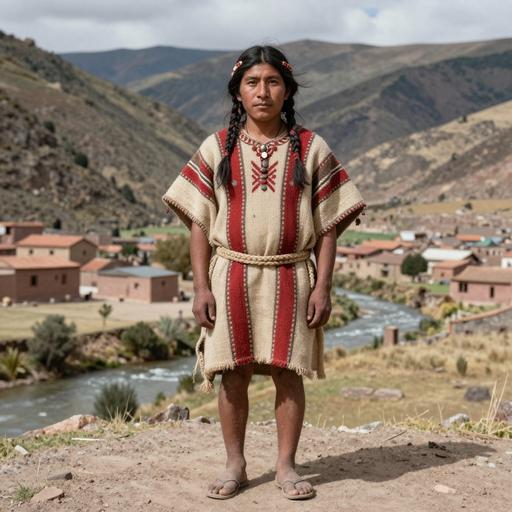
Portrait reconstruction of A man buried in Peru in the Ancient South America era
Ancient Individual

A man buried in Peru in the Ancient South America era

A man buried in Peru during the La Galgada, Peru 4,100 Years Ago

A fragment of the ancient world, preserved across millennia in strands of DNA.

I2261
2280 BCE - 2030 BCE
Male
Peru
Scroll to begin
Chapter I

Identity

The biological and cultural markers that define this ancient individual

Sample ID

I2261

Date Range

2280 BCE - 2030 BCE

Cultural Period

La Galgada, Peru 4,100 Years Ago

Biological Sex

Male

mtDNA Haplogroup

C1c

Y-DNA Haplogroup

Q-M902

Chapter II

Place

Where this individual was discovered

Country Peru
Locality La Galgada. Highlands
Chapter III

Time

When this individual lived in the broader context of human history

I2261 2280 BCE - 2030 BCE
Chapter IV

Story

The narrative of this ancient life

La Galgada is an archaeological site in Peru that provides significant insights into the early Andean civilizations of South America around 4,100 years ago. Situated in the North-Central Andes along the Tablachaca River, a tributary of the Santa River, La Galgada represents a complex society that thrived during what is known as the Preceramic Period or Late Archaic period. This era in Andean history is marked by the emergence of sedentary communities, social stratification, and the inception of monumental architecture.

Geographical and Environmental Context

La Galgada is located in a region characterized by its diverse ecological zones, from coastal areas to highland plateaus. This geographical diversity allowed early inhabitants to exploit a wide range of resources. The proximity to the river facilitated agriculture, which played a central role in sustaining the community and contributing to its growth and eventual complexity. The site's elevation and the surrounding fertile terraces were conducive to the cultivation of crops like beans, squash, and possibly maize, which were supplemented by hunting, fishing, and gathering.

Architectural Features

One of the most striking aspects of La Galgada is its architecture. The site is renowned for its round and rectangular, stone-constructed ceremonial buildings. These structures are sophisticated, featuring plazas, terraces, and staircases. The main architectural feature of La Galgada is its two large mounds, which were built in phases over centuries. These mounds are believed to have served ceremonial purposes and indicate a high level of organizational skill and labor mobilization.

The structures at La Galgada were constructed using locally available materials, primarily stone and mud. The buildings feature intricate design aspects with niches, vents, and chambers that likely had ritual significance. The ceremonial mounds were not simply temples but were also used as burial sites, indicating the integration of religious and mortuary practices.

Social and Cultural Aspects

The people of La Galgada are considered to have been part of a complex society with emerging social stratification. This inference is drawn from the differences in burial practices and grave goods. Elites were likely interred in the ceremonial mounds, with offerings that suggest belief in an afterlife and status differentiation within the community.

Religion and ritual played a crucial role in La Galgada's society. The ceremonial architecture suggests religious activities were central to community life, serving as a unifying force and a means of social control. The presence of specific architectural features like the \sunken circular courts" points towards astronomical observations linked to agricultural cycles or religious events.

Technological and Economic Developments

La Galgada existed during a time of technological innovation and adaptation. The community was adept at agriculture, which formed the backbone of its economy. The development and management of irrigation systems would have been crucial in this semi-arid region, allowing for stable food production. The site's inhabitants also practiced textile production, and evidence suggests an early use of cotton.

Trade and exchange likely extended beyond the immediate region, as indicated by the presence of exotic materials such as Spondylus shells and obsidian. These materials suggest a trade network that connected La Galgada with distant coastal and highland societies, facilitating the exchange of goods, ideas, and cultural practices.

Legacy and Importance

La Galgada is significant for its role in showcasing the developmental trajectory of early Andean civilizations. It represents a transition from nomadic hunter-gatherer groups to more stable, agricultural societies with complex social structures. The site's innovative use of architecture and ceremony provides insight into the sociopolitical organization and ceremonial life of preceramic Andean societies.

In sum, La Galgada stands as a testament to early human ingenuity in adapting to and flourishing within the Andean environment. Its study contributes to a broader understanding of the region’s prehistoric development and its influence on subsequent cultures, such as the Chavín, which would come to dominate the Andean landscape in later periods."

Context

Related Samples

This individual exists within a broader network of ancient samples. No ancient genome stands alone.

Sample ID Culture/Period Date Location Action
I0041 Lauricocha, Peru 8,600 Years Ago 6640 BCE Lauricocha. Highlands, Peru View
I0039 Lauricocha, Peru 3,500 Years Ago 1660 BCE Lauricocha. Highlands, Peru View
I0040 Lauricocha, Peru 5,800 Years Ago 3990 BCE Lauricocha. Highlands, Peru View
I1748 Arroyo Seco 2 Site 7200 Years Ago 5460 BCE Arroyo Seco II, Argentina View
I0309 Arroyo Seco 2 Site 7700 Years Ago 5850 BCE Arroyo Seco II, Argentina View
I1357 Laramate, Peru 900 Years Ago 900 CE Botigiriayocc. Laramate. Highlands, Peru View
I1484 Laramate, Peru 900 Years Ago 1050 CE Botigiriayocc. Laramate. Highlands, Peru View
I0238 Lauricocha, Peru 8,600 Years Ago 7000 BCE Lauricocha. Highlands, Peru View
I1485 Laramate, Peru 900 Years Ago 790 CE Cueva Yacotogia. Laramate. Highlands, Peru View
I1742 Laramate, Peru 900 Years Ago 750 CE Tranca. Laramate. Highlands, Peru View
I0237 Laramate, Peru 900 Years Ago 1030 CE Botigiriayocc. Laramate. Highlands, Peru View
I0038 Lauricocha, Peru 8,600 Years Ago 6780 BCE Lauricocha. Highlands, Peru View
I0308 Arroyo Seco 2 Site 7700 Years Ago 5620 BCE Arroyo Seco II, Argentina View
I2230 Arroyo Seco 2 Site 7700 Years Ago 7010 BCE Arroyo Seco II, Argentina View
I2232 Arroyo Seco 2 Site 7700 Years Ago 6570 BCE Arroyo Seco II, Argentina View
I2261 La Galgada, Peru 4,100 Years Ago 2280 BCE La Galgada. Highlands, Peru View
I2537 Pica Ocho Site, Chile 700 Years Ago 1230 CE Pica Ocho. Coast, Chile View
I2551 Laramate, Peru 900 Years Ago 1040 CE Huayuncalla. Laramate. Highlands, Peru View
I1752 Conchali, Chile 700 Years Ago 1300 CE Conchalí. Santiago. RM, Chile View
I1753 Los Rieles Site, Chile 5,100 Years Ago 3360 BCE Coquimbo. Los Vilos. Los Rieles, Chile View
I1754 Conchali, Chile 700 Years Ago 1040 CE Conchalí. Santiago. RM, Chile View
Lapa14 Lapa do Santo Site, Brazil 9,600 Years Ago 7600 BCE Lapa do Santo, Brazil View
Lapa01 Lapa do Santo Site, Brazil 9,600 Years Ago 8210 BCE Lapa do Santo, Brazil View
Lapa22 Lapa do Santo Site, Brazil 9,600 Years Ago 8250 BCE Lapa do Santo, Brazil View
Lapa15 Lapa do Santo Site, Brazil 9,600 Years Ago 7730 BCE Lapa do Santo, Brazil View
Lapa05 Lapa do Santo Site, Brazil 9,600 Years Ago 8250 BCE Lapa do Santo, Brazil View
Cuncaicha15-07 Cuncaicha, Peru 9,000 Years Ago 7290 BCE Cuncaicha. Highlands, Peru View
Cuncaicha15-03 Cuncaicha, Peru 4,200 Years Ago 2300 BCE Cuncaicha. Highlands, Peru View
I5456 Saki Tzul Site, Belize 7,400 Years Ago 5490 BCE Saki Tzul, Belize View
I5457 Saki Tzul Site, Belize 7,400 Years Ago 5513 BCE Saki Tzul, Belize View
I7088 Arroyo Seco 2 Site 7400 Years Ago 5620 BCE Arroyo Seco II, Argentina View
I7086 Arroyo Seco 2 Site 7700 Years Ago 5975 BCE Arroyo Seco II, Argentina View
I7090 Arroyo Seco 2 Site 7200 Years Ago 5462 BCE Arroyo Seco II, Argentina View
I8348 Laguna Chica Site 6800 Years Ago 5010 BCE Pampas. Laguna Chica, Argentina View
I8349 Laguna Chica Site 6800 Years Ago 4830 BCE Pampas. Laguna Chica, Argentina View
Cuncaicha15-04 Cuncaicha, Peru 3,300 Years Ago 1431 BCE Cuncaicha. Highlands, Peru View
LAR001 Laranjal Site, Brazil 6,700 Years Ago 4710 BCE Laranjal, Brazil View
LAR002 Laranjal Site, Brazil 6,700 Years Ago 4950 BCE Laranjal, Brazil View
MOS001 Moraes Site, Brazil 5,800 Years Ago 3960 BCE Moraes, Brazil View
I11974 Los Rieles Site, Chile 12,000 Years Ago 10420 BCE Coquimbo. Los Vilos. Los Rieles, Chile View
Lapa24 Lapa do Santo Site, Brazil 9,600 Years Ago 7460 BCE Lapa do Santo, Brazil View
Lapa25 Lapa do Santo Site, Brazil 9,600 Years Ago 7720 BCE Lapa do Santo, Brazil View
I9058 Jabuticabeira 2 Site, Brazil 2,000 Years Ago 410 BCE Jabuticabeira Shell Midden II, Brazil View
I9054 Jabuticabeira 2 Site, Brazil 2,000 Years Ago 90 BCE Jabuticabeira Shell Midden II, Brazil View
I9056 Jabuticabeira 2 Site, Brazil 2,000 Years Ago 670 CE Jabuticabeira Shell Midden II, Brazil View
I9055 Jabuticabeira 2 Site, Brazil 2,000 Years Ago 40 BCE Jabuticabeira Shell Midden II, Brazil View
I9057 Jabuticabeira 2 Site, Brazil 2,000 Years Ago 390 BCE Jabuticabeira Shell Midden II, Brazil View
I3443 Mayahak Cab Pek Site, Belize 9,300 Years Ago 7472 BCE Mayahak Cab Pek, Belize View
I8350 Laguna Chica Site 6800 Years Ago 7000 BCE Pampas. Laguna Chica, Argentina View
I9056 670 CE Jabuticabeira Shell Midden II, Brazil View
I9057 390 BCE Jabuticabeira Shell Midden II, Brazil View
I9054 90 BCE Jabuticabeira Shell Midden II, Brazil View
I9055 40 BCE Jabuticabeira Shell Midden II, Brazil View
Lapa24 7460 BCE Lapa do Santo, Brazil View
Lapa25 7720 BCE Lapa do Santo, Brazil View
I11974 10420 BCE Coquimbo. Los Vilos. Los Rieles, Chile View
I9058 410 BCE Jabuticabeira Shell Midden II, Brazil View
I3443 7472 BCE Mayahak Cab Pek, Belize View
I11974 10420 BCE Coquimbo. Los Vilos. Los Rieles, Chile View
I8350 7000 BCE Pampas. Laguna Chica, Argentina View
I11974 10420 BCE Coquimbo. Los Vilos. Los Rieles, Chile View
Sample ID Culture/Period Date Location Action
I2261 La Galgada, Peru 4,100 Years Ago 2280 BCE La Galgada. Highlands, Peru View
Sources

References

Scientific publications and genetic data that inform this profile.

Scientific Publication

Reconstructing the Deep Population History of Central and South America

Authors Posth C, Nakatsuka N, Lazaridis I, Skoglund P, Mallick S et al.
Abstract

We report genome-wide ancient DNA from 49 individuals forming four parallel time transects in Belize, Brazil, the Central Andes, and the Southern Cone, each dating to at least ∼9,000 years ago. The common ancestral population radiated rapidly from just one of the two early branches that contributed to Native Americans today. We document two previously unappreciated streams of gene flow between North and South America. One affected the Central Andes by ∼4,200 years ago, while the other explains an affinity between the oldest North American genome associated with the Clovis culture and the oldest Central and South Americans from Chile, Brazil, and Belize. However, this was not the primary source for later South Americans, as the other ancient individuals derive from lineages without specific affinity to the Clovis-associated genome, suggesting a population replacement that began at least 9,000 years ago and was followed by substantial population continuity in multiple regions.

Use code for 25% off Expires Jul 13