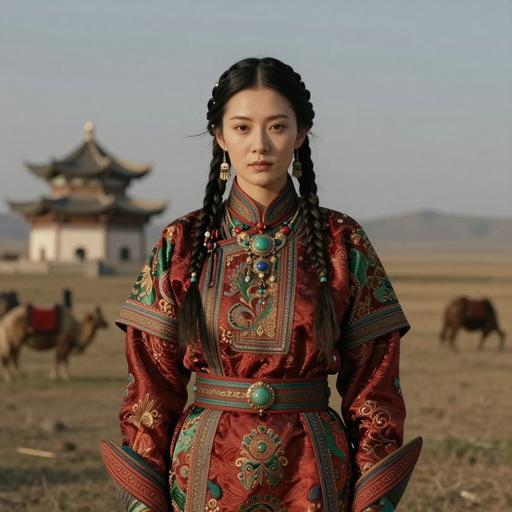
Region & Environment
The Mongol Empire originated in Mongolia’s broad steppe and adjacent grassland zones. Its environments favored mobility: seasonal pastures supported herding and the maintenance of large riding and draft-animal herds, while wide open landscapes enabled rapid movement across distances.
Historical Context
The Mongol Empire began with the consolidation of authority around Temüjin (Genghis Khan) in 1206, followed by large-scale campaigns across Eurasia in the 13th century. Imperial governance relied on incorporating conquered peoples, negotiating local arrangements, and maintaining systems capable of controlling territory far beyond the Mongolian steppe.
Populations & Lifeways
Beyond the ruling Mongol groups, the empire encompassed many peoples with different livelihoods—pastoralists, agricultural communities, and urban populations across multiple regions. Mongol power depended on a network of riders, officials, and allied or subjugated communities who supplied manpower, transport, goods, and local administrative knowledge.
Archaeology & Material Culture
Archaeological evidence across Eurasia associated with the Mongol period includes categories such as metal artifacts, ceramics, and everyday items from settlements and burial contexts, alongside broader steppe traditions in material culture. Material patterns can reflect both continuity in local traditions and the movement of people, goods, and artisans within imperial networks.
Culture & Society
Mongol administration blended steppe practices with administrative methods adopted in the regions they controlled. Social life varied widely by locality, but imperial institutions connected diverse populations through taxation systems, regulated obligations, and shared documentation practices in certain administrative contexts.
Legacy & Transition
The empire’s unity gradually weakened, and authority fractured into regional successor jurisdictions over time, with the overall imperial structure transforming after the mid-14th century. Nevertheless, Mongol-era political structures and connectivity left lasting influences on governance, trade routes, and cultural exchange across Eurasia.