Aller au contenu principal
mtDNA · lignée Maternelle

H15B

mtDNA Haplogroup H15B

Profil de référence pour une branche de lignée. Des haplogroupes partagés n'établissent pas de lien familial ni d'identité culturelle.

Profil de référence

Contexte de la branche

Contexte historique de la branche de lignée mtDNA H15B

Origins and Evolution

mtDNA haplogroup H15B is a downstream branch of haplogroup H15, itself a minor lineage within the broader Western European haplogroup H. H15 most likely formed in the early Holocene (around ~9 kya) associated with post‑glacial expansions from Atlantic/Iberian refugia; H15B represents a later, localized diversification within that clade. H15B is defined by private mutations that place it downstream of the H15 node, and phylogenetic evidence suggests a time depth on the order of several thousand years after the origin of H15, consistent with an early Neolithic or post‑Neolithic emergence (we estimate ~6–7 kya).

Because H15B is rare, its precise mutational defining motif is known from relatively few complete mitochondrial genomes, and its phylogeographic signal is strongest in regions where H15 itself is most common (Iberia and adjacent Atlantic/Western European areas). The rarity of H15B and limited ancient DNA representation mean age and dispersal estimates carry moderate uncertainty and should be treated conservatively.

Subclades (if applicable)

H15B is a subclade below H15; published and public-sequence datasets list a small number of sequence-defined lineages under H15 (for example H15a/H15b groupings in some trees). As of current datasets, H15B does not contain widely documented multiple deep sub-branches at high frequency — its diversity appears limited relative to more common H subclades (e.g., H1, H3). Continued mitogenome sequencing in targeted populations may reveal additional substructure within H15B.

Geographical Distribution

H15B is a low-frequency Western European lineage with focal presence in the Iberian Peninsula and neighboring Atlantic/Western European regions. Modern occurrences are recorded across:

  • Iberian populations (Spain, Portugal) where H15 and its subclades show their highest relative representation.
  • Western Europe more broadly (France, British Isles) at low frequencies.
  • Southern Europe (Italy, Sardinia, parts of the central Mediterranean) occasionally, with some island occurrences reflecting founder effects or drift.
  • Central and parts of Eastern Europe at very low frequencies, likely reflecting gene flow and later dispersals.
  • Sporadic occurrences in the Near East (Anatolia, Levant) and northwest Africa (Maghreb), probably reflecting historic contacts and long‑range Mediterranean gene flow.

Ancient DNA representation for the broader H15 clade is limited but present in a small number of archaeological samples; H15B itself has been identified or inferred in very few ancient mitogenomes, consistent with a low-frequency, regionally restricted maternal lineage.

Historical and Cultural Significance

H15B fits the broader story of post‑glacial recolonization and early farming expansions in Western Europe. As a derivative of H15, H15B likely participated in demographic processes associated with early Holocene hunter‑gatherer reexpansions and the arrival/interaction of Neolithic farming groups along Atlantic and Mediterranean routes. Because of its geographic affinities, H15B may appear in contexts connected to Iberian Mesolithic/Neolithic sequences and later Atlantic‑facing archaeological cultures.

In later prehistory, the lineage could be carried forward by populations associated with widespread cultural phenomena (for example regional Neolithic farmer groups and later Bronze Age movements), but there is no strong evidence tying H15B specifically to major steppe‑derived cultures (e.g., Yamnaya) — its distribution better matches western coastal and Mediterranean networks. Low modern frequencies and sparse ancient occurrences mean cultural associations are suggestive rather than definitive.

Conclusion

H15B is a rare, regionally concentrated mtDNA subclade of H15 that likely arose in Western Europe during the early Holocene and reflects localized maternal diversification following post‑glacial and early Neolithic demographic events. Its low frequency and limited ancient DNA visibility constrain confident statements about fine‑scale migration histories, but current data place it primarily within Iberia and adjacent Western and Southern European locales with occasional Mediterranean and Near Eastern connections. Additional whole mitogenome sampling in Iberia, Mediterranean islands (e.g., Sardinia) and targeted ancient DNA studies would improve resolution of H15B's age, substructure, and dispersal pathways.

Points clés

  • Origins and Evolution
  • Subclades (if applicable)
  • Geographical Distribution
  • Historical and Cultural Significance
  • Conclusion
Profil de référence

Arbre et relations

Contexte phylogénétique et sous-clades

Voie évolutive

Suivez les branches parentes consignées jusqu'à H15B. Les dates sont des estimations et peuvent évoluer lorsque les données de référence sont révisées.

Étapes Haplogroupe Âge estimé Époque archéologique Temps écoulé Descendants immédiats Descendants modernes testés Liens anciens
1 H15B Actuel ~6,000 years ago Chalcolithic 6,500 ans 1 16 14
2 H15 ~12,000 years ago Neolithic 12,000 ans 2 72 0
3 H ~25,000 years ago Paleolithic 25,000 ans 78 9,404 991
4 HV ~30,000 years ago Paleolithic 30,000 ans 14 11,092 228
5 R0 ~15,000 years ago Mesolithic 15,000 ans 2 11,230 4
6 R ~55,000 years ago Paleolithic 55,000 ans 17 22,830 57
7 NA - - - 1 22,830 0
8 N ~60,000 years ago Paleolithic 60,000 ans 16 26,150 13
9 L3 ~70,000 years ago Paleolithic 70,000 ans 7 30,162 6
10 L3'4 - - - 2 30,212 0
11 L3'4'6 - - - 2 30,216 0
12 L2'3'4'6 - - - 2 31,333 0
13 L2'3'4'5'6'7 - - - 2 31,349 0
14 L1'2'3'4'5'6'7 - - - 2 31,852 0
15 L ~160,000 years ago Paleolithic 160,000 ans 2 32,236 5

Branches sœurs (1)

Autres branches issues du même haplogroupe parent

Profil de référence

Dans le monde

Distribution géographique et présence moderne

Origine consignée

Western Europe (Iberian/Atlantic region)

Distribution moderne

The populations where MTDNA haplogroup H15B is found include:

  1. Iberian populations (Spain, Portugal, including regional groups)
  2. Western European populations (France, Britain) at low frequencies
  3. Southern European populations (Italy, Sardinia, Greece) occasionally
  4. Central and Eastern European populations (Germany, Poland, Balkans) at very low frequencies
  5. Near Eastern populations (Anatolia, Levant) sporadically
  6. Northwest African populations (Morocco, Algeria) at very low frequencies
  7. Island and isolated communities (Sardinia and some Mediterranean islands) occasionally
  8. Present at trace levels in modern Jewish and other Mediterranean diaspora groups
Contexte historique

Une branche dans le temps

Formation estimée sur une chronologie historique large. Les repères de période servent de contexte et n'impliquent pas de lien avec des cultures particulières.

  1. Il y a ~10k ans

    Révolution néolithique

    Début de l'agriculture et émergence de communautés sédentaires

  2. Il y a ~6.5k ans

    Haplogroupe H15B

    Formation estimée de cette branche mtDNA ; les dates et les lieux sont des estimations de référence.

    Cette branche
  3. Il y a ~5k ans

    Âge du bronze

    Travail des métaux, écriture et premières civilisations

  4. Il y a ~3k ans

    Âge du fer

    Outils en fer, réseaux d'échanges élargis

  5. Il y a ~2.5k ans

    Antiquité classique

    Floraison des civilisations grecque et romaine

  6. Aujourd'hui

    Aujourd'hui

    Époque moderne

Profil de référence

Contexte archéologique

Associations archéologiques consignées pour la branche mtDNA H15B

Associations consignées

Ces libellés décrivent des contextes archéologiques consignés pour des échantillons de référence liés à H15B. Une association n'établit pas que tous les porteurs appartenaient à une culture ni qu'ils ont suivi une route migratoire précise.

Afanasievo Afanasievo Culture Anatolian Iron Age Early Iron Age Chinese Eurasian Steppe Munkhkhairkhan Culture Okunevo Culture Russia_Kalmykia_Eneolithic Russia_Khakassia_Eneolithic_Afanasievo Russia_StavropolKrai_BA Yamnaya Culture
Les attributions culturelles reposent sur le contexte archéologique des échantillons d'ADN ancien et peuvent refléter des associations régionales à certaines périodes.
Profil de référence

Catalogue d'échantillons

2 porteurs directs et 12 porteurs de sous-clade de l'haplogroupe H15B

10 affiché(s) · 14 échantillons correspondants

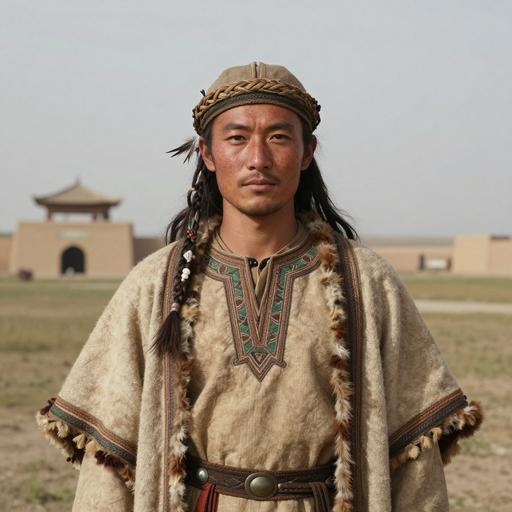
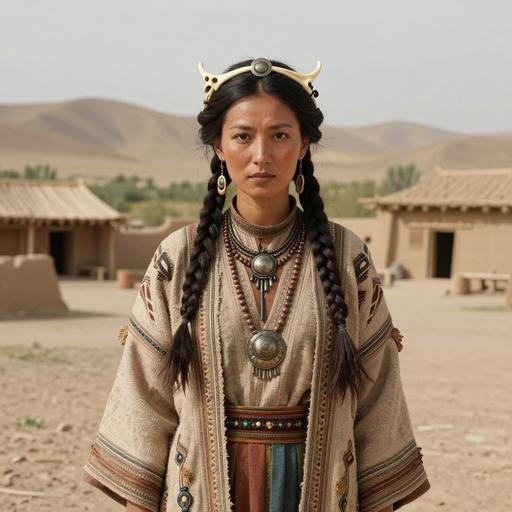
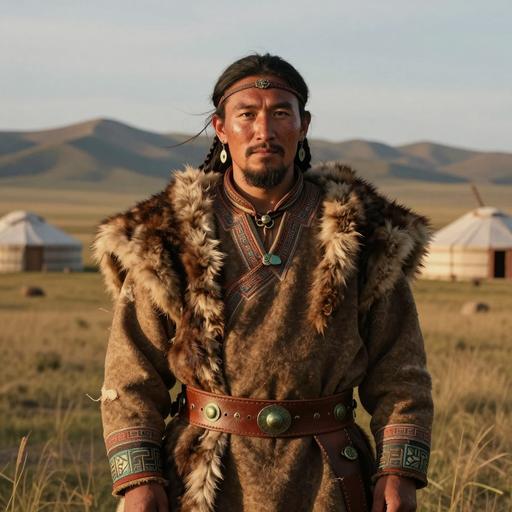
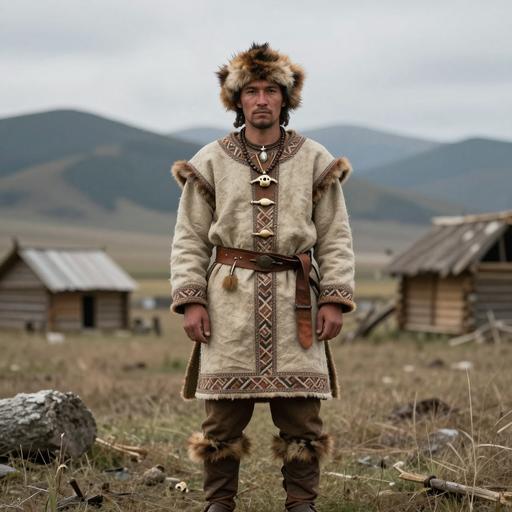
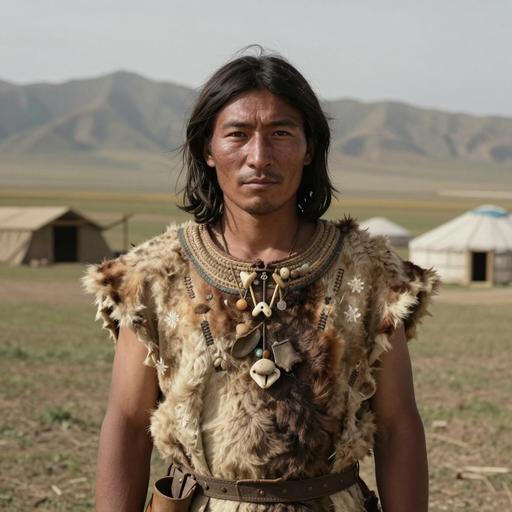
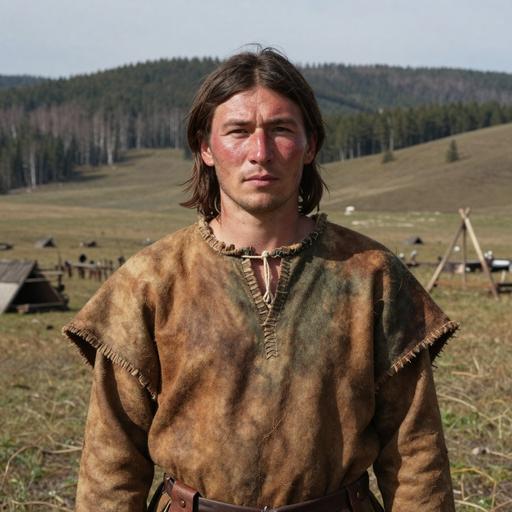
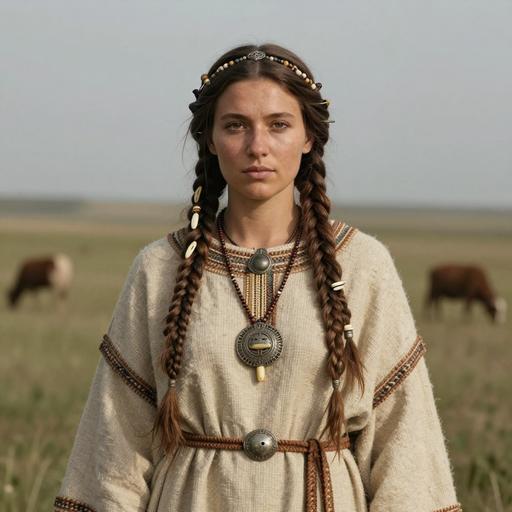
Les portraits sont des illustrations générées par IA. Les libellés d'échantillon et identifiants d'accès désignent les enregistrements de référence.

Portrait Échantillon Pays Époque Date Culture mtDNA Correspondance
Portrait illustratif généré par IA de Xinjiang Jirentaigoukou EIA-o West Eurasia individual, Xinjiang. Yili Region. Nileke County. Jirentaigoukou, China (401-211 BCE)
Identifiant d'échantillon : C1368
China China Xinjiang Jirentaigoukou EIA 450-200 BCE Early Iron Age Chinese H15b Direct
Portrait illustratif généré par IA de Urartian individual, Çavuştepe (East. Van), Turkey (850-750 BCE)
Identifiant d'échantillon : I19612
Turkey Turkey IA 850-750 BCE Anatolian Iron Age H15b Direct
Portrait illustratif généré par IA de Ancient Chinese Civilization individual, Northwest China. Xinjian. Shirenzigou, China (400-200 BCE)
Identifiant d'échantillon : M819
China Iron Age Xinjiang, China 400 BCE - 200 BCE Xinjiang Culture H15b1 Sous-clade
Portrait illustratif généré par IA de China West Ia individual, Northwest China. Xinjian. Shirenzigou, China (400-200 BCE)
Identifiant d'échantillon : M819
China Iron Age Western China 400 BCE - 200 BCE H15b1 Sous-clade
Portrait illustratif généré par IA de Eurasian Steppe individual, Khovd. Munkhkhairkhan sum. Ulaan goviin uzuur barrow 2, Mongolia (1,876-1,690 BCE)
Identifiant d'échantillon : I13173
Mongolia Middle Bronze Age Munkhkhairkhan 2, Mongolia 1876 BCE - 1690 BCE Munkhkhairkhan Culture H15b1 Sous-clade
Portrait illustratif généré par IA de Munkhkhairkhan MBA-2 individual, Ulaan-goviin-uzuur (Khovd Province, Mönkhkhairkhan District), Mongolia (1,876-1,690 BCE)
Identifiant d'échantillon : UAA001
Mongolia Middle Bronze Age Munkhkhairkhan 2, Mongolia 1876-1690 calBCE (3449±17 BP) [R_Combine: (3460±20 BP, UCIAMS-226552, PSUG-5467), (3421±32 BP, OxA-X-2737-53), (3150±70 BP, Le-6936)] Munkhkhairkhan Culture H15b1 Sous-clade
Portrait illustratif généré par IA de Altai Mlba individual, Khovd. Munkhkhairkhan sum. Ulaan goviin uzuur barrow 2, Mongolia (1,876-1,690 BCE)
Identifiant d'échantillon : I13173
Mongolia The Bronze Age in the Altai Region 1876 BCE - 1690 BCE H15b1 Sous-clade
Portrait illustratif généré par IA de Eurasian Steppe individual, Khakassia. Ust'-Abakan. Uybat V, Russia (2,138-1,901 BCE)
Identifiant d'échantillon : RISE683
Russia Russia BA Okunevo 2138 BCE - 1901 BCE Okunevo Culture H15b1 Sous-clade
Portrait illustratif généré par IA de Okunevo individual, Khakassia. Ust'-Abakan. Uybat V, Russia (2,138-1,901 BCE)
Identifiant d'échantillon : RISE683
Russia The Okunevo Culture 2138 BCE - 1901 BCE H15b1 Sous-clade
Portrait illustratif généré par IA de Eurasian Steppe individual, Xinjiang. Nileke, China (2,910-2,697 BCE)
Identifiant d'échantillon : G218M5-2
China Bronze Age Afanasievo Culture Nileke, Xinjiang, China 2910 BCE - 2697 BCE Afanasievo Culture H15b1 Sous-clade
LIGNÉE MATERNELLE · ADN ANTIQUE

Carte des preuves de lignées antiques

Suivez les clades parents jusqu'à cette branche et explorez où des porteurs antiques ont été identifiés.

Chargement des observations antiques…

Les marqueurs indiquent des lieux de découvertes archéologiques. Un trait pointillé représente une transition géographique proposée et incertaine entre branches consécutives, appuyée sur plusieurs observations datées ; ce n'est pas un itinéraire exact, un lieu de naissance ni une preuve de descendance directe. Des échantillons de clades parents peuvent appartenir à d'autres branches descendantes. Des lacunes subsistent lorsque les preuves sont insuffisantes. Les dates d'échantillon diffèrent des dates de formation des haplogroupes.

Profil de référence

Carte de répartition des porteurs

Répartition géographique de 14 échantillons d'ADN ancien (porteurs directs et de sous-clade de H15B)

Porteur direct Porteur de sous-clade
Filtre de période
Toutes les périodes
Affichage de tous les échantillons
Profil de référence

Répartition temporelle

Répartition des porteurs selon les périodes archéologiques

Profil de référence

Répartition géographique

Effectifs par pays d'échantillon consigné. Ils reflètent la sélection de référence disponible, pas des fréquences de population.

Profil de référence

Répartition pays × époque

Comparez les effectifs d'échantillons consignés selon les pays et les périodes archéologiques. Sélectionnez une cellule renseignée pour examiner un échantillon.

Données

Données et provenance

Informations sur les sources et qualité des données

Dernière mise à jour 2026-02-16
Score de confiance 50/100
Couverture Low

Source des données

La classification, les dates estimées et le contexte géographique reflètent les données de référence consignées et peuvent évoluer lorsque les éléments sont révisés. La couverture d'échantillons est inégale ; les lieux consignés et les associations archéologiques n'établissent pas une origine personnelle ni une identité culturelle.