Aller au contenu principal
mtDNA · lignée Maternelle

L2A1A

mtDNA Haplogroup L2A1A

Profil de référence pour une branche de lignée. Des haplogroupes partagés n'établissent pas de lien familial ni d'identité culturelle.

Profil de référence

Contexte de la branche

Contexte historique de la branche de lignée mtDNA L2A1A

Origins and Evolution

mtDNA haplogroup L2A1A is a subclade nested within L2A1, itself part of the broader African lineage L2A. Based on the phylogenetic position under L2A1 (which dates to roughly the Late Pleistocene/early Holocene), L2A1A most likely arose in West/Central Africa during the Holocene (several thousand years ago) as a diversification of maternal lineages already established in the region. Its age estimate (here conservatively placed around ~8 kya) reflects a post-glacial regional differentiation and is consistent with patterns of lineage branching observed across many African mtDNA subclades.

Subclades (if applicable)

L2A1A is itself a terminal or near-terminal subclade in many published phylogenies; where internal branching exists it forms localized sublineages that track regional demographic events (for example, expansions linked to population growth and migrations in the Holocene). Because many African mtDNA studies sample at varying resolution, some named sub-branches of L2A1A may be recognized in deep sequencing datasets but remain rare in broad surveys.

Geographical Distribution

The geographic distribution of L2A1A mirrors that of its parent L2A1 but is often more localized or skewed toward regions that experienced demographic growth and migration during the Holocene. High frequencies are observed in West and Central African groups, particularly among populations historically involved in regional expansions (including many Bantu-speaking groups). Moderate frequencies occur in parts of Eastern and Southern Africa due to gene flow during the Bantu expansion and other regional contacts. Low frequencies are detected in North Africa, the Horn of Africa, the Middle East, and among African-descended populations in the Americas — the latter reflecting the impact of the trans-Atlantic slave trade.

Ancient DNA evidence for L2A1A is limited but present (one recorded aDNA sample in the contributing database), which is consistent with a Holocene origin and subsequent spread through historical and prehistoric population movements.

Historical and Cultural Significance

L2A1A is informative for reconstructing maternal histories in sub-Saharan Africa. It commonly appears in studies of:

  • Bantu-associated populations, where the lineage contributes to the maternal makeup of communities relocated or expanded during the Bantu dispersals across Central, Eastern, and Southern Africa.
  • West African populations (including Yoruba and neighboring groups), where L2A-derived lineages are a significant component of maternal diversity.
  • African diaspora communities in the Americas, where L2A sublineages (including L2A1A) are observed at lower frequencies as a result of forced migration during the last five centuries.

Although mtDNA provides only the maternal perspective, the distribution of L2A1A often complements patterns seen in paternal markers such as Y-haplogroup E-M2 in many of the same populations.

Conclusion

L2A1A is a regionally important Holocene maternal lineage that illustrates how local diversification within West/Central Africa contributed to the maternal genetic landscape of much of sub-Saharan Africa and, through historical processes, to the African diaspora. Its presence across West, Central, East and Southern Africa — and at lower levels elsewhere — makes it a useful marker for tracing maternal ancestry tied to prehistoric expansions (notably Bantu-related movements) and historical events (including the slave trade). Continued high-resolution sequencing and broader sampling, especially ancient DNA, will refine its internal structure and chronological framework.

Points clés

  • Origins and Evolution
  • Subclades (if applicable)
  • Geographical Distribution
  • Historical and Cultural Significance
  • Conclusion
Profil de référence

Arbre et relations

Contexte phylogénétique et sous-clades

Voie évolutive

Suivez les branches parentes consignées jusqu'à L2A1A. Les dates sont des estimations et peuvent évoluer lorsque les données de référence sont révisées.

Étapes Haplogroupe Âge estimé Époque archéologique Temps écoulé Descendants immédiats Descendants modernes testés Liens anciens
1 L2A1A Actuel ~8,000 years ago Neolithic 8,000 ans 4 341 4
2 L2A1 ~18,000 years ago Mesolithic 18,000 ans 2 606 0
3 L2A1'2'3'4 - - - 2 616 0
4 L2A ~50,000 years ago Paleolithic 50,000 ans 2 642 12
5 L2A'B'C'D - - - 2 989 0
6 L2 ~70,000 years ago Paleolithic 70,000 ans 4 1,045 7
7 L2'3'4'6 - - - 2 31,333 0
8 L2'3'4'5'6'7 - - - 2 31,349 0
9 L1'2'3'4'5'6'7 - - - 2 31,852 0
10 L ~160,000 years ago Paleolithic 160,000 ans 2 32,236 5

Branches sœurs (1)

Autres branches issues du même haplogroupe parent

Profil de référence

Dans le monde

Distribution géographique et présence moderne

Origine consignée

West/Central Africa

Distribution moderne

The populations where mtDNA haplogroup L2A1A is found include:

  1. Yoruba and other West African groups
  2. Bantu-speaking groups across Central, Eastern and Southern Africa
  3. Central African rainforest groups (including some Pygmy populations)
  4. Horn of Africa populations (e.g., Oromo, Amhara) at lower frequencies
  5. Khoe-San and southern African groups (low to moderate frequency due to gene flow)
  6. African-descended populations in the Americas (African American, Afro-Caribbean)
  7. North African and Middle Eastern populations (low frequencies from historical admixture)
Contexte historique

Une branche dans le temps

Formation estimée sur une chronologie historique large. Les repères de période servent de contexte et n'impliquent pas de lien avec des cultures particulières.

  1. Il y a ~10k ans

    Révolution néolithique

    Début de l'agriculture et émergence de communautés sédentaires

  2. Il y a ~8k ans

    Haplogroupe L2A1A

    Formation estimée de cette branche mtDNA ; les dates et les lieux sont des estimations de référence.

    Cette branche
  3. Il y a ~5k ans

    Âge du bronze

    Travail des métaux, écriture et premières civilisations

  4. Il y a ~3k ans

    Âge du fer

    Outils en fer, réseaux d'échanges élargis

  5. Il y a ~2.5k ans

    Antiquité classique

    Floraison des civilisations grecque et romaine

  6. Aujourd'hui

    Aujourd'hui

    Époque moderne

Profil de référence

Contexte archéologique

Associations archéologiques consignées pour la branche mtDNA L2A1A

Associations consignées

Ces libellés décrivent des contextes archéologiques consignés pour des échantillons de référence liés à L2A1A. Une association n'établit pas que tous les porteurs appartenaient à une culture ni qu'ils ont suivi une route migratoire précise.

El Argar Luxmanda Culture Makwasinyi Modern Period Mtwapa Pemba Phase II
Les attributions culturelles reposent sur le contexte archéologique des échantillons d'ADN ancien et peuvent refléter des associations régionales à certaines périodes.
Profil de référence

Catalogue d'échantillons

1 porteur direct et 3 porteurs de sous-clade de l'haplogroupe L2A1A

4 affiché(s) · 4 échantillons correspondants

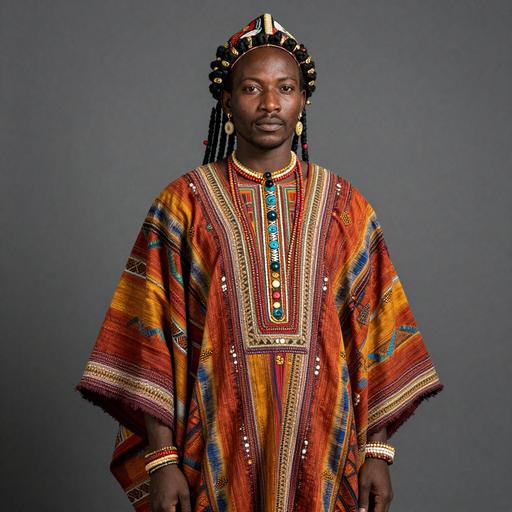
Les portraits sont des illustrations générées par IA. Les libellés d'échantillon et identifiants d'accès désignent les enregistrements de référence.

Portrait Échantillon Pays Époque Date Culture mtDNA Correspondance
Portrait illustratif généré par IA de Medieval Swahili individual, Mtwapa (Kilifi), Kenya (1,250-1,650 CE)
Identifiant d'échantillon : I19381
Kenya Swahili Culture of Mtwapa 1651-1801 calCE (245±20 BP, ISGS-A2126) Mtwapa L2a1a Direct
Portrait illustratif généré par IA de Swahili Coast Civilization individual, Zanzibar. Pemba Island. Mapangani Cave, Tanzania (1,319-1,411 CE)
Identifiant d'échantillon : I2298
Tanzania Pemba 600 Years Before Present in Tanzania 1319 CE - 1411 CE Pemba Phase II L2a1a2 Sous-clade
Portrait illustratif généré par IA de Africa East Ancient individual, Zanzibar. Pemba Island. Mapangani Cave, Tanzania (1,319-1,411 BCE)
Identifiant d'échantillon : I2298
Tanzania Ancient East Africa 1319 BCE - 1411 BCE L2a1a2 Sous-clade
Portrait illustratif généré par IA de Maryland Historic African American individual, Maryland's Catoctin Furnace African American Cemetery, USA (1,700-1,850 CE)
Identifiant d'échantillon : I8086
USA Modern Era 1800-1850 CE Modern Period L2a1a1 Sous-clade
LIGNÉE MATERNELLE · ADN ANTIQUE

Carte des preuves de lignées antiques

Suivez les clades parents jusqu'à cette branche et explorez où des porteurs antiques ont été identifiés.

Chargement des observations antiques…

Les marqueurs indiquent des lieux de découvertes archéologiques. Un trait pointillé représente une transition géographique proposée et incertaine entre branches consécutives, appuyée sur plusieurs observations datées ; ce n'est pas un itinéraire exact, un lieu de naissance ni une preuve de descendance directe. Des échantillons de clades parents peuvent appartenir à d'autres branches descendantes. Des lacunes subsistent lorsque les preuves sont insuffisantes. Les dates d'échantillon diffèrent des dates de formation des haplogroupes.

Profil de référence

Carte de répartition des porteurs

Répartition géographique de 4 échantillons d'ADN ancien (porteurs directs et de sous-clade de L2A1A)

Porteur direct Porteur de sous-clade
Filtre de période
Toutes les périodes
Affichage de tous les échantillons
Profil de référence

Répartition temporelle

Répartition des porteurs selon les périodes archéologiques

Profil de référence

Répartition géographique

Effectifs par pays d'échantillon consigné. Ils reflètent la sélection de référence disponible, pas des fréquences de population.

Profil de référence

Répartition pays × époque

Comparez les effectifs d'échantillons consignés selon les pays et les périodes archéologiques. Sélectionnez une cellule renseignée pour examiner un échantillon.

Données

Données et provenance

Informations sur les sources et qualité des données

Dernière mise à jour 2026-02-16
Score de confiance 50/100
Couverture Low

Source des données

La classification, les dates estimées et le contexte géographique reflètent les données de référence consignées et peuvent évoluer lorsque les éléments sont révisés. La couverture d'échantillons est inégale ; les lieux consignés et les associations archéologiques n'établissent pas une origine personnelle ni une identité culturelle.