Aller au contenu principal
mtDNA · lignée Maternelle

M10

mtDNA Haplogroup M10

Profil de référence pour une branche de lignée. Des haplogroupes partagés n'établissent pas de lien familial ni d'identité culturelle.

Profil de référence

Contexte de la branche

Contexte historique de la branche de lignée mtDNA M10

Origins and Evolution

mtDNA haplogroup M10 is a primary branch of macro-haplogroup M, which diversified rapidly across Eurasia after the initial expansion of modern humans out of Africa. M10 likely coalesced in Central to Northeastern Asia during the late Upper Paleolithic (roughly 20–30 thousand years ago), arising from an early Asian lineage of M. Its phylogenetic position places it among the East Asian/Siberian M-derived clades (alongside clades such as D, G, C and Z), and its internal diversity suggests a long-standing presence in northern East Asia with later dispersals tied to demographic processes on the Eurasian steppe and high plateaus.

Subclades (if applicable)

Several downstream subclades and distinct haplotypes of M10 have been reported in population studies, with regional differentiation visible between northern (Siberian/Mongolic) and highland (Tibetan) lineages. Subclades tend to show geographic structuring rather than cosmopolitan spread, indicating local expansions and drift in isolated populations. Specific subclade nomenclature and SNP-definitions continue to be refined as more complete mitogenomes are sequenced.

Geographical Distribution

M10 is most frequent and diverse in Central, Northeast and parts of North Asia. Present-day occurrences include Mongolic and Turkic-speaking groups (e.g., Mongolians, Buryats, Tuvans, Altaians), several Siberian indigenous groups (Yakuts, Evenks), and northern Han/other East Asian minorities at lower frequencies. It is also recorded among Tibetan populations and in some Central Asian groups, reflecting gene flow across the steppe and highland corridors. In ancient DNA datasets, M10-like lineages appear in some Bronze Age and later steppe-associated and East Asian archaeological contexts, consistent with mobility across eastern Eurasia.

Historical and Cultural Significance

The distribution of M10 mirrors major cultural and demographic processes in northern and Central East Asia. Its presence in Mongolic, Tungusic and Turkic groups links the haplogroup to the maternal substrate of populations historically associated with the steppe, including Bronze Age pastoralists and later nomadic confederations. The appearance of M10 lineages in Tibetan samples underlines contacts and assimilation between plateau inhabitants and adjacent northern populations. In historical-period samples (e.g., Xiongnu and other steppe assemblages), M10 contributes to the genetic mosaic showing eastern Eurasian maternal input into expansive mobile polities.

Conclusion

mtDNA M10 is a regionally important East–Central Asian maternal lineage with deep Paleolithic roots in northern Asia and a pattern of local differentiation and intermittent spread by steppe and highland movements. Ongoing mitogenome sequencing and expanded ancient DNA sampling are refining its subclade structure and clarifying its role in prehistoric and historic population interactions across northeastern Eurasia.

Points clés

  • Origins and Evolution
  • Subclades (if applicable)
  • Geographical Distribution
  • Historical and Cultural Significance
  • Conclusion
Profil de référence

Arbre et relations

Contexte phylogénétique et sous-clades

Voie évolutive

Suivez les branches parentes consignées jusqu'à M10. Les dates sont des estimations et peuvent évoluer lorsque les données de référence sont révisées.

Étapes Haplogroupe Âge estimé Époque archéologique Temps écoulé Descendants immédiats Descendants modernes testés Liens anciens
1 M10 Actuel ~25,000 years ago Paleolithic 25,000 ans 1 24 0
2 M ~60,000 years ago Paleolithic 60,000 ans 42 2,671 41
3 L3 ~70,000 years ago Paleolithic 70,000 ans 7 30,162 6
4 L3'4 - - - 2 30,212 0
5 L3'4'6 - - - 2 30,216 0
6 L2'3'4'6 - - - 2 31,333 0
7 L2'3'4'5'6'7 - - - 2 31,349 0
8 L1'2'3'4'5'6'7 - - - 2 31,852 0
9 L ~160,000 years ago Paleolithic 160,000 ans 2 32,236 5

Branches sœurs (41)

Autres branches issues du même haplogroupe parent

Profil de référence

Dans le monde

Distribution géographique et présence moderne

Origine consignée

Central–Northeast Asia

Distribution moderne

The populations where mtDNA haplogroup M10 is found include:

  1. Mongolic-speaking groups (Mongolians, Buryats)
  2. Turkic-speaking groups of Central Asia and Altai (Tuvans, Altaians, Kazakhs)
  3. Siberian indigenous peoples (Yakut/Sakha, Evenk, other north Siberian groups)
  4. Tibetan Plateau populations (Tibetans and neighboring highland groups)
  5. Northern Han Chinese and ethnic minorities in northern China (low to moderate)
  6. Korean peninsula populations (low frequency)
  7. Japanese (sporadic/low frequency in some regional samples)
  8. Central Asian groups (Kyrgyz, some Uzbek/Tajik samples at low frequency)
  9. Ancient steppe and nomadic assemblages (Bronze Age to Iron Age eastern steppe remains)
  10. Scattered occurrences in modern East Eurasian diaspora communities
Contexte historique

Une branche dans le temps

Formation estimée sur une chronologie historique large. Les repères de période servent de contexte et n'impliquent pas de lien avec des cultures particulières.

  1. Il y a ~25k ans

    Haplogroupe M10

    Formation estimée de cette branche mtDNA ; les dates et les lieux sont des estimations de référence.

    Cette branche
  2. Il y a ~20k ans

    Dernier maximum glaciaire

    Apogée de la dernière période glaciaire, populations isolées

  3. Il y a ~10k ans

    Révolution néolithique

    Début de l'agriculture et émergence de communautés sédentaires

  4. Il y a ~5k ans

    Âge du bronze

    Travail des métaux, écriture et premières civilisations

  5. Il y a ~3k ans

    Âge du fer

    Outils en fer, réseaux d'échanges élargis

  6. Il y a ~2.5k ans

    Antiquité classique

    Floraison des civilisations grecque et romaine

  7. Aujourd'hui

    Aujourd'hui

    Époque moderne

Profil de référence

Contexte archéologique

Associations archéologiques consignées pour la branche mtDNA M10

Associations consignées

Ces libellés décrivent des contextes archéologiques consignés pour des échantillons de référence liés à M10. Une association n'établit pas que tous les porteurs appartenaient à une culture ni qu'ils ont suivi une route migratoire précise.

Andamanese British Neolithic Goyet Cave Gravettian Iberomaurusian Indonesian Hunter-Gatherer Culture Ostuni Culture Spanish Gravettian Tang Culture
Les attributions culturelles reposent sur le contexte archéologique des échantillons d'ADN ancien et peuvent refléter des associations régionales à certaines périodes.
Profil de référence

Catalogue d'échantillons

1 porteur direct et 13 porteurs de sous-clade de l'haplogroupe M10

10 affiché(s) · 14 échantillons correspondants

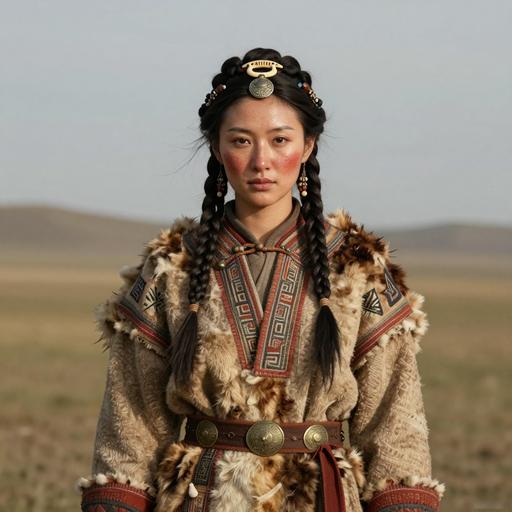
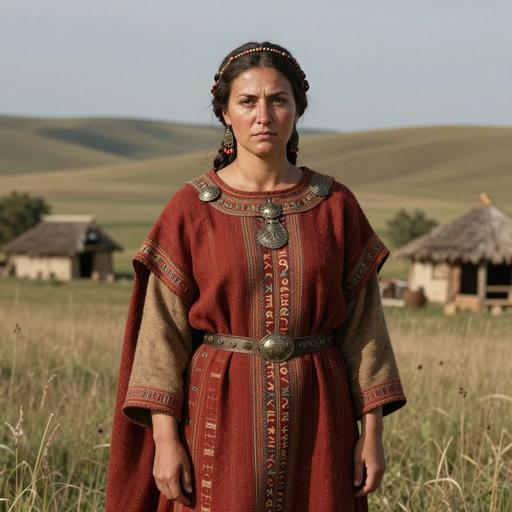
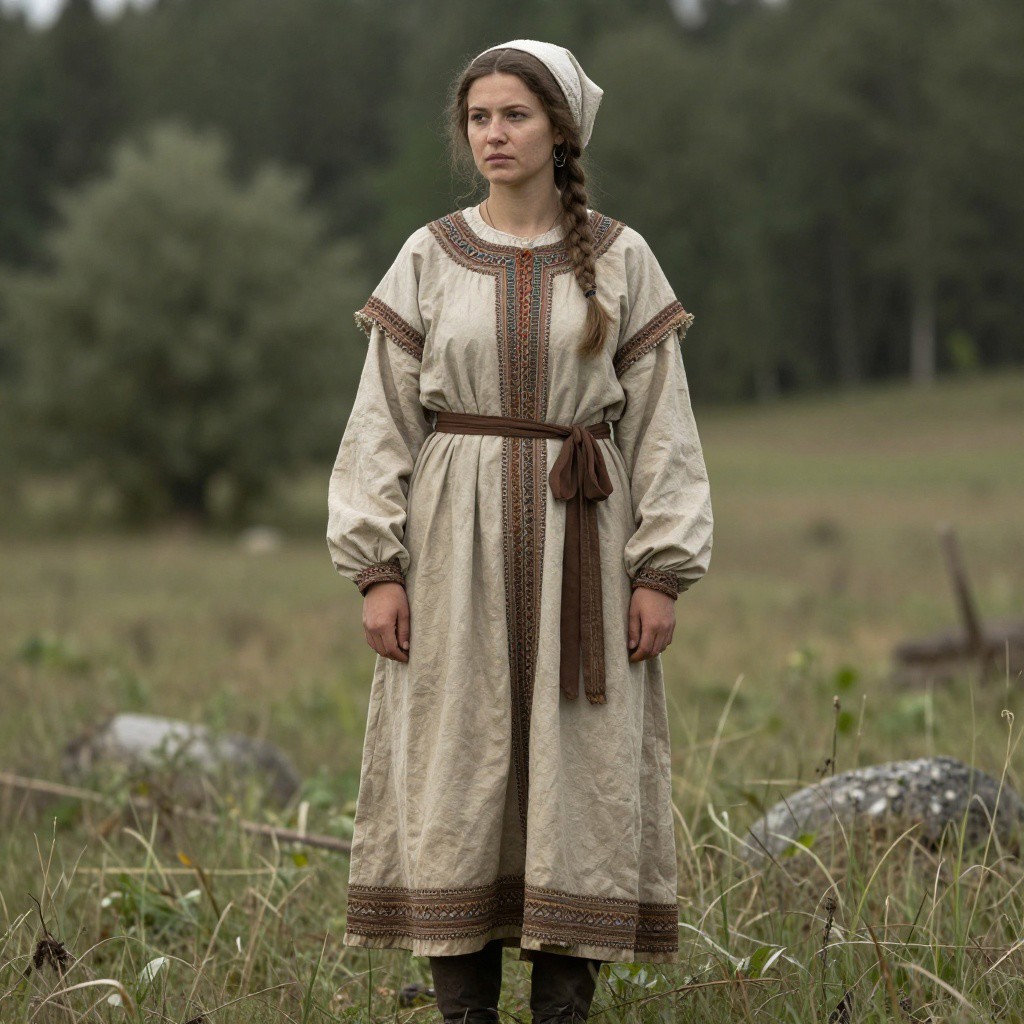
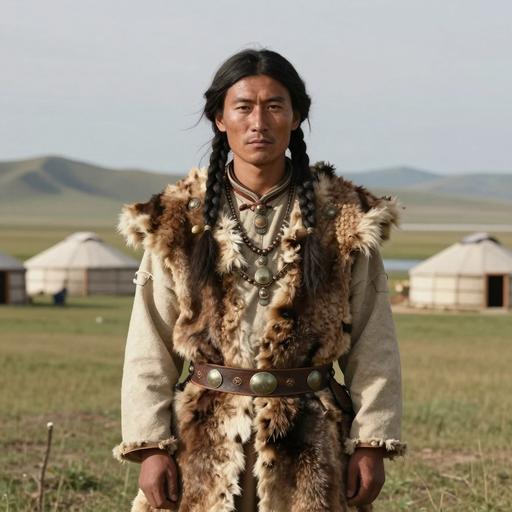
Les portraits sont des illustrations générées par IA. Les libellés d'échantillon et identifiants d'accès désignent les enregistrements de référence.

Portrait Échantillon Pays Époque Date Culture mtDNA Correspondance
Portrait illustratif généré par IA de Guangxi Cenxun Cave individual, Guangxi. Baise City. Pingguo County. Taiping Town. Cenxun Cave, China (440-640 CE)
Identifiant d'échantillon : CenxunKP13
China Tang Dynasty China 440-640 calCE (1510±30 BP) Tang Culture M10 Direct
Portrait illustratif généré par IA de Tibet Pulanduowa IA individual, Pulanduowa (Tibet, Ngari Prefecture), China (26-374 CE)
Identifiant d'échantillon : PLDW10
China China Tibet Pulanduowa IA 50-350 CE China_Tibet_Pulanduowa_IA M10a1b Sous-clade
Portrait illustratif généré par IA de Khentii Xiongnu Period individual, Khentii. Jargalantyn Am. Jargalantyn Khondii/Hundhii, Mongolia (200-1 BCE)
Identifiant d'échantillon : JAA001
Mongolia Xiongnu Period Khentii, Mongolia 200-1 BCE Xiongnu Culture M10a1b Sous-clade
Portrait illustratif généré par IA de Scythian individual, Slobodzeya District. Glinoe, Moldova (250-411 CE)
Identifiant d'échantillon : scy332
Moldova Scythian Period Glinoe, Moldova 250 CE - 411 CE Scythian M10a1a1a Sous-clade
Portrait illustratif généré par IA de Nomadic Steppe Cultures individual, Tian Shan. Central Steppe, Kyrgyzstan (250-535 CE)
Identifiant d'échantillon : DA72
Kyrgyzstan The Hun Period in Kyrgyzstan 250 CE - 535 CE Hunnic Period M10a1-a Sous-clade
Portrait illustratif généré par IA de Hun individual, Tian Shan. Central Steppe, Kyrgyzstan (250-535 CE)
Identifiant d'échantillon : DA72
Kyrgyzstan The Huns 250 CE - 535 CE M10a1-a Sous-clade
Portrait illustratif généré par IA de Scythian individual, Slobodzeya District. Glinoe, Moldova (250-411 CE)
Identifiant d'échantillon : scy332
Moldova The Scythian Culture 250 CE - 411 CE M10a1a1a Sous-clade
Portrait illustratif généré par IA de Republicof Korea Three Kingdoms individual, Gyeongsangnam-do. Daeseong-dong, South Korea (300-500 CE)
Identifiant d'échantillon : AKG_10209
South Korea The Three Kingdoms of Korea 300-500 CE Three Kingdoms Period M10a1b Sous-clade
Portrait illustratif généré par IA de Early Avar-o Low East Asia individual, Rákóczifalva-Bagi-földek (Jász-Nagykun-Szolnok Coiunty, Szolnok), Hungary (550-700 CE)
Identifiant d'échantillon : RKF164
Hungary Hungary EarlyAvar 550-700 CE Early Avar M10a1a1b Sous-clade
Portrait illustratif généré par IA de Early Avar-o High East Asia individual, Rákóczifalva-Bagi-földek (Jász-Nagykun-Szolnok Coiunty, Szolnok), Hungary (550-700 CE)
Identifiant d'échantillon : RKF185
Hungary Hungary EarlyAvar 550-700 CE Early Avar M10a1a1b Sous-clade
LIGNÉE MATERNELLE · ADN ANTIQUE

Carte des preuves de lignées antiques

Suivez les clades parents jusqu'à cette branche et explorez où des porteurs antiques ont été identifiés.

Chargement des observations antiques…

Les marqueurs indiquent des lieux de découvertes archéologiques. Un trait pointillé représente une transition géographique proposée et incertaine entre branches consécutives, appuyée sur plusieurs observations datées ; ce n'est pas un itinéraire exact, un lieu de naissance ni une preuve de descendance directe. Des échantillons de clades parents peuvent appartenir à d'autres branches descendantes. Des lacunes subsistent lorsque les preuves sont insuffisantes. Les dates d'échantillon diffèrent des dates de formation des haplogroupes.

Profil de référence

Carte de répartition des porteurs

Répartition géographique de 14 échantillons d'ADN ancien (porteurs directs et de sous-clade de M10)

Porteur direct Porteur de sous-clade
Filtre de période
Toutes les périodes
Affichage de tous les échantillons
Profil de référence

Répartition temporelle

Répartition des porteurs selon les périodes archéologiques

Profil de référence

Répartition géographique

Effectifs par pays d'échantillon consigné. Ils reflètent la sélection de référence disponible, pas des fréquences de population.

Profil de référence

Répartition pays × époque

Comparez les effectifs d'échantillons consignés selon les pays et les périodes archéologiques. Sélectionnez une cellule renseignée pour examiner un échantillon.

Données

Données et provenance

Informations sur les sources et qualité des données

Dernière mise à jour 2026-02-16
Score de confiance 50/100
Couverture Low

Source des données

La classification, les dates estimées et le contexte géographique reflètent les données de référence consignées et peuvent évoluer lorsque les éléments sont révisés. La couverture d'échantillons est inégale ; les lieux consignés et les associations archéologiques n'établissent pas une origine personnelle ni une identité culturelle.