Aller au contenu principal
Y-DNA · lignée Paternelle

A

Y-DNA Haplogroup A

Profil de référence pour une branche de lignée. Des haplogroupes partagés n'établissent pas de lien familial ni d'identité culturelle.

Profil de référence

Contexte de la branche

Contexte historique de la branche de lignée Y-DNA A

Origins and Evolution

Y-DNA haplogroup A occupies the deepest branches of the human Y-chromosome phylogeny and is widely regarded as the earliest-diverging major paternal lineage. Estimates based on Y-chromosome mutation rates and whole-Y sequencing place the origin of haplogroup A and its immediate branches in the Late Middle Pleistocene (hundreds of thousands of years ago). This deep time depth means that haplogroup A lineages preserve signals of some of the earliest population structure within anatomically modern humans inside Africa.

Genetically, haplogroup A split from other Y lineages long before the radiation that produced the major non-A/B macro-haplogroups (for example CT and its descendants). Because of its basal position, A is not a homogeneous cluster but a set of highly divergent subclades that split early and then persisted, often in geographically restricted populations.

Subclades

Haplogroup A contains multiple deep subclades, several of which have been characterized by targeted sequencing and SNP discovery. Notable subclades include:

  • A00 — one of the deepest known branches, discovered relatively recently in West-Central Africa (e.g., among the Mbo), and notable for its extreme divergence from other Y lineages.
  • A0 / A0-T related branches — found at low frequencies in parts of West and Central Africa and informative about early splits in African paternal lineages.
  • A1 and downstream branches — represented among eastern and southern African hunter-gatherer groups (including Khoe-San populations) and some East African forager populations (e.g., Hadza, Sandawe), with additional localized lineages in Central African pygmy groups and Nilotic populations.

The discovery and characterization of these subclades comes primarily from deep sequencing studies and targeted SNP screens that revealed the extreme antiquity and diversity preserved within African populations.

Geographical Distribution

Haplogroup A is largely African in distribution. The highest frequencies and the most deeply divergent subclades are observed in specific indigenous populations rather than broadly across all African populations. Typical patterns are:

  • High prevalence of certain A subclades among Southern African Khoe-San groups.
  • Presence of deeply diverging lineages (e.g., A00) in parts of West-Central Africa.
  • Representation in some Central African rainforest hunter-gatherers (Pygmy groups) and East African forager groups (Hadza, Sandawe).
  • Low-frequency occurrences in parts of North Africa and in the African diaspora outside Africa due to recent historical movements (trans-Saharan and trans-Atlantic slave trades).

Because haplogroup A lineages are often highly localized and rare outside their core regions, their modern geographic footprint reflects a combination of ancient structure and more recent demographic changes.

Historical and Cultural Significance

Haplogroup A predates the archaeological cultures known from the Holocene and most of the Late Pleistocene; therefore, it is most relevant for understanding deep prehistory rather than specific named archaeological cultures like Bell Beaker or Yamnaya. Its significance is primarily in the following areas:

  • Deep population structure in Africa: The presence of multiple highly divergent A subclades indicates long-standing population subdivisions within Africa that predate many later migrations and cultural changes.
  • Insights into early modern human demography: Because A branches are so old, their phylogeny helps calibrate Y-chromosome mutation rate models and timelines for early human population events.
  • Connections to hunter-gatherer communities: Modern occurrences of A lineages are often enriched in groups that maintained foraging lifeways (e.g., Khoe-San, some Pygmy groups), offering a genetic window into pre-agricultural population histories in Africa.

Although haplogroup A is not directly associated with later pan-regional archaeological cultures (Neolithic farmers, Bronze Age steppe expansions), its persistence in specific populations complements the story obtained from other haplogroups that spread with agriculture and pastoralism.

Conclusion

Haplogroup A is a cornerstone of Y-chromosome phylogenetics because it represents the deepest paternal branches of modern humans. Its highly divergent subclades, geographic concentration in particular African populations, and great antiquity make it essential for reconstructing Africa's earliest population structure and for calibrating timelines of human paternal lineage divergence. Ongoing whole-Y sequencing and broader sampling across understudied African groups continue to refine our understanding of A's internal branching and geographic history.

Points clés

  • Origins and Evolution
  • Subclades
  • Geographical Distribution
  • Historical and Cultural Significance
  • Conclusion
Profil de référence

Arbre et relations

Contexte phylogénétique et sous-clades

Voie évolutive

Suivez les branches parentes consignées jusqu'à A. Les dates sont des estimations et peuvent évoluer lorsque les données de référence sont révisées.

Étapes Haplogroupe Âge estimé Époque archéologique Temps écoulé Descendants immédiats Descendants modernes testés Liens anciens
1 A Actuel ~270,000 years ago Paleolithic 270,000 ans 3 585 8
Profil de référence

Dans le monde

Distribution géographique et présence moderne

Origine consignée

Eastern Africa

Distribution moderne

The populations where Y-DNA haplogroup A is found include:

  1. Khoe-San (Southern Africa)
  2. Mbuti and other Central African Pygmy groups
  3. Mbo and some West-Central African groups (A00 carriers)
  4. Hadza and Sandawe (East African forager groups)
  5. Nilotic populations at low frequencies (e.g., Dinka, Nuer)
  6. Certain Afroasiatic-speaking Ethiopian Highland groups (low-frequency occurrences)
  7. North African populations at very low frequencies (occasional reports)
  8. African diaspora populations in the Americas and Europe (reflecting recent forced migrations)

Présence régionale

Eastern Africa High
Southern Africa High
Central Africa Moderate
Western Africa Low
Northern Africa Low
Western Asia (Near East) Low
North America (diaspora) Low
Contexte historique

Une branche dans le temps

Formation estimée sur une chronologie historique large. Les repères de période servent de contexte et n'impliquent pas de lien avec des cultures particulières.

  1. Il y a ~300k ans

    Adam chromosomique Y

    Ancêtre commun le plus récent théorique de l'ensemble des lignées ADN-Y

  2. Il y a ~270k ans

    Haplogroupe A

    Formation estimée de cette branche Y-DNA ; les dates et les lieux sont des estimations de référence.

    Cette branche
  3. Il y a ~200k ans

    Ève ADNmt

    Ancêtre commun le plus récent théorique de l'ensemble des lignées ADNmt

  4. Il y a ~70k ans

    Sortie d'Afrique

    Grande migration des humains modernes hors d'Afrique

  5. Il y a ~50k ans

    Paléolithique supérieur

    Outils avancés, art et essor culturel

  6. Il y a ~20k ans

    Dernier maximum glaciaire

    Apogée de la dernière période glaciaire, populations isolées

  7. Il y a ~10k ans

    Révolution néolithique

    Début de l'agriculture et émergence de communautés sédentaires

  8. Il y a ~5k ans

    Âge du bronze

    Travail des métaux, écriture et premières civilisations

  9. Il y a ~3k ans

    Âge du fer

    Outils en fer, réseaux d'échanges élargis

  10. Il y a ~2.5k ans

    Antiquité classique

    Floraison des civilisations grecque et romaine

  11. Aujourd'hui

    Aujourd'hui

    Époque moderne

Profil de référence

Contexte archéologique

Associations archéologiques consignées pour la branche Y-DNA A

Associations consignées

Ces libellés décrivent des contextes archéologiques consignés pour des échantillons de référence liés à A. Une association n'établit pas que tous les porteurs appartenaient à une culture ni qu'ils ont suivi une route migratoire précise.

Anglo-Saxon Avar Cameroon Stone Mounds China_LN_Xiaoheyan Danish Early Neolithic Early Avar Ezero Culture Gumelnița Maltese Temple Pastoral Neolithic Ukraine_IA_Lusatian
Les attributions culturelles reposent sur le contexte archéologique des échantillons d'ADN ancien et peuvent refléter des associations régionales à certaines périodes.
Profil de référence

Catalogue d'échantillons

6 porteurs directs et 2 porteurs de sous-clade de l'haplogroupe A

8 affiché(s) · 8 échantillons correspondants

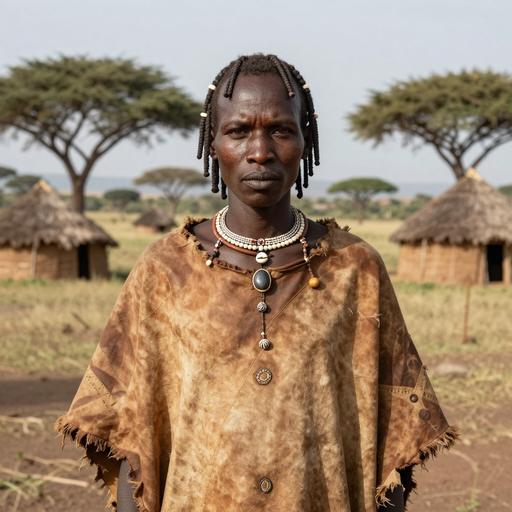
Les portraits sont des illustrations générées par IA. Les libellés d'échantillon et identifiants d'accès désignent les enregistrements de référence.

Portrait Échantillon Pays Époque Date Culture Y-DNA Correspondance
Portrait illustratif généré par IA de Nilotic individual, Nakuru. Naivasha Burial Groud, Kenya (409-373 BCE)
Identifiant d'échantillon : I8830
Kenya Kenya PastoralN 409 BCE - 373 BCE Pastoral Neolithic A Direct
Portrait illustratif généré par IA de Early Avar individual, Rákóczifalva-Bagi-földek (Jász-Nagykun-Szolnok Coiunty, Szolnok), Hungary (550-700 CE)
Identifiant d'échantillon : RKF225
Hungary Hungary EarlyAvar 550-700 CE Early Avar A Direct
Portrait illustratif généré par IA de Avar-o Low East Asia individual, Rákóczifalva-Bagi-földek (Jász-Nagykun-Szolnok Coiunty, Szolnok), Hungary (580-804 CE)
Identifiant d'échantillon : RKF082
Hungary Hungary Avar 550-850 CE Avar A Direct
Portrait illustratif généré par IA de Avar individual, Rákóczifalva-Bagi-földek (Jász-Nagykun-Szolnok Coiunty, Szolnok), Hungary (580-804 CE)
Identifiant d'échantillon : RKF232
Hungary Hungary Avar 580 CE - 804 CE Avar A Direct
Portrait illustratif généré par IA de Early Middle Avar individual, Rákóczifalva-Bagi-földek (Jász-Nagykun-Szolnok Coiunty, Szolnok), Hungary (580-720 CE)
Identifiant d'échantillon : RKF236
Hungary Early Middle Avar Period 550-750 CE Avar A Direct
Portrait illustratif généré par IA de Gumelnita individual, Pietrele Măgura Gorgana (Giurgiu County), Romania (4,604-4,451 BCE)
Identifiant d'échantillon : PIE009
Romania Gumelnița Culture 4604-4451 calBCE (5686±29 BP, MAMS-47800) Gumelnița A Direct
Portrait illustratif généré par IA de EN individual, Rude (Jutland region), Denmark (3,699-3,528 BCE)
Identifiant d'échantillon : NEO41
Denmark Danish Early Neolithic 3699-3528 calBCE (4838±29 BP, UBA-37876) Danish Early Neolithic A1 Sous-clade
Portrait illustratif généré par IA de Sub-Saharan African individual, Shum Laka, Cameroon (6,058-5,889 BCE)
Identifiant d'échantillon : I10871
Cameroon Stone Mound Architecture in Cameroon 6058 BCE - 5889 BCE Cameroon Stone Mounds A00 Sous-clade
LIGNÉE PATERNELLE · ADN ANTIQUE

Carte des preuves de lignées antiques

Suivez les clades parents jusqu'à cette branche et explorez où des porteurs antiques ont été identifiés.

Chargement des observations antiques…

Les marqueurs indiquent des lieux de découvertes archéologiques. Un trait pointillé représente une transition géographique proposée et incertaine entre branches consécutives, appuyée sur plusieurs observations datées ; ce n'est pas un itinéraire exact, un lieu de naissance ni une preuve de descendance directe. Des échantillons de clades parents peuvent appartenir à d'autres branches descendantes. Des lacunes subsistent lorsque les preuves sont insuffisantes. Les dates d'échantillon diffèrent des dates de formation des haplogroupes.

Profil de référence

Carte de répartition des porteurs

Répartition géographique de 8 échantillons d'ADN ancien (porteurs directs et de sous-clade de A)

Porteur direct Porteur de sous-clade
Filtre de période
Toutes les périodes
Affichage de tous les échantillons
Profil de référence

Répartition temporelle

Répartition des porteurs selon les périodes archéologiques

Profil de référence

Répartition géographique

Effectifs par pays d'échantillon consigné. Ils reflètent la sélection de référence disponible, pas des fréquences de population.

Profil de référence

Répartition pays × époque

Comparez les effectifs d'échantillons consignés selon les pays et les périodes archéologiques. Sélectionnez une cellule renseignée pour examiner un échantillon.

Données

Données et provenance

Informations sur les sources et qualité des données

Dernière mise à jour 2026-06-15

Source des données

La classification, les dates estimées et le contexte géographique reflètent les données de référence consignées et peuvent évoluer lorsque les éléments sont révisés. La couverture d'échantillons est inégale ; les lieux consignés et les associations archéologiques n'établissent pas une origine personnelle ni une identité culturelle.