Aller au contenu principal
Y-DNA · lignée Paternelle

N1B2A

Y-DNA Haplogroup N1B2A

Profil de référence pour une branche de lignée. Des haplogroupes partagés n'établissent pas de lien familial ni d'identité culturelle.

Profil de référence

Contexte de la branche

Contexte historique de la branche de lignée Y-DNA N1B2A

Origins and Evolution

Y-DNA haplogroup N1B2A is a subclade of N1B2, which in turn belongs to the broader northern Eurasian paternal macrohaplogroup N. As an intermediate branch within this lineage, N1B2A is best understood as part of the complex post-glacial history of northern Eurasia, where populations moved along forest, river, and taiga corridors after the Last Glacial Maximum.

Given its phylogenetic position and the distribution of its parent clade, N1B2A likely arose in North Eurasia during the early Holocene, roughly 8 thousand years ago. Its formation probably predates many of the historically observed ethnolinguistic distributions, but its later spread and survival were shaped by demographic expansions among populations ancestral to modern Uralic-speaking groups and neighboring northern Eurasian communities.

Subclades

As an intermediate clade, N1B2A may contain additional downstream branches not always equally represented in public datasets or ancient DNA sampling. In general, subclades of this level often show strong regional founder effects, especially in populations with long-term isolation or repeated bottlenecks.

Because detailed substructure can vary by study and by the constantly updated Y-chromosome phylogeny, N1B2A should be interpreted as a transitional branch connecting broader N1B2 diversity to more localized population-specific lineages. Its internal diversification likely reflects expansions within northeastern Europe, the Volga-Ural region, and western Siberia.

Geographical Distribution

The highest frequencies and strongest historical relevance for N1B2A are expected in northern and northeastern Europe and western Siberia. It is most commonly associated with:

  • Finnish, Estonian, and other Baltic-Finnic populations
  • Sámi groups in northern Fennoscandia
  • Uralic-speaking populations such as the Komi, Khanty, Mansi, and Nenets
  • Northern Russian and other eastern Baltic / forest-zone populations
  • Some Siberian populations, with possible presence in more eastern branches of related lineages

Its distribution is usually patchy rather than uniform, which is typical of lineages shaped by founder effects, drift, and language shift in the northern Eurasian forest zone.

Historical and Cultural Significance

Haplogroup N lineages are widely associated with the spread of populations across the taiga belt of Eurasia, and N1B2A fits this broader pattern. While Y-DNA alone cannot identify language or culture, the lineage is often informative for reconstructing paternal ancestry in populations with Uralic linguistic associations.

In ancient and historical contexts, N1B2A and related branches are most plausibly tied to:

  • Post-glacial recolonization of northern Eurasia
  • Neolithic and Chalcolithic forest-zone interactions
  • Bronze Age and Iron Age mobility across the Volga-Ural and Baltic regions
  • Later ethnogenesis among Finnic, Sámi, and Siberian Uralic populations

The lineage also helps explain the paternal genetic continuity seen in parts of northeastern Europe, where autosomal ancestry and language history do not always align neatly with simple migration models.

Population Genetics Perspective

From a population-genetic standpoint, N1B2A is likely to show moderate to strong regional differentiation. Its prevalence in some populations is probably the result of serial founder events, small effective population sizes, and drift rather than solely large-scale migration. This is especially relevant in northern Fennoscandia and Siberia, where isolated groups often preserve rare Y-lineages at appreciable frequencies.

Because the phylogeny of haplogroup N is deeply structured and many branches remain under-sampled in ancient DNA, the exact historical route of N1B2A should be treated as probabilistic rather than definitive. Nonetheless, its placement strongly suggests a connection to the ancient paternal landscapes of North Eurasia.

Conclusion

N1B2A is a northern Eurasian Y-DNA lineage of interest for reconstructing the paternal history of the eastern Baltic, Fennoscandia, and western Siberia. As a subclade of N1B2, it represents part of the broader spread of haplogroup N across the Eurasian forest zone and is especially relevant to the deep ancestry of Uralic-speaking and neighboring northern populations.

Points clés

  • Origins and Evolution
  • Subclades
  • Geographical Distribution
  • Historical and Cultural Significance
  • Population Genetics Perspective
Profil de référence

Arbre et relations

Contexte phylogénétique et sous-clades

Voie évolutive

Suivez les branches parentes consignées jusqu'à N1B2A. Les dates sont des estimations et peuvent évoluer lorsque les données de référence sont révisées.

Étapes Haplogroupe Âge estimé Époque archéologique Temps écoulé Descendants immédiats Descendants modernes testés Liens anciens
1 N1B2A Actuel ~8,000 years ago Neolithic 8,000 ans 1 0 0
2 N1B2 ~20,000 years ago Mesolithic 20,000 ans 1 17 0
3 N1B ~25,000 years ago Paleolithic 25,000 ans 2 17 0
4 N1 ~25,000 years ago Paleolithic 25,000 ans 2 80 14
5 N ~45,000 years ago Paleolithic 45,000 ans 2 172 17
6 NO ~45,000 years ago Paleolithic 45,000 ans 4 801 12
Profil de référence

Dans le monde

Distribution géographique et présence moderne

Origine consignée

North Eurasia

Distribution moderne

The populations where Y-DNA haplogroup N1B2A is found include:

  1. Finnish and other Baltic-Finnic populations
  2. Estonian, Latvian, and Lithuanian populations
  3. Sámi populations of northern Fennoscandia
  4. Uralic-speaking populations such as the Khanty, Mansi, Nenets, and Komi
  5. Siberian populations including Yakuts and other northern Asian groups
  6. Ancient and modern populations of northern and northeastern Europe
  7. Some East Asian and Central Asian populations through deeper and downstream branches

Présence régionale

Northeast Asia / Siberia High
Northern Europe Moderate
Eastern Europe Moderate
Baltic Low
Central Asia Low
Western Siberia Moderate
Contexte historique

Une branche dans le temps

Formation estimée sur une chronologie historique large. Les repères de période servent de contexte et n'impliquent pas de lien avec des cultures particulières.

  1. Il y a ~10k ans

    Révolution néolithique

    Début de l'agriculture et émergence de communautés sédentaires

  2. Il y a ~8k ans

    Haplogroupe N1B2A

    Formation estimée de cette branche Y-DNA ; les dates et les lieux sont des estimations de référence.

    Cette branche
  3. Il y a ~5k ans

    Âge du bronze

    Travail des métaux, écriture et premières civilisations

  4. Il y a ~3k ans

    Âge du fer

    Outils en fer, réseaux d'échanges élargis

  5. Il y a ~2.5k ans

    Antiquité classique

    Floraison des civilisations grecque et romaine

  6. Aujourd'hui

    Aujourd'hui

    Époque moderne

Profil de référence

Contexte archéologique

Associations archéologiques consignées pour la branche Y-DNA N1B2A

Associations consignées

Ces libellés décrivent des contextes archéologiques consignés pour des échantillons de référence liés à N1B2A. Une association n'établit pas que tous les porteurs appartenaient à une culture ni qu'ils ont suivi une route migratoire précise.

China_MLBA China_Tibet_Gebusailu_IA China_Tibet_Laga_IA China_Tibet_Qulongsazha_IA Dulan-Wayan Piyangjiweng Culture Yellow River Culture Zhangcun Culture Zongri Culture
Les attributions culturelles reposent sur le contexte archéologique des échantillons d'ADN ancien et peuvent refléter des associations régionales à certaines périodes.
Profil de référence

Catalogue d'échantillons

1 porteur de sous-clade de l'haplogroupe N1B2A (aucun porteur direct dans la sélection de référence actuelle)

1 affiché(s) · 1 échantillons correspondants

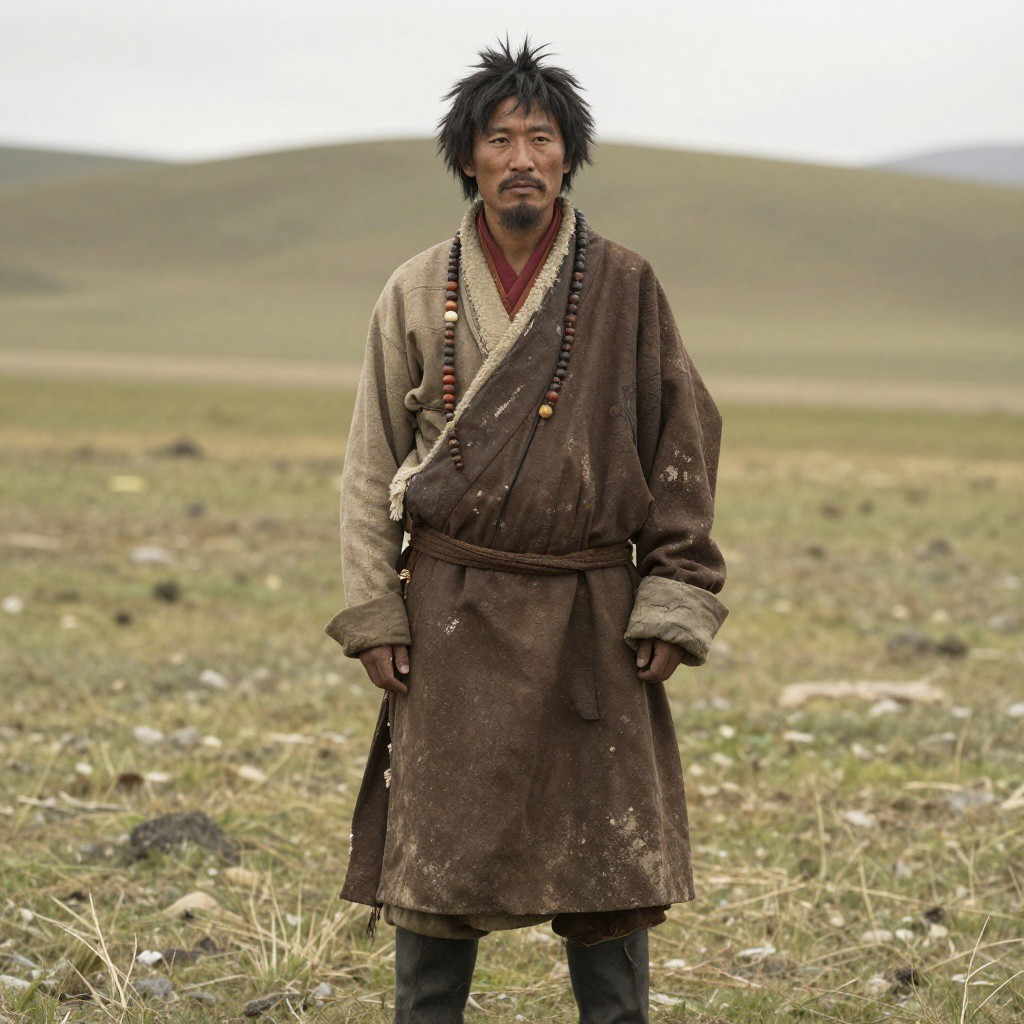
Les portraits sont des illustrations générées par IA. Les libellés d'échantillon et identifiants d'accès désignent les enregistrements de référence.

Portrait Échantillon Pays Époque Date Culture Y-DNA Correspondance
Portrait illustratif généré par IA de Tibet Qulongsazha IA individual, Qulongsazha (Tibet, Ngari Prefecture), China (469-181 BCE)
Identifiant d'échantillon : QLSZ8
China China Tibet Qulongsazha IA 450-200 BCE China_Tibet_Qulongsazha_IA N1b2a1b~ Sous-clade
LIGNÉE PATERNELLE · ADN ANTIQUE

Carte des preuves de lignées antiques

Suivez les clades parents jusqu'à cette branche et explorez où des porteurs antiques ont été identifiés.

Chargement des observations antiques…

Les marqueurs indiquent des lieux de découvertes archéologiques. Un trait pointillé représente une transition géographique proposée et incertaine entre branches consécutives, appuyée sur plusieurs observations datées ; ce n'est pas un itinéraire exact, un lieu de naissance ni une preuve de descendance directe. Des échantillons de clades parents peuvent appartenir à d'autres branches descendantes. Des lacunes subsistent lorsque les preuves sont insuffisantes. Les dates d'échantillon diffèrent des dates de formation des haplogroupes.

Profil de référence

Carte de répartition des porteurs

Répartition géographique de 1 échantillon d'ADN ancien (porteurs directs et de sous-clade de N1B2A)

Porteur de sous-clade
Filtre de période
Toutes les périodes
Affichage de tous les échantillons
Profil de référence

Répartition temporelle

Répartition des porteurs selon les périodes archéologiques

Profil de référence

Répartition géographique

Effectifs par pays d'échantillon consigné. Ils reflètent la sélection de référence disponible, pas des fréquences de population.

Profil de référence

Répartition pays × époque

Comparez les effectifs d'échantillons consignés selon les pays et les périodes archéologiques. Sélectionnez une cellule renseignée pour examiner un échantillon.

Données

Données et provenance

Informations sur les sources et qualité des données

Dernière mise à jour 2026-06-17
Score de confiance 50/100
Couverture Low

Source des données

La classification, les dates estimées et le contexte géographique reflètent les données de référence consignées et peuvent évoluer lorsque les éléments sont révisés. La couverture d'échantillons est inégale ; les lieux consignés et les associations archéologiques n'établissent pas une origine personnelle ni une identité culturelle.