Préparation du rapport

Chargement des informations et références disponibles

Connexion au corpus archéologique…

Collecte des archives antiques

Aller au contenu principal
Botai Echoes
Profil culturel

Botai Echoes

Eneolithic hunters and early horse managers on the Kazakh steppe

3517 CE - 3025 BCE
Botai, northern Kazakhstan
Faites défiler pour commencer
Chapitre I

Le récit

Comprendre la culture Botai Echoes

Archaeological remains at Botai (c. 3517–3025 BCE) reveal early horse management and lakeside settlements. Human DNA from three individuals shows Y haplogroups R and N and mtDNA Z1*, K, R. Limited samples make genetic conclusions preliminary but evocative for steppe mobility studies.

Time Period

3517–3025 BCE

Region

Botai, northern Kazakhstan

Common Y-DNA

R (1), N (1)

Common mtDNA

Z1*, K, R

Chapitre II

Chronologie

Moments clés de l'histoire de cette culture

3500 BCE

Intensive horse management at Botai

Archaeological layers at Botai show concentrated horse remains and settlement features, indicating sustained human management of horses by ca. 3500 BCE.

Chapitre III

Origins & Emergence

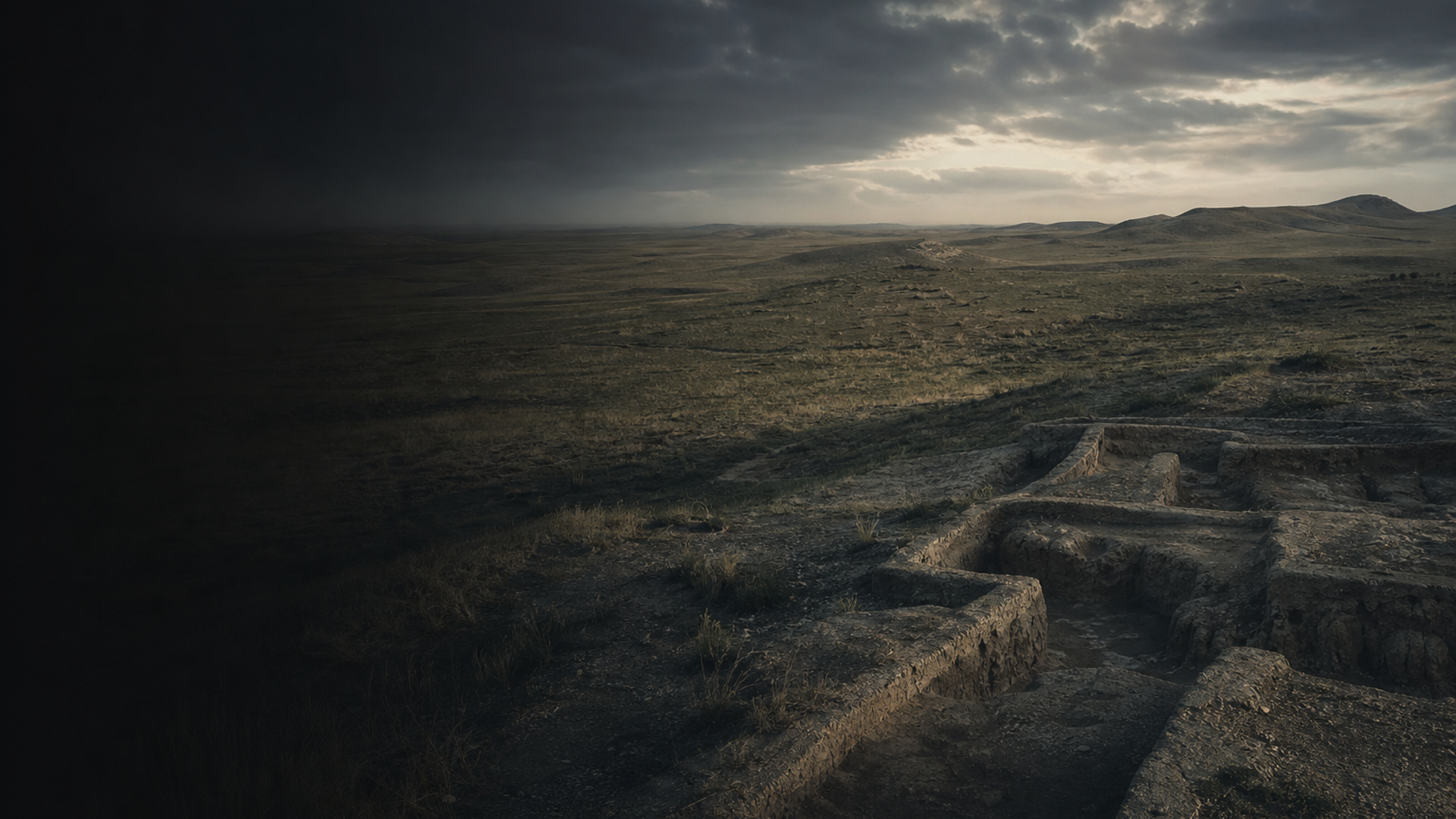
On the windswept plains beside seasonal lakes in northern Kazakhstan, the site of Botai emerges in the fourth millennium BCE as a luminous archaeological signal of Eneolithic life. Radiocarbon dates cluster between roughly 3517 and 3025 BCE, tying hearths, house pits and expansive bone middens to a community that focused intensely on horses and riverine resources. Archaeological data indicates dense settlement features — compact dwellings, concentrated ash and refuse deposits, and specialised butchery contexts — suggesting repeated, long-term occupation rather than short seasonal camps. Large quantities of horse bones, copious ceramic fragments, and traces of processed fat paint a picture of a people who organized their economy around a rich combination of hunting, fishing, and horse exploitation.

Limited evidence suggests that Botai’s material culture represents a local adaptation on the steppe rather than a simple import of practices from neighboring farming zones. The architecture and artifact technologies show continuity with regional Eneolithic traditions of Kazakhstan, while the sheer scale of horse remains marks Botai as exceptional. Important caveats remain: human genetic sampling is small, and interpretations about social structure and origins must remain provisional. Nevertheless, the archaeological footprint at Botai offers a vivid window into a community negotiating life on an open landscape, where animal economies and human mobility intertwined beneath broad skies.

  • Botai dated to ca. 3517–3025 BCE on the Kazakh steppe
  • Large assemblages of horse bones and settlement features
  • Local Eneolithic traditions adapted to a horse-focused economy
Chapitre IV

Daily Life & Society

The daily rhythms at Botai can be imagined through detritus: hearths glowing at night, pottery drying in wind-swept courtyards, and the constant presence of horses as both resource and companion. Archaeological data indicates households processed large numbers of horses for meat and likely for secondary products; lipid residue studies and bone cut-marks show butchery and fat exploitation. Wooden and bone tools, worked antler and fine flint, and thick coarse pottery suggest an economy well adapted to preservation, boiling and storage in a continental climate.

Features interpreted as corrals, paired with wear patterns on horse teeth and a prevalence of pathologically altered limbs in faunal assemblages, suggest systematic horse management. Whether that management equated to riding, traction, or tethering is debated; current evidence supports sustained human–horse relationships, possibly including penning and selective culling. Social life at Botai would have revolved around clustered households and seasonal movements to exploit fishing and grazing cycles. Craft specialization appears limited; instead, community resilience likely depended on shared knowledge of animal husbandry, landscape navigation, and processing technologies.

These reconstructions remain interpretive: equating bone concentrations with particular social institutions requires cautious linking of material remains to behavior. Still, the material record projects a cinematic image of a people living intimately with horses under an open sky.

  • Everyday economy centered on horse processing and lake resources
  • Evidence for corralling and systematic management of horses
Chapitre V

Genetic Profile

Human genetic data from Botai are tantalizing but sparse: three individuals sampled between ca. 3517–3025 BCE provide the first direct look at the community’s biological affinities. Y‑chromosome results include one R and one N lineage; mitochondrial haplogroups observed are Z1* (1), K (1), and R (1). These results are descriptive of the sampled individuals rather than definitive population frequencies.

Interpretive caution is essential. With only three genomes, conclusions about population structure, migration, or continuity are preliminary. That said, the detected lineages fit broad Eurasian patterns: Y‑haplogroup R has deep presence across western and central Eurasia, while haplogroup N is more frequent in northern and northeastern Eurasia; mtDNA Z1 is often associated with northern Eurasian maternal lineages and K and R are widespread across Eurasia. Archaeological and genetic lines together suggest Botai communities were part of steppe-wide networks that could mobilize people and animals, though the small sample count prevents fine-grained inferences.

Complementary ancient DNA studies of animals at Botai have shown that horses managed at the site represent lineages distinct from later domestic breeds, underscoring that animal domestication processes were complex and regionally variable. Ultimately, human and animal genetic data at Botai together illuminate mobility, selective animal use, and the patchwork character of early Eneolithic lifeways on the steppe — but wider sampling is needed to move from intriguing hints to robust models.

  • Only 3 human samples — conclusions are preliminary
  • Y: R (1), N (1); mt: Z1*, K, R — reflective of wide Eurasian connections
Chapitre VI

Legacy & Modern Connections

Botai’s legacy resonates across archaeology and genetics as an emblem of early steppe lifeways and human–horse relationships. Archaeologically, the site reshaped debates about where and how horse management began on the Eurasian plains; genetically, even the small human sample hints at links between western and northern Eurasian lineages in this region. Modern populations of Kazakhstan and neighboring regions carry descendant lineages of some haplogroups observed at Botai, but continuity is neither uniform nor straightforward — millennia of migrations, cultural change, and demographic shifts have reshaped the genetic landscape.

Importantly, the preliminary human DNA from Botai emphasizes the need for more sampling. Each additional genome from the Eneolithic steppe has the potential to refine narratives of mobility, ancestry, and cultural transmission. For visitors and researchers alike, Botai offers a cinematic tableau: people and horses coexisting at a threshold in prehistory, their traces preserved in bones, potsherds, and fragile strands of ancient DNA.

  • Botai reframes early horse management on the steppe
  • Modern haplogroups echo ancient lineages but continuity is complex
Propulsé par l'IA

Assistant IA

Posez des questions sur la culture Botai Echoes

Assistant IA par DNAGENICS

Débloquer cette fonction
Posez des questions sur la culture Botai Echoes. L'assistant IA peut expliquer les résultats génétiques, le contexte historique, les preuves archéologiques et les liens génétiques avec les populations actuelles, dans les limites de l'interprétation.
Exemple d'analyse IA

La culture Botai Echoes représente un chapitre fascinant de l'histoire humaine…

L'analyse génétique met en évidence des similarités avec des populations antérieures et des signes d'adaptations propres. Les échantillons d'ADN ancien éclairent les schémas migratoires et les liens entre populations, avec des limites qui dépendent de l'étude et du contexte archéologique.

Il s'agit d'un aperçu de l'analyse IA. Accédez à l'assistant complet pour explorer :

  • Composition et similarité génétique
  • Schémas migratoires et origines
  • Vie quotidienne et pratiques culturelles
  • Contexte génétique actuel

Explorez d'autres cultures antiques

Découvrez les récits de civilisations issues du monde antique