Préparation du rapport

Chargement des informations et références disponibles

Connexion au corpus archéologique…

Collecte des archives antiques

Aller au contenu principal
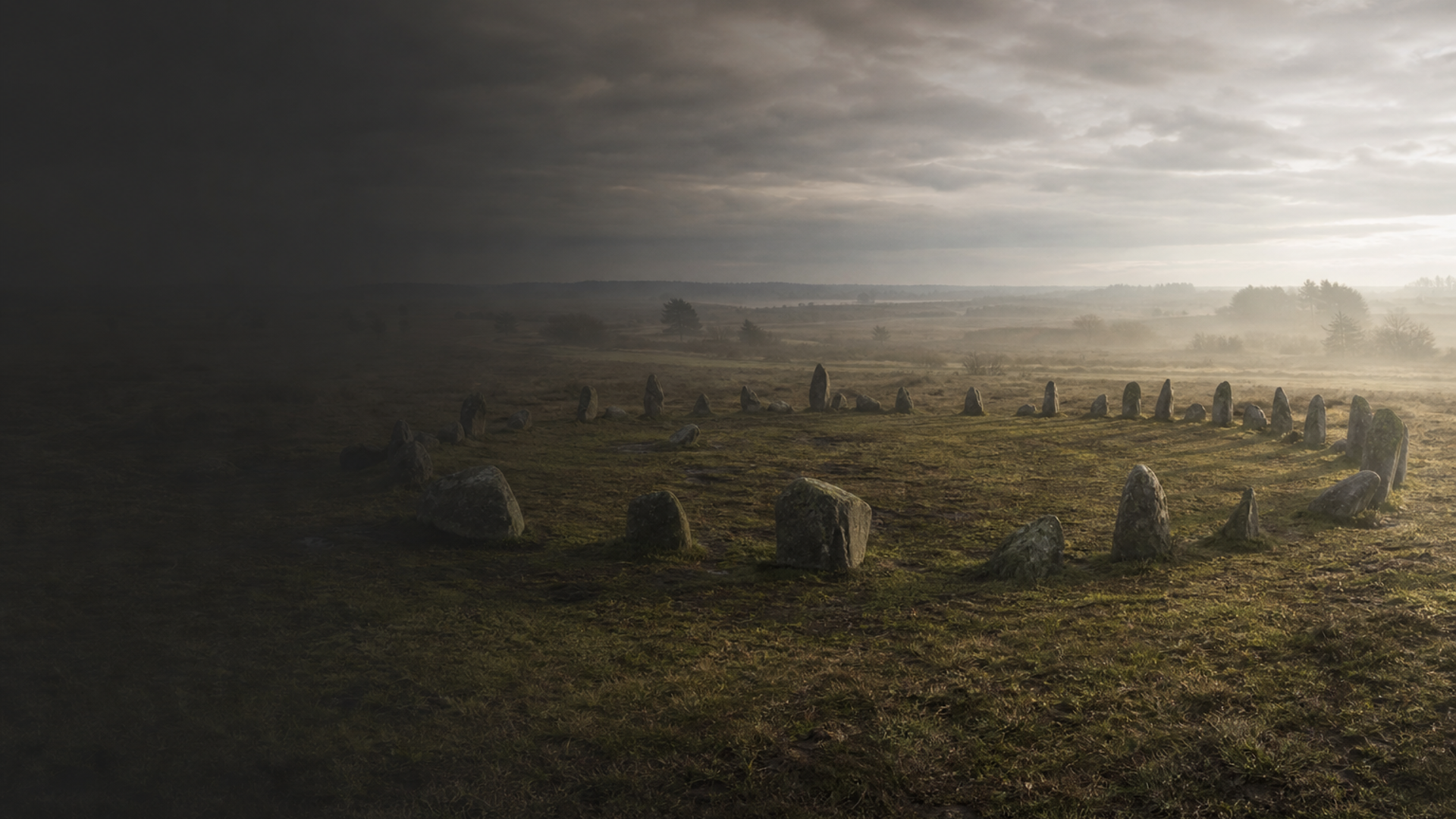
Drantum Saxon Circle
Profil culturel

Drantum Saxon Circle

A glimpse into Saxon life in Lower Saxony (600–900 CE) through bones and genomes

600 CE - 900 CE
Lower Saxony, Germany (Drantum)
Faites défiler pour commencer
Chapitre I

Le récit

Comprendre la culture Drantum Saxon Circle

Archaeological and genetic data from 17 medieval burials at Drantum, Lower Saxony (600–900 CE) illuminate Saxon-era community structure and ancestry. Ancient DNA shows common northern European maternal lineages and mixed Y-chromosome signals, suggesting local continuity with regional mobility. Conclusions remain cautious.

Time Period

600–900 CE

Region

Lower Saxony, Germany (Drantum)

Common Y-DNA

R (2), I (2), I1 (1)

Common mtDNA

H (7), K (4), U (3), HV+ (1), H51 (1)

Chapitre II

Chronologie

Moments clés de l'histoire de cette culture

700 CE

Drantum burials (approx.)

Burial activity at Drantum falls within the Early to High Medieval Saxon horizon (ca. 600–900 CE).

Chapitre III

Origins & Emergence

The cemetery at Drantum, Lower Saxony, yields a cinematic but cautious portrait of a Saxon medieval community active between roughly 600 and 900 CE. Archaeological data indicates a local burial locus whose chronology sits squarely in the Early to High Middle Ages, a time of shifting polities, trade, and regional interaction along the North Sea and inland river corridors. Material culture at contemporary Saxon sites suggests long-standing ties across northern Germany and into Frisia and Denmark; at Drantum the human remains are the primary source for tracing biological ancestry.

Ancient DNA from 17 individuals provides a direct, if moderate, line of evidence about population makeup. Genetic signals sit comfortably within northern European variation: maternal haplogroups dominated by H, K, and U are consistent with longstanding European maternal lineages, while Y-chromosome diversity includes R and I lineages typical of the region. Limited evidence suggests some individuals carry haplogroup I1, a lineage that has elevated frequency in Scandinavia, hinting at possible northern connections or patrilineal links across the North Sea. However, sample sizes for individual Y-lineages are small, and archaeological data indicates local continuity as the most parsimonious explanation for much of the assemblage.

In short, Drantum appears to be a local Saxon-era community shaped by regional networks. Genetic and archaeological data together point to continuity with broader northwestern European populations, tempered by intermittent mobility. Because the dataset includes 17 samples, some genetic patterns should be treated as provisional.

  • Drantum cemetery dated ca. 600–900 CE in Lower Saxony
  • DNA shows mainly northern European maternal lineages (H, K, U)
  • Y-chromosome diversity is limited; some signals (I1) suggest northern links
Chapitre IV

Daily Life & Society

Archaeological context for Drantum is dominated by human remains rather than large assemblages of associated buildings or artifacts; as a result, reconstruction of daily life relies on comparative evidence from Saxon-period northern Germany. Contemporary settlements in Lower Saxony combined mixed farming, animal husbandry, and seasonal exchange, and burial practices reflect kinship and household-based social organization. The Drantum burials, when paired with regional cemetery patterns, imply communities where family ties, landholding, and small-scale craft and trade structured daily existence.

Saxon social landscapes were not static: seasonal mobility, regional trade along rivers, and occasional long-distance contacts—through marriage, raiding, or pilgrimage—would have introduced new people and goods. Isotopic studies at similar sites often reveal a majority of locals with a minority of non-local individuals, a pattern consistent with limited but significant mobility. Grave variation across the region indicates social differentiation, but at Drantum the small sample and limited grave inventories mean interpretations must be cautious. Osteological evidence can hint at diet, workload, and health: skeletal markers typically reflect an agrarian life, with childhood stress episodes and adult activity markers tied to manual labor.

Together, the archaeological record and genetic snapshots suggest Drantum’s inhabitants lived in tightly knit, locally rooted households that nonetheless participated in broader northwestern European networks.

  • Community likely engaged in mixed farming, animal husbandry, and local craft
  • Regional patterns imply mostly local origins with some incoming individuals
Chapitre V

Genetic Profile

Seventeen sequenced individuals from Drantum provide a moderate dataset for early medieval northern Germany. Maternal lineages are dominated by haplogroup H (7 samples), with additional representation of K (4), U (3), HV+ (1) and H51 (1). These mtDNA lineages are widespread across Europe in the medieval period and are consistent with long-term maternal continuity in the region. Mitochondrial diversity indicates multiple maternal lines within the community rather than a single matrilineal founder.

Y-chromosome data are sparser and should be interpreted carefully: observed counts include R (2), I (2), and I1 (1). Haplogroup R is common across much of Europe; I and especially I1 have higher frequencies in northern Europe and Scandinavia. The presence of I1 in one individual could reflect genetic links across the North Sea or reflect regional patrilineal variation—both are plausible given archaeological mobility in the Early Middle Ages. Because the number of male Y-chromosome calls is small, any inference about patrilineal continuity or migration must remain tentative.

Genetic affinity analyses (when applied) typically place Drantum individuals within northern-western European variation, overlapping modern Germanic populations. Combined archaeological-genetic interpretation suggests a largely local Saxon gene pool with admixture episodes and kin-based community structure. Note that with 17 samples the dataset is informative but not exhaustive; further sampling from Drantum and nearby cemeteries would refine these patterns.

  • mtDNA dominated by H, K, U — typical of medieval Europe
  • Y-DNA shows limited diversity; I1 presence hints at northern connections but is tentative
Chapitre VI

Legacy & Modern Connections

Drantum’s genetic echoes may extend into the present landscape of northern Germany, but links between medieval and modern populations should be drawn carefully. The prevalence of mtDNA H, K, and U at Drantum mirrors long-term maternal continuity across Europe; such continuity does not prove direct lineal descent for any modern individual, but it does indicate that mitochondrial lineages common today were also present in the Saxon past.

The modest Y-chromosome representation—R and I lineages with one I1—aligns broadly with the genetic palette of contemporary northern Germans and neighbouring populations. This alignment supports archaeological expectations of regional continuity, punctuated by mobility and exchange. Importantly, because only 17 individuals were analyzed, the dataset highlights probable trends rather than definitive demographic histories. Future sampling and integration with isotopic, archaeological, and historical data will deepen our understanding of how Drantum’s people contributed to the genetic tapestry of northern Europe.

  • mtDNA continuity suggests long-standing maternal lineages in the region
  • Y-chromosome signals align with northern European patterns but remain provisional
Propulsé par l'IA

Assistant IA

Posez des questions sur la culture Drantum Saxon Circle

Assistant IA par DNAGENICS

Débloquer cette fonction
Posez des questions sur la culture Drantum Saxon Circle. L'assistant IA peut expliquer les résultats génétiques, le contexte historique, les preuves archéologiques et les liens génétiques avec les populations actuelles, dans les limites de l'interprétation.
Exemple d'analyse IA

La culture Drantum Saxon Circle représente un chapitre fascinant de l'histoire humaine…

L'analyse génétique met en évidence des similarités avec des populations antérieures et des signes d'adaptations propres. Les échantillons d'ADN ancien éclairent les schémas migratoires et les liens entre populations, avec des limites qui dépendent de l'étude et du contexte archéologique.

Il s'agit d'un aperçu de l'analyse IA. Accédez à l'assistant complet pour explorer :

  • Composition et similarité génétique
  • Schémas migratoires et origines
  • Vie quotidienne et pratiques culturelles
  • Contexte génétique actuel

Explorez d'autres cultures antiques

Découvrez les récits de civilisations issues du monde antique